
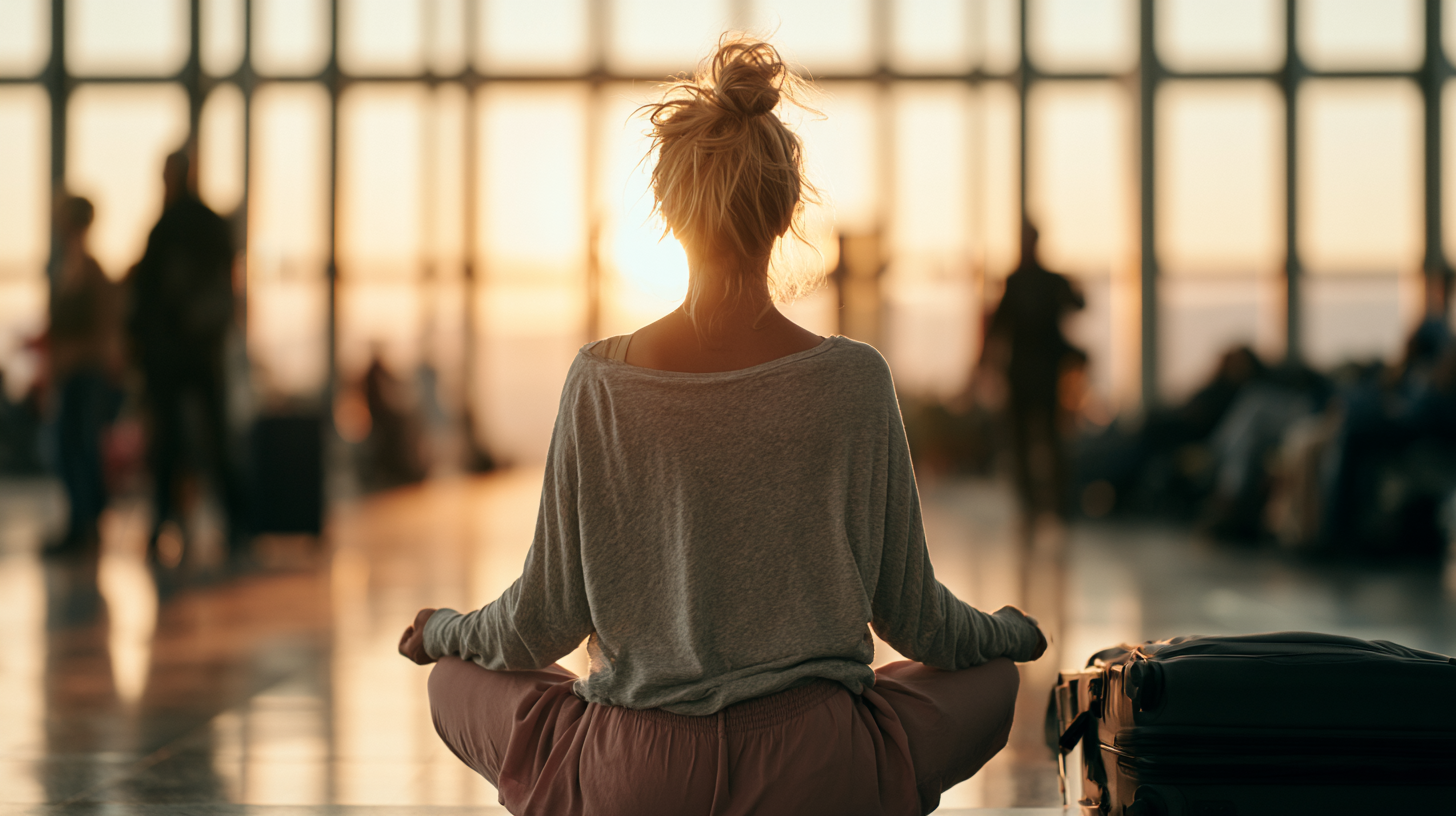
Julia has struggled with travel anxiety for years. She’s so stressed packing for her holiday in Greece that she’s snapping at her husband and two children. For as long as she can remember, she’s made excuses not to travel – first it was that she couldn’t leave her ageing mum, then a house move, and her daughter’s asthma diagnosis. This year, she’s agreed to a break abroad, but, as her stress levels soar, she’s already regretting it.
‘I’m at the stage where I’ll never plan a holiday again,’ says Julia, 47, a medical secretary who lives in Dubai. ‘Just making sure I’ve packed everything is worrying enough, without the anxiety of driving to the airport, checking in our luggage with an app, the resort being ravaged by wildfires and the children being safe on the beach. I’ve even Googled to find out if there are sharks in the sea in Greece.
‘It feels like there are so many disasters just waiting to happen. It would be much, much safer, easier and less stressful for us all to stay at home.’
‘It feels like there are so many disasters just waiting to happen. It would be much, much safer, easier and less stressful for us all to stay at home.’
Julia is suffering from travel anxiety, a form of fear that appears when we’re planning to go on vacation, and according to therapist and coach Becki Houlston, the mother-of-two is torturing herself with ‘What If’ questions. Julia’s constantly concerned and asking: What if our luggage gets lost, the train is delayed, there’s an accident on the motorway, the flight is cancelled, there’s turbulence on the plane or the hotel isn’t what we expected?

When we’re completely worn down by all those scenarios, we start to change the way we travel, often even avoiding it completely. And it’s not just the over 40s, like Julia, who suffer from it. According to research by language app Babbel, almost 70 per cent of Gen Z travellers have cancelled or changed their travel plans due to anxiety and a lack of preparedness.
‘Travel can make you feel like someone has shaken your snow globe – you have to cope with the unknown and change, as well as not being in control at times,’ says UK-based Becki.
‘You might stick to the familiar and go to the same hotel in the same resort each time. You might decide to do a staycation and avoid flying and long-distance travel. Or you might opt for a cruise, as many older people do, so you don’t have to get on a plane if that’s what’s worrying you.
‘However, you might invent excuses, like illness or caring for pets, to avoid travel altogether. But this reduces our options and shrinks our world.’
Why even dream holidays can spark travel anxiety
It’s ironic really – travel is said to broaden our minds and holidays are a vital break from our daily routines, so why should something so relaxing and beneficial cause us so much stress?
‘It often begins with a single anxious thought, which spirals into a cascade of psychological and physical symptoms, including catastrophising, nausea, sweating, panic attacks and an overwhelming urge to avoid the journey altogether’
Tanya Laing Sibley, clinical hypnotherapist
Clinical hypnotherapist Tanya Laing Sibley, who has worked with clients in Abu Dhabi, explains that travel anxiety is the mind’s way of trying to stay safe, often based on past experiences or imagined fears.
‘This fear can relate to any part of the journey, whether it’s months, days or hours before you’re due to travel,’ she says. ‘It can present during travel and sometimes upon arrival at the new destination, preventing you from fully enjoying yourself.
‘For some, like the actress Jennifer Aniston, it can take the form of an extreme fear of flying (she’s had hypnotherapy, does breathwork and listens to a meditation app onboard), while for others, it might be triggered by navigating unfamiliar transport systems and worrying about missed connections.
‘You could be anxious about getting lost, attacked or mugged, or wildfires, flooding, typhoons, terrorism or political unrest at your destination,’ adds Tanya, who specialises in helping people overcome fear, anxiety and imposter syndrome.
‘Early life experiences and childhood trauma can play a part in having travel anxiety. If someone grew up feeling unsafe or unsupported, they might be more vulnerable to developing specific fears around travel’
Tanya Laing Sibley, clinical hypnotherapist
‘It often begins with a single anxious thought, which spirals into a cascade of psychological and physical symptoms, including catastrophising, nausea, sweating, panic attacks and an overwhelming urge to avoid the journey altogether.’
So why do some people pack their cases and saunter off on their travels without a care in the world, while others chew their nails, get thumping headaches and make themselves ill if they even go at all?
‘We’re not born with travel anxiety,’ explains Tanya, ‘but some people do have a higher predisposition to anxiety in general. People who come from a family history of panic attacks, depression or anxiety disorders may have inherited genetic traits.

‘Early life experiences and childhood trauma can play a part in having travel anxiety. If someone grew up feeling unsafe or unsupported, they might be more vulnerable to developing specific fears around travel.’
Then there’s the 24/7 news. Who hasn’t watched footage of a disaster and imagined being caught up in a tsunami, an earthquake or a wildfire? Others equate capital cities with robberies, muggings and terrorism; the countryside with ravines to tumble down, windy roads that are dangerous to drive along and wild animals prowling for prey.
‘The nervous system takes your fear of the unknown and reads it as danger. So, planning your trip well in advance gives you the illusion of being in control, thereby reducing your fear’
Becki Houlston, therapist and coach
‘We’re exposed to a wide range of global events, from wars to natural disasters to political unrest and climate change,’ adds Tanya, who is now based on the Isle of Man. ‘The more we absorb these worst-case scenarios, the more we catastrophise and internalise that travel is inherently dangerous.
‘When you take a step back, assess your actual route and destination, and stay grounded in facts, the likelihood of something going wrong is usually very low.

‘Emotion often overrides logic, which is why it’s important to pause, peel back the layers, and ground yourself in the facts. Focus on what’s likely to go right, rather than catastrophising about what could go wrong.’
So how can we conquer our travel anxiety? Becki and Tanya share their expert tips.
Boss your admin
Plan ahead and be more organised, advises Becki.
Have your documents in one easily accessible folder, make sure you’ve downloaded all the parking and checking-in apps you’ll need and have your accommodation details to hand.
‘The nervous system takes your fear of the unknown and reads it as danger,’ she explains. ‘So, planning your trip well in advance gives you the illusion of being in control, thereby reducing your fear.’
Trick your brain
Visualise your trip going really well, suggests Tanya.
‘Imagine each stage of the journey. Picture yourself packing calmly, arriving at the airport, boarding with ease and feeling settled,’ she says. ‘Then see your stay being successful and enjoyable.
‘This works because the subconscious mind responds powerfully to imagery. Rehearing a calm outcome builds familiarity and confidence, reducing the fear of the unknown.’
Circle time
Get clear about what you can control, and what you can’t, says Becki.
‘On a sheet of paper, draw two large circles side by side,’ she suggests. ‘In one of them, write down all the things that are within your control, like packing essentials in your hand luggage in case your suitcase doesn’t arrive on time and taking a waterproof in case it rains, and in the second one, list the things you can’t control, such as the train being on time and the weather.
‘It’s important to write it down and get it out of your head and onto paper because your head is part of the problem!’
Do your research
Check out where you’re going long before you get there, advises Becki.
‘Be sure how far the transfer from the airport is, how you’ll get to your accommodation, what the roads are like and look at the street view on Google maps,’ she says.
‘Read other people’s reviews and learn from their tips. You’ll find that familiarity reduces fear.’
And breathe…
Use your breath to calm down your nervous system, suggests Becki.
‘Breathe in for a count of four, then out for a count of eight,’ she says. ‘It’s important that the out- breath is longer than the in-breath.
‘When we sense danger from imaginary things, the body goes into fight or flight mode – the extended out-breath releases the nervous system.’
Zap that anxiety
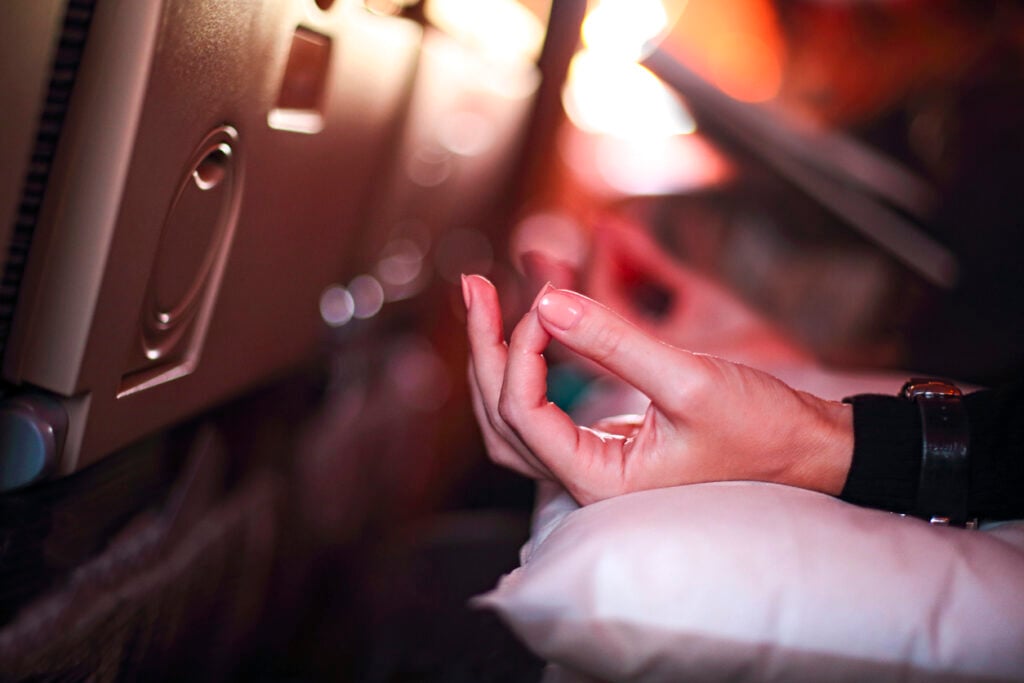
Before you travel, when you’re in a relaxed state, create an ‘anchor’ that you can use later, recommends Tanya.
‘This is a physical cue and could be something like gently pressing together your thumb and forefinger when you’re in a relaxed state,’ she says. ‘As soon as you sense anxiety surfacing on your travels, you can use this technique.
‘Over time, it creates an automatic calming response which can be used during stressful times.’
Change your story
Gently shift your inner voice to the positive, says Tanya.
‘Your inner voice will ask: ‘What if something goes wrong?’ But if you reframe your language, it will help the subconscious update its beliefs. You could tell yourself: ‘I’ve prepared well and covered all issues that could go wrong. I can manage whatever comes up as I am fully prepared. I’ve handled new experiences before. I am going to enjoy this experience as I am in control.’
‘When the inner dialogue becomes more supportive, the body’s stress response begins to change too.’
Own your feelings
Don’t be afraid of your emotions, advises Becki.
‘There’s an increase in activity before a holiday – we have work deadlines, pets to care for and organise, along with domestic things to sort out,’ she acknowledges.
‘Name what you’re feeling, whether it’s panic, fear or overwhelm. Just saying out loud: “I am feeling stressed because I have a lot to do,” will reduce the power that emotion has over you.’


To learn more visit beckihoulston.co.uk and rapidmindtherapy.org