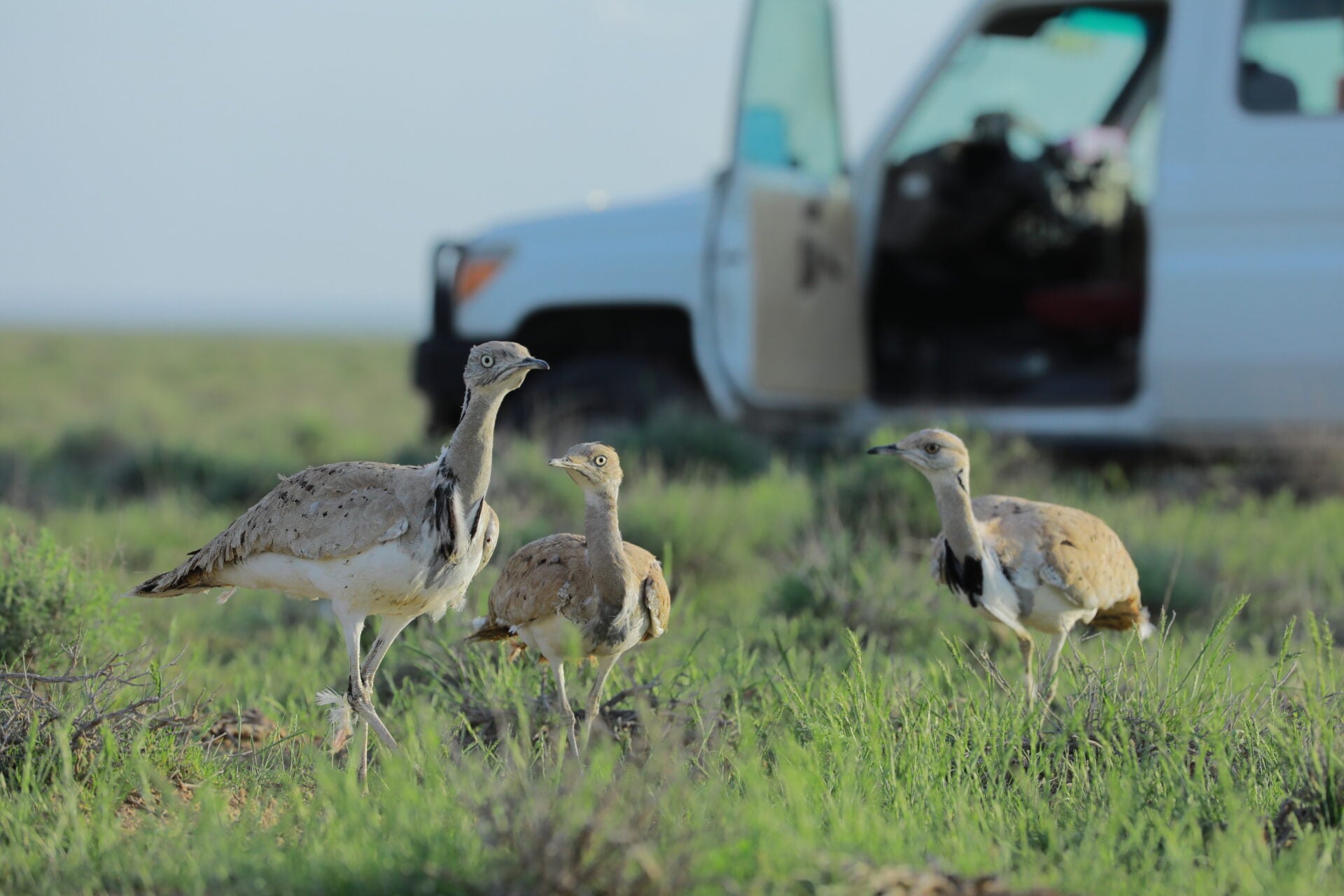
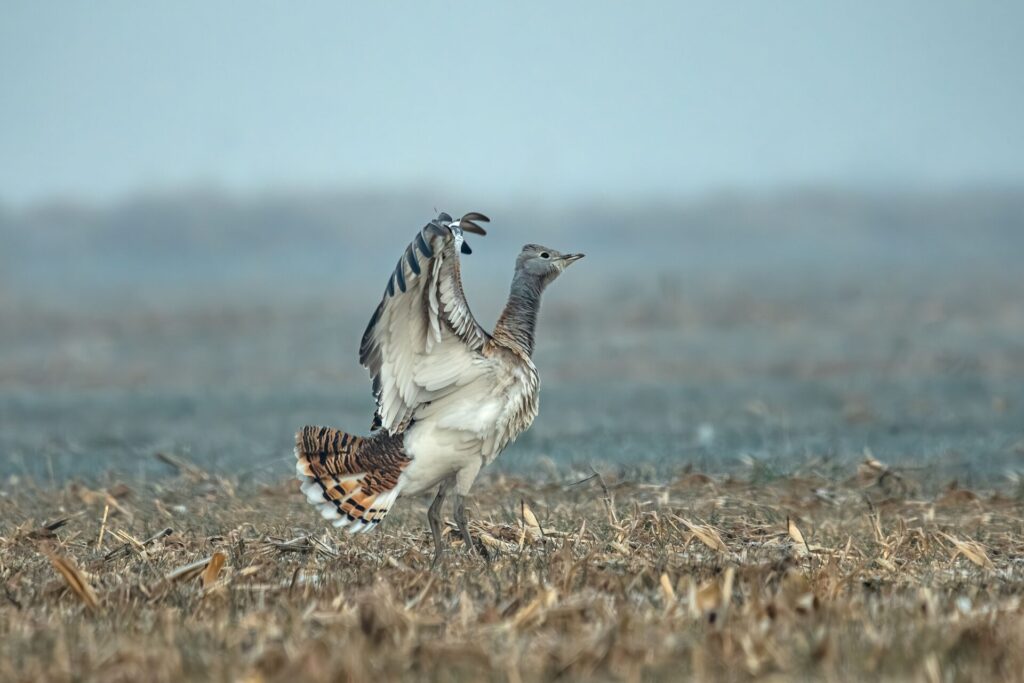
Hundreds of vulnerable houbara bustards have been released into the wild in western Uzbekistan, marking a significant step in efforts to bring wildlife back to one of Central Asia’s most dramatically altered landscapes.
A total of 672 Asian houbara bustards were released in Karakalpakstan, the autonomous republic encompassing much of Uzbekistan’s former Aral Sea region, in June.
The migratory birds were bred at a specialist conservation centre in neighbouring Kazakhstan before undergoing pre-release preparation and being transported to the region.
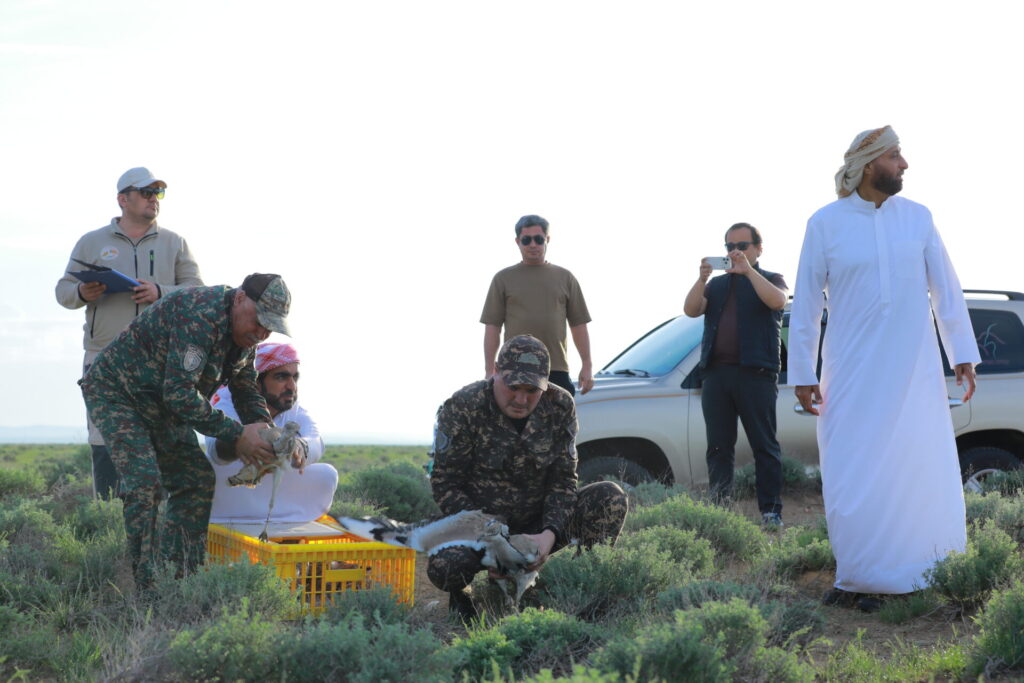
Conservationists hope the project can contribute to the much larger task of rebuilding functioning ecosystems across a landscape transformed by the catastrophic decline of the Aral Sea.
Bringing Wildlife Back to the Aral Sea
Once one of the world’s largest inland bodies of water, the Aral Sea has become a global symbol of environmental degradation.
Today, the Aral Sea is around 10 per cent of the size it was in the 1960s, according to Uzbekistan’s National Committee on Ecology and Climate Change.
Beginning in the Soviet era, enormous quantities of water from the Amu Darya and Syr Darya rivers were diverted to irrigate crops, dramatically reducing the flow of water reaching the sea.
Today, the Aral Sea is around 10 per cent of the size it was in the 1960s, according to Uzbekistan’s National Committee on Ecology and Climate Change.
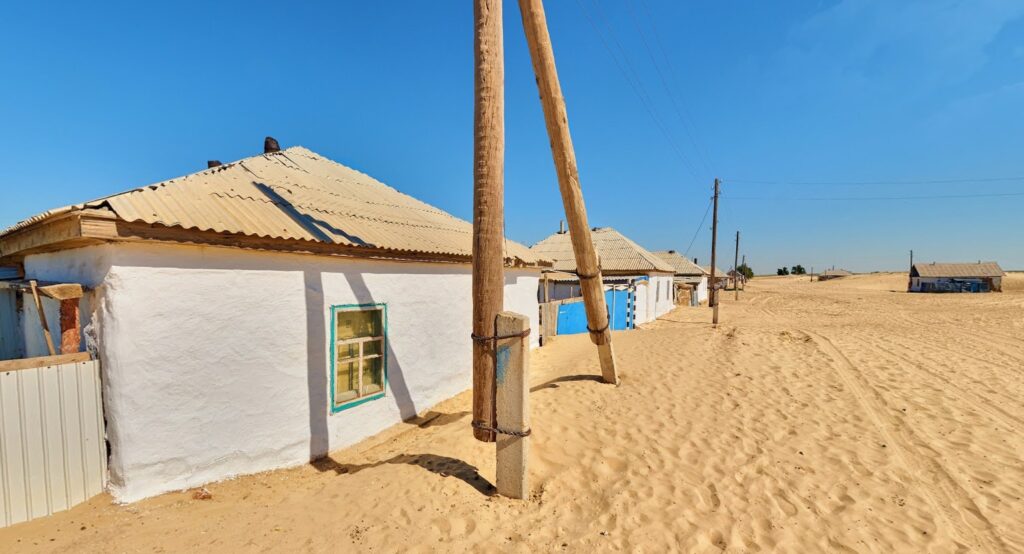
In its place, vast stretches of exposed lakebed have formed the Aralkum Desert, one of the world’s newest deserts.
The ecological consequences have been profound. Habitats have disappeared, water supplies have diminished and the changing landscape has affected both wildlife and the approximately two million people living in Karakalpakstan.
Climate change is now adding another layer of pressure, with declining mountain glaciers affecting the Amu Darya and temperatures across the region continuing to rise.
Against that backdrop, bringing native wildlife back is increasingly being viewed as one part of the region’s ecological recovery.
Why the Houbara Matters
The Asian houbara is a migratory desert bird whose range extends across large parts of Central Asia and beyond.
Its wild populations have declined significantly since the 1960s and the species is currently classified as Vulnerable on the IUCN Red List. It is also protected under the Convention on International Trade in Endangered Species of Wild Fauna and Flora (CITES) and listed under the Convention on Migratory Species.
Uzbekistan’s conservation programme aims to restore populations to landscapes including the Ustyurt Plateau and Kyzylkum Desert.
Sophie Ibbotson, Uzbekistan’s Ambassador for Ecology, said the return of the birds was cause for celebration after decades of decline.
‘Breeding, release, and conservation programmes of this kind are vital for ecosystem restoration,’ she said.
The houbara can also act as a flagship for the wider desert ecosystem it inhabits. Protecting sufficient habitat for a migratory species requires conserving the plants, insects and other wildlife sharing that landscape, as well as addressing pressures on the land itself.
In that sense, restoring one threatened species can provide an incentive to protect considerably more.
Conservation Across Borders
The project also illustrates one of the complexities of restoring migratory wildlife: animals don’t recognise national borders.
The 672 birds were bred at a specialist centre operated by the Representative Office of the UAE’s Sheikh Mansour bin Zayed Al Nahyan in Kazakhstan, before being released in Uzbekistan.
The operation involved specialists from Uzbekistan’s National Committee on Ecology and Climate Change alongside international experts, including representatives of the CITES Management Authority.
The resulting collaboration spans Uzbekistan, Kazakhstan and the UAE, while the houbara itself depends upon habitats extending across multiple countries.
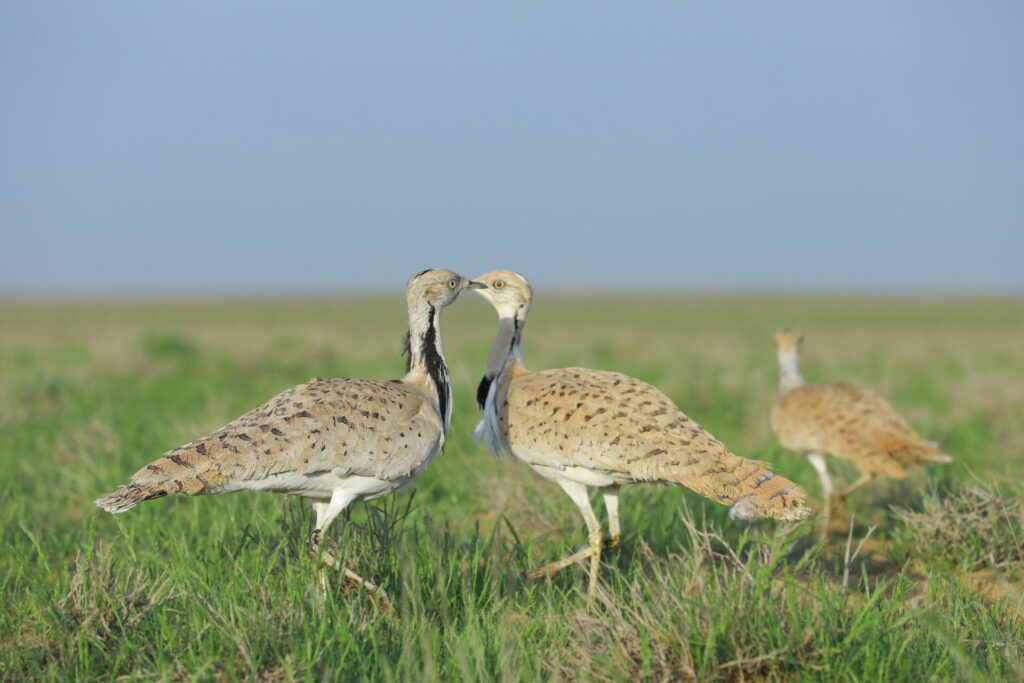
Such cooperation is becoming increasingly important across Central Asia, where rivers, deserts, mountain ecosystems and migratory routes routinely cross political boundaries.
Uzbekistan previously brought international attention to the conservation of these shared species when it hosted COP14 of the Convention on Migratory Species in Samarkand in 2024.
Restoring a Landscape After Environmental Disaster
Releasing hundreds of birds cannot, by itself, reverse the ecological transformation of the Aral Sea region.
But the houbara programme forms part of a broader change in thinking about how degraded landscapes can recover: not simply by protecting what remains, but by actively restoring habitats and rebuilding wildlife populations.
For Karakalpakstan, that challenge is enormous. The disappearance of much of the Aral Sea has altered the region’s hydrological cycle and transformed the landscape, while shrinking water supplies and increasingly extreme temperatures continue to put pressure on ecosystems.
Uzbekistan’s National Committee on Ecology and Climate Change says the average July temperature in the country has exceeded the long-term climate norm over the past decade, and temperatures above 40°C are becoming increasingly common.
That makes the houbara’s return both hopeful and instructive. Successful reintroduction requires more than breeding birds and opening transport crates; released animals need healthy landscapes to feed, breed, and migrate.
After decades in which the Aral Sea became synonymous with ecological loss, the sight of hundreds of houbara bustards returning to its surrounding deserts offers something the region has had far too little of: evidence of nature being given the opportunity to return.