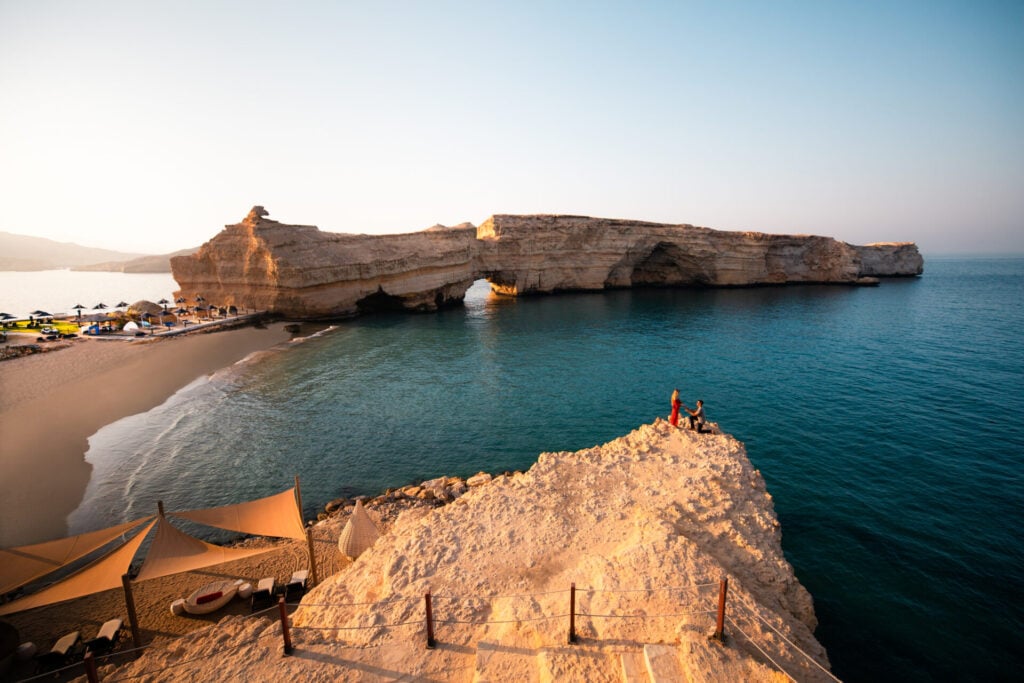
Oman has always been one of the region’s most beautiful destinations, with its dramatic mountains, turquoise waters, and rich heritage. And tucked away in a secluded bay, where the Hajar Mountains meet the Gulf of Oman, Barr Al Jissah is beginning a new chapter.
After 20 years under Shangri-La, the coastal resort has been taken over by Hilton, with its three hotels now operating under different brands. But while the names have changed, this spectacular stretch of coastline is as beautiful as ever, with Hilton bringing a new focus to protecting its natural surroundings.
The Ethicalist sat down with Joakim Velinder, Cluster Commercial Director at Hilton Muscat, to discuss Barr Al Jissah’s transformation and what guests can expect.
TE: You were involved with Barr Al Jissah before its transition from Shangri-La to Hilton. What can guests expect from the three different properties?
Joakim Velinder: It’s been a really exciting transition. The resort has nearly 21 years of heritage, including 20 years operating under a well-established brand. What we’re doing now is introducing three distinct identities, each catering to a different type of guest, while maintaining the destination’s special character.
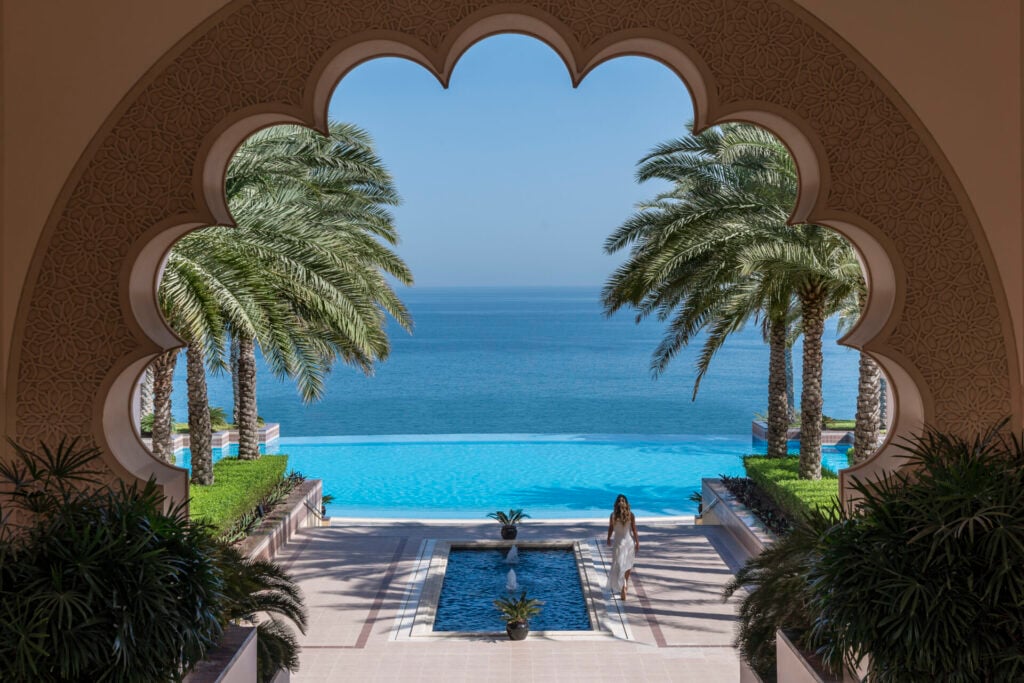
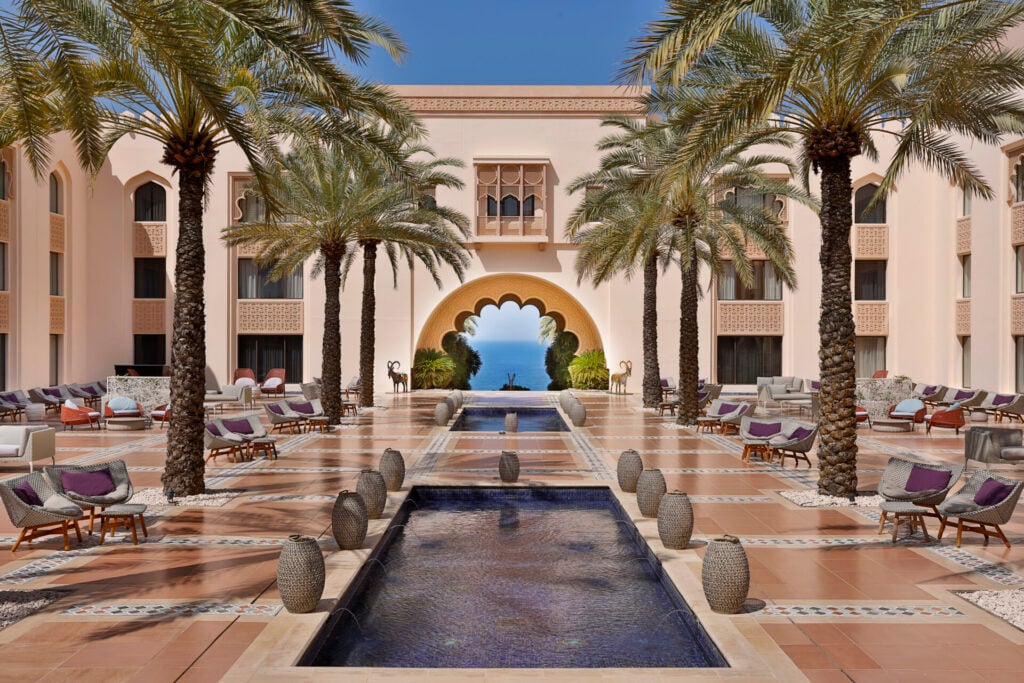
We have DoubleTree Al Waha, which is very much our family hotel, with its pools, splash areas and access to the lazy river. Then there’s Hilton Al Bandar, which is the village, where you’ll find most of our restaurants, along with our meetings and events facilities. Finally, there’s Al Husn, our adults-only luxury property, which will become a fully branded Waldorf Astoria following refurbishment.
The interesting thing is that these identities have always been reflected in the architecture. Al Husn is the castle, positioned high on the cliffside overlooking everything below. Al Bandar is the village, and Al Waha is the oasis.
Much of the infrastructure is the same, but we’ve introduced new service standards, refreshed our restaurants and menus, and are developing experiences around each brand. Guests staying at Al Husn can enjoy facilities across all three properties, while those staying at Al Bandar and Al Waha have access to those two hotels.
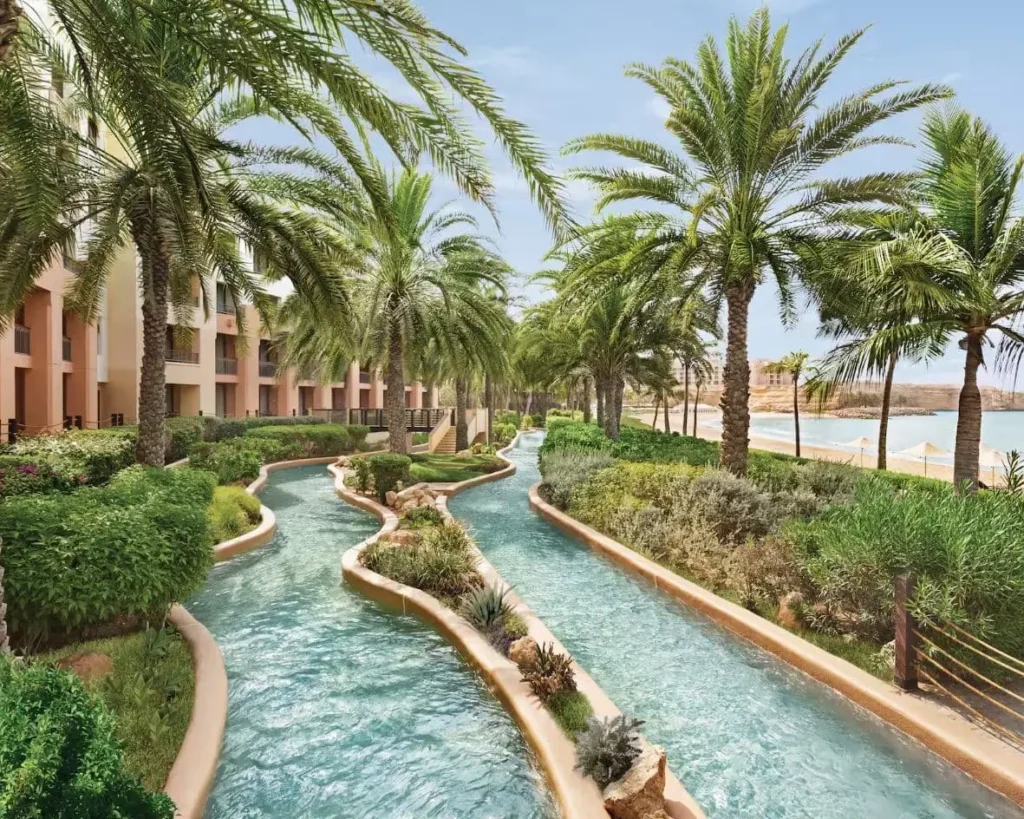
For families, the 400-metre lazy river connecting the lower resorts is a definite highlight. You can float between the hotels, and there are splash pads and slides for children.
TE: The Ethicalist previously covered the turtle conservation programme at Barr Al Jissah. Is protecting the nesting beaches still a priority under Hilton?
JV: Absolutely. Our dedicated turtle rangers are still on the property, protecting the nesting areas and educating guests through turtle talks. It’s an important part of our environmental responsibility, but also part of what makes staying here unique.
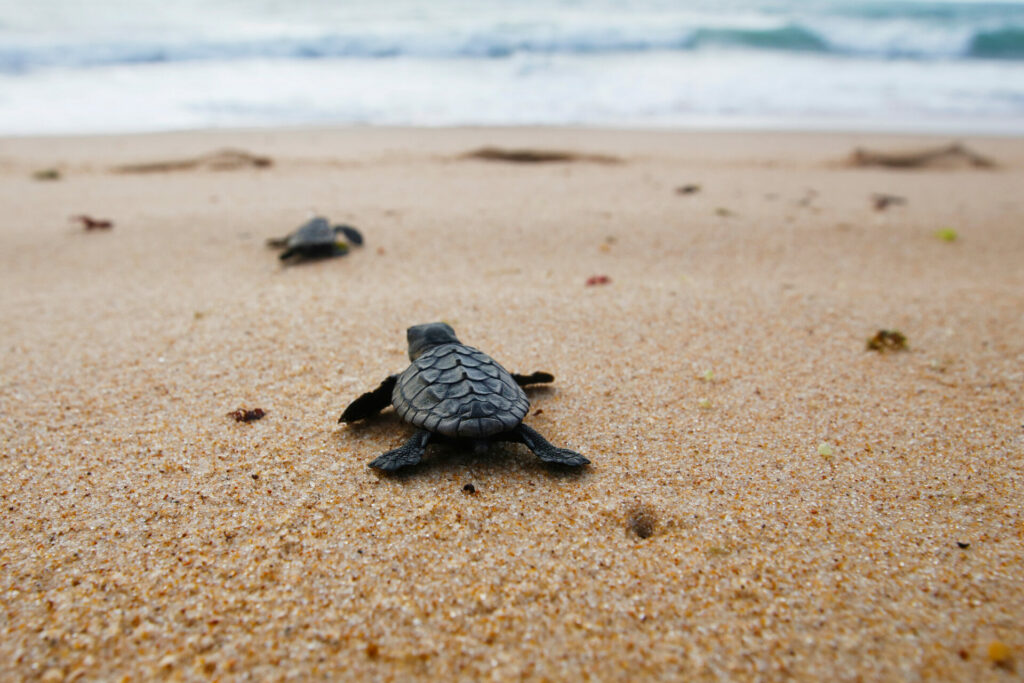
The nesting beaches are used by endangered Green Turtles and critically endangered Hawksbill Turtles. In 2025, we recorded 158 nests and 3,555 hatchlings making their way into the ocean. During hatching season, guests can witness the hatchlings beginning their journey towards the sea. Guests aren’t simply coming to enjoy a beach; they’re visiting a coastline that provides an important habitat for marine wildlife.
‘At certain times of year, whale sharks pass through Omani waters, and there are opportunities to join responsible swimming excursions. We also have orcas, humpback whales and several species of dolphins, including bottlenose and spinners’
It’s something we want to continue developing because conservation and education can work together. When guests understand why these places matter, they’re more likely to appreciate why we need to protect them.
TE: Beyond the turtles, what is Hilton doing to protect the surrounding marine environment at Barr Al Jissah?
I’m a passionate diver, so marine conservation is something I feel particularly strongly about. Last year, we organised an underwater clean-up initiative in collaboration with the Ministry of Environment, focusing on discarded fishing nets and other debris.
Some of these nets can be hundreds of metres long, and when they’re lost or abandoned, they can become entangled around coral beds. We brought together around 40 certified divers and completed five dives, removing three large fishing nets along with a substantial amount of other waste. It’s quite an undertaking because you need the appropriate permissions and experienced divers to remove the nets safely. But it’s an initiative we’re keen to continue.
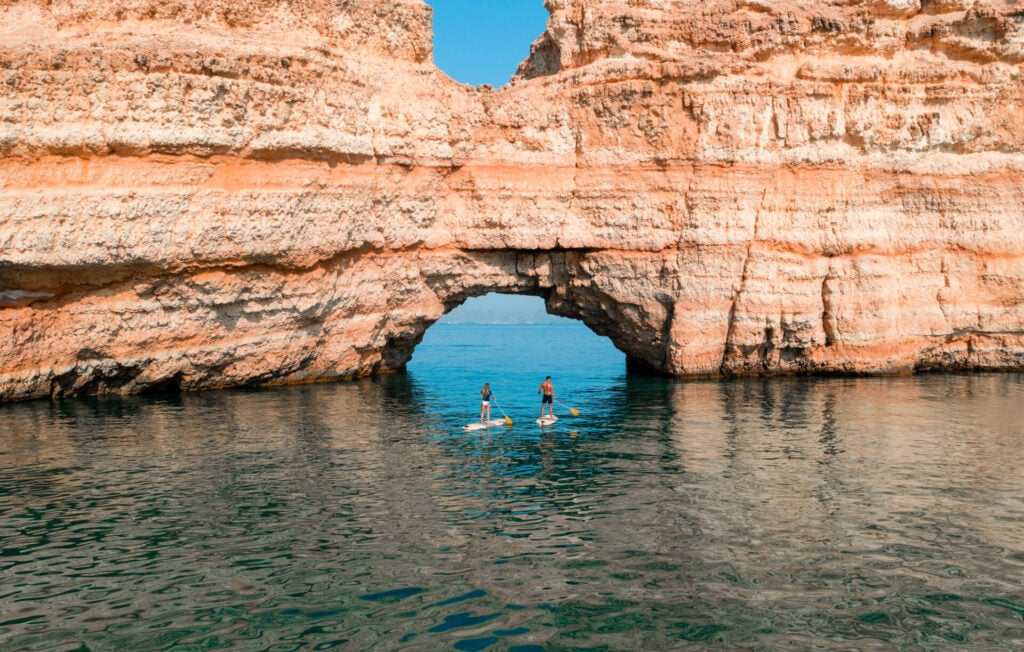
One of the remarkable things about Oman is how different its marine environment is from anywhere else in the Gulf. People sometimes think it’s all the same, but we face the Indian Ocean, and its marine life is incredibly diverse. At certain times of year, whale sharks pass through the waters, and there are opportunities to join responsible swimming excursions. We also have orcas, humpback whales and several species of dolphins, including bottlenose and spinner dolphins.
TE: You also connects guests directly with local fishermen. How does that work?
JV: We have a beautiful seafood restaurant called Bait Al Bahr, and we started thinking about how we could create something memorable for guests while also supporting the local community. So we approached fishermen from Qantab, a small fishing village further along the coast. The idea is quite simple: a fisherman comes directly to the resort with his boat after he’s been fishing. It’s not staged; he’s bringing in his actual catch. Guests can come down, see what’s available, choose their seafood and have it prepared for dinner that evening.
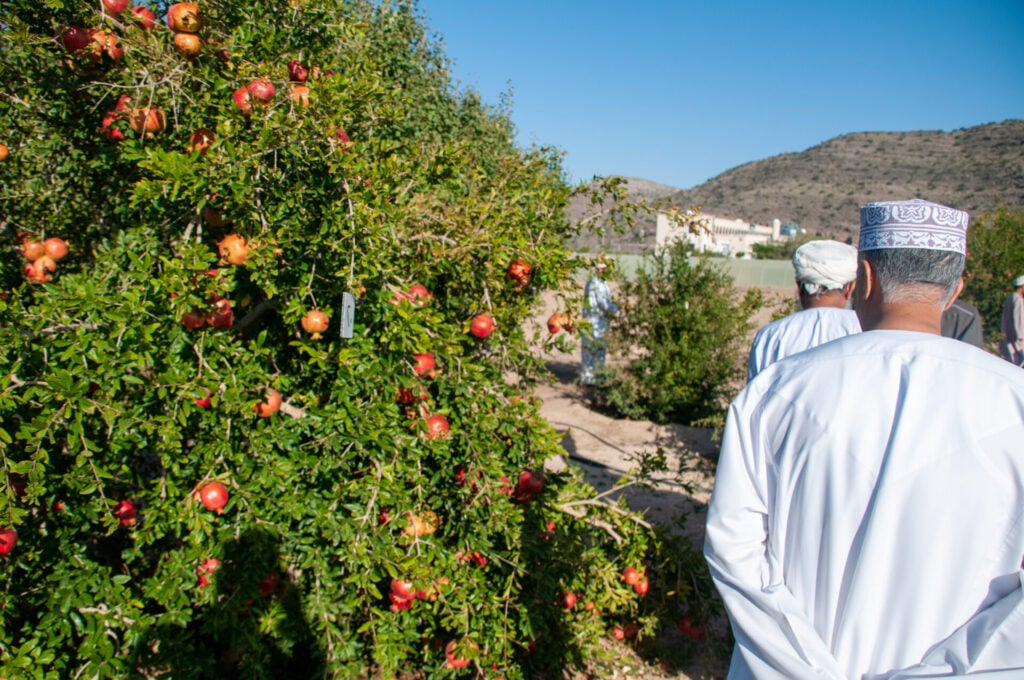
‘When it’s pomegranate season in the mountains, why wouldn’t we bring fresh Omani pomegranates into the hotel? We might not grow them ourselves, but we’re supporting local farmers and reducing the need to bring ingredients from halfway around the world’
More broadly, we’re trying to increase the amount of produce we source locally across our restaurants. Oman has fantastic seasonal ingredients, and I think we should make the most of them. For example, when it’s pomegranate season in the mountains, why wouldn’t we bring fresh Omani pomegranates into the hotel? We might not grow them ourselves, but we’re supporting local farmers and reducing the need to bring ingredients from halfway around the world.
We also have honeybee hives within the resort grounds, producing honey that guests can enjoy at breakfast. Of course, guests will always expect certain international products, and there are practical limitations to what hotels can source locally. But I think supporting local producers is just as important as growing everything on-site.
TE: What about sustainability behind the scenes?
JV: When the resort was originally built, there weren’t even roads leading into the bay. Everything had to come in by barge, so the entire destination was effectively designed to function as its own little city. We have our own desalination plant, which draws seawater from about 300 metres offshore, along with a wastewater treatment facility. Water management is particularly important in Oman because freshwater resources are limited. Our closed-loop water recycling system lets us use treated wastewater for irrigation across our landscaping.
‘When it comes to single-use plastics, I think the hospitality industry still has more work to do. You sometimes see hotels announcing they’ve eliminated plastic straws, which is a positive step, but then you look around and there are plastic bottles everywhere’
We’re also looking at how we can reduce waste across our food and beverage operations. Surplus food that meets the necessary safety and hygiene standards is donated to the Oman Food Bank, while dry food waste is converted into organic fertiliser. Used cooking oil is collected and recycled through Modern Arabia for the production of bunker fuel.
When it comes to single-use plastics, I think the hospitality industry still has more work to do. You sometimes see hotels announcing they’ve eliminated plastic straws, which is a positive step, but then you look around and there are plastic bottles everywhere. Don’t get me wrong, these are all moves in the right direction. But I think we need to ask ourselves what more we can do.
TE: Another particularly unusual experience is your frankincense sommelier. Tell us more.
We have what I believe is the world’s only frankincense sommelier, Khalid Al Amri, and he’s incredibly knowledgeable about the history and cultural significance of frankincense in Oman. Most people associate frankincense with incense or religious ceremonies, but it’s used in so many different ways, from perfumes and skincare to food and drinks. It’s also an important part of Oman’s trading history, with frankincense routes stretching back thousands of years.
We have frankincense trees growing in one of our gardens, and Khalid takes guests through the different varieties, explaining how the resin is harvested and how it has traditionally been used. A lot of people are surprised to discover that frankincense is actually sap from a tree, which hardens after being collected.
There’s also a great deal of history throughout the resort itself. The original owners were passionate about art and architecture, and you’ll find details inspired by different cultures and historic buildings. Khalid knows the stories behind so many of these features.
‘There are simple wooden structures built by local Omanis, some using solar power, and you’re surrounded by this incredible natural landscape…You can still find so many places where you can have authentic experiences, away from the crowds’
The location itself has an extraordinary story. The former Sultan Qaboos tasked Mohammed Al Zubair with finding a suitable site for the resort, so he reportedly asked for a helicopter, flew along the coastline and selected this particular bay. It’s fascinating to think that a decision made from the air led to the creation of the destination we have today.
TE: You clearly have a great affection for Oman. What makes it such a unique destination for travellers?
I think Oman is a world of its own. You have the mountains, the deserts, the wadis and the coastline, and so much of it is accessible within a few hours of Muscat. A lot of international visitors don’t come simply to spend eight days on a beach. They might start with a couple of nights in Muscat, visit the Grand Mosque and the souks, then head into the mountains around Jabal Akhdar. From there, they can explore Nizwa, spend a night glamping in the Wahiba Sands, visit the wadis and Sur, and return to Muscat for a few days by the sea.
You can experience so many different landscapes and aspects of Omani culture in one trip. I recently went kitesurfing with some friends at Barr Al Hikman, about four hours south of Muscat, near Masirah Island. It’s an extraordinary place, with vast stretches of white sand, turquoise lagoons and almost no infrastructure. During the khareef season, the monsoon winds bring much cooler temperatures along parts of the coast. We left Muscat when it was around 46 degrees, and down there it was closer to 23. We were wearing sweaters in the evenings!
‘I’d love to create a guide so guests can explore the trails and discover more of the landscape surrounding the property. You could go hiking in the morning and spend the afternoon snorkelling or diving’
There are simple wooden structures built by local Omanis, some using solar power, and you’re surrounded by this incredible natural landscape. I enjoyed it so much that I went back with my family. That’s what I love about Oman. You can still find so many places where you can have authentic experiences, away from the crowds.
TE: Looking ahead, what experiences would you like to develop at Barr Al Jissah?
We’ve spoken a lot about the sea, but behind the resort there are some beautiful hiking trails through the mountains. They haven’t really been mapped out properly, and that’s something I’ve put on my agenda to develop. I’d love to create a guide so guests can explore the trails and discover more of the landscape surrounding the property. You could go hiking in the morning and spend the afternoon snorkelling or diving. That’s a wonderful combination.
We’re also developing more experiences around the local community and Omani culture, because I think that’s increasingly what travellers are looking for. They want to feel connected to the place they’re visiting.
Ultimately, people choose a destination not just because of the hotel buildings, but because of what they can experience there. They might never go swimming with whale sharks or venture into the desert, but knowing those possibilities exist is part of the appeal. For me, Barr Al Jissah is about bringing those different elements together. We have the luxury and facilities of an international resort, but we’re surrounded by an extraordinary natural environment and a country with a very strong cultural identity.