

If it feels like every other family you know is navigating some form of picky eating, that’s because many are. Research suggests that between 25 and 45 per cent of typically developing young children experience feeding difficulties at any given time. In some communities, those numbers climb even higher.
For many families, picky eating is dismissed as a phase: a toddler asserting independence, a child angling for control, or a personality that will just disappear with age. But according to Clinical Psychologist Dr Hollie Shannon of Sage Clinics, what appears to be defiance is often something far more complex.
‘Picky eating is extremely common in very young children,’ she tells The Ethicalist. ‘Most toddlers will at times refuse to try new foods or even eat; this is a normal part of child development and not generally a cause for concern. But if a child starts to eliminate foods that they previously ate without difficulty, and the range of accepted foods becomes very limited or continues to shrink over time, it may signal something more serious.’
Because while typical picky eating is developmental and often resolves, anxiety-related food restriction does not simply disappear with time — and pressure rarely helps.
If a child starts to eliminate foods that they previously ate without difficulty, and the range of accepted foods becomes very limited or continues to shrink over time, it may signal something more serious.’
Dr Hollie Shannon, Clinical Psychologist, Sage Clinics
Parents often notice a subtle shift. A favourite pasta is suddenly ‘disgusting’, or a child who ate chicken happily now refuses it point-blank. Then the list of acceptable foods narrows week by week, mealtimes become difficult, and there are tears involved.
Children struggling with anxiety around food often show visible distress at the table from panic, gagging, avoidance, or even full meltdowns when presented with certain ‘fear foods.’
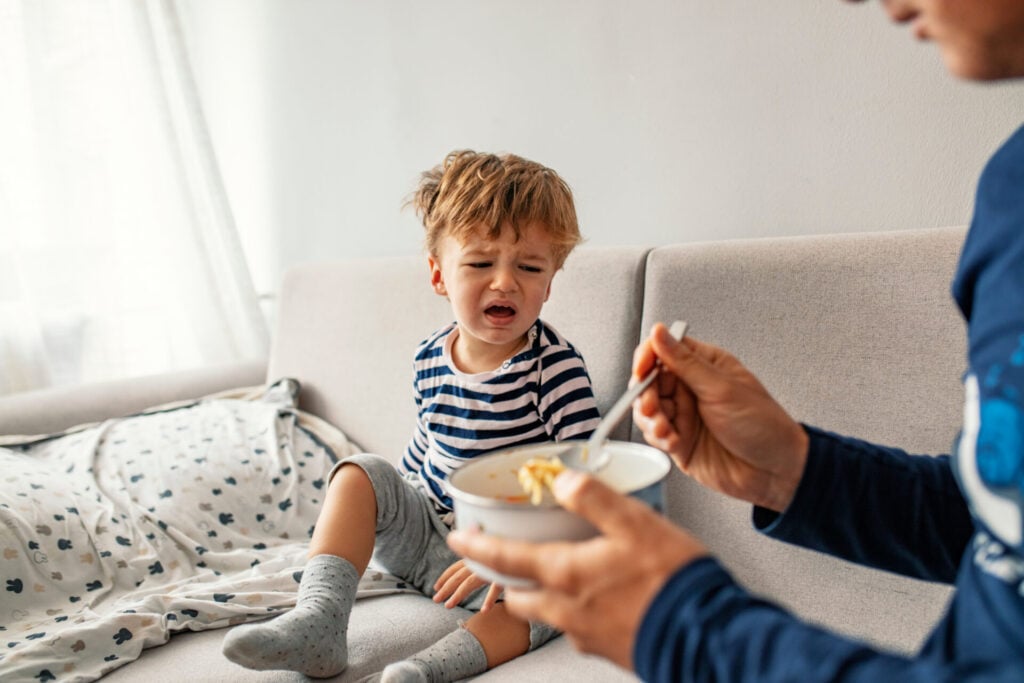
‘Without appropriate support and intervention, these difficulties will likely persist and may even worsen over time,’ says Dr Shannon. ‘If restricting food has become a way for a child to manage or reduce anxiety, then placing them in a situation that further heightens stress makes it even less likely that they will want to eat or try new foods.’
Anxiety, especially in children, frequently shows up in the body. Parents should look out for symptoms such as a tight throat, nausea, racing heart or even tummy aches.
‘If a child has had a negative experience involving food, for example, a choking or vomiting episode, that memory can become associated with eating more broadly,’ she explains. ‘Other children have particular sensory sensitivities. They may intensely dislike certain textures, tastes, smells or appearances of foods. And some simply have a general lack of interest in food or eating at all. In each case, the restriction serves a purpose: it reduces discomfort.’
When viewed through that lens, the battle at the dinner table starts to look very different.
Why Pressure Backfires
It is understandable that parents feel worried when their child refuses food. Nutrition is tied to growth, immunity, and development so the stakes feel high, and the instinct to intervene is strong.
‘Many parents, out of genuine concern, may try a range of strategies to encourage their child to eat, from bribery, to punishment, and even force feeding,’ says Dr Shannon. ‘Unfortunately, these approaches rarely lead to the desired outcome. More often, they increase distress for both the child and their parents.’
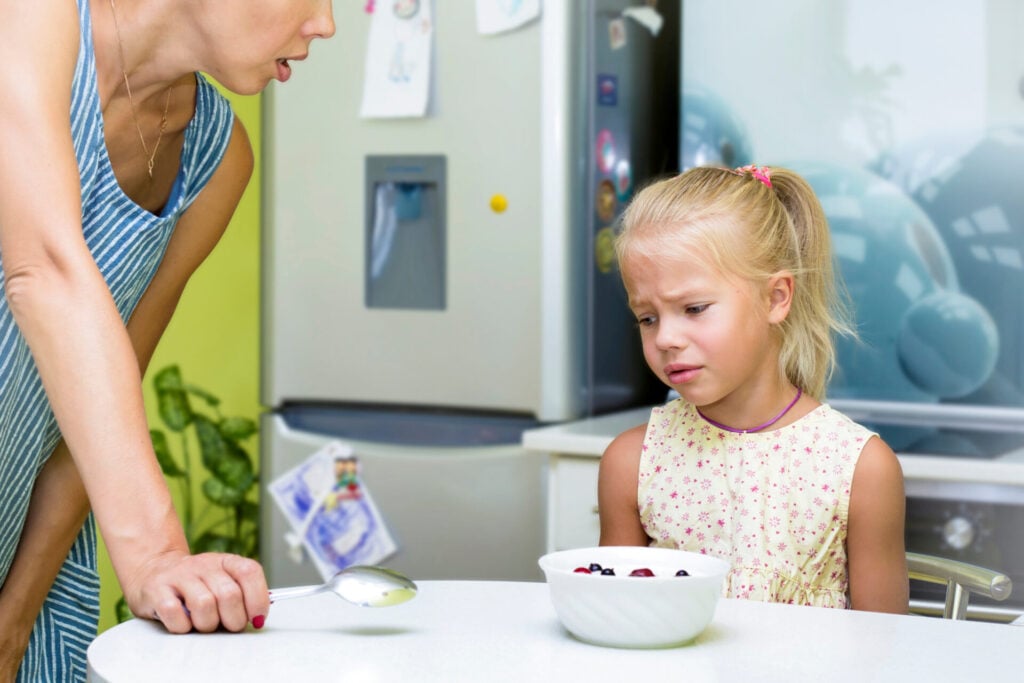
Withholding dessert, insisting on ‘just one more bite’, can all turn the table into a negotiation arena. These strategies for picky eating may seem logical, but psychologically, they amplify the anxiety thats driving the restriction.
‘If restricting food has become a way for a child to manage anxiety,’ she says, ‘then placing them in a high-pressure situation reinforces the association between food and stress. That can easily lead to a vicious cycle that becomes increasingly difficult to break, leaving everyone feeling anxious, exhausted and stuck.’
‘If restricting food has become a way for a child to manage anxiety, then placing them in a high-pressure situation reinforces the association between food and stress.
Dr Hollie Shannon, Clinical Psychologist, Sage Clinics
Over time, repeated ‘food battles’ over picky eating can take a significant emotional toll.
‘When we consider that most children require at least three meals a day, over 1,000 meals a year, even a fraction of those becoming emotionally charged can impact the entire family dynamic,’ she explains. ‘For some families who have been managing these challenges for years without appropriate support, children may begin to show heightened fear responses around food that resemble trauma-related symptoms.’
For a child repeatedly experiencing distress, shame, or pressure around eating, the dinner table can become a source of dread.
When It’s More Than Picky Eating
In some cases, persistent restriction may indicate Avoidant/Restrictive Food Intake Disorder (ARFID), an eating disorder that often develops in childhood.
‘Unlike typical picky eating, children with ARFID will not simply ‘grow out of it’,’ says Dr Shannon. ‘ARFID can seriously affect a child’s health and development if left untreated. Some children may experience significant weight loss or fail to grow as expected due to nutritional deficiencies. Others may avoid social situations, parties, and school camps because of anxiety about eating.’
Importantly, ARFID is not driven by body image concerns, as seen in other eating disorders; it comes from fear, sensory sensitivity, or low appetite.
So what can families do?
What Actually Helps
Prioritise family meals
‘Eating together as a family provides powerful opportunities for modelling balanced and flexible eating. When children observe parents and siblings eating a range of foods in a relaxed way, it supports curiosity and learning. Aim to make mealtimes as enjoyable as possible by engaging in lighthearted conversation or even incorporating some fun, simple games.’

Introduce new foods without pressure
‘It is completely understandable that parents may feel tempted to offer only preferred ‘safe’ foods to avoid conflict,’ she says. ‘However, if novel foods are no longer offered, then children will never have the opportunity to expand their eating.’
The ‘two plate’ approach
‘Consider using a ‘two plate’ approach at dinner,’ she explains. ‘One plate with your child’s usual meal, and a small separate ‘trying plate’ with a novel or less preferred food.’
Use the 5 senses
‘Encourage exploration using the five senses – looking, touching, smelling, and, if ready, licking or tasting. Let your child know that tasting is encouraged but not forced, and that it is okay to spit the food out if needed.’
Address the anxiety
‘Helping children understand what anxiety is, and how it shows up in their body — a tight throat, a tummy ache, a racing heart — can be empowering,’ she says. ‘Teaching simple coping strategies, such as deep breathing or calming self-talk, can reduce anxiety around food and build broader emotional regulation skills.’
Recalibrate expectations
‘Change with feeding difficulties is gradual. Some days your child may feel curious and brave; other days they may not. Many children with longstanding eating challenges may never accept the same range of foods as peers — and that is okay. The primary goal is not ‘eating everything’, but ensuring your child ‘eats enough’ to support healthy growth, development, and participation in daily life.’

Dr Hollie Shannon is a Clinical Psychologist at Sage Clinics with over a decade of experience working with children, adolescents and adults with eating disorders, anxiety and body image concerns. Originally from Australia, she previously worked at the world-renowned Maudsley Hospital Eating Disorders Service in London and specialises in evidence-based approaches including CBT and Family-Based Treatment.
Dr Shannon is DHA-registered and sees clients at Sage Clinics in Downtown Dubai. To learn more or book an appointment, visit sage-clinics.com or contact +971 4 575 5684