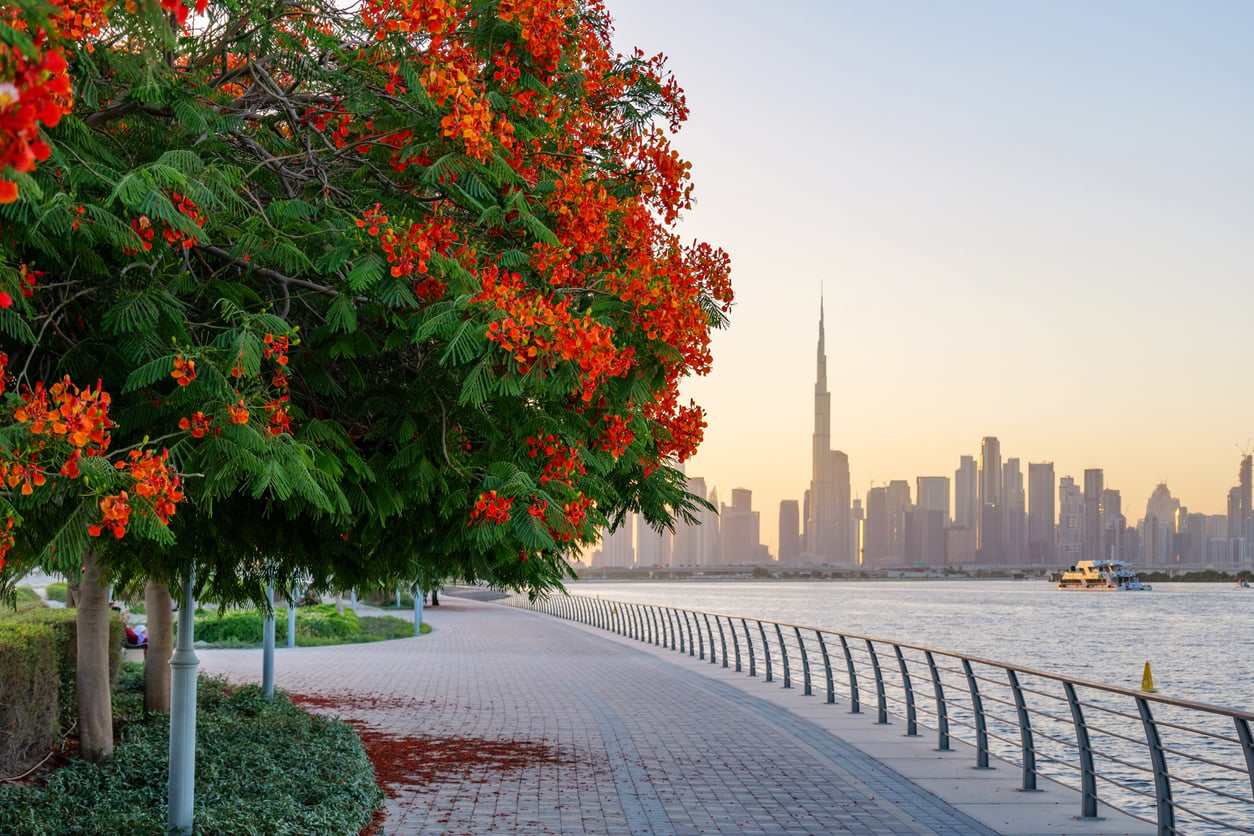
The UAE is inviting residents to roll up their sleeves and get planting as the country’s 47th Planting Week begins today, 2 November, bringing a nationwide programme of environmental activities, conservation workshops and volunteering opportunities to all seven emirates.
Organised by the Ministry of Climate Change and Environment (MOCCAE), the annual initiative runs until 8 November under the theme Together, Let’s Plant the UAE, encouraging individuals, families, schools and businesses to play a more active role in protecting the country’s natural environment.
But this year’s campaign is about considerably more than adding a few extra trees to the landscape. Against a backdrop of rising temperatures, biodiversity loss and increasing pressure on natural resources, the initiative highlights the importance of expanding green spaces, restoring native ecosystems and making the UAE’s cities more resilient to climate change.
And some of the country’s environmental ambitions are substantial.
Dubai’s Ambitious Greening Plans
Dubai Municipality has revealed that it is working towards increasing the total number of trees in the emirate to approximately 3.5 million by 2040.
The municipality also aims to expand green and landscaped areas by around 69 per cent, reaching 187 million square metres as part of the Dubai Parks and Greenery Strategy 2040.
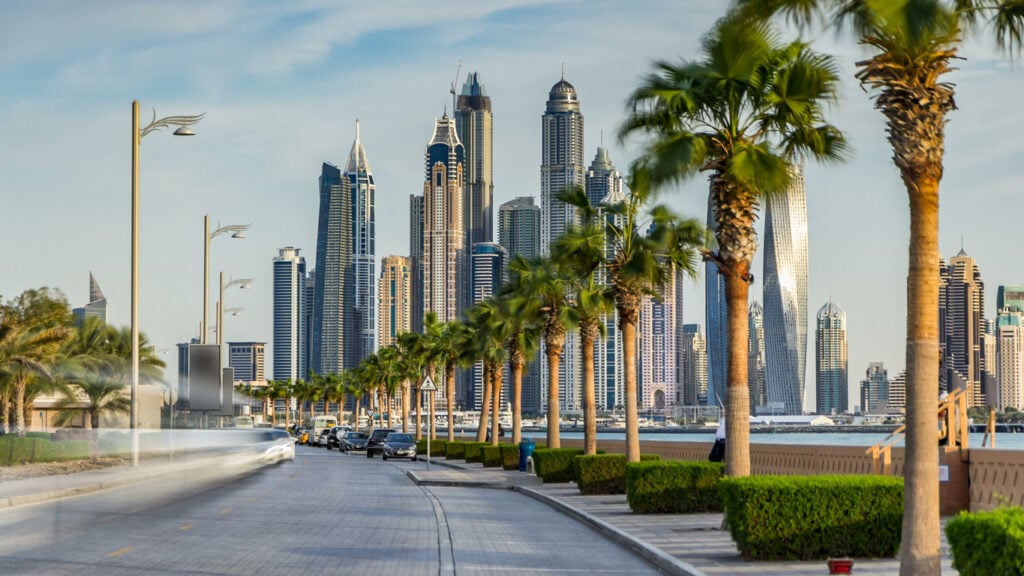
The plans align with the Dubai 2040 Urban Master Plan, which places greater emphasis on accessible green spaces, improved public environments and more sustainable urban development.
For residents accustomed to the city’s soaring summer temperatures, the benefits of more tree cover go well beyond aesthetics. Trees provide shade, help moderate temperatures and reduce the urban heat island effect, where roads, buildings and other hard surfaces absorb and retain heat. They also improve air quality, stabilise soil and create habitats for birds, insects and other wildlife.
‘Expanding vegetation cover and green spaces strengthens our capacity to adapt to climate change and protect biodiversity,’ said Dr Amna bint Abdullah Al Dahak, Minister of Climate Change and Environment.
‘Planting Week puts this approach into practice through a national effort that brings together federal and local action with contributions from the private sector and the community. We are committed to supporting this expansion through the selection of species suited to our environment, efficient water use and continued care, ensuring that the benefits of green spaces endure and extend to future generations.’
Abu Dhabi’s 75 Million Mangroves
While Dubai focuses on expanding urban greenery, Abu Dhabi has been making significant progress in restoring some of the UAE’s most valuable coastal ecosystems. According to the Environment Agency – Abu Dhabi, more than 75 million mangroves have already been planted, contributing towards the UAE’s national target of 100 million.
Mangrove forests are particularly important in coastal environments, providing nursery habitats for marine species, supporting biodiversity, storing carbon and helping protect shorelines from erosion.
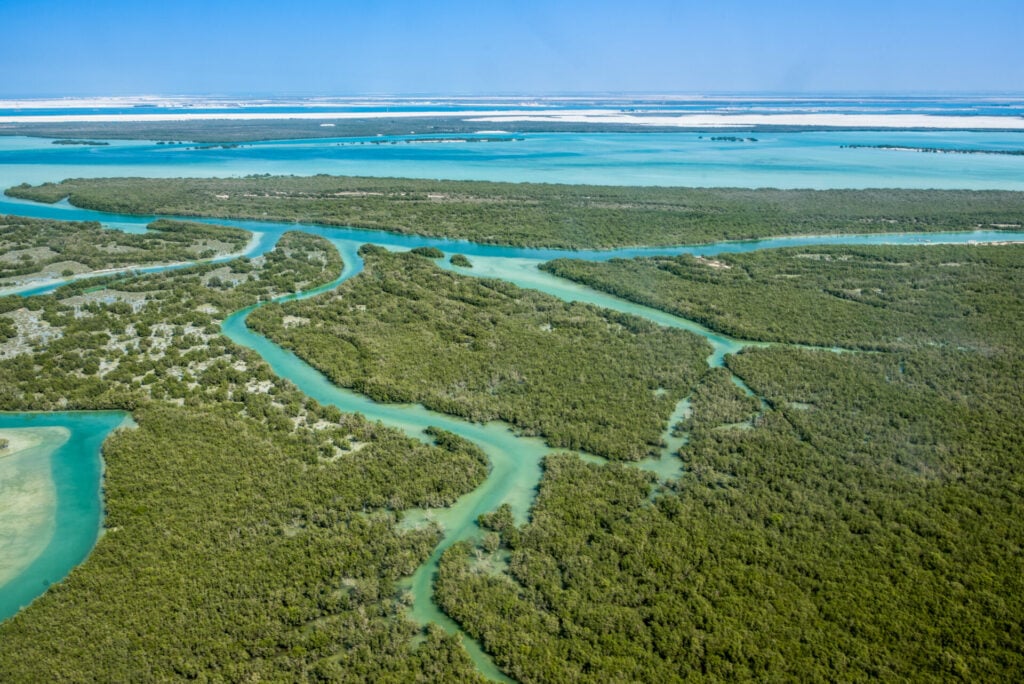
The emirate has also cultivated and restored more than 1.8 million coral colonies, with ambitions to exceed four million by 2030.
These efforts are complemented by seagrass restoration programmes and the establishment of a Seed Preservation Centre in Al Dhafra, which supports the conservation and propagation of native plants.
Together, the projects demonstrate how environmental restoration can extend from the desert to the sea, strengthening ecosystems that are increasingly vulnerable to climate change.
One of the most important messages emerging from this year’s Planting Week is that successful tree planting requires more than simply putting seedlings into the ground. In an arid country where water is a precious resource, choosing species suited to the local climate is essential.
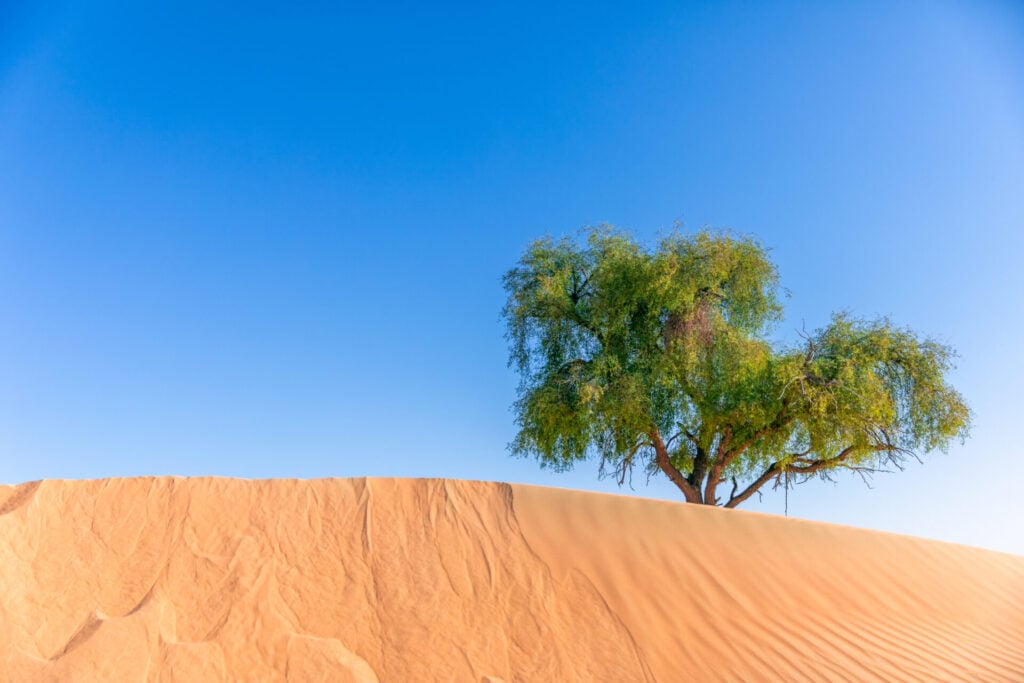
MOCCAE is encouraging the planting of native trees such as ghaf, sidr and samar, alongside mangroves in suitable coastal environments.
Native species are generally better suited to local environmental conditions than poorly adapted ornamental varieties, although appropriate planting locations, water management and continued maintenance remain essential.
Getting Families Involved
With 2026 designated the UAE’s Year of Family, this year’s programme places particular emphasis on encouraging parents and children to participate together.
Across the emirates, activities will include community planting campaigns, workshops on native seeds, environmental awareness sessions, agricultural exhibitions and volunteering opportunities.
Children will be encouraged to plant seedlings, monitor their growth and learn about responsible watering and long-term plant care.
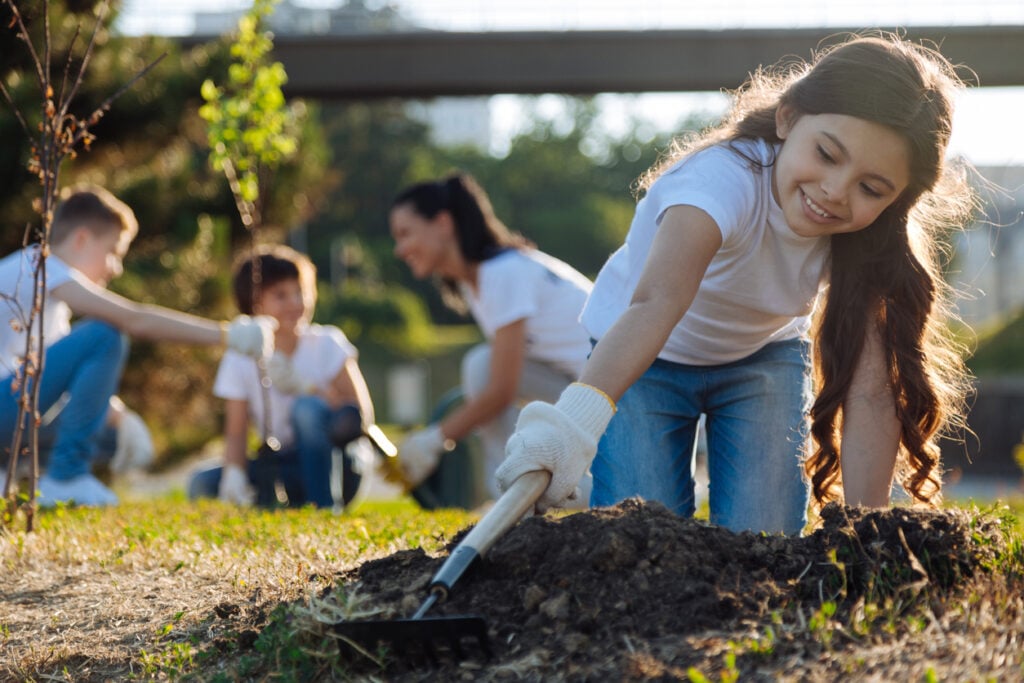
Workshops will also help women develop gardening skills, including selecting suitable plants and maintaining home gardens.
In Sharjah, the Environment and Protected Areas Authority is planning educational activities for students, young people and families, while Ajman is preparing a programme of community initiatives with a particular focus on family participation.
Fujairah is also highlighting its ongoing agricultural projects, including Women Farmers of Tomorrow, an initiative launched in 2025 to encourage Emirati women’s participation in agriculture and sustainable food production.
The Fujairah Environment Authority reports that its environmental initiatives have already resulted in more than 1,000 trees being planted, involving over 3,000 participants and 16 educational institutions.
Beyond Planting Week
Although the national campaign lasts just seven days, its organisers are keen to emphasise that caring for the environment should not be limited to an annual event.
Residents are encouraged to participate through local volunteering opportunities, planting suitable trees at home and helping maintain existing green spaces.
For the UAE, where urban expansion and environmental conservation must increasingly coexist, the long-term success of greening initiatives will depend on selecting the right species, managing water responsibly and ensuring that new vegetation survives.
Because while planting a tree takes only a few minutes, nurturing it into a thriving part of the landscape requires a commitment that lasts for years.
UAE Planting Week 2026 runs from 2–8 November. Residents can look out for activities organised by their local municipalities and environmental authorities.