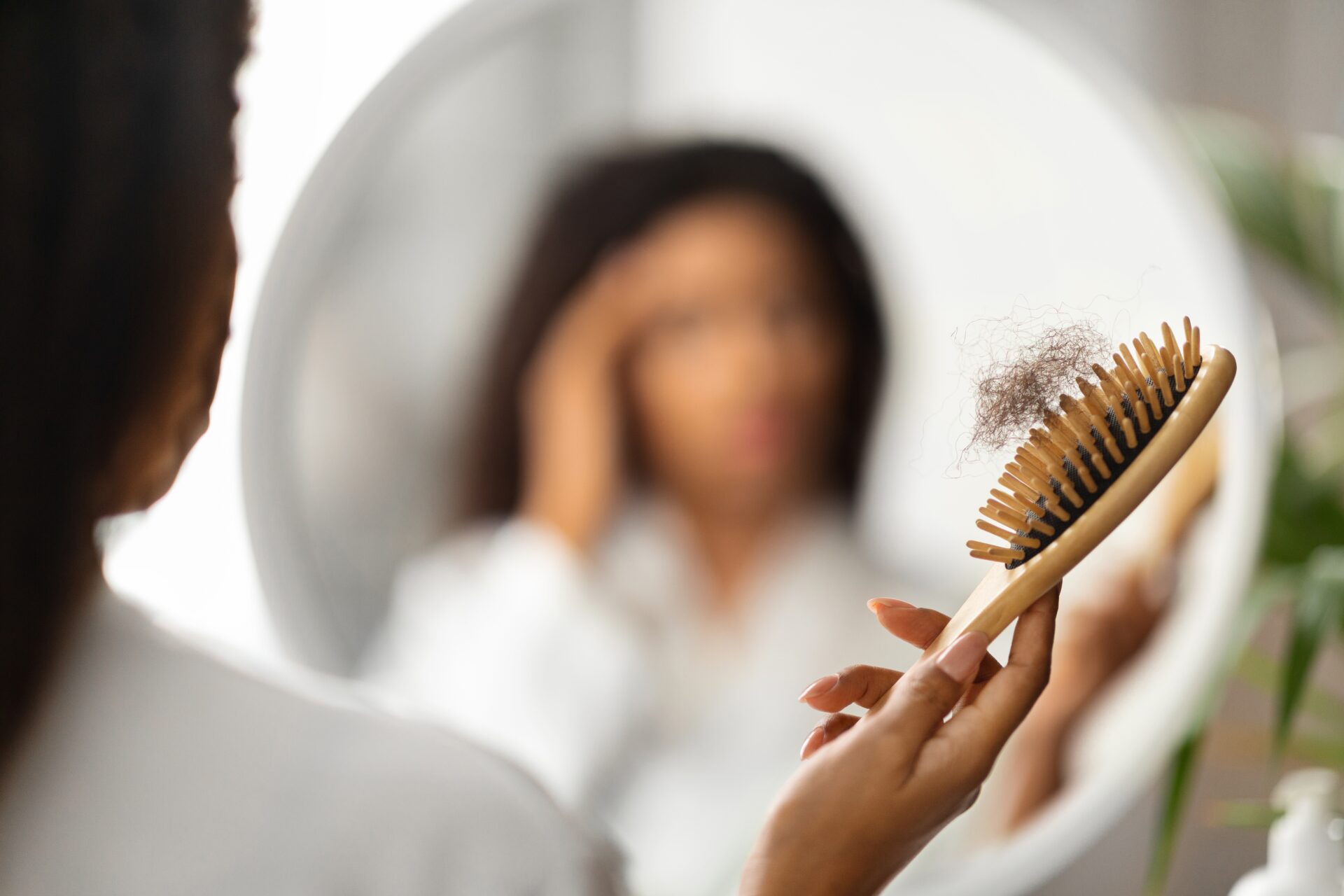
For many, hair loss happens suddenly. More strands fall in the shower, your brush needs clearing more than usual, or there’s a noticeable shift in texture. The instinct is to blame any new products, a change in water, or something environmental. But often, the trigger sits elsewhere entirely. Stress.
According to Maria Dowling, founder of Maria Dowling Salon Dubai, hair is often one of the first places internal imbalance becomes visible. ‘Hair is incredibly responsive to what is happening internally,’ she tells The Ethicalist.
‘During challenging times, when stress levels remain elevated, the body shifts its focus toward essential functions. Hair growth becomes secondary, which is why many people begin to notice increased shedding.’
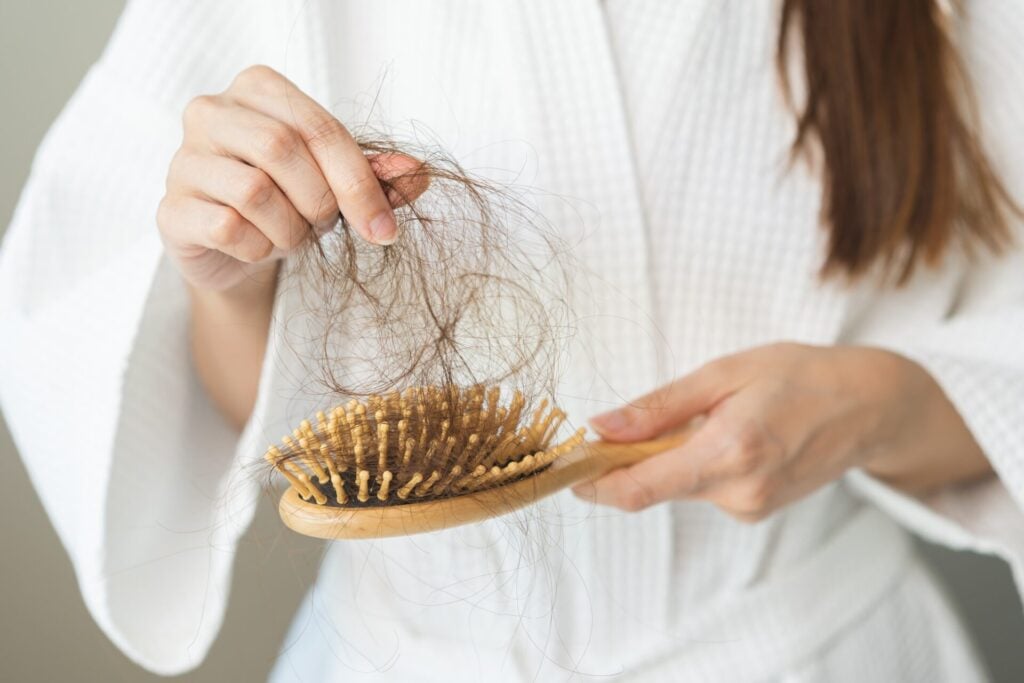
The condition most commonly associated with this is telogen effluvium, a form of diffuse hair shedding triggered by physical or emotional stressors. And it doesn’t behave as people expect; rather than happening immediately, it tends to appear weeks or even months after the initial trigger.
Research suggests that significant stress can push up to 70 per cent of hair follicles from the active growth phase into the resting phase, leading to noticeable shedding. What makes this particularly difficult to identify is the delay.
‘Hair loss often feels sudden, but biologically it is delayed,’ explains Maria. ‘What clients are seeing now is often the result of stress their body experienced weeks or even months earlier.’
‘Hair loss often feels sudden, but biologically it is delayed,’ explains Maria. ‘What clients are seeing now is often the result of stress their body experienced weeks or even months earlier.’
That disconnect is why so many people struggle to pinpoint the cause. By the time shedding begins, life may have stabilised, routines may be back to normal, and yet the body is still catching up.
Environmental factors
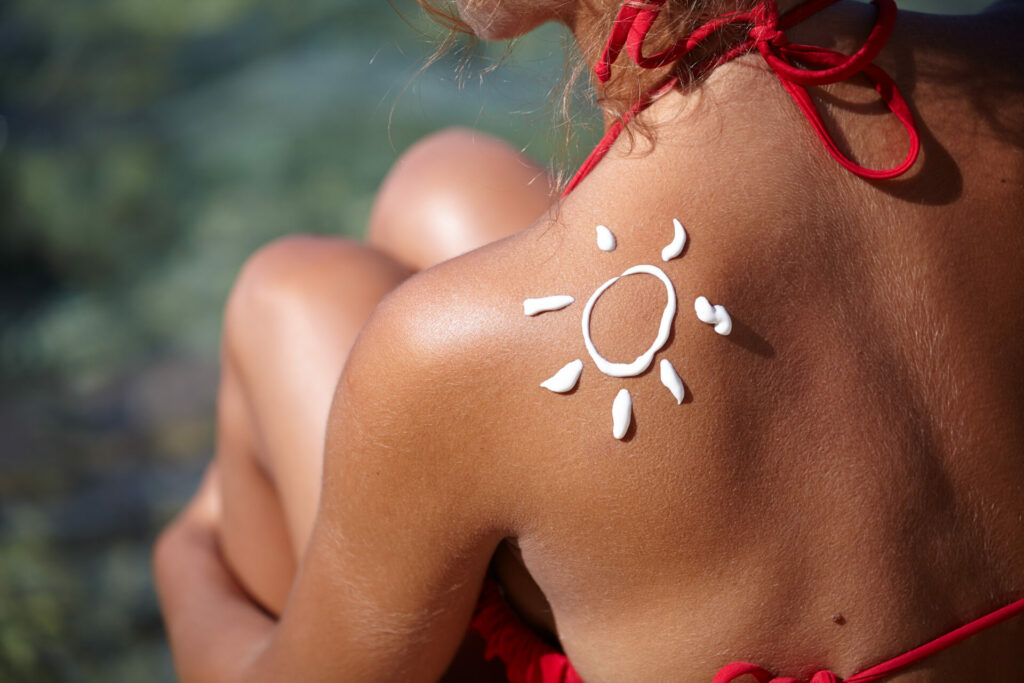
In places like the UAE, that internal stress is often compounded by environmental pressure. High UV exposure, extreme heat, humidity fluctuations, and the constant shift between outdoor temperatures and heavily air-conditioned interiors all place strain on both the hair and scalp.
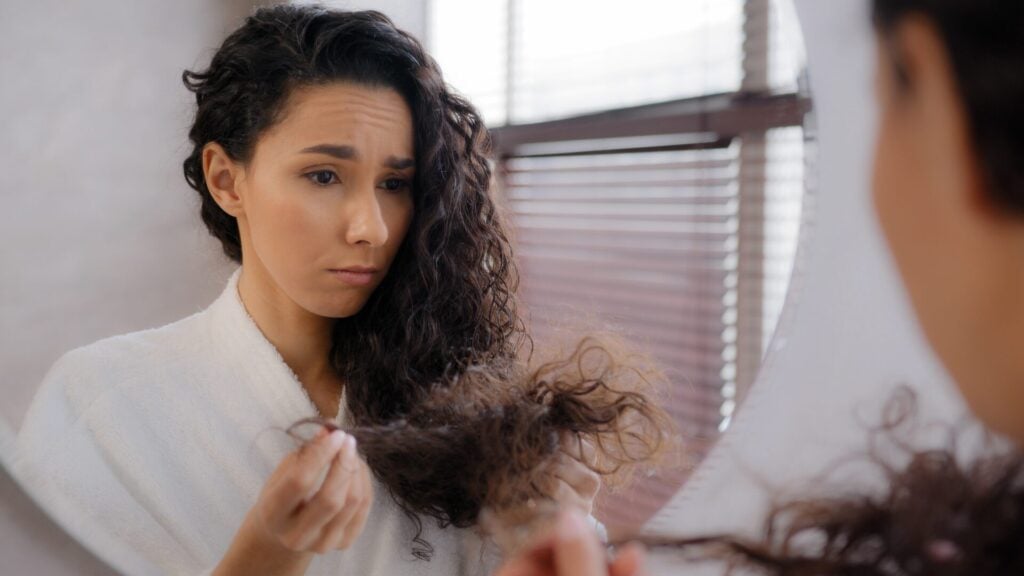
‘When internal stress is combined with environmental stress, the impact becomes much more noticeable,’ says Maria. ‘We often see increased shedding, breakage, and changes in texture during these periods.’
It’s a combination that affects how hair looks and behaves. Hair may feel drier, more fragile, and harder to manage. And because the change can feel sudden, the reaction is often to do more: more treatments, more products, more intervention.
Healthy hair is not about quick fixes, it’s about resilience. When we support the scalp, respect the environment we live in, and care for our overall well-being, the hair has an incredible ability to recover.’
But that, Maria suggests, is rarely the answer.
Protecting from Hair Loss
Instead, Maria advises focusing on scalp health as a long-term approach to resilience.
That means consistency over correction, and supporting the scalp through regular care. Reducing heat styling and physical stress on already fragile strands. Protecting hair from UV exposure. And, crucially, addressing the broader picture—sleep, nutrition, and stress management.
‘Hair health cannot be separated from lifestyle,’ Maria notes. ‘It’s about supporting the body as a whole, not just treating the symptom. Healthy hair is not about quick fixes, it’s about resilience. When we support the scalp, respect the environment we live in, and care for our overall well-being, the hair has an incredible ability to recover.’
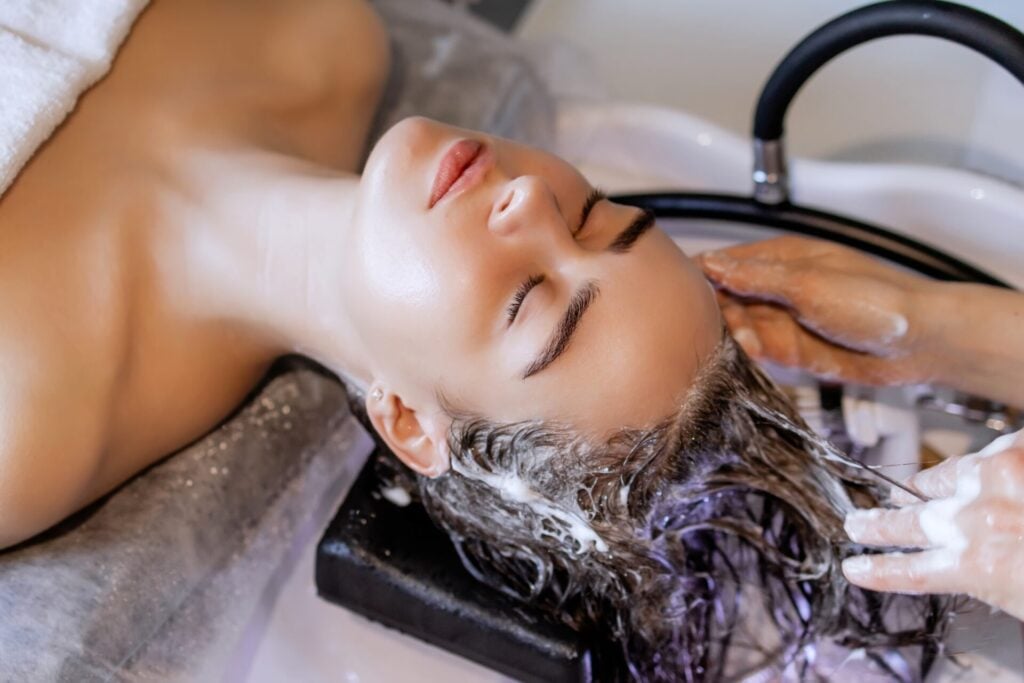
That last point is important. Because while stress-related hair loss can feel alarming, particularly when it appears without warning, it is in most cases temporary. The hair cycle resets once the body returns to balance.
What lingers, however, is the psychological impact. Changes in thickness or texture can feel disproportionate to what’s physically happening. It’s not just about appearance; it’s about familiarity and confidence.
‘Hair is closely tied to identity,’ explains Maria. ‘ So reassurance is important. In most cases, stress-related hair loss is temporary, and the hair will recover once balance is restored.’
That reassurance matters, particularly now. Because while stress has always played a role in how the body functions, there’s a growing sense that it’s no longer episodic; it’s constant. Low-level, ongoing, and often normalised. Hair might seem like a small thing, but it’s often where the body asks for a bit more care.
For more details visit mariadowling.com