
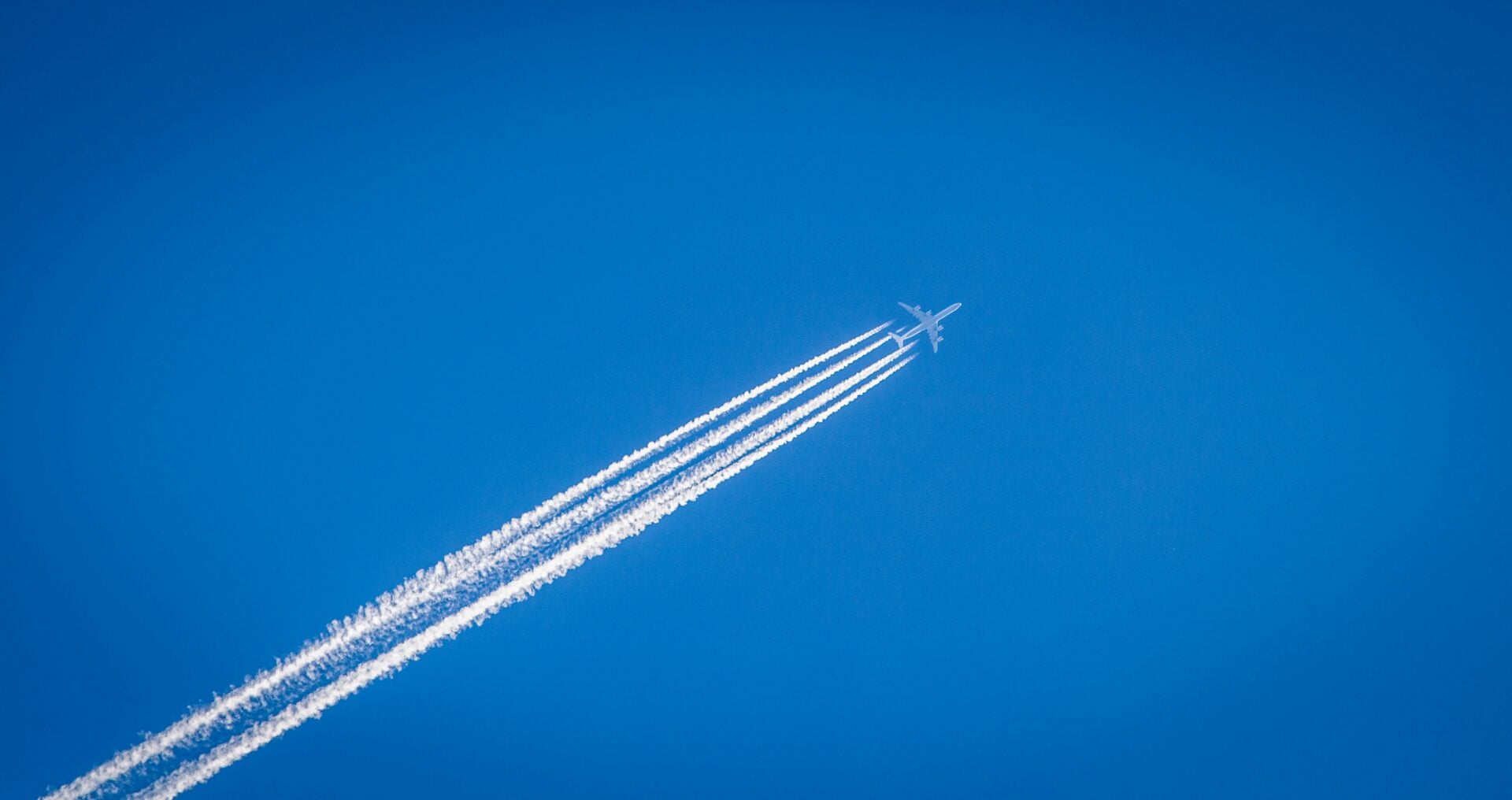
In a trial to address the global warming impact of contrails, aircraft flying across the North Atlantic will be rerouted.
Starting in November, air traffic controllers managing the Shanwick airspace on the eastern side of the North Atlantic will advise planes to adjust their altitude to avoid creating fresh condensation trails.
The controllers will use AI-generated forecasts from Google that predict where contrails will form across the region west of the British Isles and south of Iceland.
‘We can predict the regions that are going to form persistent climate-warming contrails, and we can re-route planes around them,’ Marc Shapiro, researcher at Contrails.org, said at a press briefing held on 17 August.
The 30-month Operation Blue Skies project brings together Google, the UK government, the Met Office, air traffic control provider National Air Traffic Services (NATS) and researchers at the University of Cambridge and Imperial College London.
The Menace of Contrails
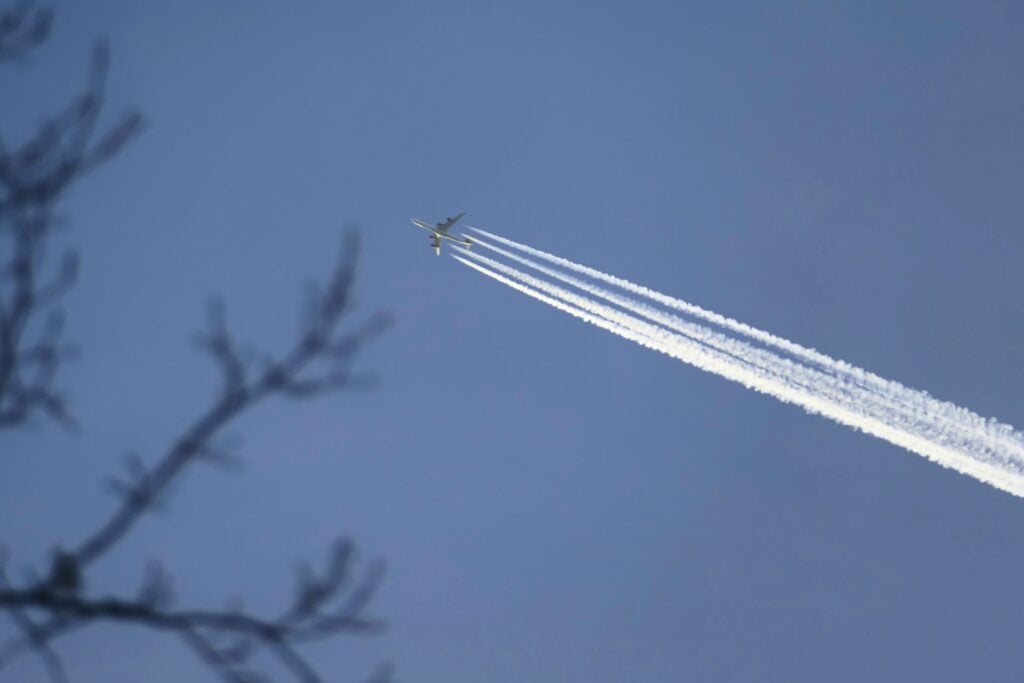
Contrails, or vapour trails, form when the heat and moisture released by aircraft engines encounter the extremely cold air found at cruising altitude, causing water vapour to condense and freeze into tiny ice crystals.
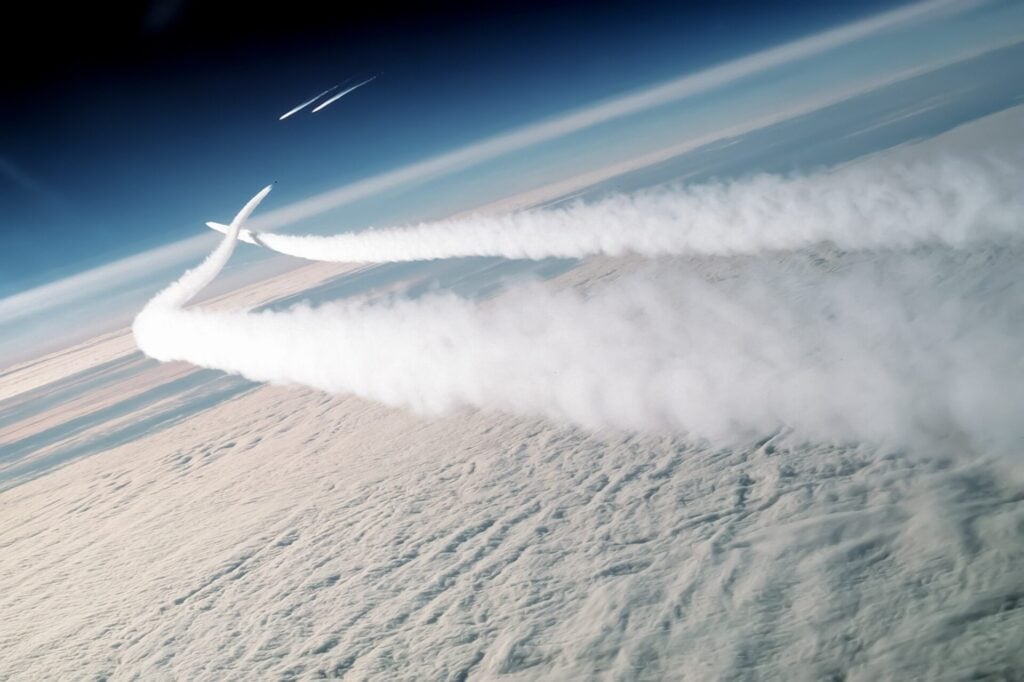
While some contrails vanish within minutes, others can linger in cold, humid atmospheric conditions, gradually spreading into cloud-like formations.
During the day, they help reflect solar radiation back into space, which has a cooling effect. But they also trap heat below them, causing warming. Overall, contrails are thought to account for around one-third of aviation’s climate impact.
During the day, they reflect solar radiation back into space, which has a cooling effect, but they also trap heat below them, causing warming. Overall, contrails are thought to account for around one-third of aviation’s climate impact
Modelling suggests the Shanwick airspace accounts for about five per cent of global contrail warming, with most of this effect occurring during the winter season between November and February.
The idea is that if scientists can predict where contrails are likely to form, aircraft could avoid them.
Pilots entering the area will be instructed to adjust their altitude by up to 600m to avoid atmospheric conditions likely to produce contrails, using the same procedures air traffic controllers already use to help pilots avoid turbulence.
The £5 million Operation Blue Skies project will reroute flights in the evening and at night, when they have the greatest warming effect.
The trial will run over two four-month winter periods in 2026-2027 and 2027-2028, with approximately 20 to 40 test days each season.
Around 10,000 flights are expected to pass through the airspace during trial hours each year, and hundreds will need to be re-routed to produce a statistically significant data set for analysis.
Researchers from the University of Cambridge and Imperial College London will analyse the data.
The climate benefit of avoiding contrails outweighs any extra fuel burn from shifting flight paths, according to Paul Hodgson at Google UK, who explained during the briefing that rerouted flights may burn an additional 100 kilograms of fuel per aircraft, resulting in a few hundred kilograms of additional CO2 emissions.
Google’s AI-powered contrail forecasts have already been tested on individual flights, helping airlines and air traffic dispatchers plan routes before aircraft take off. Those earlier trials indicated that altering a flight’s route could reduce contrail formation by around 50 to 60 per cent.
The new project takes the technology considerably further. Rather than applying forecasts to selected flights, they will be deployed across an entire section of airspace, with aircraft required to follow altitude changes instructed by air traffic control, rather than airlines choosing whether to participate.
The trial also comes at a time when the UK government is supporting airport expansion, prompting a broader debate about whether technological advances can reduce aviation’s environmental footprint enough as the number of people flying continues to rise.
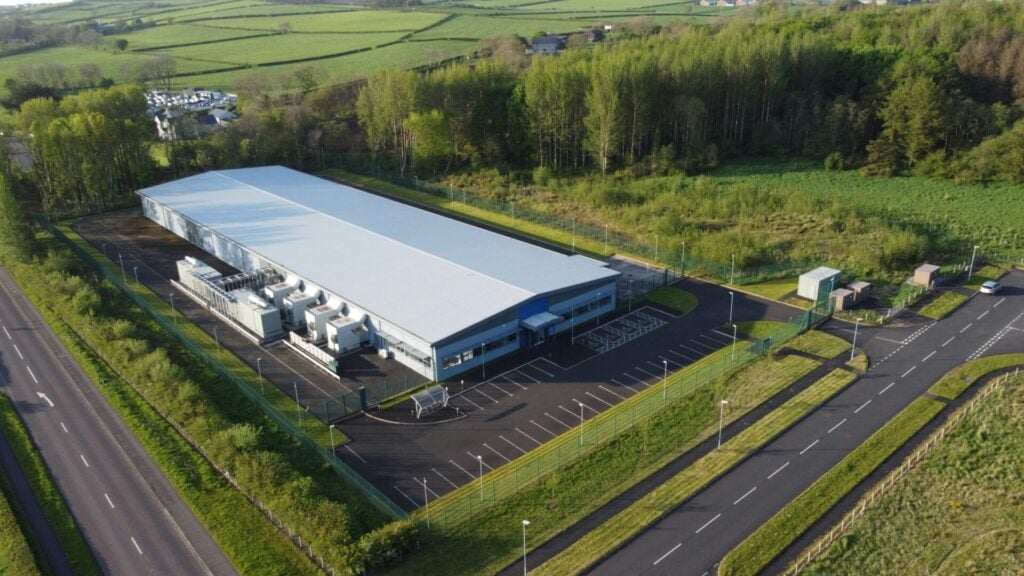
Google’s involvement also creates a further climate contradiction. The tech giant, alongside other major technology companies, is investing billions in new data centres to support the rapid growth of AI. These vast facilities require enormous amounts of energy, fuelling environmental campaigners’ concerns about the technology sector’s growing contribution to climate change.
The results of Operation Blue Skies are expected to be published in academic literature and made available to the wider scientific community.