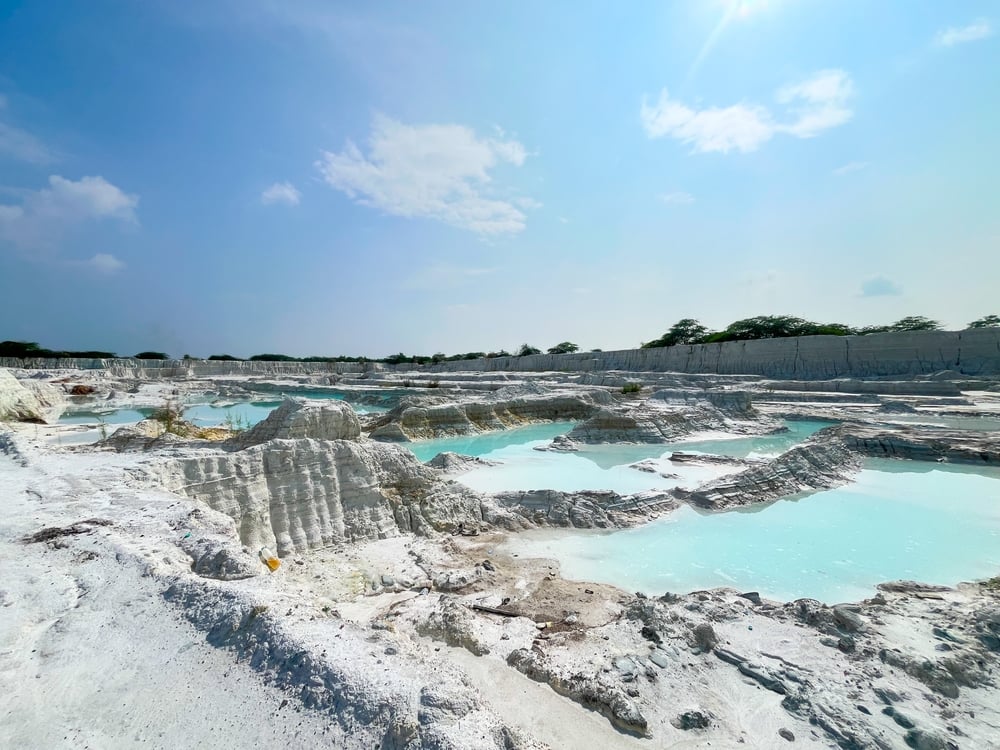
A vast expanse of white marble waste, dubbed India’s ‘Moon Surface’, has become an unlikely tourist attraction, drawing filmmakers and social media influencers to a landscape that looks like a snow-covered glacial valley.
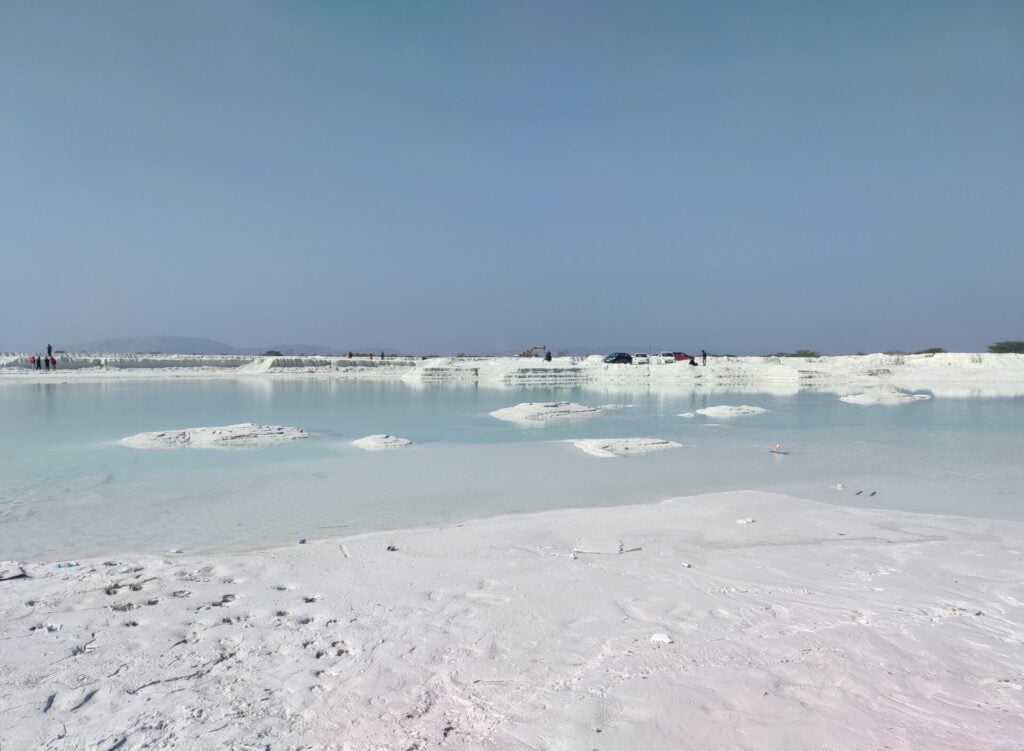
The site in Kishangarh, a major marble-processing hub in the northwestern state of Rajasthan, is blanketed in white slurry and discarded stone generated when marble and granite blocks are cut and polished.
After rainfall, water collects in the small holes between the waste piles, forming bright blue pools that create the illusion of a moon surface.
However, environmental watchdogs have highlighted the site’s health risks and repeatedly warned about the environmental impacts of marble waste disposal in the region.
Fine marble dust can become airborne, posing respiratory risks, while slurry dumped onto the land can seep into surrounding soil and water systems. Studies have also identified groundwater contamination, including increased salinity and hardness and the presence of some heavy metals.
The scale of the problem is particularly significant in Rajasthan, one of India’s major marble-producing regions, where large quantities of marble slurry and stone waste are generated by the industry each day.
India’s top environmental court, the National Green Tribunal, has ordered a series of corrective measures, including guidelines aimed at promoting the re-use of slurry instead of uncontrolled dumping.
‘There is no engineered liner system, no decanting wells, no dust suppression mechanisms, no monitoring of air or groundwater, and no protective green belt,’ it said in a statement.
Spread across 33 hectares, the area receives more than 5,500 tonnes of slurry every day from over 1,200 processing units, making it one of Asia’s largest disposal sites.
‘If left unchecked, Kishangarh risks becoming a toxic, unliveable zone, with irreversible damage to its environment, economy, and public health’
Laxmi Kant Sharma, Central University of Rajasthan
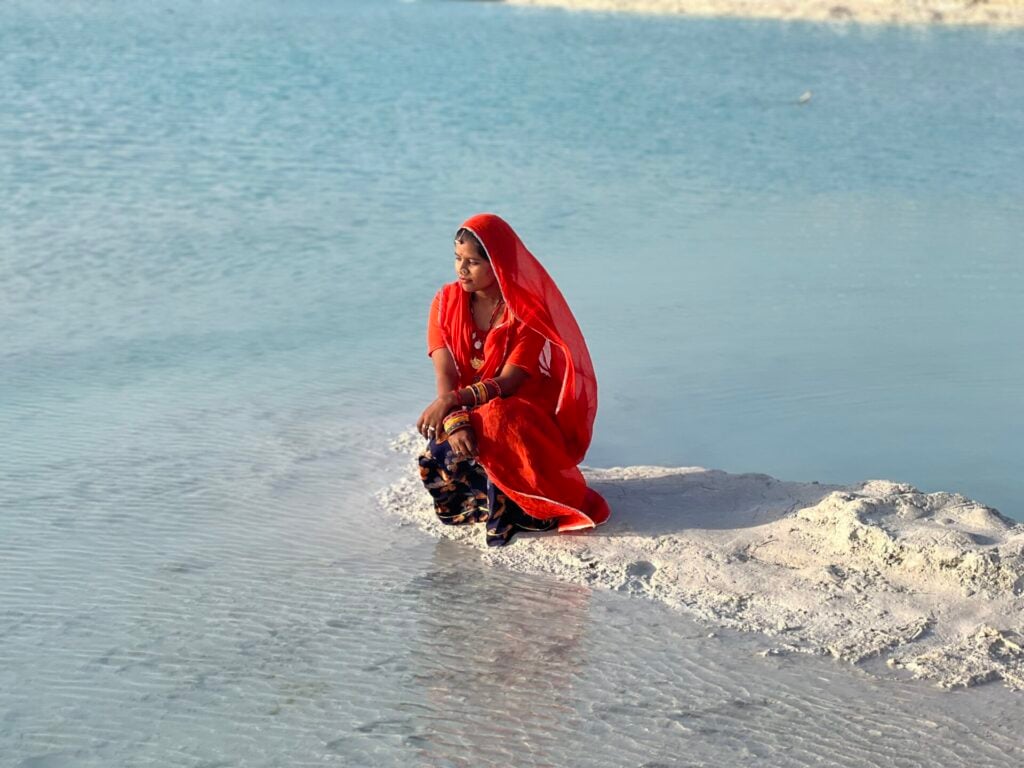
The industrial wasteland – called Rajasthan’s Moon Surface – strongly contrasts with the region’s otherwise arid landscape and is popular with couples who pose among the chalk-white mounds for pre-wedding photographs.
Bollywood filmmakers and music-video crews use the terrain as a backdrop. Comedy movie Kis Kisko Pyaar Karoon was filmed at the site and rapper Yo Yo Honey Singh also used it for a promotional video.
Expert concern over ‘Moon Surface’
Sampat Rai Sharma, CEO of the Kishangarh Marble Association (KMA), which represents the companies using the site, said: ‘The slurry, when first produced, is wet. Then the tankers empty it on to the ground, and it dries up as the water evaporates in the sunlight.’
Laxmi Kant Sharma, an ecologist who heads the department of environmental science at the Central University of Rajasthan, conducted the first comprehensive study of environmental and health issues.
Initial findings suggest over 200,000 nearby residents and industry workers are exposed to the slurry through direct contact or indirect exposure via the contamination of air, water, and crops.
‘If left unchecked, Kishangarh risks becoming a toxic, unliveable zone, with irreversible damage to its environment, economy, and public health,’ said Sharma.
‘Urgent policy enforcement, waste management infrastructure, and industrial accountability are critical to avoid long-term catastrophe.’
The concerns have led some social media influencers to say the area should not be promoted as a tourist destination, with one Instagram content creator sharing a video of the landscape with his more than 100,000 followers.
Sunil Singh said that the place is ‘quite surreal’, but added: ‘It is, at the end of the day, industrial waste—not designed or maintained for safe tourism. Romanticising it without acknowledging the environmental damage could set a harmful precedent.’