Most homeowners pick a roof the way they pick a paint colour: whatever looks decent and fits the budget. That’s a mistake, and it’s costing you twice, once at the register and once on your utility bill. The materials sitting over your head shape how much heat escapes in January, how much runoff floods your gutters in a downpour, and how many tons of waste end up in a landfill when the thing finally gets torn off.
None of that is abstract. It’s the difference between a $180 heating bill and a $340 one, and between a roof that lasts 15 years and one that outlives your mortgage.
So here’s what I want to walk you through: how roofing materials actually perform on the sustainability front, where the trade-offs hide, and how to choose without getting buried in sales jargon.
What Makes a Roof ‘Sustainable’ Anyway?
Sustainable is one of those words that gets slapped on everything, so let’s anchor it to three things you can actually measure. Embodied carbon is the energy and emissions baked into making the material. Service life is how many decades it survives before it goes to the dump. Thermal performance is what it does for your home’s heating and cooling load while it’s up there.
A cedar shake roof might be beautiful and biobased, but if you’re re-oiling it every few years and it still doesn’t insulate well, the math gets murky
A roof wins on the sustainability front when it performs well across all three. A cedar shake roof might be beautiful and biobased, but if you’re re-oiling it every few years and it still doesn’t insulate well, the math gets murky. Conversely, a metal roof that lasts 50 years but ships from overseas carries its own carbon baggage. There’s no perfect material. There’s only the best fit for your climate, your budget, and how long you plan to stay put.
Asphalt Shingles: The Default Nobody Questions
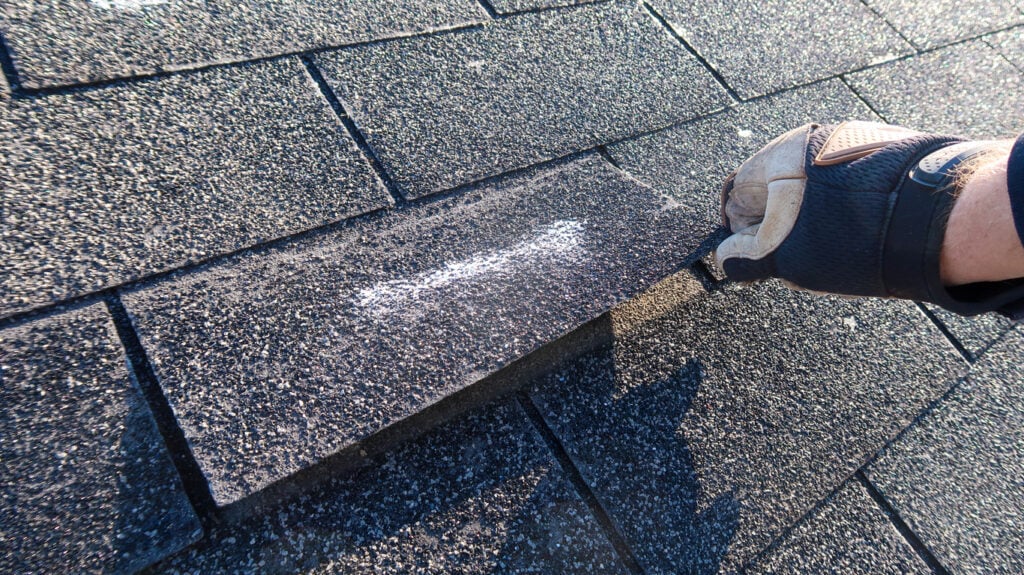
Roughly three-quarters of American homes wear asphalt shingles. They’re cheap, they’re everywhere, and they get replaced every 15 to 20 years like clockwork. That replacement cycle is the problem. Every tear-off sends hundreds of pounds of petroleum-based material to a landfill, and most of it never breaks down. The Environmental Protection Agency estimates that construction and demolition debris makes up a significant share of the national waste stream, and roofing shingles are one of the biggest contributors.
Roughly three-quarters of American homes wear asphalt shingles… and they get replaced every 15 to 20 years. That replacement cycle is the problem. Every tear-off sends hundreds of pounds of petroleum-based material to a landfill, and most of it never breaks down
Some manufacturers now offer shingles with recycled content, and a few recycling programs accept old shingles for road paving. But the infrastructure is patchy, and your contractor may or may not have access to it. Ask before you sign. If the guys pulling your roof can’t tell you where the old shingles are going, that tells you something. My take: asphalt is fine if you’re selling the house in five years. If you’re staying, the long-game math favours something more durable.
Metal Roofing: The Long-Haul Option
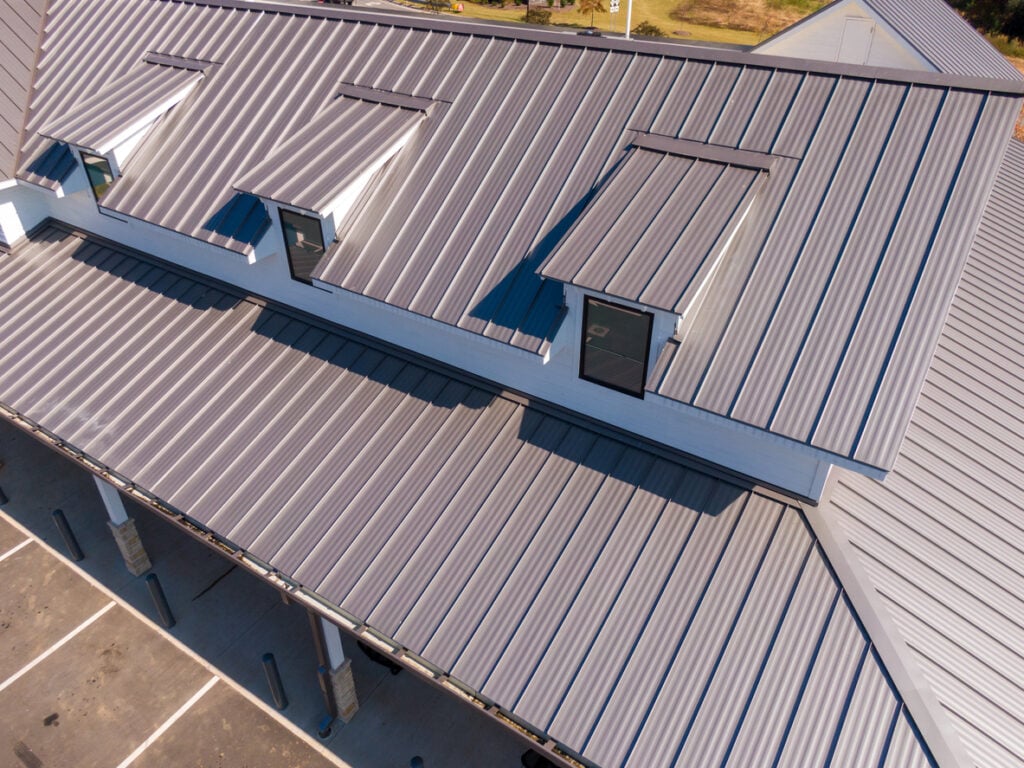
Standing seam metal roofs routinely last 40 to 70 years, and they’re often made with a high percentage of recycled steel or aluminum. When they finally do come off, they’re fully recyclable. That closed loop is why so many green builders default to metal.
They also reflect solar heat, which keeps attic temperatures down in summer. Pair one with proper insulation and you can cut your cooling load meaningfully. The Department of Energy has published guidance on cool roofs and their effect on home energy use, and the numbers are worth reading before you dismiss the upcharge. The Department of Energy is a solid starting place.
Where metal stumbles is cost and noise. You’ll pay two to three times what asphalt costs upfront, and in a heavy rain, the sound is noticeable unless you’ve got solid sheathing and insulation underneath. Some homeowners love it. Some don’t.
Natural and Synthetic Options
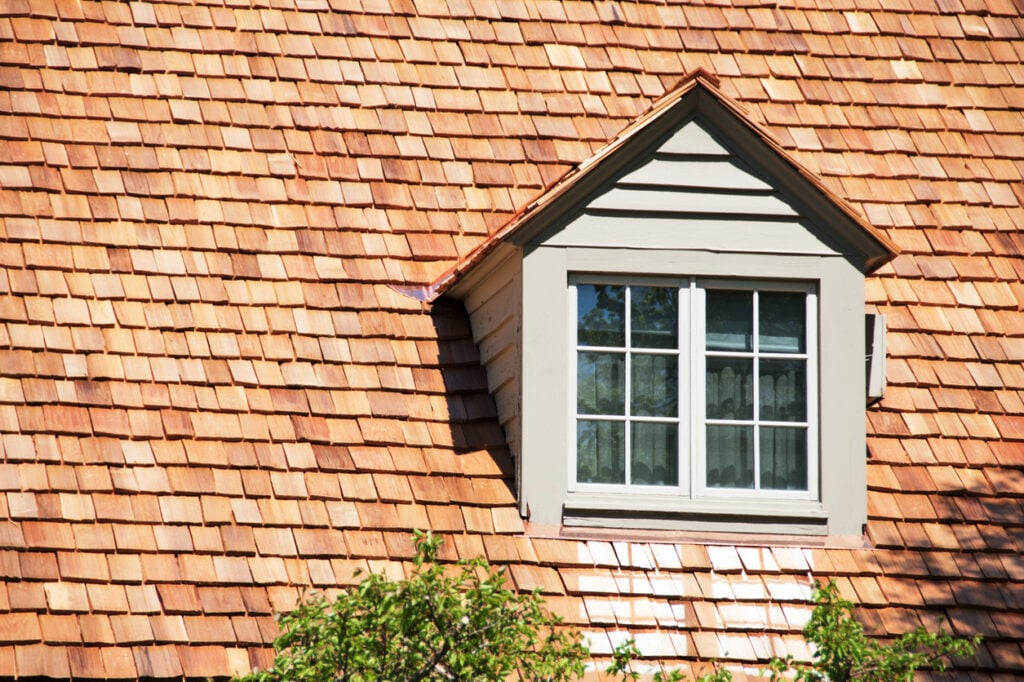
Cedar shake and slate are the classic premCedar shake and slate are the classic premium choices. Both look extraordinary. Both come with real maintenance demands. Cedar needs periodic treatment to fight rot and moss, and slate is so heavy that many older homes can’t structurally support it without reinforcement.
Synthetic cedar shake and slate have gotten surprisingly good. They’re made from recycled plastics and rubber, they mimic the look convincingly from the curb, and they weigh a fraction of the real thing. If you love the aesthetic but not the upkeep, this is the lane I’d point you toward.
Clay and concrete tile deserve a mention too, especially in hot, dry climates. They last decades and handle temperature swings without complaint. Just make sure your framing can carry the load.
A Quick Decision Framework
Here’s the sequence I’d walk any homeowner through before they commit:
- How long are you staying? Under 10 years, asphalt usually wins on pure economics. Over 20, metal or synthetic slate starts to make sense.
- What’s your climate doing? Heavy snow favors metal. Intense sun favors reflective surfaces. Constant rain punishes anything that traps moisture.
- What’s your attic situation? A great roof over a poorly insulated attic is a waste of money. Fix the insulation first.
- Where does the old roof go? Ask your contractor directly. A good one has an answer.
- What’s your runoff plan? Roofs shed enormous volumes of water. Gutters, downspouts, and drainage matter as much as the shingles.
Standards bodies like the National Institute of Standards and Technology publish research on building envelope performance that backs up most of what I just said. Worth a skim if you want the technical version.
Why Local Expertise Beats National Branding
Roofing is intensely local. The materials that work in Phoenix are wrong for Seattle, and the contractor who nails a job in one climate may botch it in another. That’s why I tell people to hire based on local track record, not glossy national ads.
If you’re in the Pacific Northwest, working with someone who understands moss, constant moisture, and short installation windows matters. Finding a kent roofing specialist, for example, means working with a crew that knows the specific drainage and material challenges of that region rather than applying a generic playbook. That local knowledge is worth more than any brochure claim. The same logic applies anywhere. Ask how many roofs they’ve done on your street. Ask what they’d put on their own house. The answers tell you more than any warranty document.
The Bottom Line on Roofing and Sustainability
Your roof is one of the few home purchases where the environmental choice and the financial choice often point the same direction. Longer service life means less waste and fewer replacements. Better thermal performance means lower bills. Recyclable materials mean a smaller footprint when the roof finally comes down. You don’t have to go full eco-warrior to make a smarter pick. You just have to ask better questions before you sign the contract.
So here’s the one to start with: when was the last time you actually looked at what’s sitting over your head?