
Is your heating bill making you sweat more than your radiators? Millions of UK households go through this dilemma every winter. You want your house to be warm and cosy, but you also don’t want a bill that shocks you.
Here’s the problem:
Most people estimate their thermostat setting. They turn it higher when they’re cold and never think about it again. That simple action can cost you hundreds of pounds annually.
Heating accounts for the largest proportion of most energy bills. On average across the UK, heating makes up approximately 55 per cent of household bills
The good news? There’s something called the Goldilocks zone. A temperature at which you’re comfortable and you’re using less energy. Find it. Nail it. And you hit two birds with one stone.
Time to dive in!
Inside this guide:
- Why Your Thermostat Setting Matters
- The Sweet Spot Temperature For Each Room
- Is A Smart Thermostat Worth The Fitting Price?
- 5x Simple Ways To Find Your Balance
Why Your Thermostat Setting Matters
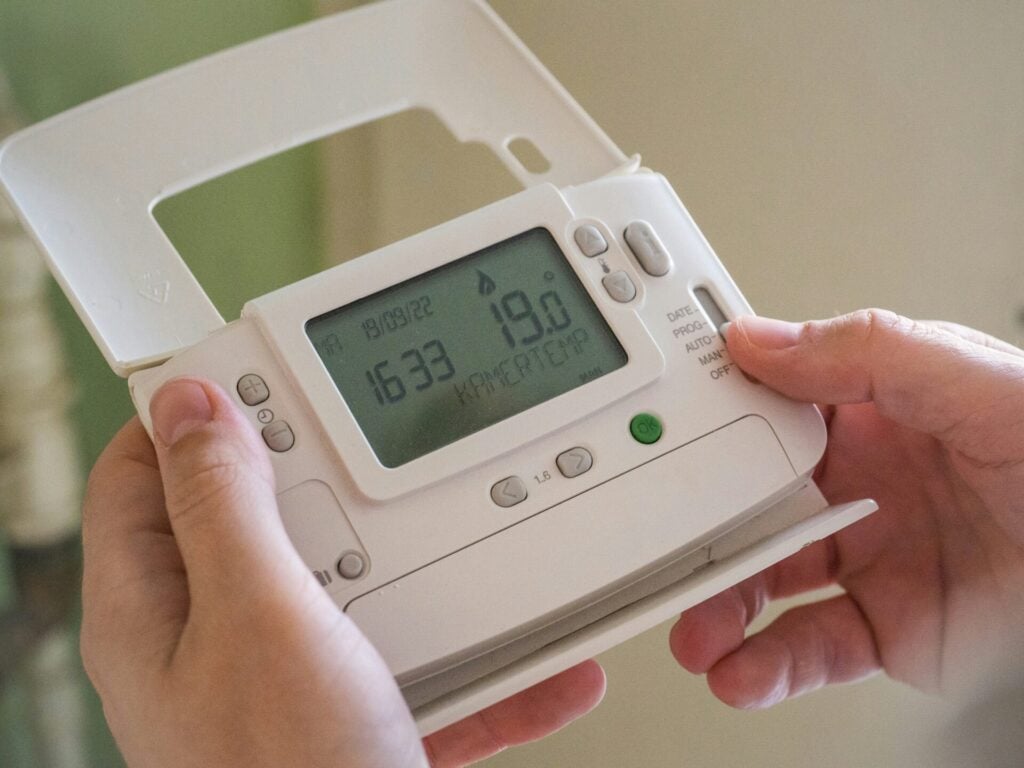
Heating accounts for the largest proportion of most energy bills. On average across the UK, heating makes up approximately 55 per cent of household bills.
Prices aren’t getting any cheaper either. Ofgem announced that the price cap will rise by 4 per cent from 1 October 2026, pushing the average household bill to £1,723 per year. That makes every single degree count.
Of course, a new study from Resideo revealed that 74 per cent of UK homeowners are concerned about their bills during winter. And many of them are starting to take control of their heating in a smarter way.
Not every room needs to be the same temperature. Heating your entire house like it’s one room is one of the biggest energy sins
If that sounds like you then firstly you should look at smart thermostat fitting price for your home. Cost of unit, labour and any rewiring adds up. Having an itemised list of smart thermostat installation prices allows you to work out how quickly you will be paid back by energy savings.
Hold off on buying one just yet! You need to figure out what temperature you want to reach first!
What’s The Heating Sweet Spot
The Energy Saving Trust recommends that for most homes, the optimum temperature is between 18 °C and 21 °C. That may not sound like much time to you, but here’s the thing…
Not every room needs to be the same temperature. Heating your entire house like it’s one room is one of the biggest energy sins.
Living Rooms
This is where you spend most of your time sitting still. Watching television, reading, chilling out. Since you aren’t physically active, you sense the cold more quickly. Target the higher end of the spectrum, that’s about 20°C|21°C.
Bedrooms
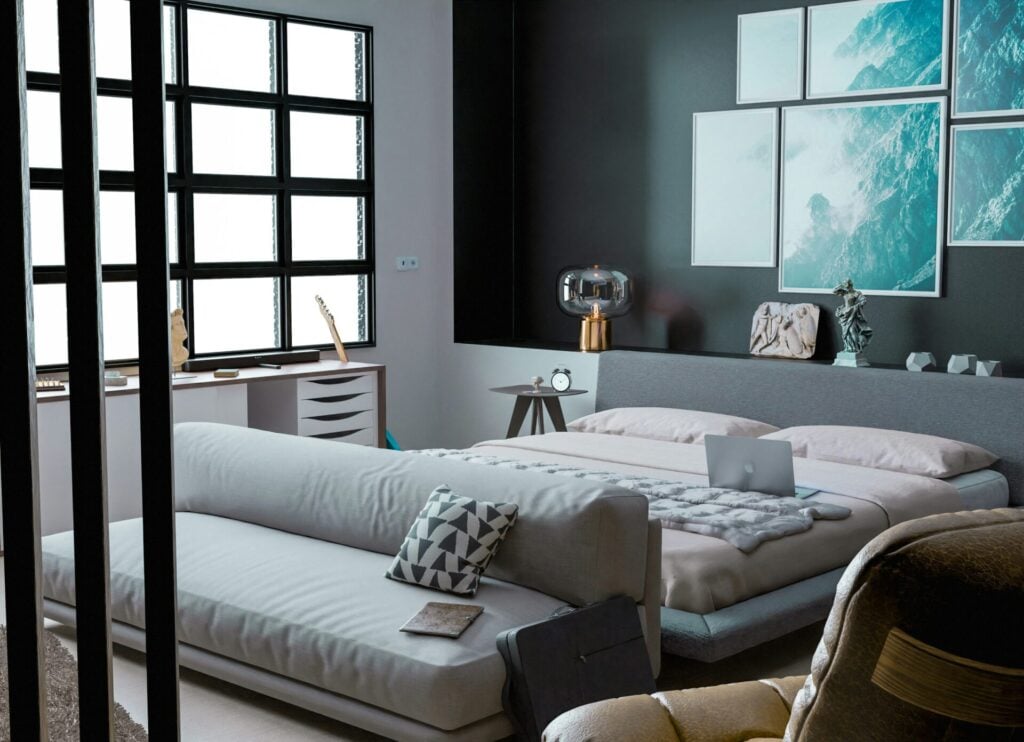
Cooler actually works better for you here. Most folks sleep better in a slightly cooler room, anyway. So 18°C should be sufficient, and a thick duvet will take care of the rest.
Spare Rooms & Hallways
Nobody lives in them, so why are you heating them as if they do? Shut the doors and turn the radiator valves down. Just make sure they don’t go stone cold in winter, as that dries the house out and causes damp.
Tip: Maintain living areas at 18°C/65°F or warmer if you have elderly people, infants, or anyone who is sick in your home. Health matters more than the money you save.
The Power Of One Degree
Want to know the easiest money you’ll ever save? Turn your thermostat down by just one degree.
The Energy Saving Trust says that’s the one thing you can change to reduce your energy bill by around 10 per cent. Plus it’s something nobody will notice after 48 hours.
Give it one week. If you feel okay after that week drop another degree. Continue until you feel it’s ‘just right’.
That point is your sweet spot. Pretty simple, right?
Is A Smart Thermostat Worth The Fitting Price?
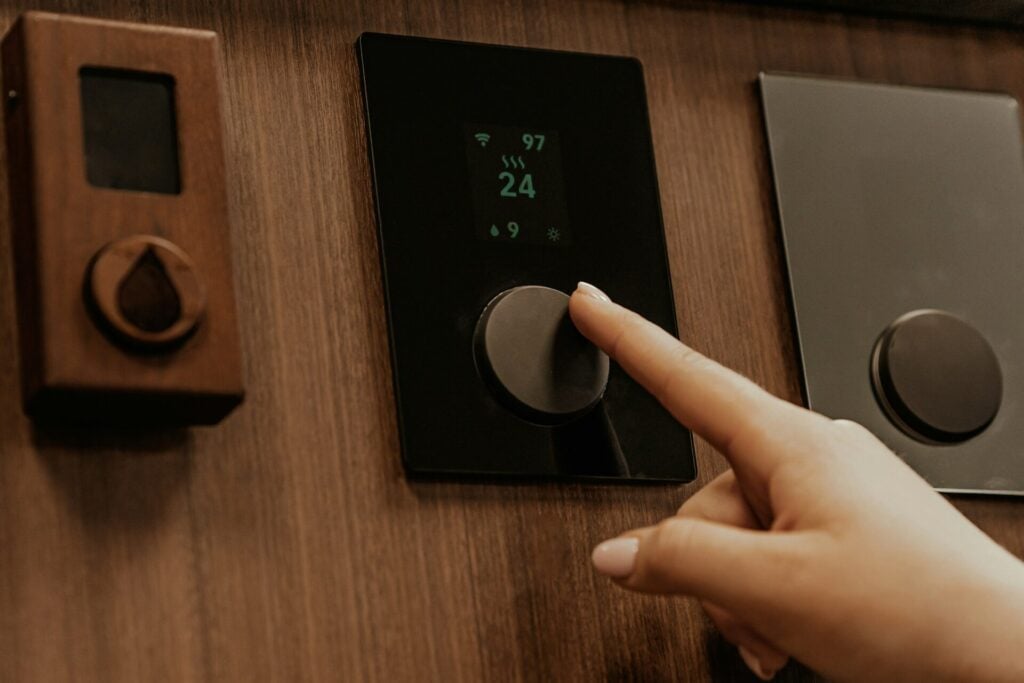
Here’s where things get interesting… A traditional thermostat does what you program it to do. A smart thermostat learns from you. It can:
- Heat your home on a schedule that fits your day
- Switch off when everyone leaves the house
- Let you control the heating from your phone
- Show you how much energy you’re using
The most appealing aspect is the elimination of waste. For example, you won’t heat an empty house if you forget to turn the thermostat down before leaving for work.
Is a smart thermostat worth the cost? If you own a typical household, then absolutely. Particularly if you spend a lot of time away from home or have erratic hours from day to day. The less predictable your schedule, the more you can save with a smart system.
Turning your thermostat up high does NOT heat your home faster. Your boiler heats at the same rate whether you set it to 21°c or 30°c. All you’re doing is instructing it to run for longer
If you are already disciplined about being on a schedule and remembering to turn the heating down, then your savings will be less. Not likely to change your life… but still worth doing.
5x Simple Ways To Find Your Balance
Ready to find your own sweet spot? Here’s how to do it.
1. Start At 21°C And Work Down
Keep your thermostat set to 21° C. Lower it by one degree every week until you reach the coolest temperature that feels comfortable. Stay at that temperature.
2. Use A Heating Schedule
Your house doesn’t have to be warm when you’re sleeping or at work. Program your heat to turn on 30 minutes before you wake up and 30 minutes before you return home.
3. Turn Down Radiator Valves
Thermostatic radiator valves (TRVs) allow individual control of each room. Set yours down low on rooms not often used, higher on occupied rooms.
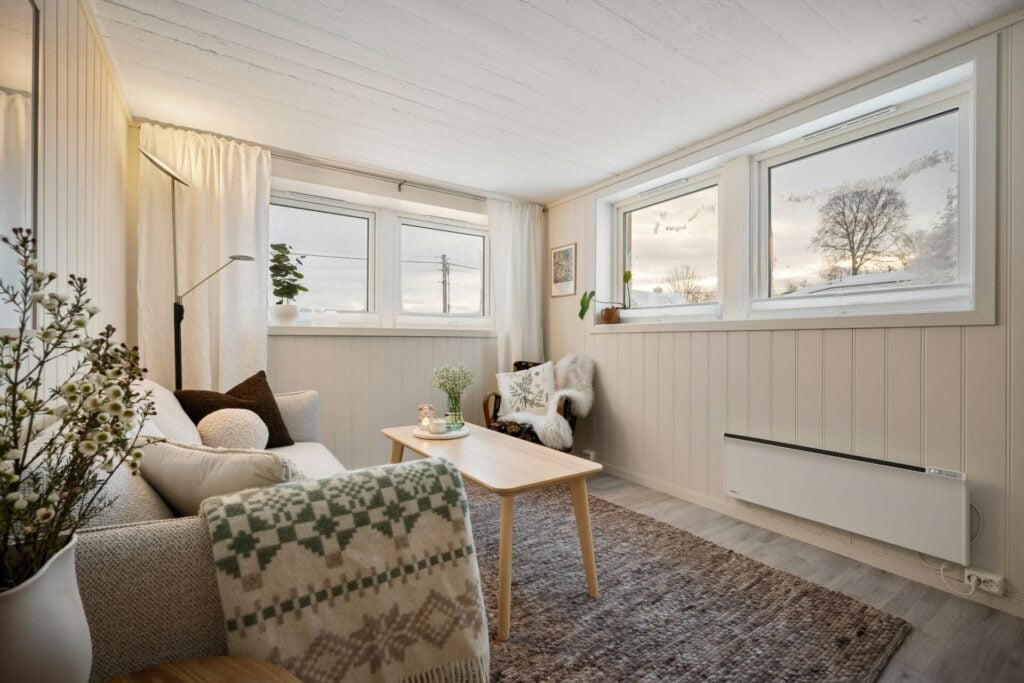
4. Block The Draughts
Why waste money heating air that escapes out of the window? Draught excluders, heavy curtains and sealing gaps around doors will keep the heat inside where you want it.
5. Bleed Your Radiators
Got cold spots at the top of your radiators? That’s air that needs bleeding. It only takes 5 minutes to bleed them, and it’ll make them warm up quicker — cutting down on your boiler’s effort.
The Biggest Thermostat Myth
Time to clear this one up… Turning your thermostat up high does NOT heat your home faster. Your boiler heats at the same rate whether you set it to 21°c or 30°c. All you’re doing is instructing it to run for longer. You overshoot your target temperature, feel too hot and waste energy.
Set it to the temperature you actually want. Then leave it alone.
Bringing It All Together
Striking a balance between comfortability and consumption is easy. All you need to do is experiment a little. Time for a quick review:
- Aim for 18°C to 21°C across your home
- Heat living rooms more and bedrooms less
- Drop the thermostat one degree at a time
- Use a schedule (or a smart thermostat) to cut waste
- Block draughts and bleed your radiators
Little adjustments. Big differences. A home that still feels cozy when you get home.
Frequently Asked Questions
What temperature should my house be in winter?
Most people find temperatures between 18°C and 21°C comfortable in their homes. Living rooms can be at the higher range while bedrooms can be slightly cooler.
How much does a smart thermostat cost to fit?
The price of having a smart thermostat fitted will vary depending on which brand you choose, your boiler type and how much wiring is required. The best way to get an idea of a fair price is to obtain a couple of quotes from local heating engineers.
Is it cheaper to leave the heating on low all day?
Typically not. For the majority of homes it is more cost effective to only heat when needed using a timer or schedule.