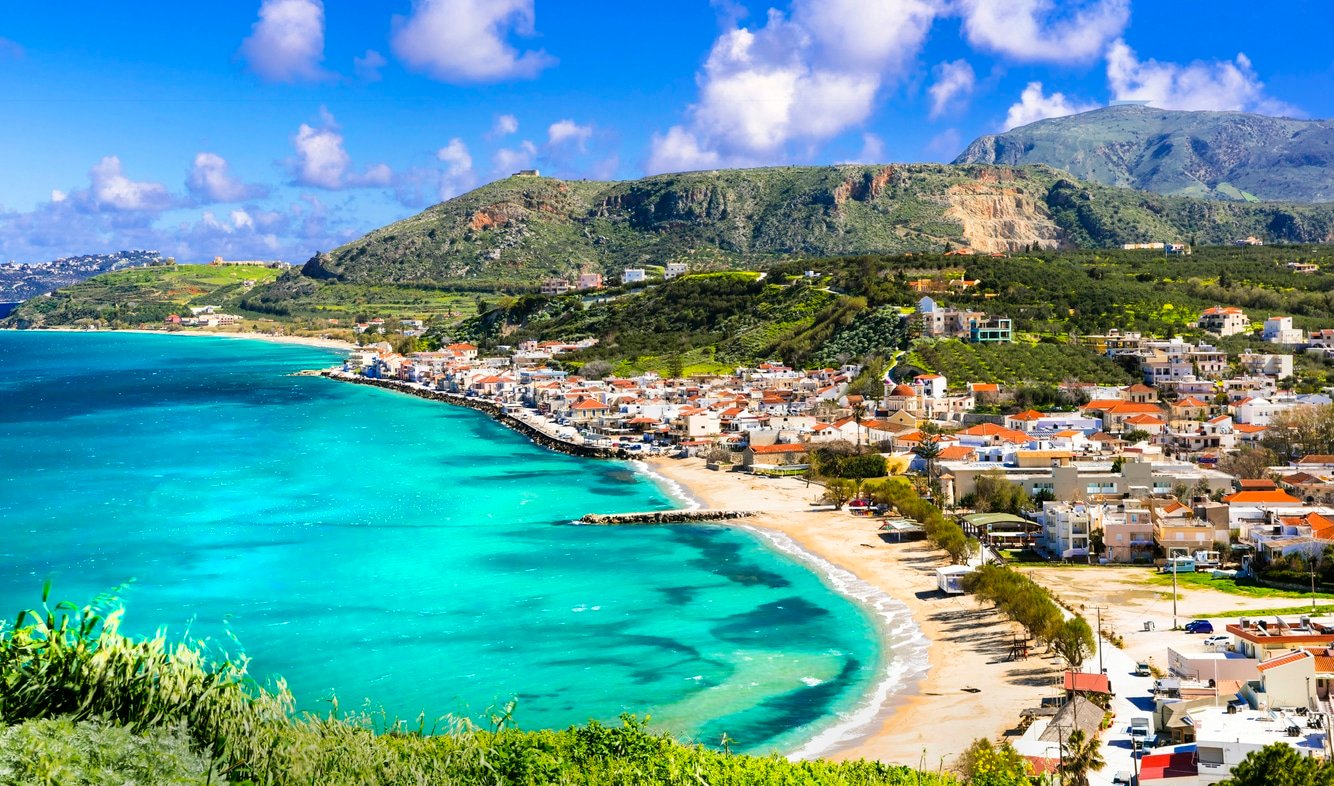
Ask any elderly Cretan what the term sustainability means to them and chances are they’ll look bemused. ‘Ah, you mean the old way of living on the island,’ they’ll say, shaking their head and smiling.
‘Sustainability isn’t a new thing, it’s how we’ve always lived,’ a 92-year-old great-grandmother tells me, tsk-tsking at my silly question. She’s living in the village where she was born, and I understand what she means.
Crete is, and always has been, chock full of small producers, servicing the needs of their immediate, local communities. Travel just a few miles down the road from this village, and it’s the same story in the next, inhabited by fourth and fifth-generation families of goat herders, cheese makers, and olive oil producers.
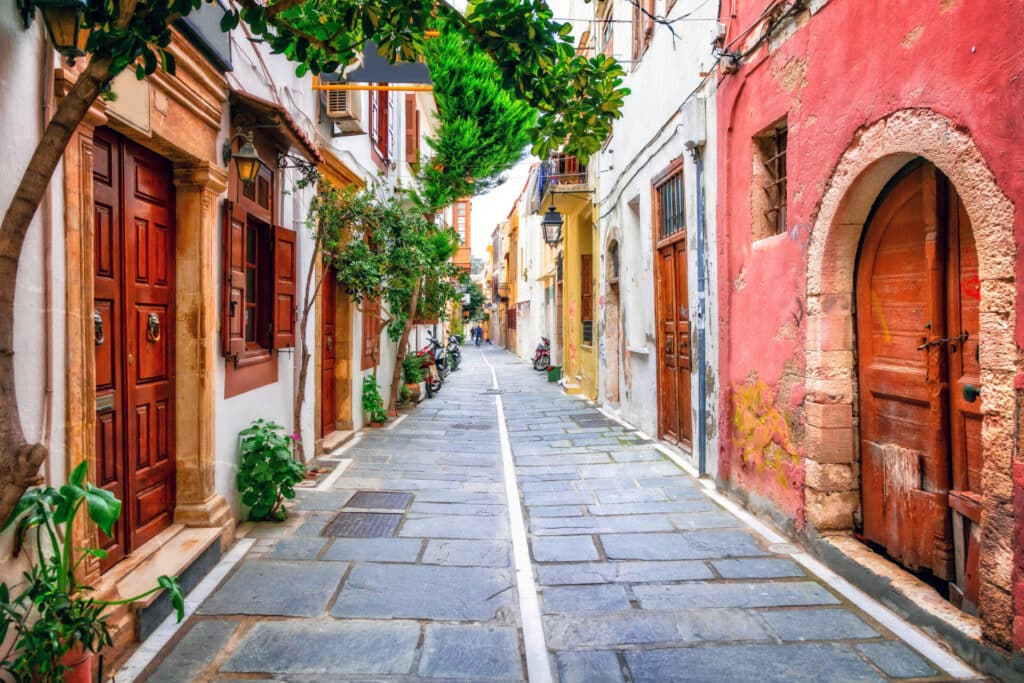
I’m 800m above sea level, within the Dikti Mountains, heading to the fertile Lassithi Plateau, once dotted with thousands of white-sailed windmills that drew water from underground wells to irrigate crops. Most mills have gone, replaced with modern systems, but the region’s beauty remains – legend has it that Zeus, the god of sky and thunder – was born in a cave here – and today the humble potato is queen of the crops.
My guide, Andreas Aretakis, was also raised here, and, in the village of Magoulas, we call in at his favourite cheesemakers, their diary nestling at the heart of the community. ‘You won’t believe the taste. Once you start to eat, it’s impossible to stop,’ he says, calling to the owner to offer me a sample of kefalotyri, a hard, salty, white cheese made from sheep’s milk, which is indeed moreish.
Andreas pauses at an almond tree to pick the first ripe nuts of the season, cracking them open with a stone. ‘We have a rule here, if a tree is on common ground anyone can help themselves, but no one can fill a whole sack. You must leave enough for the next passerby’
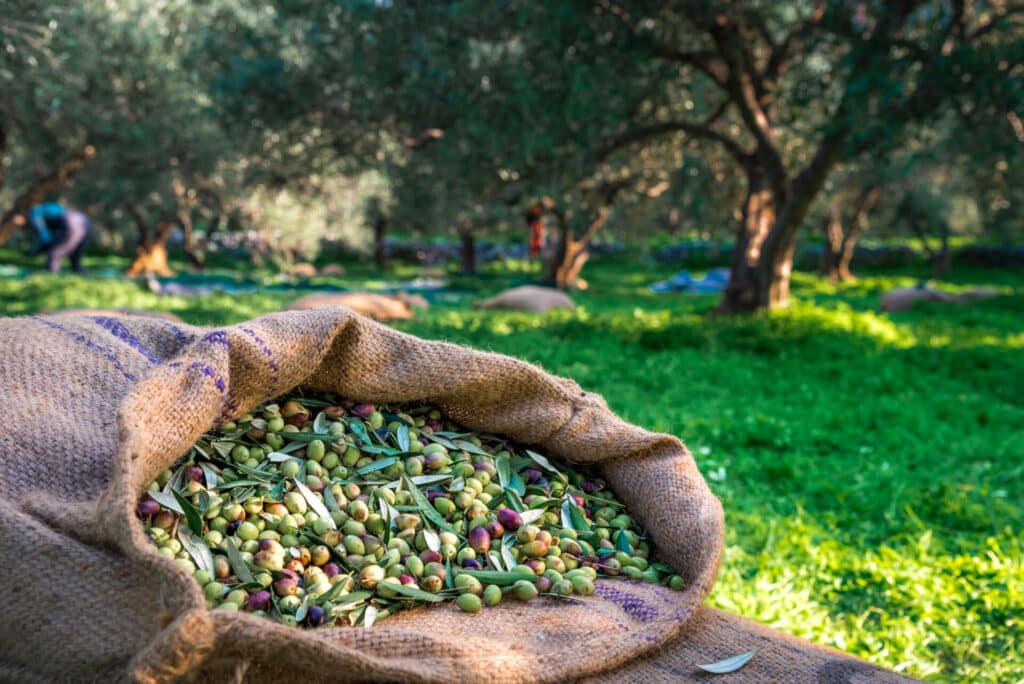
At the village of Avdou, engulfed with olive and fruit trees and famous for its six byzantine chapels, we stop at the small olive oil factory of Assargiotakis, to sample extra virgin oil, plus four others infused with orange, garlic, basil, and lemon, which we knock back in shot glasses. Their homemade olive jam is a revelation, perfect with yaourti cheese they tell me, as I heap a spoonful of it on a dakos (barley rusk).
The factory lies still in May but from early November to the beginning of January residents of Crete begin the back-breaking work of harvesting, which brings entire communities together. There are around 38 million olive trees on Crete, and every small village has its own version of Assargiotakis, which presses the olives from half a dozen or more local farmers.
In the picturesque village of Krasi, it is a 2,000-year-old plane tree, protected by the Greek State, that dominates, with a height of 13 m and a monumental girth of 16 m, watered by a nearby natural spring. Its broad, leafy branches act as a natural community centre where people gather on feast days to dance and make merry and at other times to take respite for the sun and exchange gossip.
Andreas pauses at an almond tree to pick the first ripe nuts of the season, cracking them open with a stone. ‘We have a rule here: if a tree is on common ground, anyone can help themselves, but no one can fill a whole sack. You must leave enough for the next passerby.’
In spring, wild herbs grow in abundance on the hillsides, and we pull over on a countryside road, etched in scarlet poppies and vivid pink tulipa saxatilis, to pluck sprigs of oregano, rosemary and sage.
The same goes for the wild pomegranate, apricot, and orange trees that grow on common ground in Crete. I get the idea that no one will ever go hungry. The tradition for foraging for wild greens, known as horta, goes back 2,500 years, and the most sought-after are fennel, artichokes, nettles, capers and stamnagathi, green tender leaves with a grassy, bitter taste. In spring, wild herbs grow in abundance on the hillsides, and we pull over on a countryside road, etched in scarlet poppies and vivid pink tulipa saxatilis, to pluck sprigs of oregano, rosemary and sage.
Wildflowers on Crete thrive, with 1,800 species of flowering plants recorded, one tenth of which are endemic to the island. In April and May orchids bloom, and edible flowers such as nasturtiums feature as pretty garnishes during countryside festivities.
The biggest threat to the flora is the destruction of land for infrastructure improvements, such as the new mega highway underway, which includes 43 interchanges, 23 tunnels, and 12 overpasses. This will revolutionise the island’s transportation network, but it raises concerns about ecosystem damage, prompting government pledges to implement reforestation projects and wildlife initiatives, such as eco-corridors.
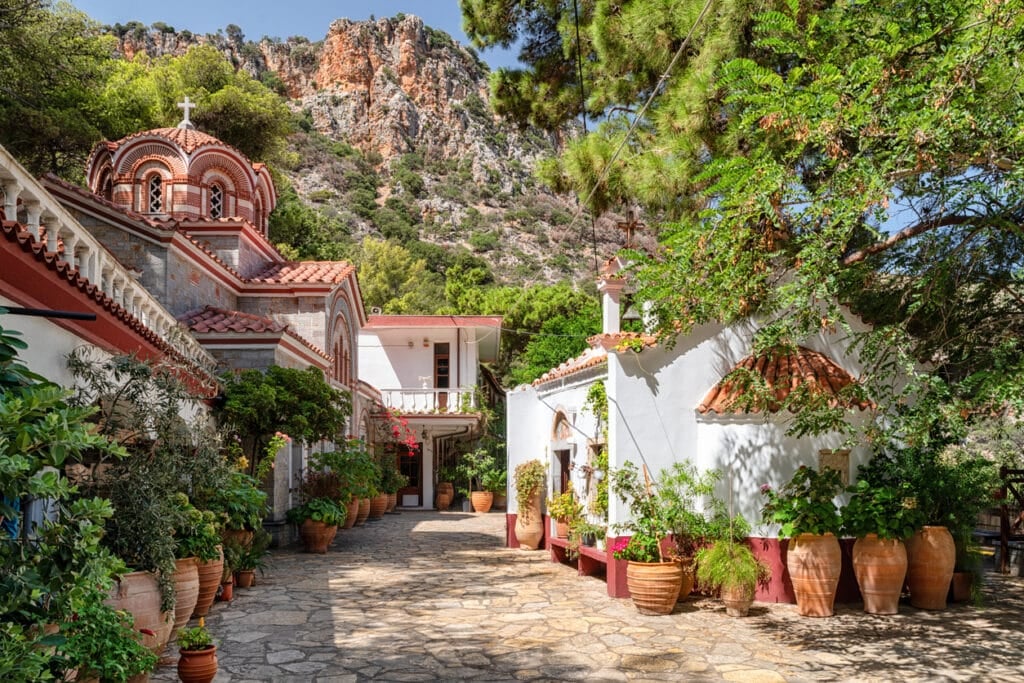
Reassuring amid these changes are the presence of several monasteries, most unaltered for centuries. Off the beaten track, at the monastery of Panagia Vidiani, founded in 1856, cockerels strut and ducks roost in geranium potted gardens tended to by beekeeping priests. The church, with its powdery cerulean ceiling and ochre hued niches filled with icons etched in gold leaf, is a beauty.
The constant hum of honeybees, returning to wooden hives drunk on wildflower nectar, breaks the silence, as does the bird song of Cetti warblers and Blue Rock thrushes in fine, full-throated voice. Honey in Crete comes in many varieties, dependent on the region that the bees call home, from pine-forests to wild thyme rich valleys, and, of course, orange blossom filled, island-wide orchards. I begin each day by pouring a new flavour over my Greek yoghurt with figs.
At the roadside taverna of Metochion, in the village of Kato Metochi, the tzatziki is creamy and garlicy, laced with fresh lemons grown in the garden and olive oil pressed within a mile. We scoop it up with pita, made fresh each day by the owner’s mother, and tuck into a juicy tomato and feta salad, and deep-fried zucchini flowers, enjoying the simple, delicious, freshness of it all. ‘You’ll drink our traditional aperitif, of course,’ is the statement rather than invitation.
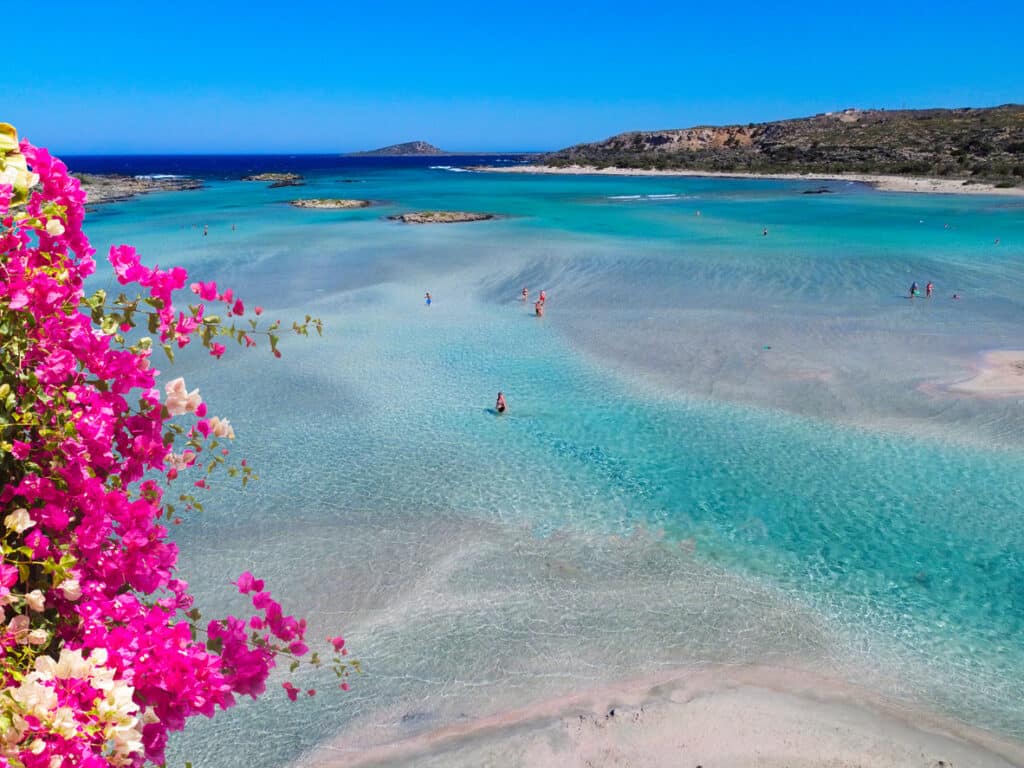
At sunset, standing by ruined stone windmills on the hilltop pass of Seli Ambelou, I’m treated to panoramic views of Crete that on a clear day stretch to the Aegean, imagining a time when Cretans had to lug their wheat up here to be milled. From this vantage point, I hear the goat and sheep long before I see them, their bells tinkling merrily as they skip nimble hoofed through pasture, peppered by rockfall, as I linger delightedly over the remnants of this bucolic day.
Staying on Crete
Of larger resorts, sustainability is forefront of mind at family-owned 680-room strong Creta Maris www.cretamaris.gr. ‘We are very proud to be operating on 100 per cent renewable solar energy, and that all food waste is also turned into power,’ their sustainability manager tells me, as we wander through their kitchen garden, rich with the aroma of basil, which is bound for their sustainability restaurant Pithos, that replicates age-old recipes using produce from local producers.
‘We’re also working with many local producers and supporting several farmers who are using regenerative and organic methods. Our next step is to stop using single-use plastic by providing drinking fountains at the resort.’ Among more boutique offerings, family-run, adult-only Villa Ippocampi (www.ippocampi.gr), situated between mountain and sea, is a fine example of responsible tourism for its waste management, use of solar power, and environmentally friendly pool, set in beautiful, flower-filled gardens.
While exploring the Lassithi Plateau, Kate was a guest of Go Crete Safaris, who offer group and bespoke tours by jeep (www.gocretesafari.gr ).