
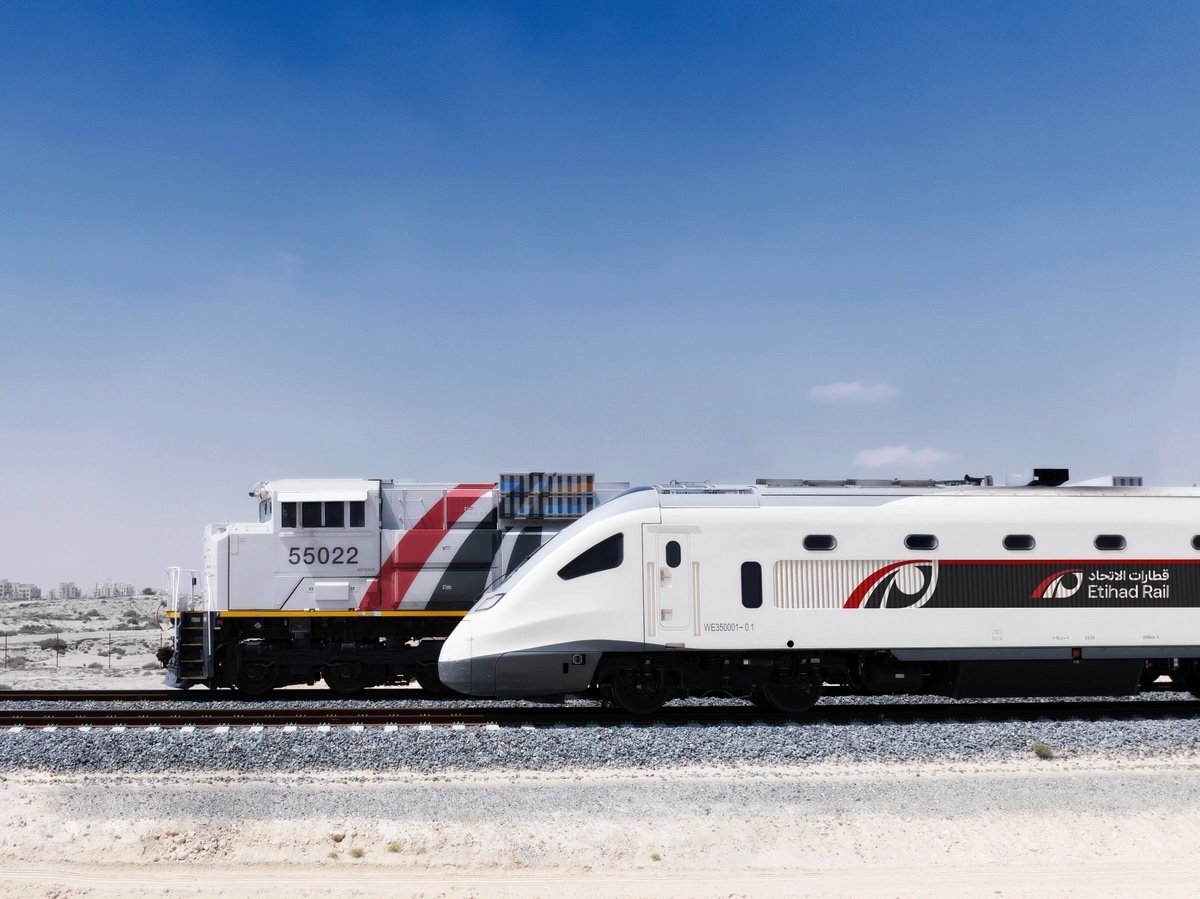
Etihad Rail has announced the locations of seven additional passenger stations as momentum builds toward the long-awaited launch of its national passenger service in 2026. The update brings the UAE a step closer to a fully integrated rail network spanning all seven emirates, and signals a major shift toward lower-carbon, mass transit.
The 900-kilometre network will ultimately connect 11 cities across the country, with stations opening in phases throughout 2026. Most of the newly announced stops are in Abu Dhabi emirate, alongside one in Sharjah.
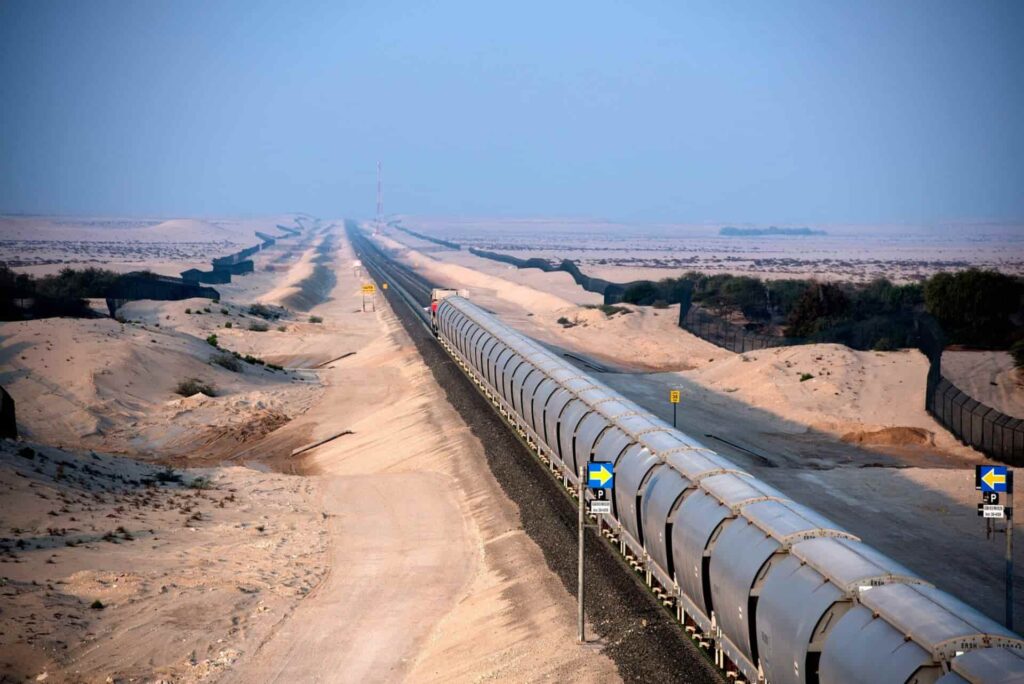
Newly announced Etihad Rail stations
Abu Dhabi emirate
- Al Sila
- Al Dhannah
- Al Mirfa
- Madinat Zayed
- Mezairaa
- Al Faya
Sharjah
- Al Dhaid
Exact station locations will be confirmed at a later date.
Commenting on the announcement, Azza AlSuwaidi, Deputy CEO, Etihad Rail Mobility, underscored the project’s strategic significance, saying: ‘Our preparations to launch passenger services across the national railway network in 2026 reflect the vision of our wise leadership to build an integrated transport ecosystem that supports the UAE’s economic and social fabric.’
Confirmed locations for major stations
Once operational, journey times between major cities are expected to drop dramatically. Travel between Abu Dhabi and Dubai—and between Dubai and Fujairah—will take around 50 minutes, while a future high-speed rail project could reduce the Abu Dhabi–Dubai journey to just 30 minutes. Abu Dhabi to Al Ruwais is expected to take approximately one hour and ten minutes, and Abu Dhabi to Fujairah around one hour and 40 minutes.
In Dubai, the Roads and Transport Authority (RTA) is scaling up last-mile connectivity, with feeder buses and taxi services planned to link commuters seamlessly to the main Etihad Rail station.
The trains have been designed to offer a comfortable experience, featuring ergonomic seating, contemporary interior designs, full Wi-Fi coverage, and individual power outlets at every seat.
Services on Etihad Rail will operate on a precise schedule, providing passengers with a reliable alternative for smooth and speedy travel between cities, free from road congestion.
Why this matters for sustainability
From a climate perspective, the passenger rail network represents one of the UAE’s most significant transport decarbonisation opportunities. Rail travel produces substantially lower emissions per passenger kilometre than private cars or short-haul flights, particularly when powered by increasingly clean energy sources.
By 2030, Etihad Rail aims to carry up to 36 million passengers annually, potentially removing millions of car journeys from UAE roads each year.
The standard passenger service will operate at speeds of up to 200 km/h, while the proposed high-speed line could reach 350 km/h. Paired with strong public transport integration and walkable station design, the network will help reshape commuting habits, reduce congestion, and cut urban air pollution.
For the UAE, Etihad Rail is a test case for whether rail can finally become a mainstream, everyday alternative to the car.