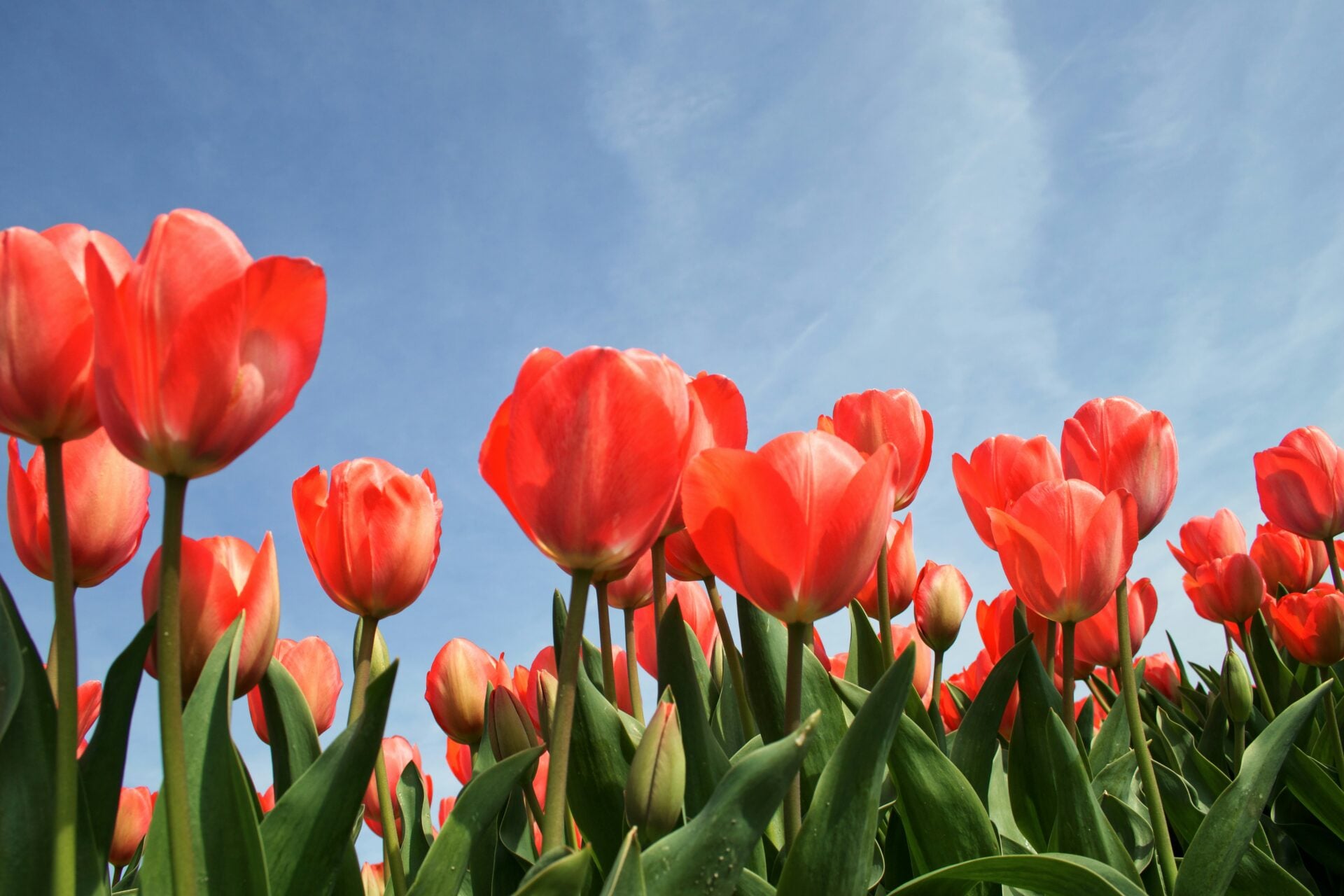
The UAE might not be the first place that springs to mind when you think of tulip fields. Traditionally associated with the cooler climes of the Netherlands, these colourful spring flowers are hardly natural inhabitants of the Arabian desert. But a new UAE-based venture is challenging that assumption, using artificial intelligence and advanced agricultural technology to grow luxury tulips and roses right here in the Emirates.
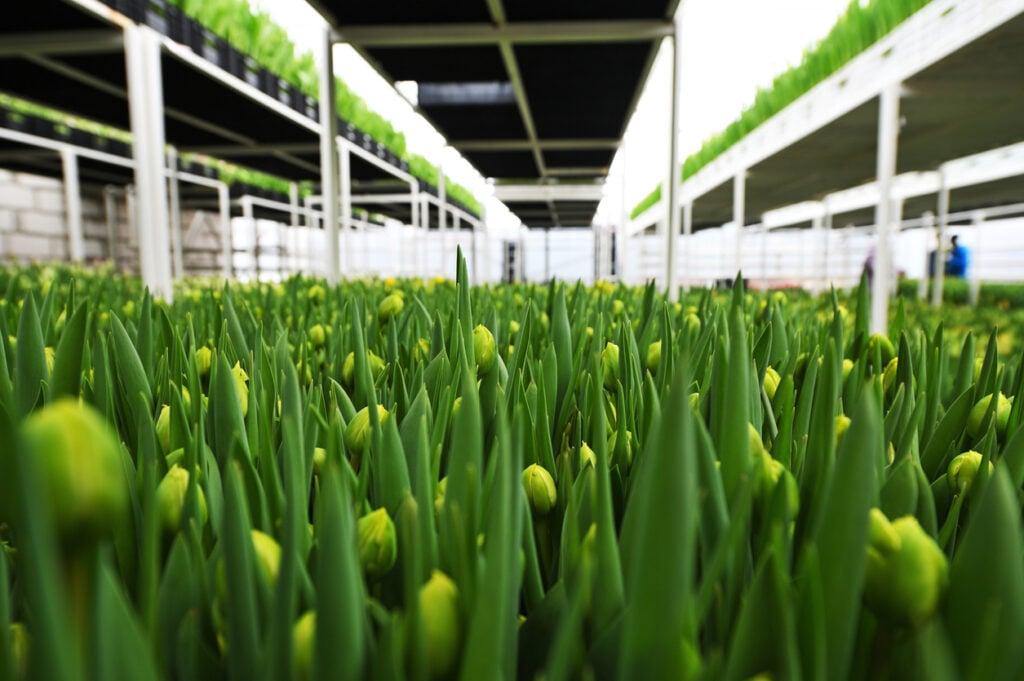
XSEED, founded by luxury flower entrepreneur Whitney Bromberg Hawkings, is developing two specialist growing facilities designed to reduce the region’s reliance on imported flowers. The first, described as the GCC’s first vertical tulip farm, uses controlled-environment agriculture to cultivate premium blooms, while a second smart glasshouse will focus on growing luxury roses.
And although the project is firmly rooted in the luxury market, its environmental implications could extend considerably further.
Grown Here, Not Flown Here
According to XSEED, up to 90 per cent of luxury flowers sold in the Gulf begin their journey overseas, travelling through international supply chains and temperature-controlled storage facilities before finally reaching florists, hotels and customers.
It’s a system that comes with an environmental cost. Cut flowers are highly perishable, often requiring refrigeration throughout their journey, while air freight can contribute substantially to their carbon footprint. XSEED hopes to turn that model on its head by growing flowers much closer to the people buying them.
‘The idea behind XSEED is very simple: why should the UAE have to import extraordinary flowers when [we] can grow BETTER flowers here?’
Bromberg Hawkings, founder and CEO of XSEED
The company’s ambition is to deliver flowers to customers within 24 hours of harvesting, compared with the more than five days it says imported stems typically spend travelling through the supply chain. Shorter journeys could mean fresher flowers, longer vase life and less waste, particularly for hotels and event organisers purchasing blooms in large quantities.
‘The idea behind XSEED is very simple: why should the UAE have to import extraordinary flowers when [we] can grow BETTER flowers here?’ says Bromberg Hawkings, founder and CEO of XSEED and FLOWERBX.
‘We have spent years developing the tech to grow flowers optimally in the desert and we are excited to execute in the region.’
Can Technology Make Flowers More Sustainable?
Developed in partnership with agricultural technology company Pure Harvest, XSEED’s vertical tulip farm uses artificial intelligence and controlled growing conditions to optimise production.
The company claims the technology can shorten the crop cycle by up to 70 per cent while reducing water consumption by 40 per cent. That’s particularly significant in a country where water scarcity and extreme temperatures present major challenges to conventional agriculture.
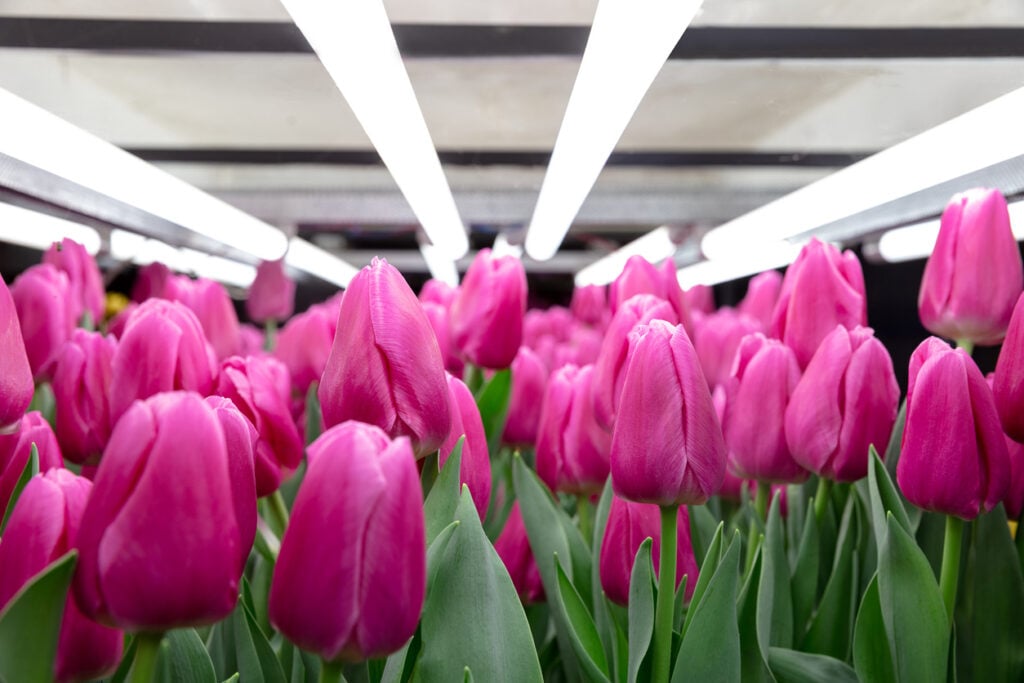
Vertical farming allows crops to be cultivated in carefully managed environments, reducing their exposure to unpredictable weather and enabling growers to control factors such as temperature, humidity and light.
Meanwhile, the second facility will use smart glasshouse technology to create conditions specifically suited to roses, with the aim of producing consistent, premium-quality flowers throughout the year.
There are, however, important sustainability questions surrounding controlled-environment agriculture. Artificial lighting, cooling and climate-control systems can require considerable energy, particularly in hot climates. The reported water savings and shorter supply chains are promising, but the overall environmental benefits will ultimately depend on how the farms are powered and operated.