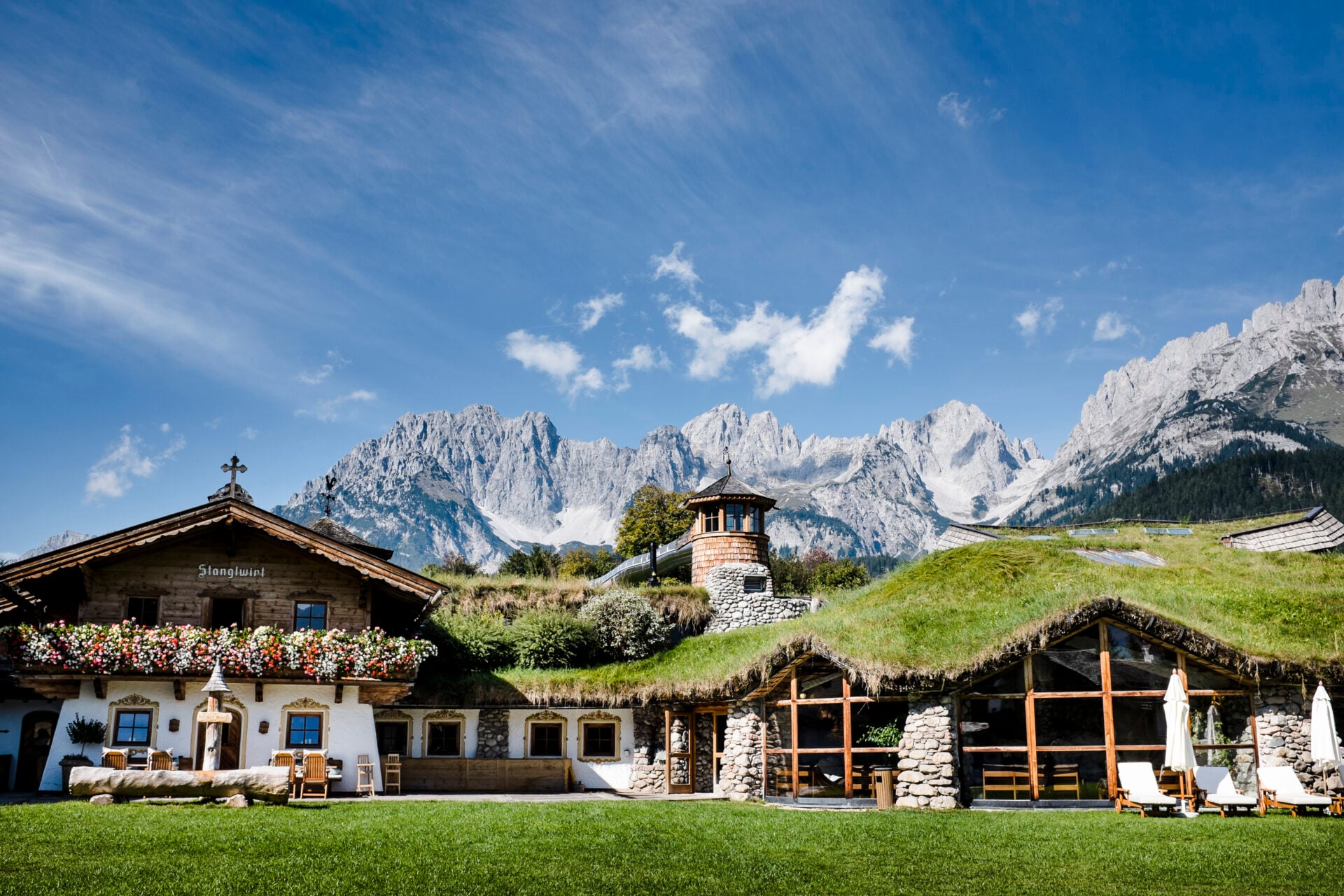
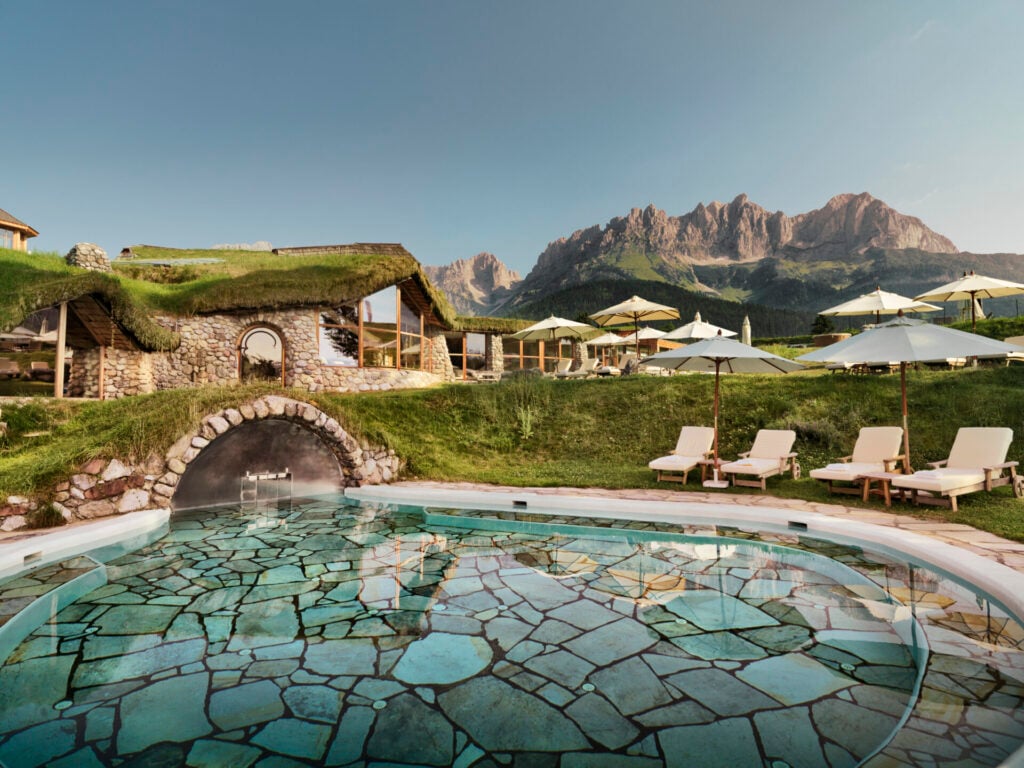
The rain is falling gently onto the surface of the outdoor rock pool at Bio- and Wellnessresort Stanglwirt, sending tiny ripples across the water as clouds of steam rise into the cold mountain air. Beyond the edge of the pool, the great limestone peaks of Austria’s Wilder Kaiser mountains are disappearing under a blanket of low-hanging clouds. I have the pool entirely to myself and, as I sink a little deeper into the water, which is kept at a comforting 32 degrees, I watch the droplets disappear almost as fast as they land.
It’s a strange sensation, being outside in a swimsuit in weather that would normally have me rushing for a coat and umbrella, but the rain falling only on my face and shoulders while the rest of me is warm is possibly one of the most relaxing experiences.
We had been due to spend the afternoon forest bathing in the resort’s 5,128 m² outdoor relaxation zone, but the rain had put an end to that plan. Instead, I had retreated to the enormous green spa wellness facilities at Bio- and Wellnessresort Stanglwirt, a Beyond Green five-star eco-resort tucked into the Tyrolean countryside. When I say enormous, I mean no fewer than 6 pools, including their 210 m² saltwater brine pool, the largest hotel-owned brine pool in Europe, 5 saunas, and 3 steam baths. Stanglwirt is known as Austria’s best wellness resort for a reason!
But there is much more to Stanglwirt than its impressive wellness facilities, as I discover over the next few days.
Family Affair
Stanglwirt has been in the hands of the Hauser family since 1722, although its history stretches back to 1609, when it was a traditional Alpine inn and working farm. Over the centuries, the original building has grown into a five-star retreat, but the farm remains at its core. The family still produces its own dairy products, including cheese matured in a natural stone cave that wouldn’t look out of place in The Hobbit. The farm, overseen by Johannes Hauser, one of the three siblings now involved in running the family business, also works closely with local producers to supply the hotel’s kitchens, while sustaining the local economy.
Over the centuries, the original building has grown into a five-star retreat, but the farm remains at its core. The family still produces its own dairy products, including cheese matured in a natural stone cave that wouldn’t look out of place in The Hobbit
In fact, it’s very much a family affair, with Johannes’s sisters, Maria and Elisabeth, also looking after different aspects of the hotel. And the family’s long history of hospitality can be seen in some extraordinary photographs that line the hotel walls, showing generations of Hausers alongside some rather famous guests.
Among them are the late Dr Jane Goodall, Muhammad Ali, Pamela Anderson, David Hasselhoff, Phil Collins and Larry Hagman (who will forever be JR Ewing from Dallas to those of us old enough to remember him). There are photographs of the Klitschko brothers too, which is fitting given that the resort has its own boxing ring, used by the famous brothers during their world championship careers.
A Lipizzaner Legacy
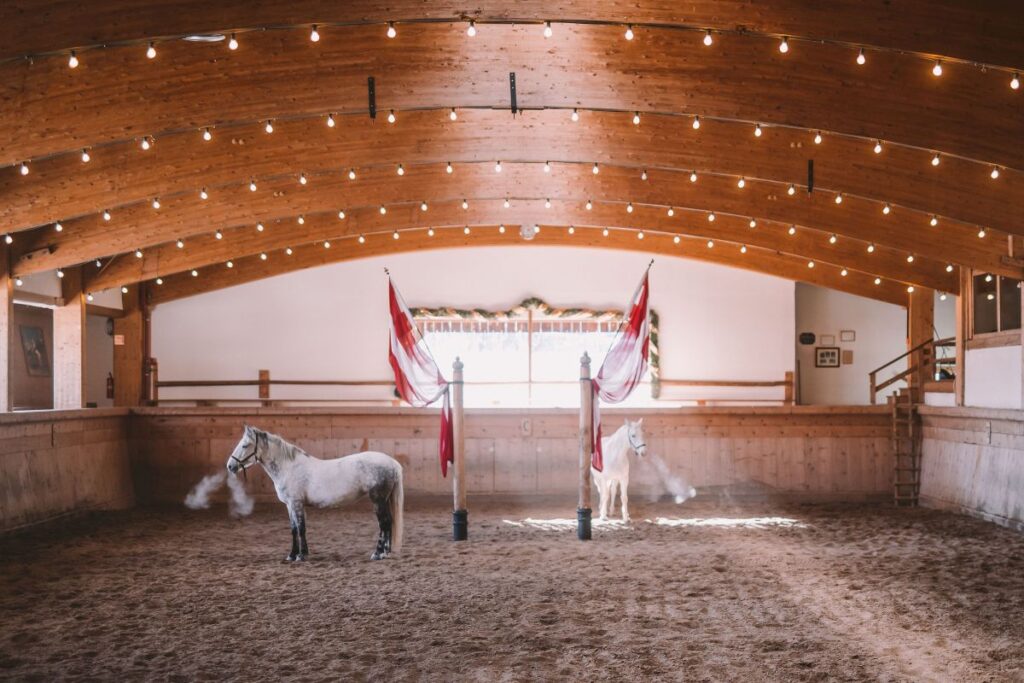
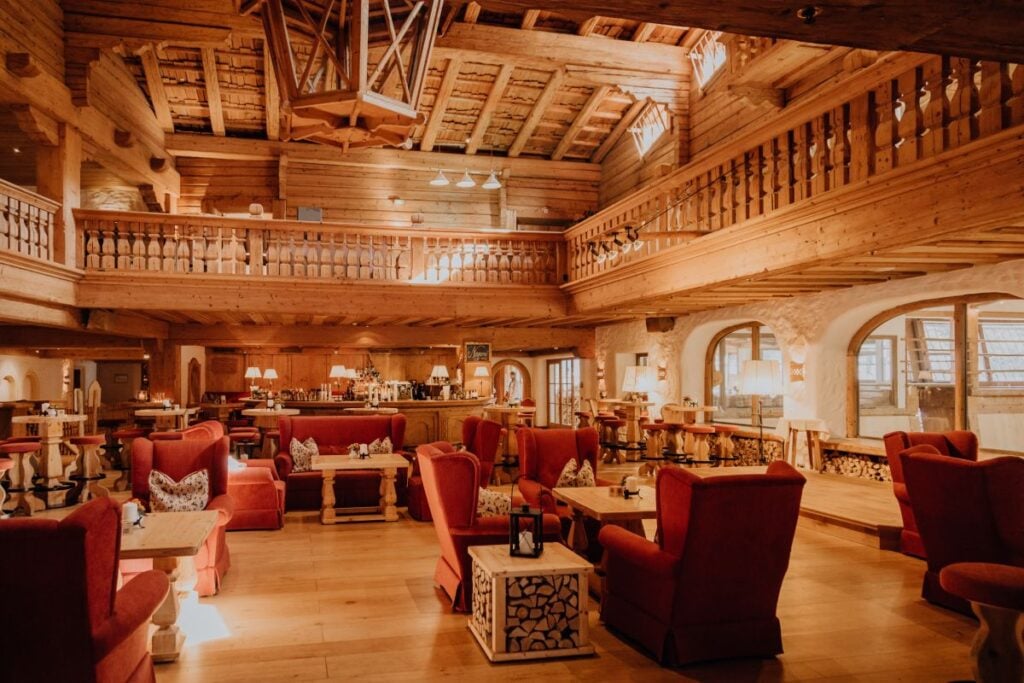
One of the more unusual features at Stanglwirt is its indoor riding arena, which can be seen through enormous windows from the Auf der Tenne hotel bar, exactly where, over 40 years ago, the farm’s hay and grain store once stood. Guests can enjoy a range of specially crafted drinks, including the Haybath, a glass of foaming buttermilk served on a bed of straw from the Stangl Alm, while watching the Lipizzaner horses being exercised.
Stanglwirt is home to one of Austria’s first private Lipizzaner studs, established by Balthasar Hauser in the 1980s, and has been breeding these beautiful horses for more than four decades. The breeding traditions of these magnificent horses were recognised by UNESCO as Intangible Cultural Heritage of Humanity in 2022, acknowledging more than 450 years of knowledge passed down through generations of breeders.
Guests can enjoy a range of specially crafted drinks, including the Haybath, a glass of foaming buttermilk served on a bed of straw from the Stangl Alm, while watching the Lipizzaner horses being exercised
During a tour with Elisabeth, one of the Hauser siblings who runs the stud and riding school at Stanglwirt, we learn that the family wants guests to see how they care for the horses, rather than keeping them hidden away in stables. At the time of my visit, there are 24 horses and six ponies, each with its own individually fitted saddle and exercise routine. The horses don’t have any formal training until they’re around five years old, and they are cared for by physiotherapists while also receiving treatments like red-light therapy. As Elisabeth shares this with us, I find myself thinking I would quite like a stay in the stables too.
For horse lovers, there are multiple ways to interact with them that don’t involve riding. You can brush the horses, walk quietly beside them, or even work with a therapist to overcome a fear of them. Elisabeth tells me that people are often drawn to one particular horse, and I’m not surprised; the energy amongst these remarkable animals is electric.
Pioneering Sustainability
After our visit to the stables, we head to the resort’s bioenergy plant, which is a little less photogenic than the horses but just as interesting. Stanglwirt was a pioneer of biomass heating back in the 1980s, and the family’s latest investment is a sophisticated system that uses wood sustainably sourced from regional forests and sawmills to produce heat and electricity.
Johannes, who oversees Stanglwirt’s agriculture and gastronomy, tells me that rather than just burning the timber, the system heats it in an oxygen-limited environment, releasing a gas that’s used to create electricity. The heat is then captured and stored in a vast water tank to supply the hotel and farm. What remains is biochar, a carbon-rich material that can be used to improve soil and retain moisture, while storing carbon for long periods.
Johannes is passionate about using local resources, and his philosophy is straightforward. In a desert, he says, solar energy makes sense, but in a region surrounded by forests, using responsibly sourced wood is the logical choice.
Johannes explains that while the farm produces its own dairy products, the family deliberately sources much of its other food from local businesses rather than trying to do everything itself. The bread, for example, is collaborative, with the hotel baking some varieties and buying others from nearby bakeries.
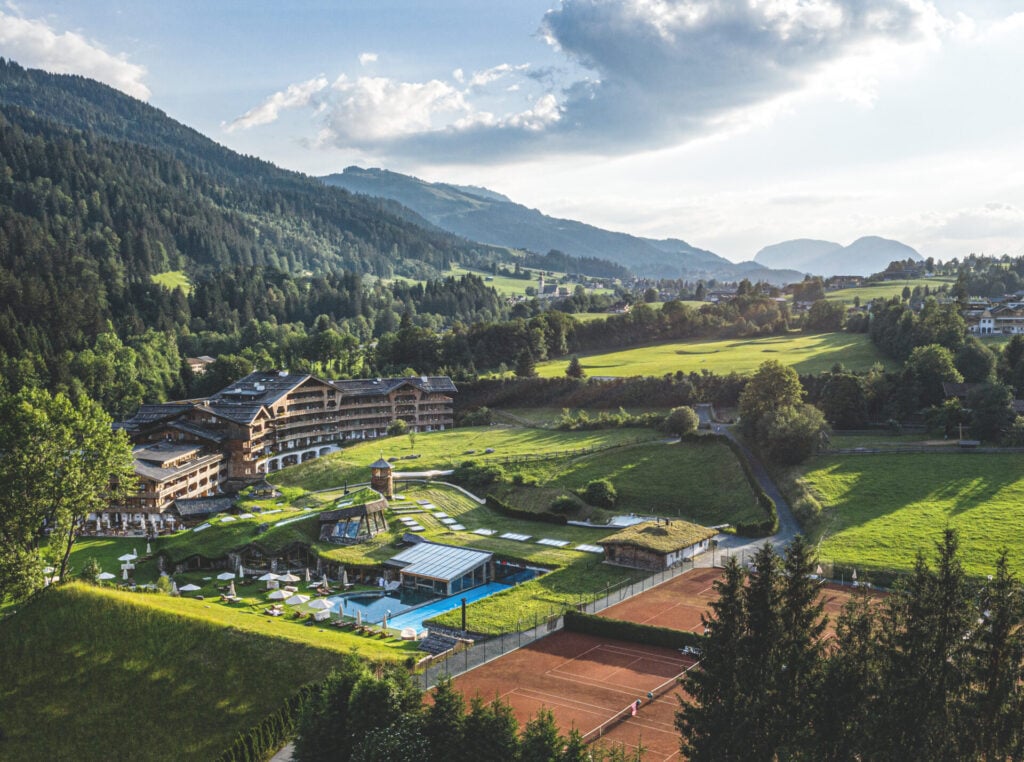
And the tennis facilities aren’t just for the professionals who come and go; sit on your balcony with a coffee in the afternoon, and you may see the two resident sheep on lawn-mowing duty
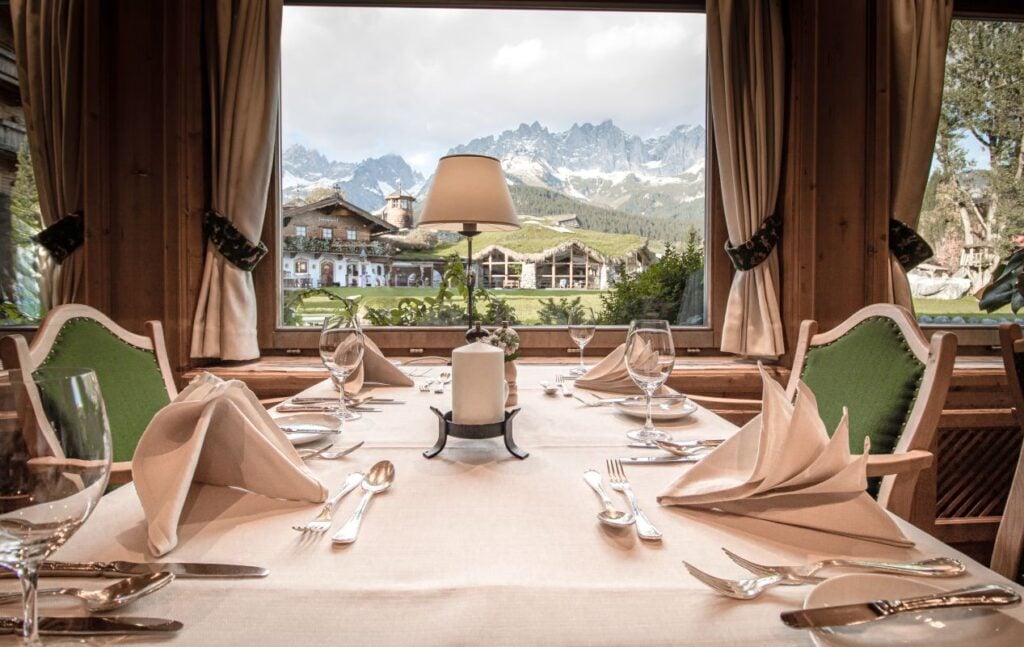
After the tour, we head to Restaurant Dreiklang for lunch, with stunning table views of the mountains, and enjoy a selection of organic salads showcasing produce from local farmers. The vegetables are bursting with flavour, and so are the mushroom croquettes; it’s a refreshing change to have an abundance of vegetarian options.
Of course, it would be a shame to visit a wellness resort of this calibre and spend all one’s time learning about sustainable agriculture and renewable energy, however fascinating they may be. Fortunately, Stanglwirt offers more than enough opportunities to work up an appetite before returning to one of its three restaurants.
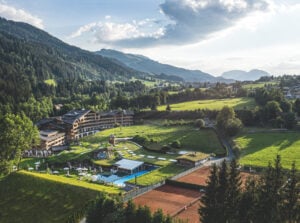
Guests can enjoy an enormous fitness centre, tennis courts (five indoor carpet (Schöpp Champion granule courts) and eight outdoor courts (Clay), no less), yoga and Pilates classes, boxing facilities and an atmospheric old bowling alley hidden under the original part of the hotel. For those who want to explore the surrounding areas, there are walks, mountain and e-bike trails, and hikes aplenty, while winter offers skiing and cross-country trails.
Of course, it would be a shame to visit a wellness resort of this calibre and spend all one’s time learning about sustainable agriculture and renewable energy, however fascinating they may be. Fortunately, Stanglwirt offers more than enough opportunities to work up an appetite before returning to one of its three restaurants
And the tennis facilities aren’t just for the professionals who come and go; sit on your balcony with a coffee in the afternoon, and you may see the two resident sheep on lawn-mowing duty. It’s a charming way to keep the landscaping under control.
After a trip to the gym, which again offers alpine views (no need to play the forest videos available on their state-of-the-art equipment), it’s time for a facial at their award-winning spa, using the hotel’s own Good Conscience skincare range. My therapist, Maria, starts with a thorough cleanse, then uses an oxygen device that blows a gentle stream of air across my face, before performing a sequence of massage movements across my face. While a mask works its magic, she gives me a head massage that’s so light it feels like craniosacral therapy. Even though I could barely feel her hands, I drifted off to sleep.
When I look in the bedroom mirror later, my skin has a glow that I haven’t seen in a very long time. I’d even say it was like I’d had Botox by hand. I’m so pleased with the result that I go down to dinner without a scrap of makeup on – not something I do very often!
That evening, we descend the wooden staircase, weathered by centuries of guests, to eat at Gasthof Stanglwirt, the historic inn that forms the foundation of the resort. The kitchen team, led by head chef Thomas Ritzer, prepares an incredible tomato and burrata salad followed by a perfectly cooked seasonal pumpkin ravioli.
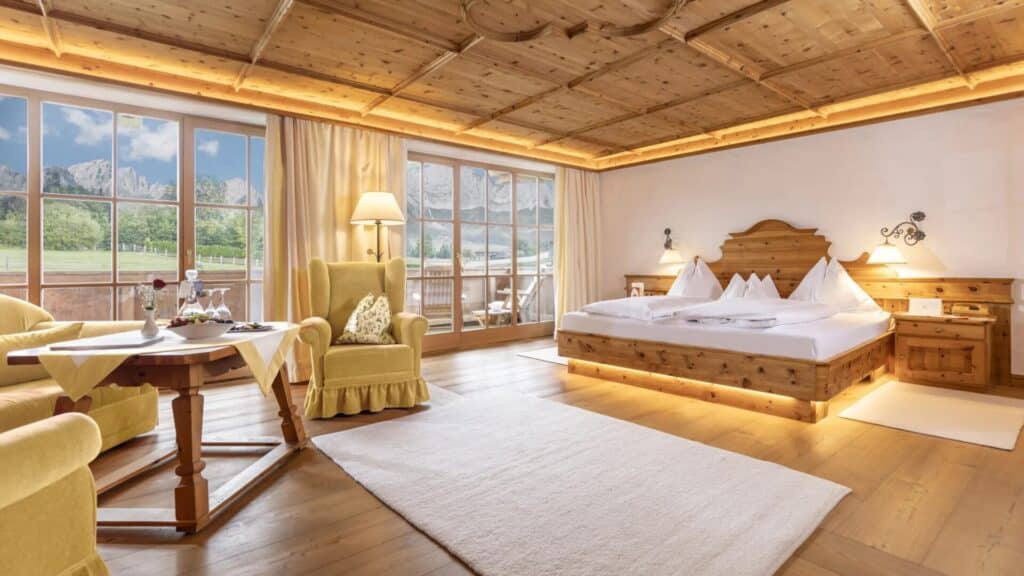
After dinner, I go back to my beautiful Kaiserbogen Luxury Suite with its pine interiors, working fireplace, and impeccable soft furnishings, and step out into the cool night air. I look at the lights twinkling under the dark outline of the mountains, and I think about just how much Bio- and Wellnessresort Stanglwirt has changed over the centuries. It may have embraced modern luxury, introduced extraordinary wellness facilities and invested in sophisticated renewable energy technology, but somehow it’s managed to retain the sense of identity that started with a humble Alpine inn more than 400 years ago.