Egg freezing is rapidly moving from a niche procedure to a mainstream move for women navigating modern life. As careers, relationships, and financial stability take longer to establish, more are turning to the medical option to preserve their fertility and extend their timeline.
For decades, the idea of a ‘biological clock’ has shaped decisions about when to have children. Today, that pressure is colliding with a very different reality. According to the Human Fertilisation and Embryology Authority, egg-freezing cycles in the UK have risen sharply in recent years, from around 2,500 in 2019 to nearly 7,000 in 2023.
‘The surge in fertility preservation is really a response to how we live today,’ explains Maria Banti, IVF Laboratory Director and Senior Clinical Embryologist at Almond BlossomsFertility Centre in Dubai. ‘Many women choose social freezing to focus on personal goals, education or financial stability, or to take the pressure off finding the right partner.’

While the reasons vary, the underlying issue remains the same: our lives have evolved, but our biology has not. Fertility still peaks in the mid-20s and begins to decline more rapidly after 35.
That reality is increasingly reflected in behaviour. The average age of women freezing their eggs dropped from 36.9 to 35.0 between 2016 and 2023. This shift reflects what the data has said for years: age drives outcomes more than any other factor in fertility preservation. This has made timing a critical consideration for those exploring egg freezing, not just in terms of success rates, but how many cycles may be required.
‘Quality and quantity are everything,’ says Maria. ‘Women are born with a finite number of eggs, and both decline over time. Freezing earlier generally means retrieving more eggs of better quality, which increases the likelihood of success later on. Most experts agree the optimal window for freezing is between 28 and 35, when outcomes tend to be strongest.’
Why Egg Freezing Is Becoming More Common
At its core, egg freezing offers something previous generations didn’t have: choice.
For some women, it is about removing the urgency that can shape relationships and life decisions. For others, it is a practical step taken in the face of medical uncertainty. Patients undergoing treatments such as chemotherapy, or living with conditions like endometriosis or polycystic ovary syndrome (PCOS), may choose to preserve their fertility before it is compromised.
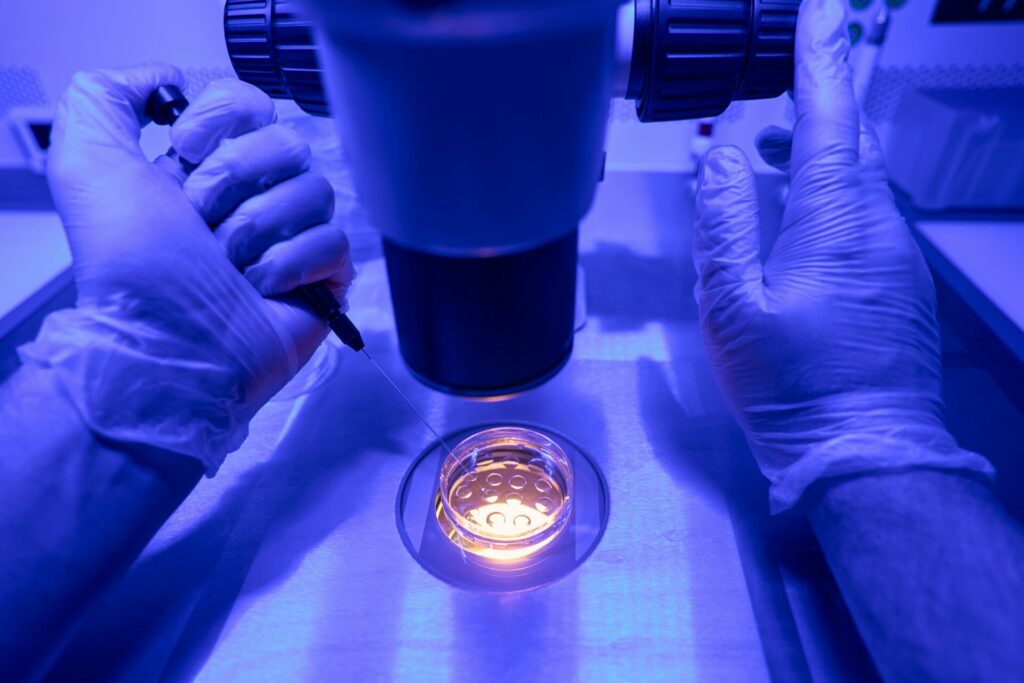
The science behind the procedure has also improved significantly.
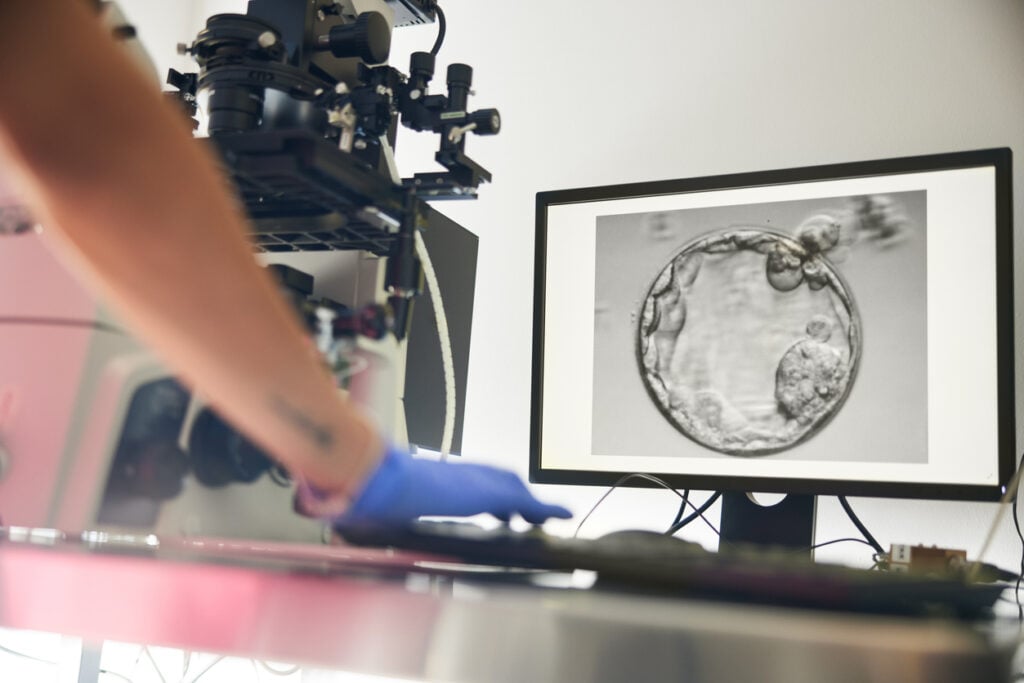
‘The science has finally caught up,’ explains Maria. ‘In the past, egg freezing was not as successful because eggs are mostly made out of water and would often get damaged when ice crystals formed during the freezing process. Today, we use a technique called vitrification, which basically freezes eggs so quickly that ice crystals don’t have time to form. This means over 90 per cent of eggs now survive the thawing process, making it a much more reliable “insurance policy” than it used to be.’
Beyond individuals, wider cultural and workplace shifts are also playing a role. Companies such as Apple and Meta have introduced fertility benefits, including egg freezing, as part of employee healthcare packages to help keep talented women on their teams.
At the same time, legal frameworks are evolving.
‘In the UAE, the law now allows women to freeze their eggs for medical reasons without needing a partner’s permission,’ Maria explains. ‘It also gives women total control over their eggs, even if they get divorced later. These kinds of changes are making the process much more empowering.’
What It Can—and Can’t—Guarantee
Despite growing awareness, egg freezing remains complex both financially and emotionally.
‘There’s no way around it, it’s expensive,’ explains Maria. ‘The cost of treatment, medication and long-term storage can place it out of reach for many, particularly as most insurance plans do not cover elective procedures.’
New models are beginning to emerge. Fertility benefit providers such as Carrot Fertility are working with employers to subsidise treatment, while organisations like Livestrong Fertility offer support for those with medical needs. Even so, access remains uneven.
Perhaps the biggest misconception is that egg freezing guarantees a future pregnancy.
‘Egg freezing isn’t a promise of a baby,’ Maria cautions. ‘There is no guarantee that a specific egg will thaw successfully, fertilise, or result in a healthy pregnancy.’
Success rates depend on several factors, including the age at which eggs are frozen and the number collected.
‘A woman under 35 who freezes 20 eggs has about a 94.4 per cent chance of having at least one baby later in life. By the time a woman reaches 38 or 40, the quality of her eggs drops significantly, and she might need to go through several rounds of treatment to collect enough viable eggs to have a good chance of success.’
While a woman under 35 who freezes a sufficient number of eggs may have a strong chance of a future pregnancy, outcomes are never certain. While you can still freeze eggs in your late 30s, the chances of a live birth can drop significantly.
In that sense, egg freezing is less about certainty and more about probability.
What it ultimately offers is the ability to step outside a deadline that has long shaped life decisions.
‘Egg freezing is a powerful way to take control of your own timeline,’ says Maria. ‘It’s about giving yourself the chance to wait for the right moment that men have always had. By “freezing time” today, you are protecting your ability to make the most important decision of your life on your own terms tomorrow.’
For more information visit almondblossoms.care