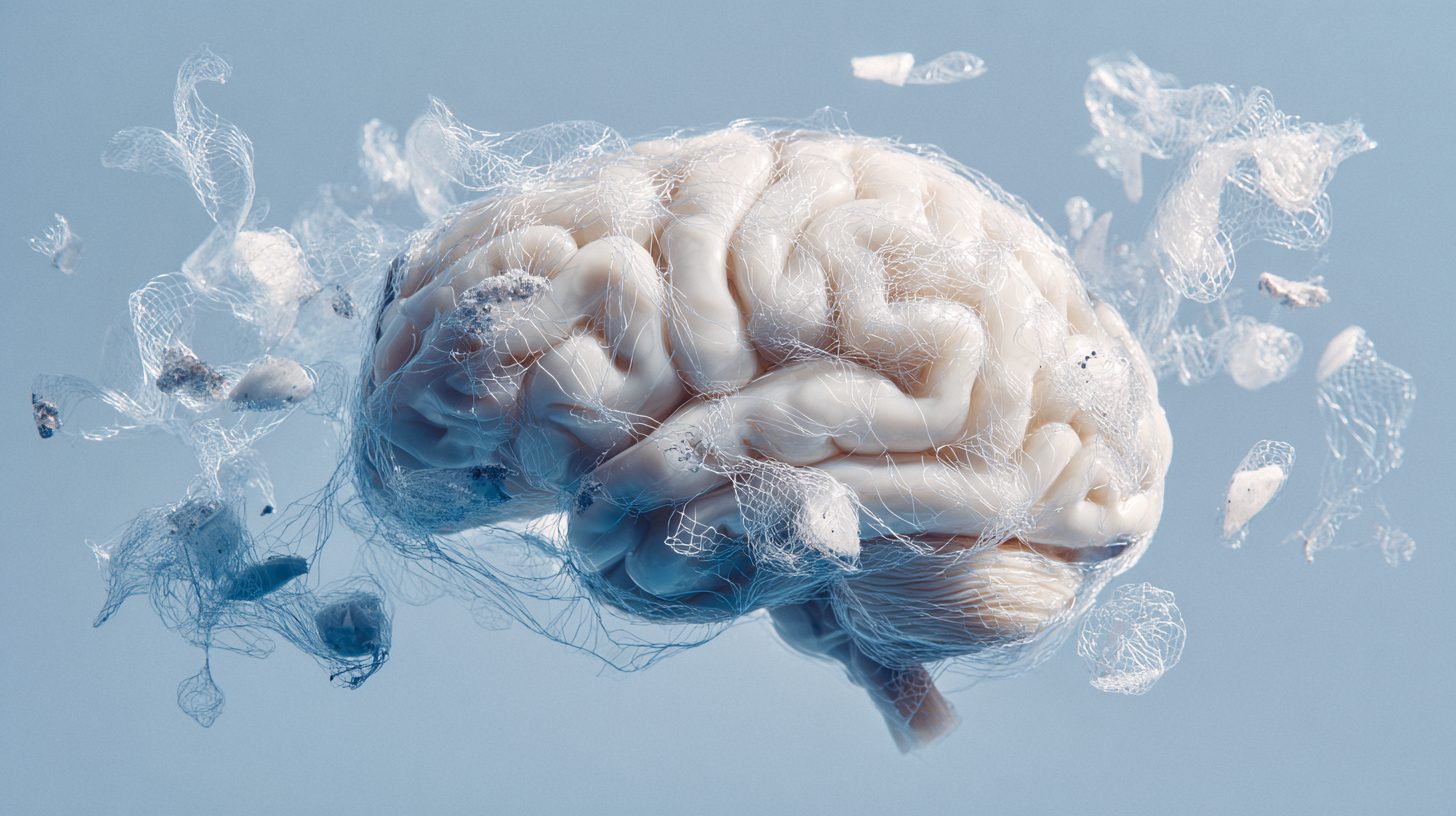
For years, concerns about plastic pollution have focused on oceans, wildlife and the food chain. Now, scientists are increasingly turning their attention to a more unsettling question: what happens when the smallest plastic particles – nanoplastics – enter the human body, including the brain?
 Our Brains Are Now 99.5% Human—And 0.5% Plastic
 New research from the University of Eastern Finland suggests that nanoplastics, tiny particles smaller than a thousandth of a millimetre, can accumulate inside neurons and may affect brain cells differently depending on their size.
The study examined the effects of polystyrene nanoplastics on neurons, the specialised cells responsible for processing and transmitting information throughout the brain. While previous research has shown that plastics can accumulate in human brain tissue, scientists are only beginning to understand what those particles might do once they arrive there.
Because of their tiny size, nanoplastics are able to cross biological barriers more easily than larger particles and can interact directly with cells and tissues throughout the body.
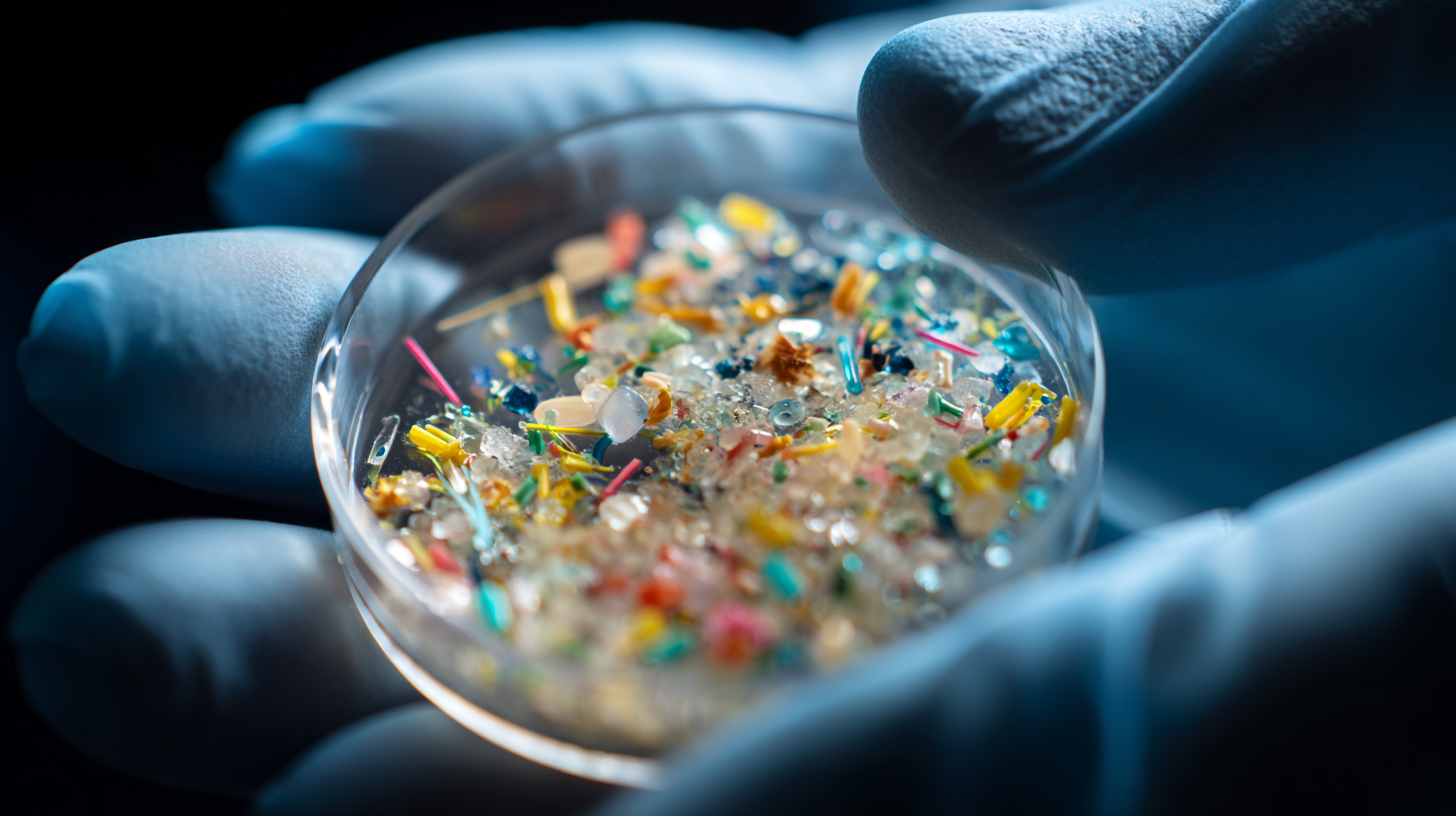
Plastic particles smaller than 5,000 nanometres are classified as microplastics, while particles measuring less than 1,000 nanometres are known as nanoplastics. Because of their tiny size, nanoplastics are able to cross biological barriers more easily than larger particles and can interact directly with cells and tissues throughout the body.
Researchers focused on neurons, the brain cells that help us think, learn, remember, move and communicate. These specialised cells act as the body’s information highway, carrying signals between the brain, spinal cord and the rest of the nervous system.
They exposed neurons to low doses of different-sized polystyrene nanoplastics to see whether they produced subtle changes within the cells. Their findings revealed that the particles could be absorbed and accumulated inside neurons.
Why Nanoplastics Are Worrying
While the changes observed were relatively small, the researchers found that the smallest particles appeared to have a greater effect on brain cells than larger nanoplastics.
‘It is important to understand that not only the concentration and material, but also the size of the particles matters,’ said Doctoral Researcher Veronika Górová, the study’s lead author.
‘With decreasing nanoparticle size, we observed more pronounced, although still relatively subtle changes.’
Because nanoplastics are small enough to pass through biological barriers that would normally protect the body, researchers believe they may pose unique health risks compared with larger plastic fragments.
The findings add to a growing body of research examining how microplastics and nanoplastics may affect human health.
Scientists have increasingly detected plastic particles in places once thought unlikely to contain them, including human blood, lungs, placentas and, more recently, the brain. Because nanoplastics are small enough to pass through biological barriers that would normally protect the body, researchers believe they may pose unique health risks compared with larger plastic fragments.
However, experts caution that the latest study was conducted using cultured brain cells rather than living humans, meaning many questions remain unanswered.
The researchers say future studies should investigate longer-term exposure and more complex biological models to better understand what happens under real-world conditions.
For now, the study does not prove that nanoplastics are causing neurological disease or brain damage. What it does show is that these microscopic particles can enter neurons and that their size may influence how they interact with brain cells.
As scientists continue to unravel the health impacts of the world’s growing plastic problem, one thing is becoming increasingly clear: when it comes to plastic pollution, what we can’t see may prove just as important as what we can.