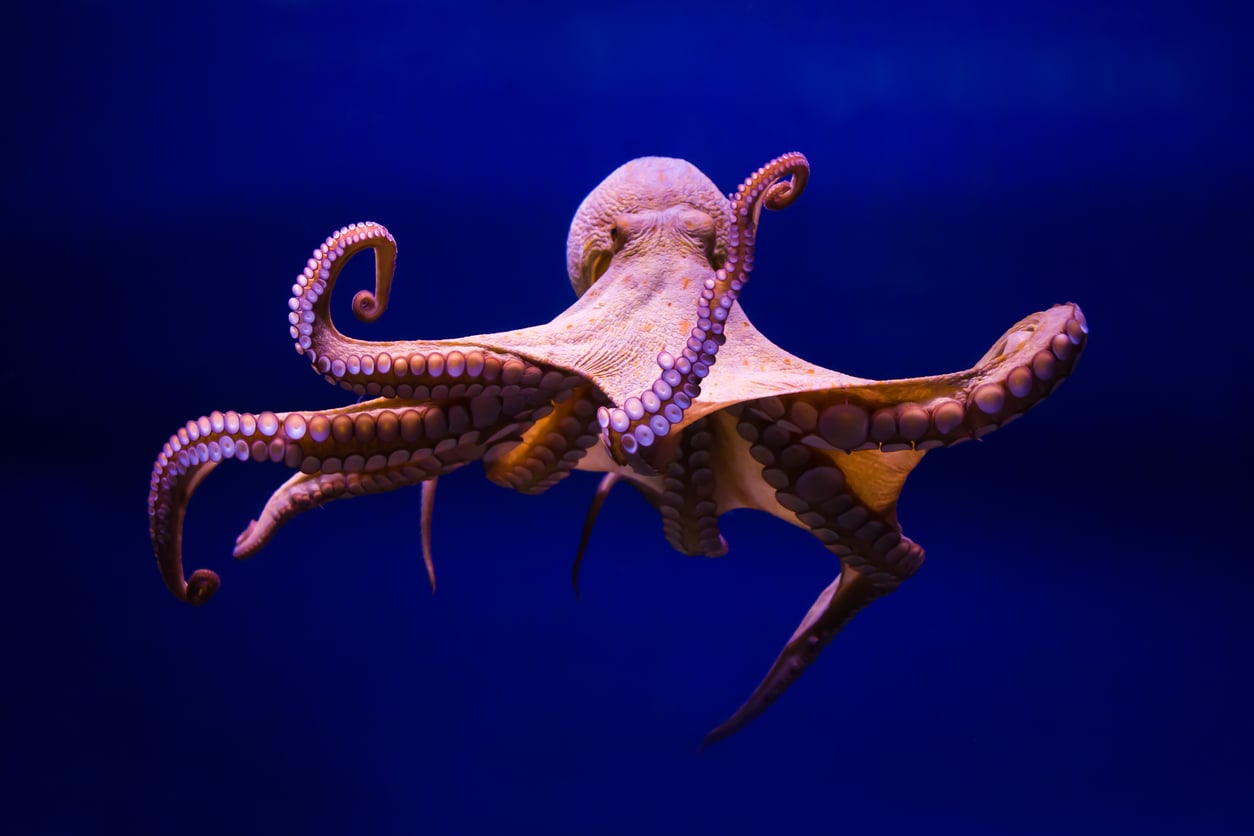
In a major victory for marine environmental campaigners plans for the world’s first octopus ‘megafarm’ – which would have killed more than a million of the creatures each year – have been cancelled.
Seafood producer Nueva Pescanova was originally aimed to build the project in Las Palmas, in the Canary Islands. At its full capacity, the 31,000m2 fish farm would have slaughtered 3,000 tonnes of octopus annually.
 ‘It’s Octopus Prison.’ Why Activists are Fighting to Stop World’s First Commercial Octopus Farm
 Now, the Spanish firm has withdrawn its planning application to the local Port Authority, putting an end to the controversial project to intensively farm sentient animals that are widely thought to be capable of feeling pain.
The global octopus food market is estimated to be worth around AED10billion, but there was previously no way to reproduce the entire octopus life cycle in captivity.
That changed in 2019 when Nueva Pescanova and the Spanish Institute of Oceanography (IEO) in Vigo announced they had found a way to raise octopus entirely in tanks – but using intensive methods which attracted widespread criticism.
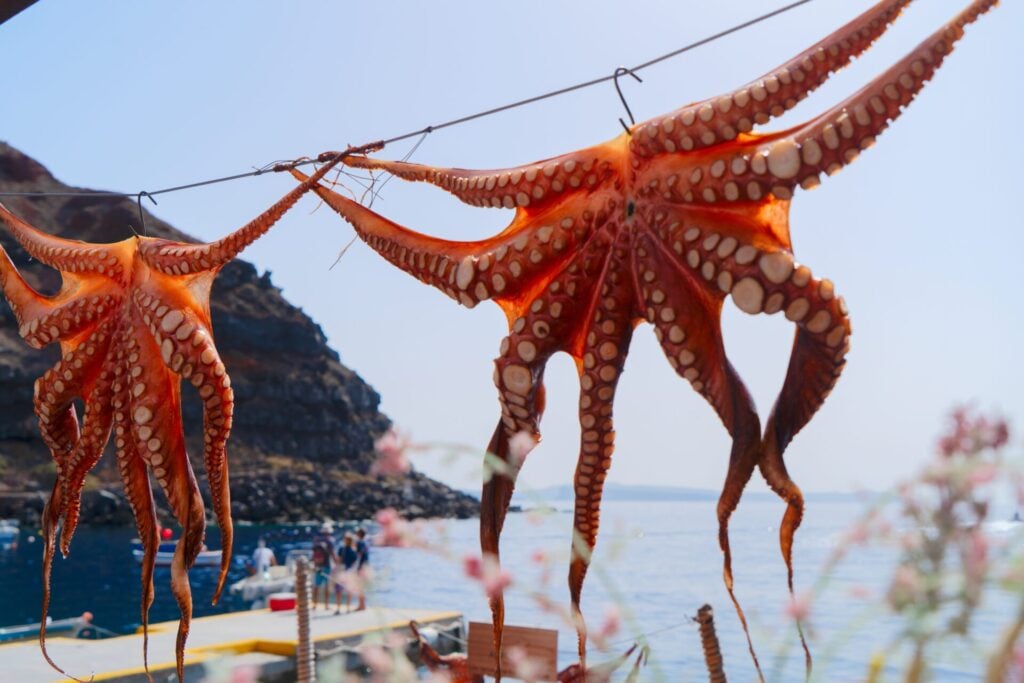
These solitary creatures, which are used to the dark, would be kept under constant bright lights and crammed in with up to 15 other animals per cubic metre.
The octopus would then be killed by being plunged into a tank of ice held at minus 3°C a method which studies have shown to cause a slow, painful death.
The octopus would then be killed by being plunged into a tank of ice held at minus 3°C a method which studies have shown to cause a slow, painful death
Immediately, animal rights groups raised concerns that these conditions would be highly unethical.
Extremely intelligent animals
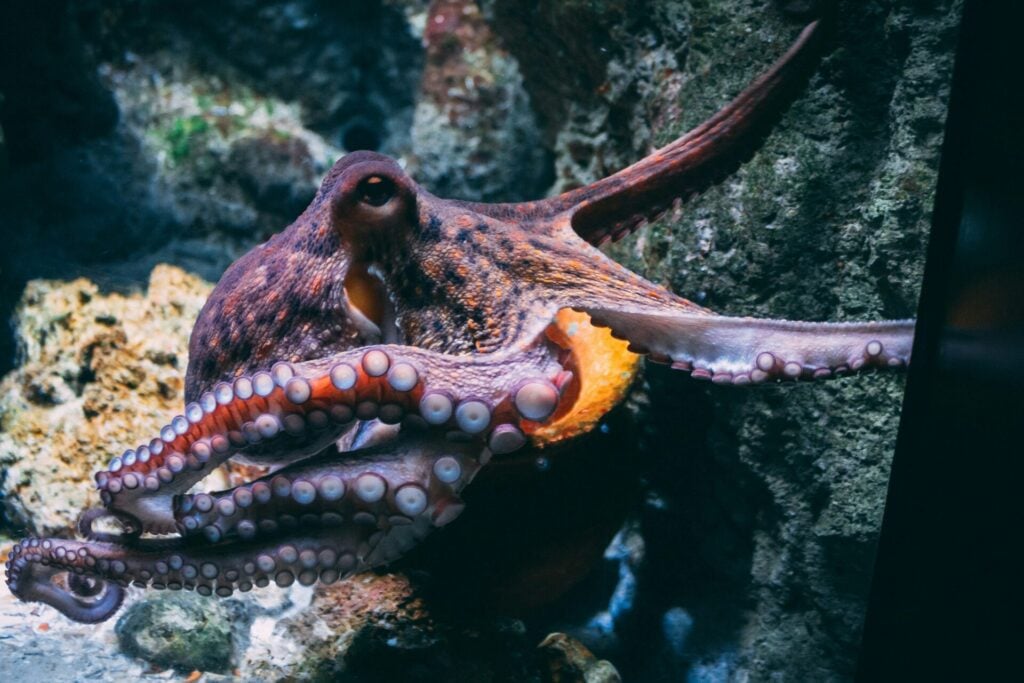
Octopuses are widely acknowledged to be extremely intelligent animals, with many studies suggesting that they have conscious awareness and are capable of feeling pain, pleasure, excitement, and fear.
This suggests that they actually register and feel pain as a negative experience, rather than just avoiding harm by reflex.
In 2022, the UK officially recognised octopus’ sentient status and enshrined this into law with the Animal Rights Bill.
Professor Jonathan Birch, of the London School of Economics, led a review of over 300 scientific papers which found that octopus feel pain and pleasure reporting there was ‘strong scientific evidence decapod crustaceans and cephalopod mollusks are sentient’.
In 2022, this led to the UK becoming the first country to officially recognise that octopus are sentient, enshrining this fact into law with the Animal Rights Bill.
Scientists also raised concerns about the proposed farm’s environmental impact as it would use up 2.1 billion wild–caught fish to feed the octopus and cause ‘serious biophysical and biosecurity risks’.
Despite this opposition, Nueva Pescanova did not acknowledge that ethical or environmental considerations played a role in the decision to cancel the project, but blamed the cancellation on ‘significant extension of administrative deadlines’.