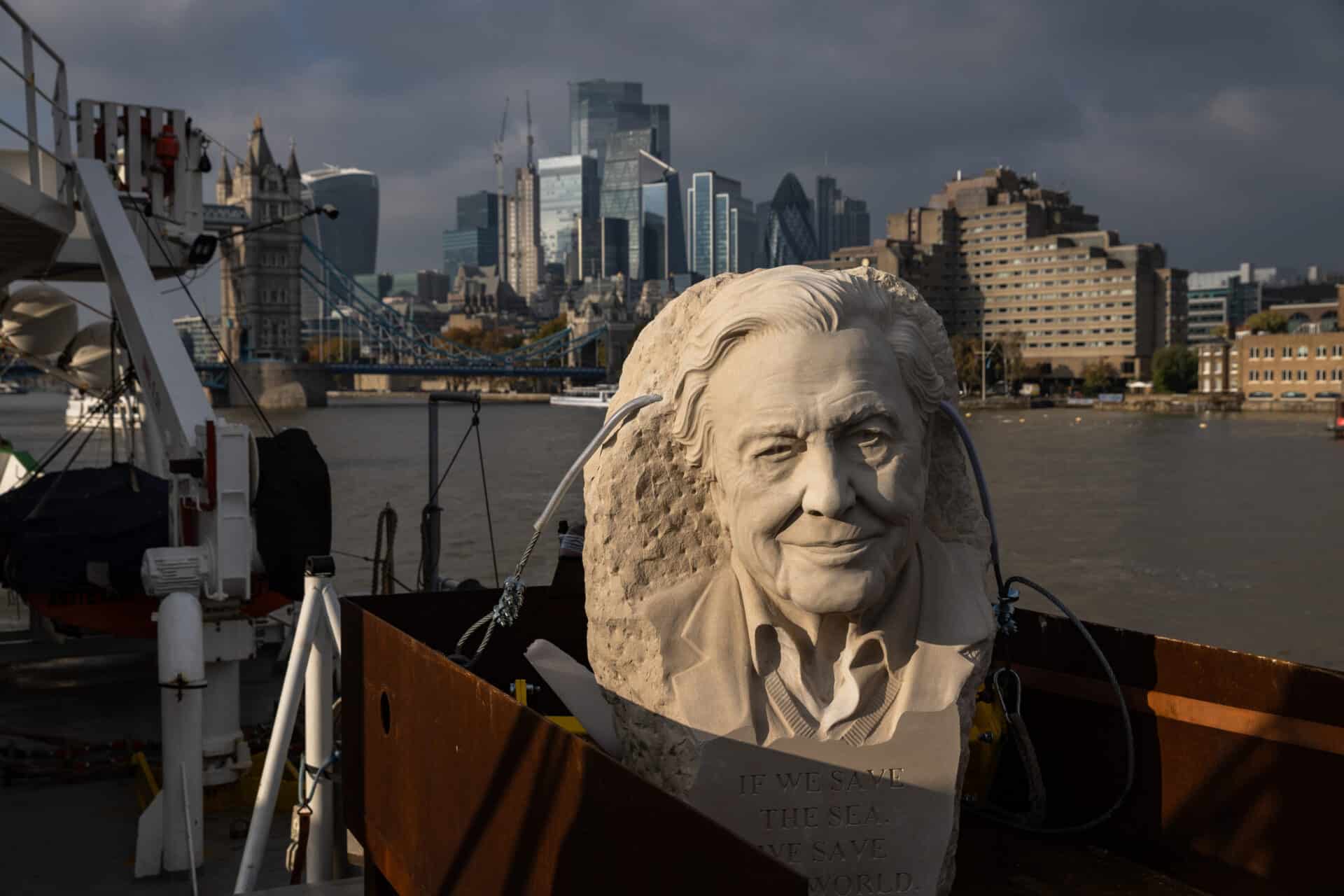
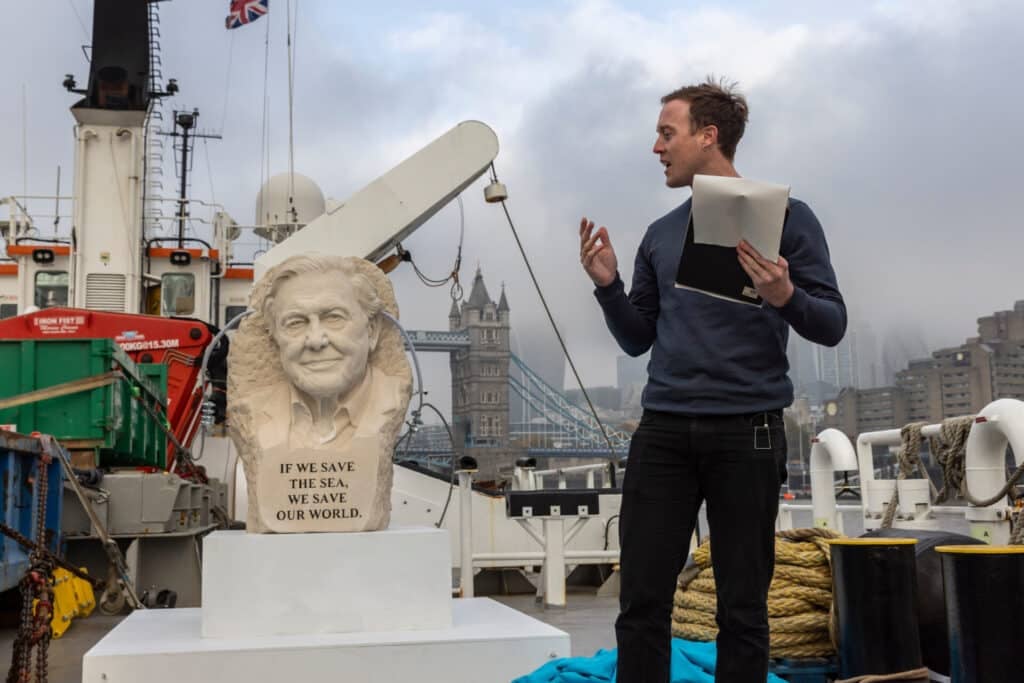
Greenpeace has unveiled a new tribute to Sir David Attenborough – a giant limestone boulder carved into the likeness of the legendary naturalist, which campaigners plan to lower onto the seabed to protect marine life from destructive fishing.
Affectionately nicknamed the ‘Attenboulder’, the sculpture was revealed aboard Greenpeace’s Arctic Sunrise on the River Thames in London, as millions tuned in to the latest instalment of the BBC’s Blue Planet series.
The sculpture will form part of an underwater barrier designed to prevent industrial fishing vessels from dragging heavy equipment across the seabed in one of Britain’s most heavily fished marine protected areas.
Protecting the Ocean, One Boulder at a Time
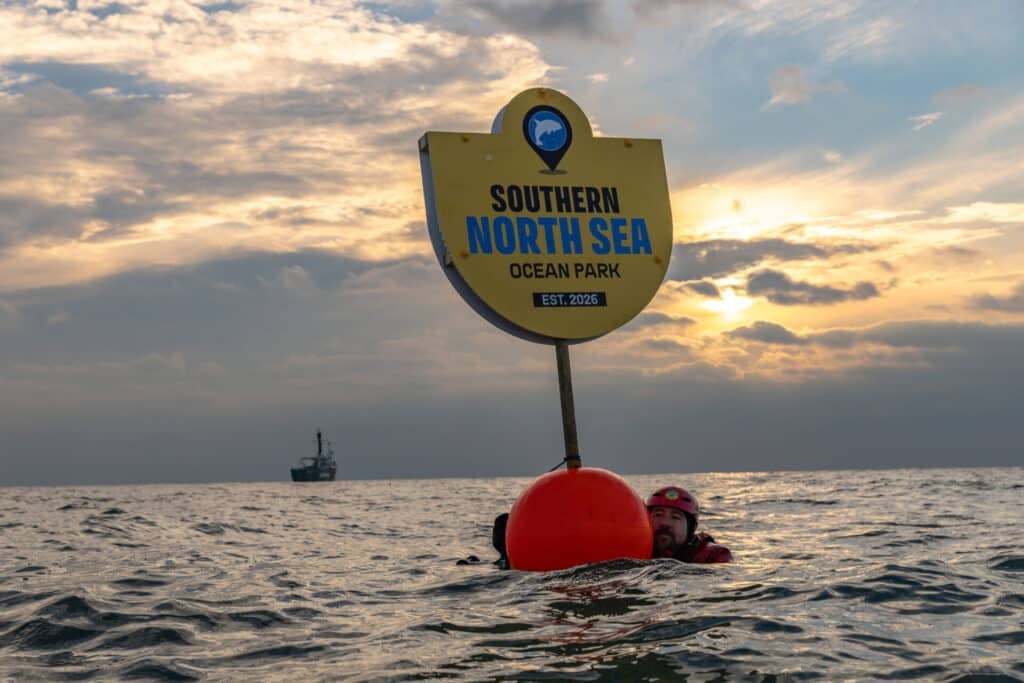
The Attenboulder will join nine other giant rocks already placed on the seabed in the Southern North Sea, off the east coast of England, where Greenpeace is attempting to create what it calls an ‘Ocean Park’.
The area was designated as a Marine Protected Area (MPA) to safeguard harbour porpoises, yet according to Greenpeace, it remains the UK’s most heavily bottom-trawled marine sanctuary.
Bottom trawling involves dragging large, weighted fishing nets along the ocean floor to catch fish and other marine species. In the process, the equipment can damage fragile seabed habitats, disturb marine ecosystems and capture species that were never intended to be caught.
By strategically positioning enormous boulders on the seabed, Greenpeace hopes to make it physically difficult for industrial fishing vessels to operate in the area.
The organisation says its underwater barrier has already effectively closed 116 square kilometres of the protected zone to bottom trawling, with the coordinates of each boulder shared with the relevant authorities.
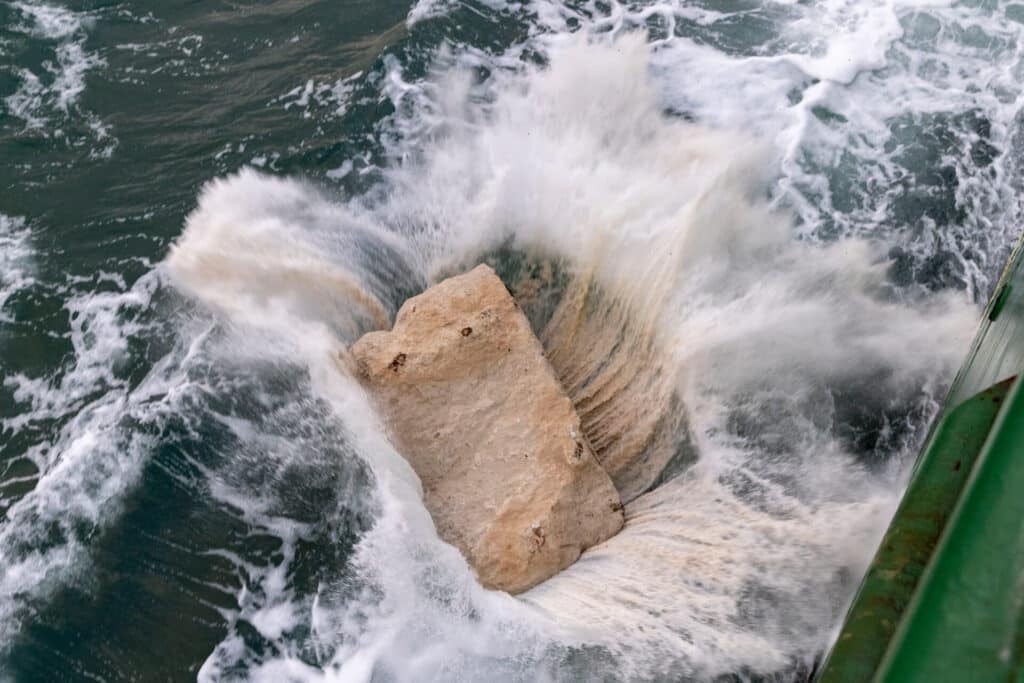
However, the campaign has brought Greenpeace into direct conflict with the UK’s Marine Management Organisation (MMO), which has threatened legal action unless the environmental group immediately stops placing rocks on the seabed.
Are Britain’s Marine Protected Areas Really Protected?
The unveiling has also reignited a wider debate about whether Britain’s marine sanctuaries are doing enough to protect the wildlife they were created to safeguard.
Since Blue Planet II first aired in 2017, the UK government has established 23 new offshore Marine Protected Areas, bringing the total to 78. Yet Greenpeace argues that many of these designated sanctuaries offer little meaningful protection from damaging industrial fishing activities.
According to the organisation, most still lack restrictions on destructive fishing methods, while fishing activity has actually increased in 16 of the newly designated protected areas.
Greenpeace also points to research by the Blue Marine Foundation suggesting that the total quantity of fish in UK waters has fallen by more than 40 per cent over the same period, with six in ten fish stocks experiencing declines.
Will McCallum, Co-Executive Director of Greenpeace UK, said the government was failing to match the public’s growing enthusiasm for ocean conservation with meaningful action.
‘The public is falling in love with our oceans all over again thanks to Blue Planet III. Yet right off our coasts the government still allows industrial fishing vessels to bulldoze the seabed and all of the incredible marine life it holds.’
He added: ‘These are supposed to be safe havens for wildlife – not killing grounds.’
A Tribute to Sir David Attenborough’s Ocean Legacy
The choice of Sir David Attenborough as the face of the campaign is particularly symbolic. Throughout his extraordinary broadcasting career, the naturalist has brought the wonders of the underwater world into millions of homes, helping generations understand the extraordinary diversity of marine life and the growing threats facing it.
His Blue Planet documentaries have also played a significant role in bringing issues such as plastic pollution, overfishing and habitat destruction into mainstream public consciousness.
‘We wanted to pay tribute to Sir David’s enduring legacy of ocean protection,’ McCallum explained.
The campaign has already attracted support from several prominent figures, including actors Benedict Cumberbatch and Simon Pegg, alongside six MPs who have signed their names to the boulders in support of stronger protections for British waters.
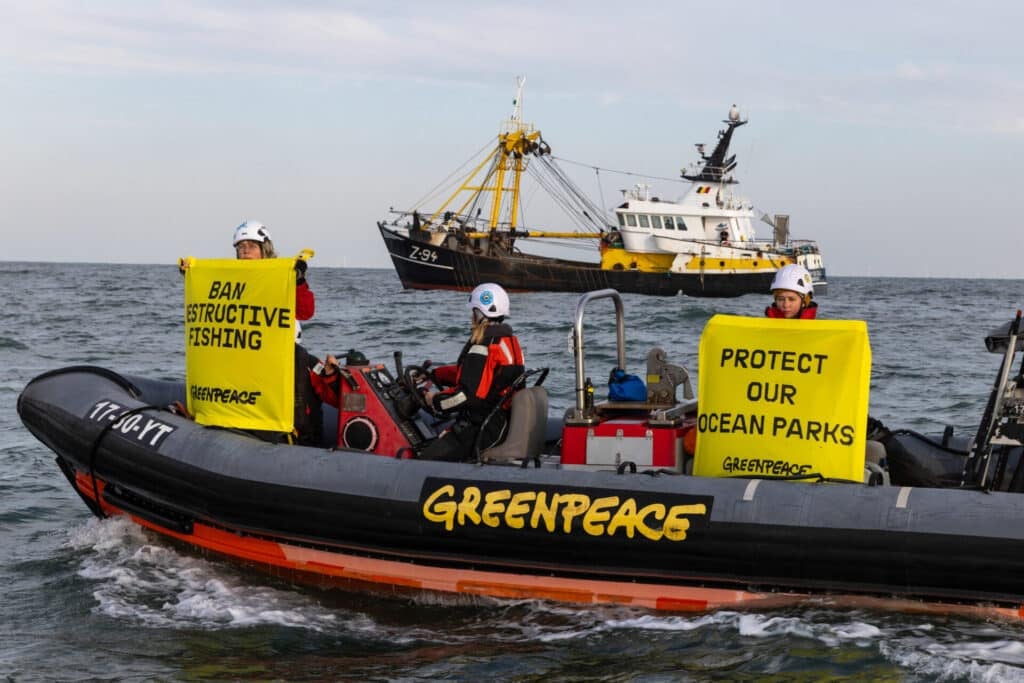
During its recent patrols of the Southern North Sea, the Arctic Sunrise crew has also approached industrial fishing vessels operating inside the protected area, urging them to stop fishing.
For Greenpeace, the Attenboulder represents a simple message that marine protected areas should offer genuine protection to their species and ecosystems.