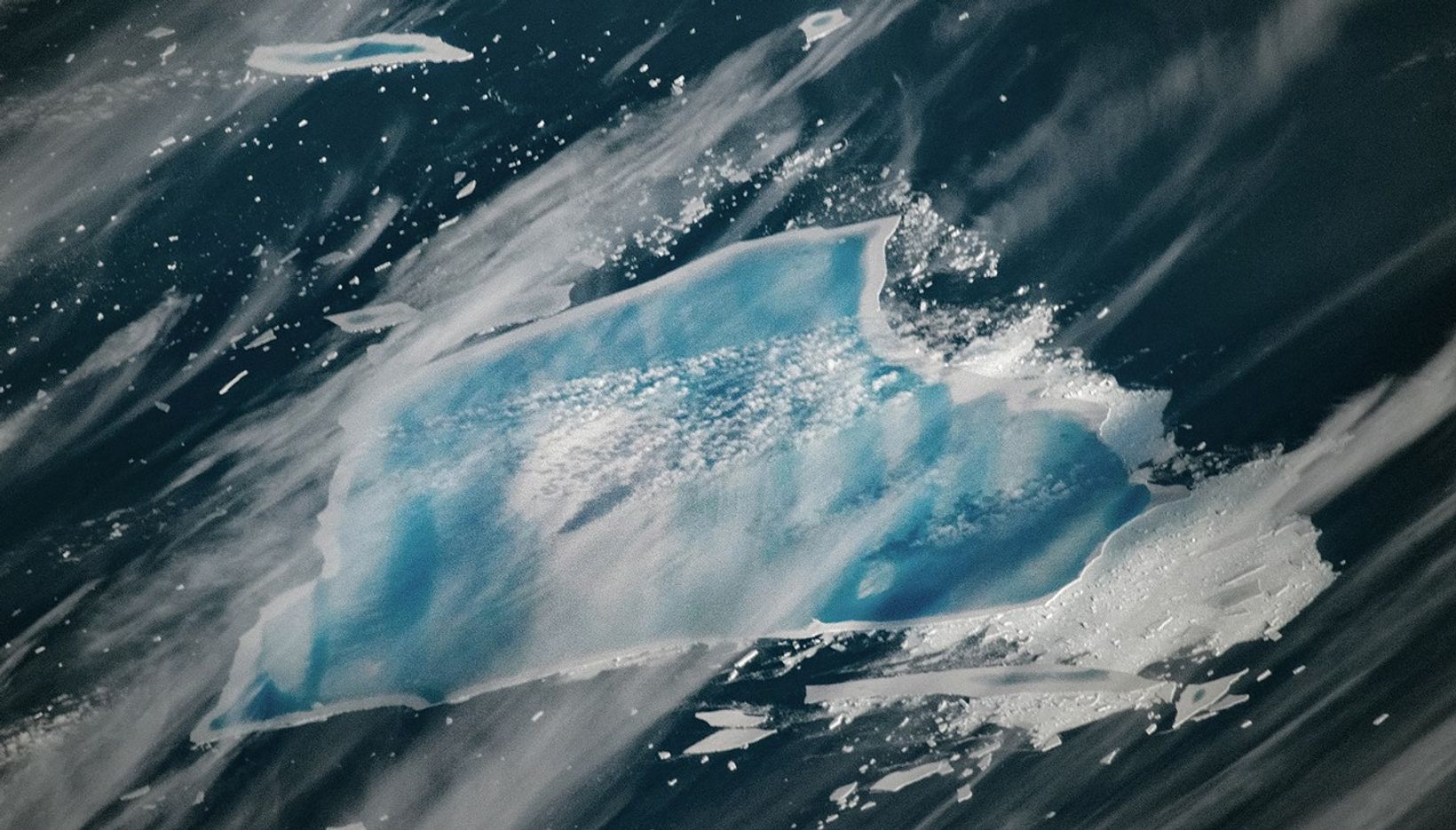
A-23A – the world’s largest iceberg – has turned bright blue, a sign, scientists say, that it is about to melt.
The frozen giant A-23A first separated from Antarctica’s Filchner Ice Shelf in 1986 and has been drifting around the Southern Atlantic Ocean ever since.
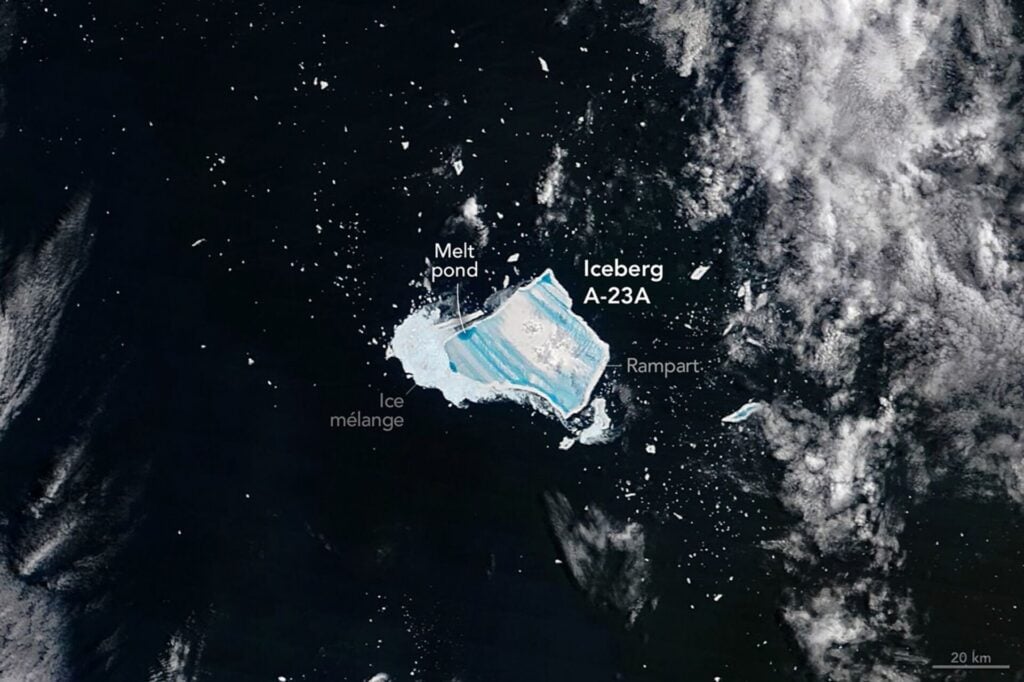
In the latest report on its condition, new satellite images taken by NASA show that the former ‘King of the Seas’ is now covered with meltwater and blue slush.
Also known as the ‘megaberg’ A23A once weighed a little under a trillion tonnes and measured almost half the size of the entire emirate of Dubai. But scientists from the US National Ice Centre estimated its area has dwindled to just 1,182 Km2.
Dr Chris Shuman, a scientist from the University of Maryland, Baltimore County, who has tracked this iceberg his entire career, says: ‘I certainly don’t expect A-23A to last through the austral (southern hemisphere) summer’ noting that the season typically brings clearer skies and warmer air and water temperatures—factors that accelerate the disintegration process in an area known among ice experts as a ‘graveyard’ for icebergs.
Total Collapse Imminent
Pictures captured by NASA’s Terra satellite show just how extensive the iceberg’s collapse has become. The blue areas show regions where meltwater has collected and pooled on the surface in large pond-like formations.
Dr Tedd Scambos, a senior research scientist at the University of Colorado Boulder, said: ‘You have the weight of the water sitting inside cracks in the ice and forcing them open’ – predicting that its total collapse is likely to come soon.
After being released into the South Ocean in the 1980s, A-23A grounded itself in the shallow waters of the Weddell Sea, where it remained almost unchanged for over 30 years.
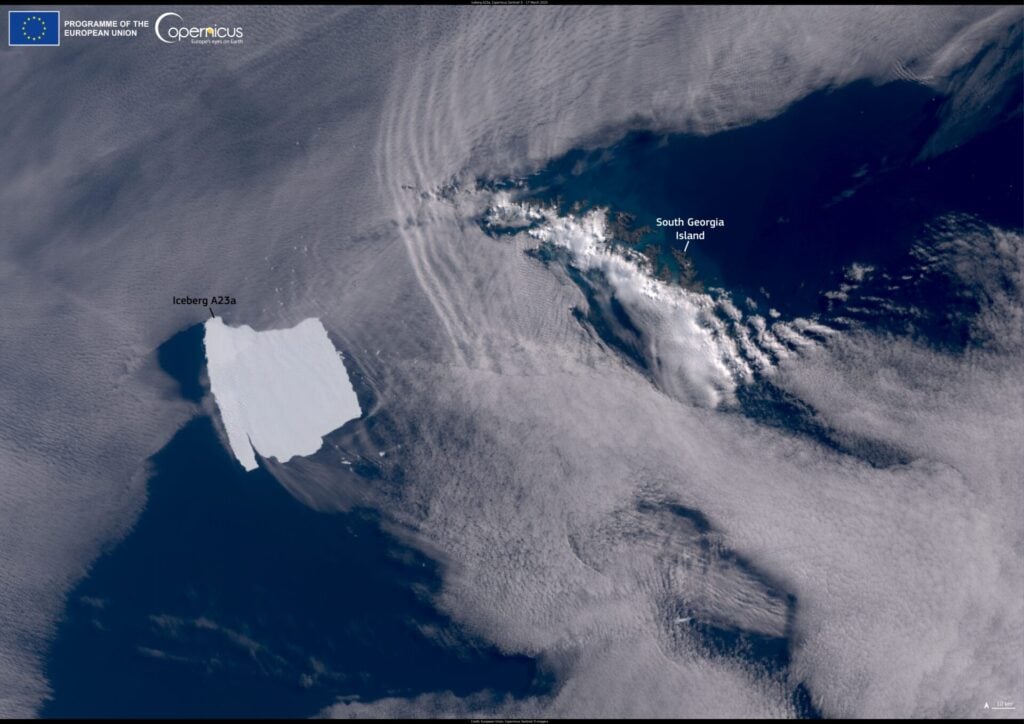
After freeing itself in 2020, the iceberg spent several months spinning in an ocean vortex known as the Taylor column. Then, after almost colliding with the island of South Georgia A-23A finally escaped into the open ocean, where it has been breaking up since 2025. It is already in water that is about three degrees centigrade warmer than around Antarctica, and currents are pushing it into even warmer waters.
Schuman added: ‘A-23A faces the same fate as other Antarctic bergs, but its path has been remarkably long and eventful. It’s hard to believe it won’t be with us much longer.
‘I’m incredibly grateful that we’ve had the satellite resources in place that have allowed us to track it and document its evolution so closely.’
NASA experts say even as A-23A fades, other massive bergs are parked or drifting along the Antarctic shoreline. Several, including A-81, B22a, and D15a, are each larger than 1,500 Km2 and are waiting for their moment to break free and begin their journey north.