
A small uncrewed vessel has set off from Australia to sail around Antarctica, powered by wind and sun, to help scientists better understand the climate crisis.
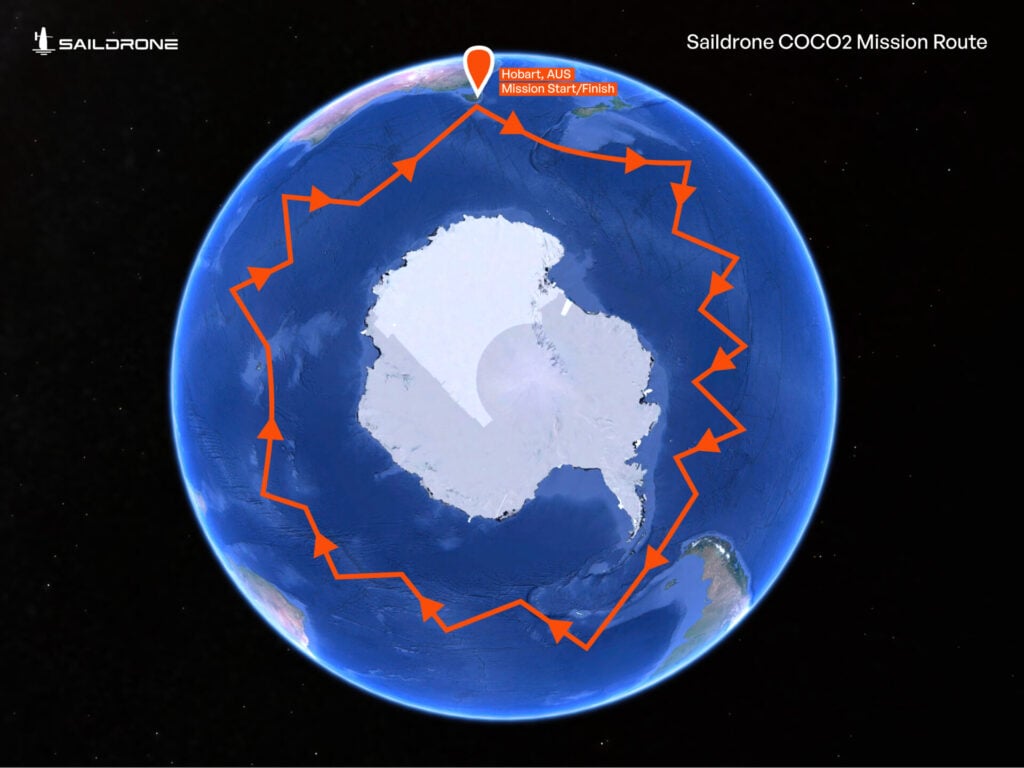
The seven-metre long ocean-going drone, is expected to travel about 22,000km battling massive waves, freezing temperature and gale force winds.
It will collect data on carbon dioxide in the ocean and atmosphere, to help scientists better understand the role that the sea plays in regulating global temperatures.
Dr Elizabeth Shadwick, a principal research scientist at the Commonwealth Scientific and Industrial Research Organization (CSIRO), said that after leaving the group’s Hobart base the vessel would travel east towards New Zealand, ‘eventually scooching (moving through a tight space) through the Drake Passage between the bottom of South America and Antarctica, then coming along past South Africa and back to us here, where we’ll pick it up.’
She added that she hoped to see it again in seven to nine months.
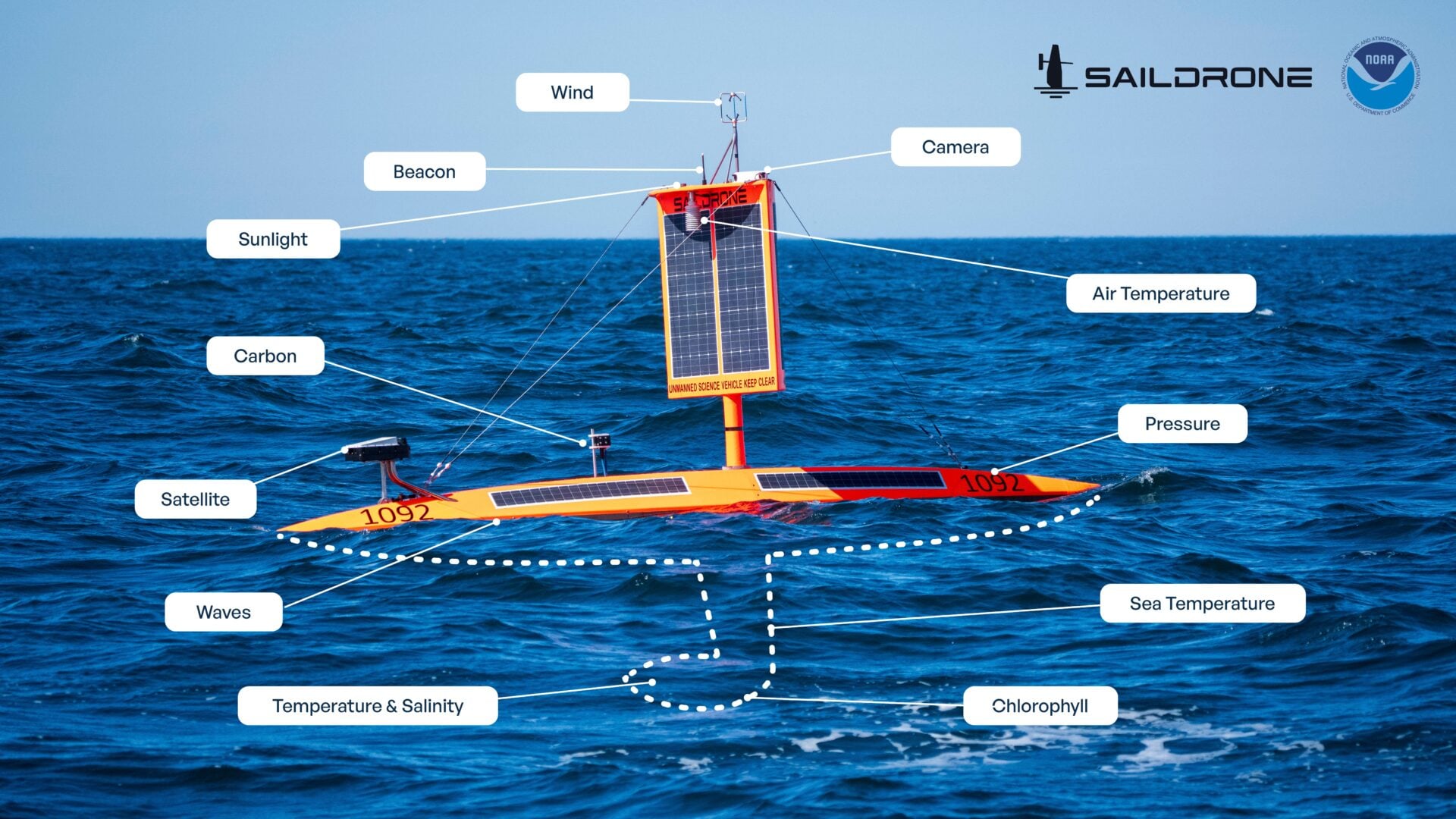
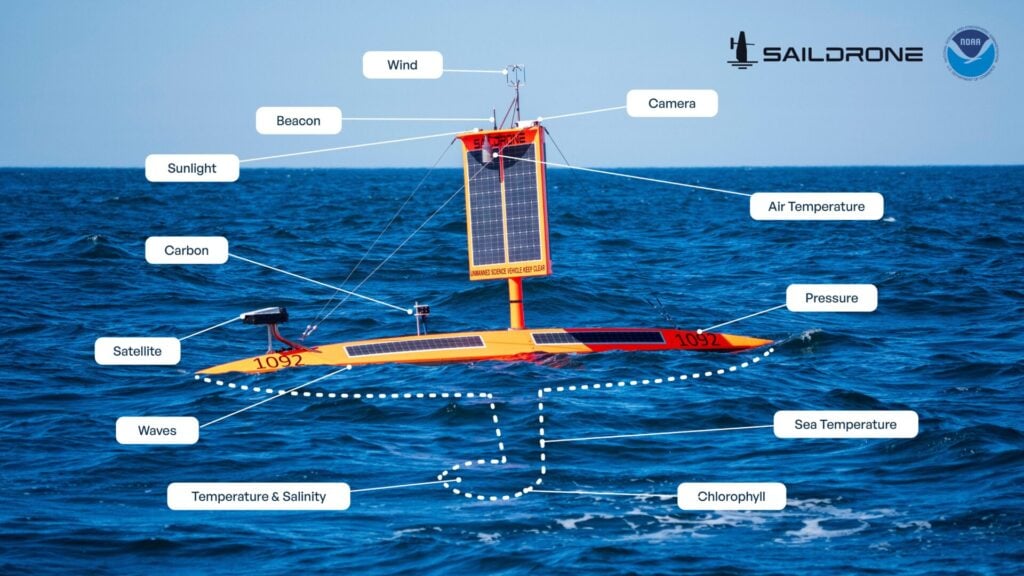
The ocean-going drone made by the US maritime company Saildrone and classified as a ‘Saildrone Explorer’ was designed to withstand the voyage by having a heavy keel keeping it upright, a rudder to steer and a fixed solar sail for power.
It will be remotely monitored by the company via satellite, and, if necessary, operators can change its course to ensure it is heading in the right direction.
‘It’s already been bashed around pretty heavily,’ Shadwick said. ‘It’s quite a robust little device. We saw some eight metres of waves just the day after we deployed it and a 35-knot wind.’
Ocean-going drone to monitor climate role
Measurements taken throughout its journey – including wind speed, atmospheric pressure, solar radiation, ocean temperature, salinity and chlorophyll, as well as carbon dioxide levels in the water and air – were expected to assist scientists in better understanding the role that oceans play in global heating.
‘The ocean is doing all of us a great service by absorbing about a third of anthropogenic or human emissions every year,’ Shadwick said
She explained that the the Southern Ocean, around Antarctica, played a significant role saying: ‘If we want to continue to rely on this ocean service of absorbing our human emissions, we need to understand how it might change in the future.’
Crewed research vessels that travelled between Hobart and Antarctica traversed only a limited patch of the ocean, but the autonomous craft will gather data over a greater distance and time, including crucial measurements during the polar winter.
The vessel is the first in a fleet of four. Others are planned to be launched at three-monthly intervals. They will be spread across the Southern, Pacific, Atlantic and Indian oceans, particularly during winter.
Scientists will be able to access information in near real time via a mission portal, and once the vessels return to home base, all data and observations will undergo quality checks before they are made available for further research.
Dr Pep Canadell, a chief research scientist at the CSIRO, said for every tonne of carbon dioxide released by burning fossil fuels, about 500kg were removed by ocean and forest sinks.
‘This is like a 50 per cent discount on climate change,’ he said.
But the amount absorbed by the oceans could change due to multiple factors such as warming waters, westerly winds, melting ice, ocean acidification and the hole in the ozone layer.
Observations by the ocean-going drone will allow scientists to more accurately model processes and understand how they could change in the future.