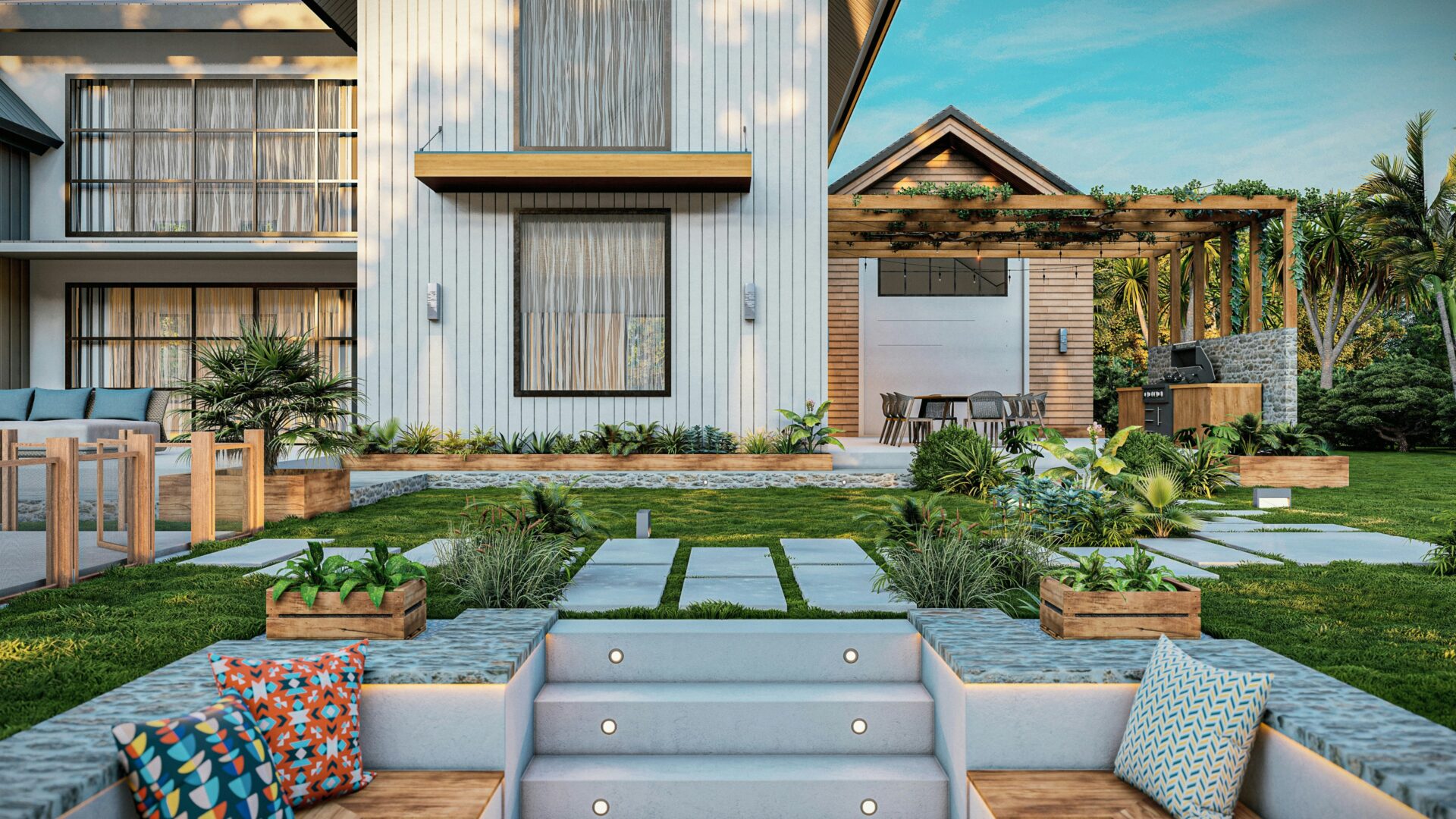
Ever scrolled through Instagram, seen a stunning patio transformation, and thought, ‘I need that in my life’? Same. Three years ago, I was ready to dive headfirst into creating my dream outdoor space, until I discovered something that stopped me cold.
That beautiful concrete patio I’d been planning? It would generate roughly the same emissions as driving a car for six months. The treated lumber I’d picked out was leaching toxins into the ground. And most of the furniture I loved would end up in a landfill within five years.
Suddenly, my eco-friendly lifestyle felt like a lie waiting to happen in my backyard.
But here’s the thing: you don’t have to choose between a beautiful outdoor space and staying true to your values. You just need to know what you’re working with and where the better options are hiding in order to create the perfect sustainable patio.
Why Your Patio Matters More Than You Think
Most of us don’t think twice about patio materials. Concrete is concrete, right? Stone is natural, so it must be fine? Not quite.
The concrete industry alone accounts for 8 per cent of global CO2 emissions. Natural stone often comes from overseas quarries with questionable labour practices. And those standard patio installations create impermeable surfaces that prevent rainwater from filtering into the ground, disrupting entire underground ecosystems.
Even in places where every drop of rain matters, we’re still paving over surfaces that could be capturing and storing precious water.
The good news? Once you know this, you can’t unknow it. And that’s when the real choices begin.
Materials That Don’t Cost the Earth
If traditional patio materials are off the table, what’s left? More than you’d think.
Permeable pavers let rainwater filter naturally into the ground instead of running off into storm drains. They’re made from recycled materials or sustainably sourced clay, and they reduce runoff by up to 95 per cent. In dry climates, this isn’t just eco-friendly, it’s smart water management.
Reclaimed materials are where function meets character. Salvaged brick, vintage flagstones, or repurposed railway sleepers carry stories and zero additional environmental cost. I’ve seen sustainable patios built entirely from materials destined for landfills that look better than anything you’d find at a big box store.
Bamboo decking reaches maturity in 3-5 years compared to 20-100 years for hardwoods. When it’s FSC-certified, you’re getting durability without rainforest destruction. Modern bamboo composites hold up to weather while maintaining their sustainability credentials.
You don’t need exotic materials to create something special. You just need to think differently about what ‘special’ means.
Living Shade That Actually Works
Shade is non-negotiable for outdoor comfort, especially in hot climates. But you have options beyond building a solid roof or cranking up outdoor cooling systems.
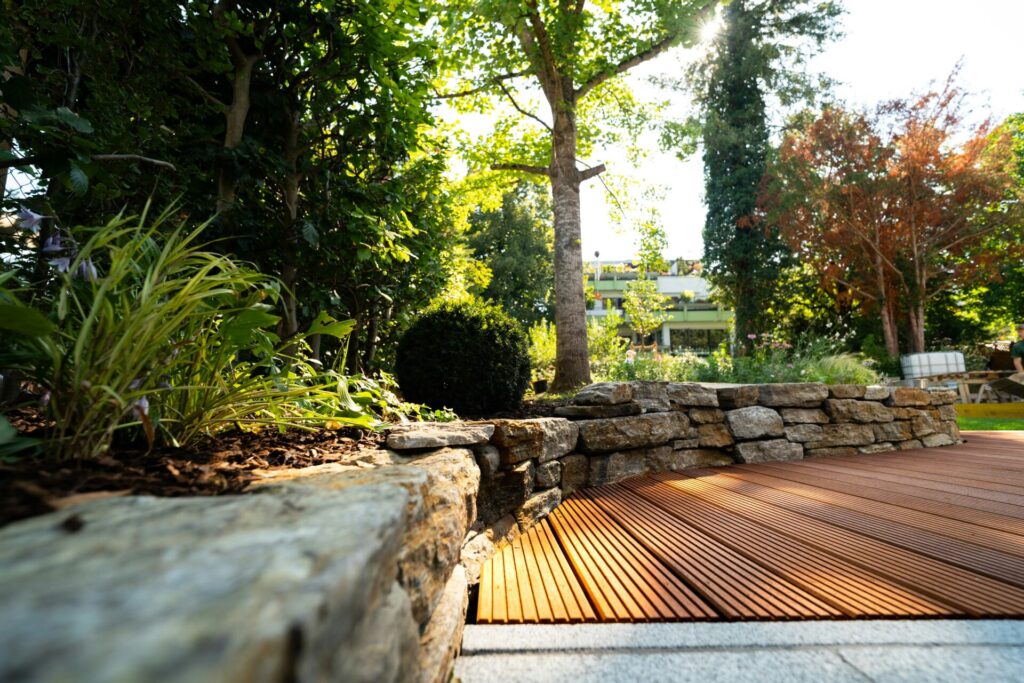
Trees are the most ecological solution. A mature tree reduces surrounding temperatures by 2-9°C through evapotranspiration while sequestering carbon and providing wildlife habitat. In hot regions, native species thrive with minimal water while creating that magical dappled shade that makes you actually want to spend time outside.
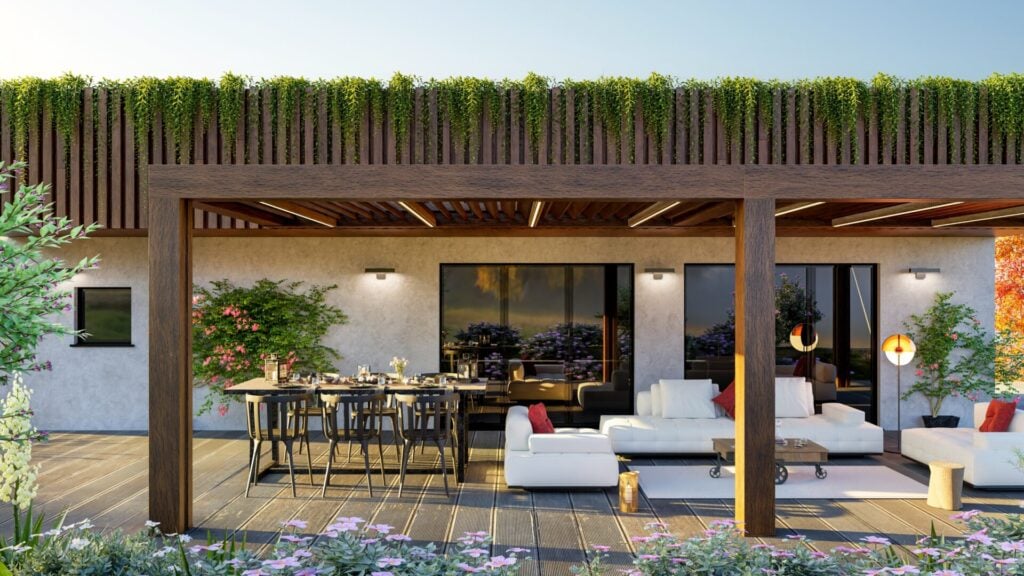
Pergolas covered with climbing vines combine structure with ecology. Native climbers like jasmine or bougainvillea create natural cooling while supporting pollinators. This “living roof” approach tackles heat island effects—something increasingly important as temperatures climb.
For immediate coverage, shade sails made from recycled ocean plastics turn pollution into function while blocking up to 98 per cent of UV radiation.
In humid regions like Florida, Orlando retractable screens provide year-round bug protection without the energy drain of air conditioning. These adaptable systems let you enjoy outdoor living while maintaining natural ventilation—especially valuable in climates where insects and intense sun are constant considerations.
Water-Wise Design For Real Life

Over 2 billion people globally face water scarcity, and drought conditions are intensifying everywhere from the Middle East to the American Southwest. Your patio design can either contribute to the problem or be part of the solution.
Rainwater harvesting integrated into sustainable patio design captures precipitation for irrigation. Rain chains replace traditional downspouts, directing water into decorative catchment basins or underground cisterns. In areas with seasonal rain, this free water can sustain gardens year-round.
Drought-adapted plants thrive without supplemental irrigation once established. And no, this doesn’t mean sad, sparse landscapes. Thoughtfully designed drought-tolerant gardens burst with colour and texture while using 50-75 per cent less water than conventional plantings.
Even furniture choices impact water consumption. Cushions made from solution-dyed acrylic resist fading without chemical treatments, and their durability prevents the water-intensive cycle of constantly replacing textiles.
Furniture That Lasts (And Why That Matters)
The outdoor furniture industry loves ‘eco-friendly’ labels, but you need to look past the marketing.
Real sustainability starts with durability. A high-quality teak chair lasting 25 years has far lower environmental impact than three cheap plastic sets ending up in landfills over the same period.
This flips conventional wisdom on its head: true sustainability often requires higher upfront investment in quality that endures.
Look for FSC-certified wood, which ensures forests are managed for long-term health rather than clear-cutting. Recycled aluminum and steel require 95 per cent less energy than virgin metal production.
But don’t stop at materials. Check labour practices, too. Fair Trade or B Corp certifications indicate companies are committed to fair wages and safe working conditions throughout their supply chains.
Modular, repairable furniture systems extend usable life while adapting to changing needs. Several manufacturers now offer lifetime repair programs, keeping furniture out of waste streams indefinitely.
The Maintenance Factor Nobody Talks About
Here’s what most sustainability guides miss: ongoing maintenance can undermine even the most eco-friendly initial construction.
Natural materials like untreated wood, when properly designed for drainage and airflow, need only occasional cleaning with eco-friendly solutions. Stone and tile last for decades with simple sweeping. Native plantings, once established, thrive on natural rainfall without fertilizers or pesticides.
This low-maintenance approach contradicts traditional landscaping’s chemical dependency. The average lawn receives 10 times more chemical pesticides per acre than agricultural farmland. Sustainable patios embrace the beautiful imperfection of weathered materials and plantings that change with the seasons.
Choose materials and plants matched to your local conditions, and you eliminate the constant battle against nature. A teak bench in humid climates weathers gracefully. The same wood in arid regions might crack and split. Understanding these relationships prevents maintenance headaches and replacement cycles.
Making The Transition Without Starting Over
If you already have a patio, don’t rip it out. Existing materials represent the embodied energy and resources that have already been consumed. The most sustainable patio might be the one you already have, thoughtfully improved.
Start with high-impact changes. Replace toxic treated wood with sustainable alternatives as needed for repairs. Add native plants around edges to create wildlife corridors. Install permeable surfaces in areas with water pooling.
For new construction, prioritise local materials to minimise transportation emissions. A locally quarried stone, even without certifications, likely has a lower environmental impact than ‘eco-friendly’ imports shipped thousands of miles.
Work with designers and contractors who understand sustainable principles. Ask specific questions about material sourcing, labour practices, and long-term environmental impacts. Be wary of greenwashing—vague ‘natural’ or ‘eco’ claims without specific certifications.
Most importantly, recognise that perfect sustainability doesn’t exist. Every choice involves tradeoffs. The goal isn’t paralysis, seeking ideal solutions, but making the most ethical, environmentally sound decisions possible within your context and constraints.
Your Outdoor Space, Your Values
Creating a sustainable outdoor living space doesn’t mean sacrificing beauty or comfort. It means making informed choices that align with your values while creating a space you’ll actually use and love.
The environmental cost of traditional patio construction has been invisible for too long. But once you see it, you can’t unsee it. And that’s when the real opportunity begins—to create outdoor spaces that enhance rather than diminish the world around them.
Start small. Pick one element to change. Then another. Your sustainable patio doesn’t need to be perfect. It just needs to be better than what came before. And honestly? That’s more than enough.