For many, the arrival of December is all about planning family get togethers, putting up the tree with the children, and the countdown to Christmas Eve. But for those who have lost a baby this time of year can reopen wounds that never truly heal. Festive posts remind mothers of milestones they never got, holiday gatherings are harder than anyone realises, and it seems there are children everywhere, except the ones they wish they had.
Baby loss is devastating at any time of year, but the emotional weight can feel especially heavy during the holidays, when society leans into images of happy families. This time of year, keep an eye on anyone in your social circle who may be carrying this kind of grief because according to Specialist Psychiatrist and Psychotherapist Dr Valentina Faia, the psychological consequences of losing a baby are not only profound but medical.
‘Baby loss significantly elevates the risk of postpartum and peripartum mental health issues,’ she tells The Ethicalist. ‘We see depression, anxiety, PTSD independently from socioeconomic status, education level, or even quality of care.’
Scientific data reinforces what Dr Faia sees in clinic every day, that perinatal loss places parents at a significantly heightened risk of depression, anxiety, PTSD and long-term emotional distress.
Studies show that many women experience clinically relevant symptoms in the months and even years after losing a baby. Research into complicated grief – intense grief lasting over a year – also suggests that rates among bereaved mothers are far higher than those seen after other types of loss. In some studies, as many as a quarter to nearly half of mothers experience lingering, intense grief reactions, underscoring just how life-altering and long-lasting the psychological impact of baby loss can be.
When the World Continues, But Your World Stops
For Safiyya Mansoor Lewis, who lost her son Mikaeel at 20 weeks, grief arrived with a force that shattered her sense of safety.
‘I was told after 12 weeks I was ‘safe,’ she recalls. ‘Losing a baby halfway through pregnancy was a shock like no other. I never imagined I would bury my son. When your worst nightmare comes true and there’s nothing you can do to stop it, it feels impossible to cope.’
‘I couldn’t see a pregnancy announcement without breaking down, wishing I were the one still pregnant or holding my newborn. It often felt like I was the only one without a baby’
Safiyya Mansoor Lewis, Mother
In the weeks and months that followed, everyday life became a minefield. Panic attacks, nightmares and intrusive memories blurred her days. Even something as routine as going to the supermarket could leave her spiralling if she encountered an aisle full of pregnant women or mothers with young babies.
‘I couldn’t see a pregnancy announcement without breaking down, wishing I were the one still pregnant or holding my newborn. It often felt like I was the only one without a baby.’
And anniversaries, like the date she should have been giving birth, were unbearable. ‘They were filled with grief for what should have been,’ she explains. ‘Even now, my due dates remain a huge trigger, marking the days I should have welcomed my babies, while instead I remember the days they were born and buried.’
Eight years later, when she lost her second son, Jibreel Lewis, in the second trimester, the grief was no less devastating, but she met it differently.
‘I noticed a significant difference in how medical teams handle bereavement, including the presence of bereavement teams who can support parents immediately after loss,’ she recalls. ‘Receiving a memory box for our little boy the second time around was also a key part of our healing journey.’
Between her two losses, Safiyya started speaking openly about her babies, educating friends on how to hold space, and joining a grief support group where she felt seen. ‘Talking about our boys has been incredibly healing,’ she says. ‘It keeps their memory alive.’
‘It Felt Like an Amputation’
For Talitha Thomas, who lost her twin sons Hosea and Malachi, grief fundamentally reshaped the landscape of her life.
‘In the weeks and months after my sons passed away, I felt like I was in a fog,’ she recalls. ‘I was exhausted all the time. I couldn’t care about anything. My mind would drift back to the NICU even when I was supposed to be driving or sitting in conversation.’
‘When you lose a child, it feels like an amputation. A missing part of you in every moment. Even now, I feel it, not as sharply, but it’s always there’
Talitha Thomas, Mother
She describes the early days as being consumed by a constant, physical ache. ‘When you lose a child, it feels like an amputation,’ she says. ‘A missing part of you in every moment. Even now, I feel it, not as sharply, but it’s always there.’
Hospitals, once a place of purpose for her as a doctor, became sites of trauma. ‘The smell of sanitiser, the sound of monitors, they could send me straight back to the moment. Just before my younger son Malachi passed away, we watched his team perform CPR on him. To this day (three years later) CPR is still a hard thing for my husband and I to even watch on TV.’

The support she received, however, was transformative. ‘Our closest friends uprooted their lives to take care of us,’ she says. ‘They moved houses for us, gave us a car, made meals, they carried us when we couldn’t carry ourselves.’
Therapy, including EMDR (Eye Movement Desensitisation and Reprocessing) – a trauma-focused technique that helps process overwhelming memories – eventually helped her access moments of her sons’ short lives with more clarity and less fear. ‘It has given me more room to love them,’ she explains, ‘and removed some of the weight of death.’
But the ache remains. ‘There will never be a time when a parent who has lost their baby is fully healed, or has no more grief,’ she says. ‘Grief exists because love exists, and that will never end.’
When Grief Deepens Into Something More
While grief is a natural response to baby loss, Dr Faia stresses that it can evolve into something more clinical, often without the parent realising the shift.
Loved ones should keep an eye out for a loss of interest in activities they once enjoyed, nightmares, panic attacks, withdrawal from loved ones, refusing to attend medical appointments, or struggling with showering, eating or getting dressed.
‘When symptoms persist beyond two to four weeks with little or no improvement, or when functioning becomes impaired at home, work or socially, it’s important to seek clinical support,’ she explains. ‘And any expression of suicidal thinking must be taken seriously and requires immediate professional intervention.’

Across cultures, baby loss still sits in the shadows. People avoid the topic because they don’t know what to say. Medical staff sometimes minimise it. Friends offer well-meaning but painful clichés.
The UAE’s transient landscape can intensify this isolation. ‘The expat lifestyle exposes parents to heightened risks,’ Dr Faia adds. ‘They often lack family support, face cultural silence around grief, and live in perfectionistic environments where losses are coded as failures.’
‘I started to believe I shouldn’t have been heartbroken and forced myself to suppress my grief and carry on with normal life to make others comfortable’
Safiyya Mansoor Lewis, Mother
For both Safiyya and Talitha, the invisibility and pressure to ‘move on,’ exacerbated the situation. The sense that others were more comfortable pretending their babies had never existed, or the feeling that their loss made people uneasy.
‘I received very little emotional support from medical staff in both the UAE and the UK, as well as from family members who felt it wasn’t culturally appropriate to speak about baby loss’ says Saffiya. ‘I started to believe I shouldn’t have been heartbroken and forced myself to suppress my grief and carry on with normal life to make others comfortable.’
For Talitha it was the lack of value placed on the life of her boys that made things impossibly hard.
‘One thing we heard again and again, both before and after our sons passed away, was, ‘You’re young, you can have more children.’ It was incredibly painful. While they were alive, comments like that made us feel as though their healthcare team didn’t value their lives, and after they passed, it made us feel as though they didn’t matter at all. Children are not replaceable, but it often felt like people believed they were.’
Dr Faia emphasises that this silence around baby loss isn’t just insensitive, it actively harms. ‘Stigma and lack of recognition delay access to support, fuel shame, and prolong psychological suffering,’ she says. ‘Parents need their loss to be acknowledged, not erased.’
What Helps
Talking openly
Conversations about the baby – their name, their story, their brief time in the world – can be profoundly healing. Safiyya says that talking about Mikaeel and Jibreel keeps their memory alive. Talitha says hearing Hosea and Malachi’s names spoken aloud still brings comfort.
Community support
Support groups like Love Through Loss provide connection, understanding, and a sense of belonging among people who have walked a similar path. They also help break the silence that often surrounds baby loss.
Therapy and professional care
Psychological therapy – including trauma-focused modalities like EMDR – can help parents process traumatic memories and rebuild emotional stability. In more severe cases of PTSD or depression, psychiatric care and medication may be needed to restore sleep, functioning and safety.
Practical help
Meals delivered, errands handled, childcare, and simply sitting beside someone in silence can be lifelines. Parents in acute grief after baby loss often lack the capacity to care for themselves, and practical support can ease this tremendous strain.
Permission to grieve without a timeline
Grief has no expiry date. Every parent’s journey is different, and healing from baby loss does not follow a neat, linear trajectory. Recognising this gives parents space to move through their grief with compassion not pressure.
As Dr Faia reminds us, ‘Baby loss is not something a parent ‘gets over.’ It is something they live alongside, with love and grief woven together. What they need most is understanding – from their communities, their workplaces, their families – and a space where their babies are remembered, not forgotten.’
‘There is no shame in baby loss,’ adds Safiyya, ‘and the more we speak about topics like this openly, the less we are forcing bereaved parents to suffer alone.’
If you, or anyone you know, is suffering from baby loss, help is available at bpsclinic.com
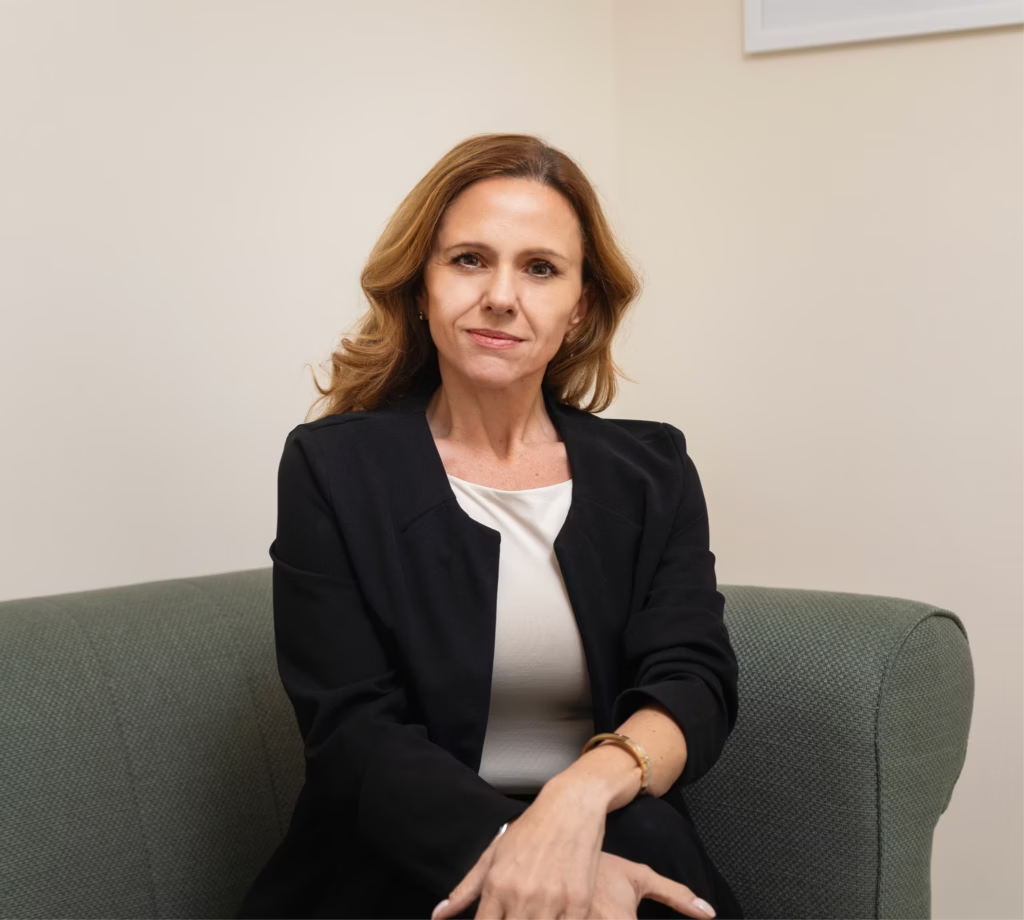
Dr. Valentina Faia is an Italian-trained Specialist Psychiatrist and Psychotherapist with over 20 years of experience. She specialises in neurodivergence (ADHD, Autism, Giftedness), mood and anxiety disorders, bipolar disorder, PTSD and sleep issues. She is particularly experienced in supporting women through emotional and hormonal life transitions.