‘Three. Two. One. Now, remember to breathe’. And with that, I back-roll off the boat into the reefs of the Bazaruto Archipelago, in Mozambique, and find myself face to face with enormous iridescent triggerfish and sprawling brain corals with honeycomb moray eels peering out from burrows below.
This is my first dive on this tropical island 14kms off the coast of east Africa but hopefully not my last. It’s so beautiful in this tranquil, technicolour world beneath the waves that I do, indeed, have to keep reminding myself to breathe. Those words aren’t just useful advice from the dive instructor but should actually be inscribed in stone above the entrance to Kisawa Sanctuary – a far flung uber-luxe retreat on Benguerra Island, where sustainability meets serenity and the days unfold to the rhythm of nature.
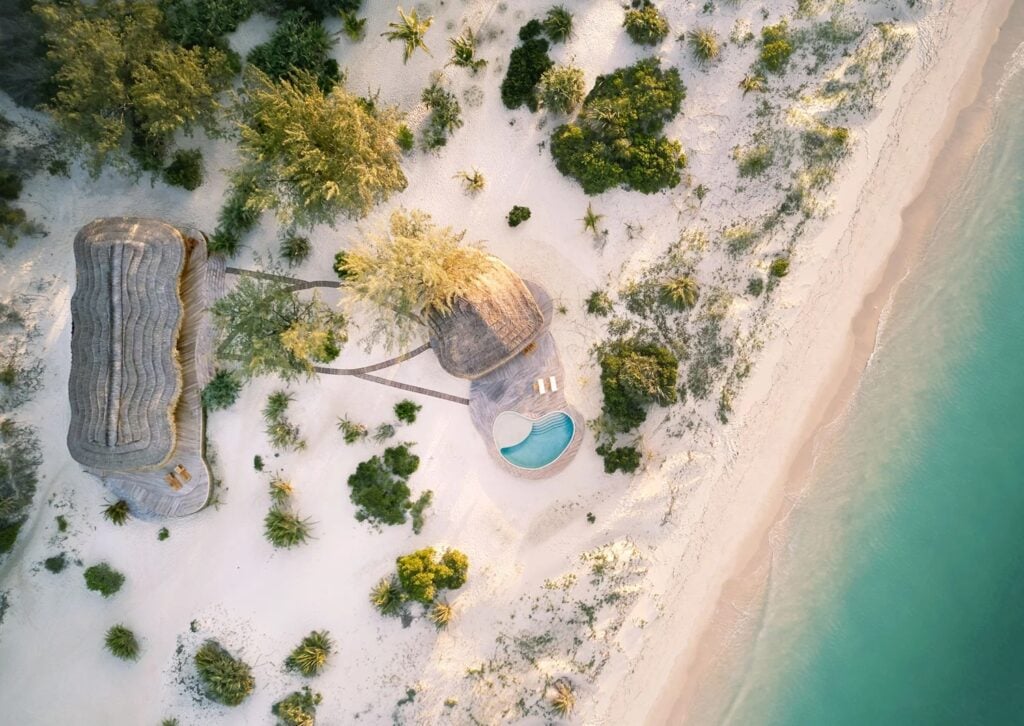
Arriving here is like stepping off the edge of the map. If you’re lucky enough to pass over Benguerra island on your flight into Mozambique, you’ll see a swirling pattern of white sands and turquoise sea that resemble an ocean painter’s water jar.
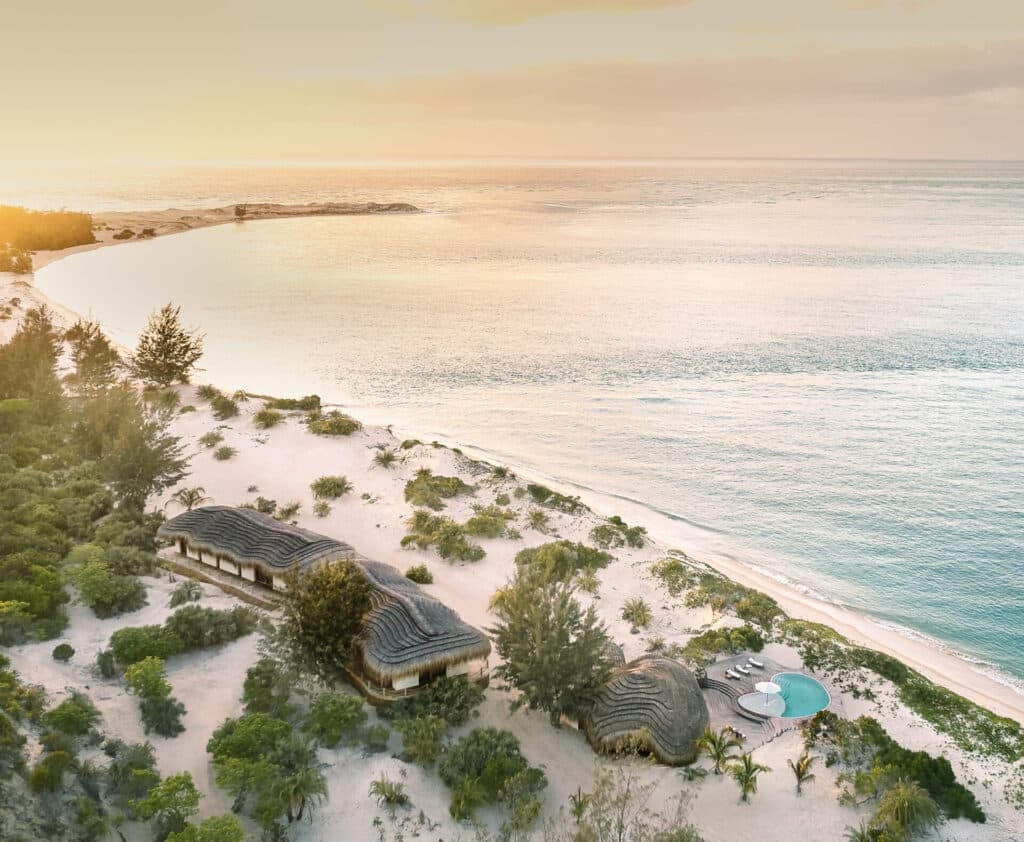
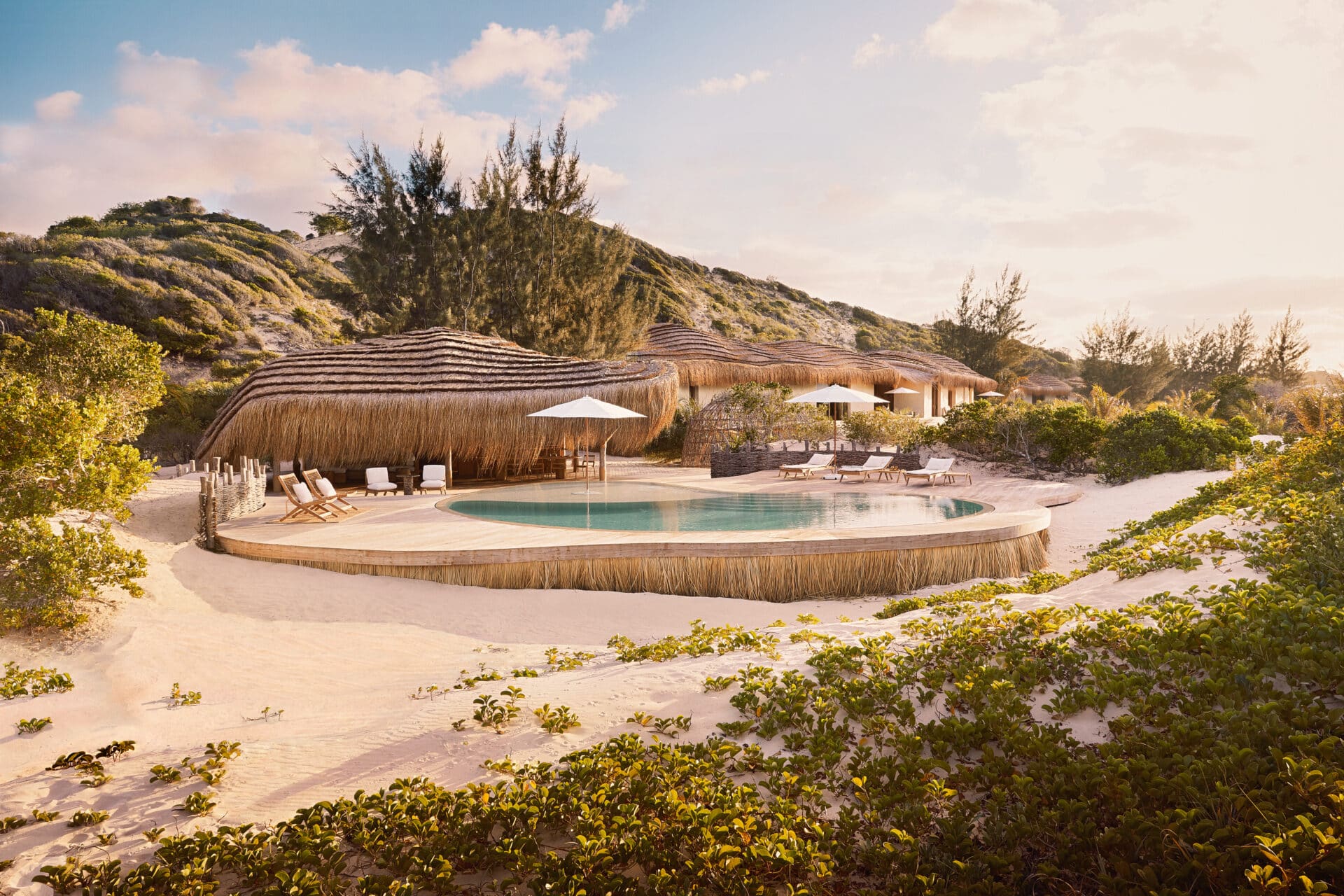
Envisioned by Swiss-born Nina Flohr, now HRH Princess Nina of Greece and Denmark, Kisawa is a luxury retreat spanning forests, dunes and beaches over a 300 hectare site. But with only 11 residences, each in an acre of land, the secluded suites promise minimal impact, maximum privacy, and is probably the closest I will ever come to feeling like I’m on my own private desert island.
Most people travel here on a 10-minute chopper ride from Vilankulos (VNX) , but I elected for the 35-minute speedboat option. The detour paid off with a drive through Vilankulos town, a vibrant slice of Mozambican life. I arrived just as the school broke up and was greeted by crowds of children in spotless white uniforms. Having been on the road for a month, my own clothes looked like they’d been washed in a puddle. I was jealous of whatever miraculous laundry technology they possessed.
Having spent years as a fisherman here, Beato uses the patient observational skills he required to read the subtle shifts of the sea along with the unspoken needs of his guests, and he is a testament to the local community engagement at Kisawa where more than 90 per cent of the staff are from the surrounding area.
The speedboat crossing that came next felt more like a 007 chase scene than a hotel shuttle. Skimming across the three-foot swell at a speed of knots, bow pointing defiantly to the sky, our smiling captain navigated by leaning his head over the side as if reversing a lorry.
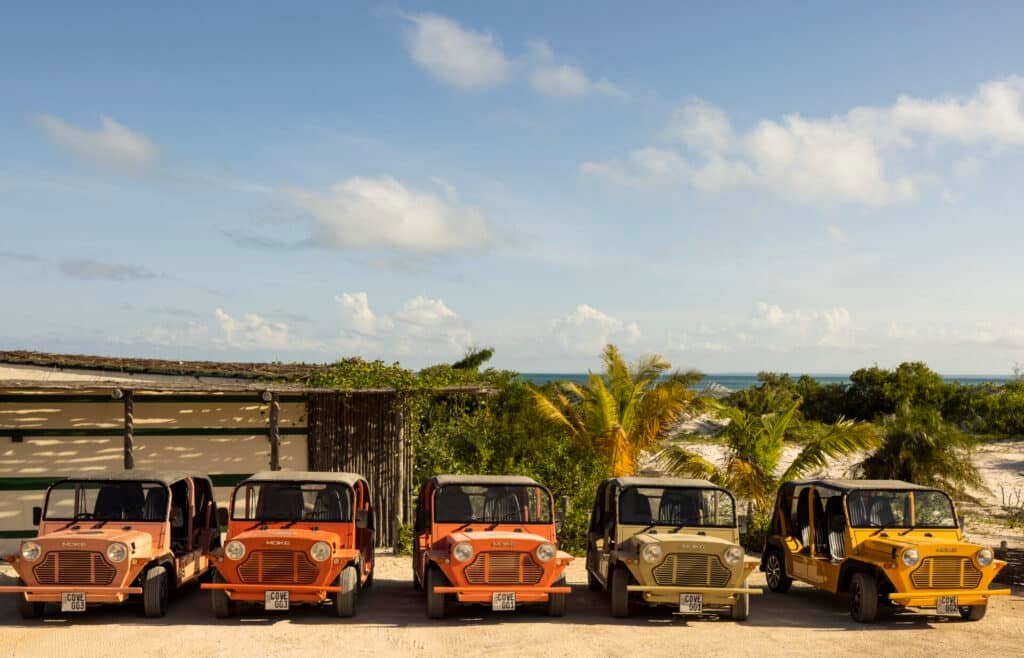
If the journey to the island is a high-speed adventure, transportation on the island is an entirely different affair. Here, getting around the estate is by an electric Mini Moke, a nod to the Bohemian beach-chic buggies of yore. They are rather fun to drive – especially if you take corners with more confidence than skill, like me – but the safer option is to be chauffeured by your private butler (Beato, in my case).
Having spent years as a fisherman here, Beato uses the patient observational skills he required to read the subtle shifts of the sea along with the unspoken needs of his guests, and he is a testament to the local community engagement at Kisawa where more than 90 per cent of the staff are from the surrounding area.
Shift and Reshape
Kisawa Sanctuary isn’t just a resort. In fact, it resists that word entirely. It’s a sanctuary in every sense. And crucially, it’s the financial engine for the neighbouring Bazaruto Center for Scientific Studies (BCSS), the first permanent ocean observatory on the African continent. This is not a CSR afterthought; it is the entire reason for Kisawa’s existence. BCSS was established by Flohr and her team first, four years before Kisawa launched in 2021, with a wonderfully open brief: to do science.
A visit to BCSS offers a fascinating glimpse beneath the surface of this remarkable project. Dr. Mario Lebrato, the Station Manager, Chief Scientist, and all-round walking encyclopaedia in reef shoes, explains that some of BCSS’s unique innovations include the repurposing of retired/obsolete remote sensors from the tuna fishing industry.
Once used to detect tuna schools to direct trawlers, these highly advanced sonar devices are now being used to track the movement of all kinds of marine life.
By collecting this information over time, BCSS is building a long-term dataset that shows how ocean creatures respond when the environment changes. The picture isn’t all doom and gloom. Whilst the data reveals that marine life is quick to react to environmental stress by moving or disappearing when conditions deteriorate, Dr. Lebrato remains optimistic. Nature, he says, is resilient: as long as there are still havens left that can support life, the ocean won’t simply give up. It will shift, reshape, and carry on.
Back at Kisawa, the villa accommodation, or Coves as they are called, are vast and create a sense of distorted scale. The welcome drink Beato has masterfully prepared should be labelled ‘Drink Me’, like the shrinking potion from Alice in Wonderland.
Much of this work is unglamorous but vital, and Dr. Lebrato radiates the passion of someone who prefers fieldwork to fanfare. ‘We don’t need to chase grants,’ he says, with a smile that suggests relief and rebellion. ‘We can just focus on the science.’ It’s a deceptively simple idea, and a profoundly radical one. Free from the pressures of academic funding cycles and the trend-chasing of peer-reviewed journals, BCSS is able to pursue long-term, foundational research. The kind of science that may never go viral, but might just help save our oceans.
As we return to the Jeep, Dr. Lebrato picks up a few 3D-printed objects from the deck. ‘Parts of Kisawa were built using 3D printing,’ he explains. ‘The raw material is sand from the surrounding area, so it would be perfect for printing artificial reefs.’ He says it almost in passing, as if such innovations were everyday thoughts.
Back at Kisawa, the villa accommodation, or Coves as they are called, are vast and create a sense of distorted scale. The welcome drink Beato has masterfully prepared should be labelled ‘Drink Me’, like the shrinking potion from Alice in Wonderland.
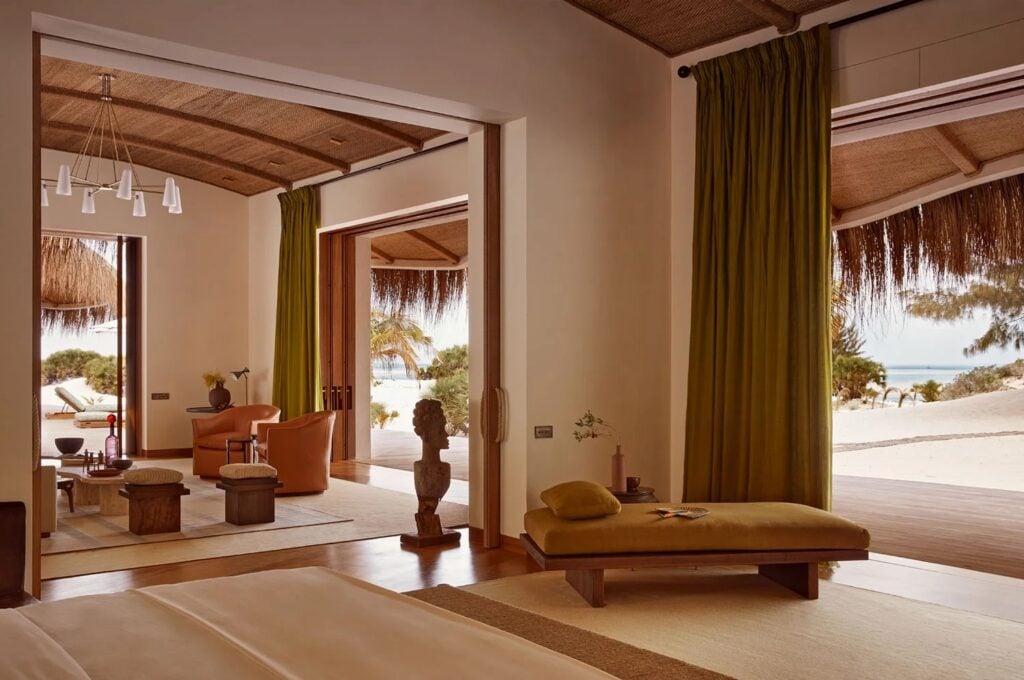
Within each Cove, the layout flows in an intuitive sequence, moving from expansive living quarters into a tranquil bedroom and culminating in a bathroom of astonishing size.
Six-metre-high ceilings, thatched with reeds grown locally on site, create a sense of airy grandeur, while floor-to-ceiling windows disappear entirely, making the very concept of walls feel optional. The bathroom is a sanctuary of muted Italian terrazzo, dominated by a monolithic bath that weighs over a tonne and commands the space like a piece of modern sculpture. And yet nothing about it feels ostentatious.
Barefoot Fine Dining
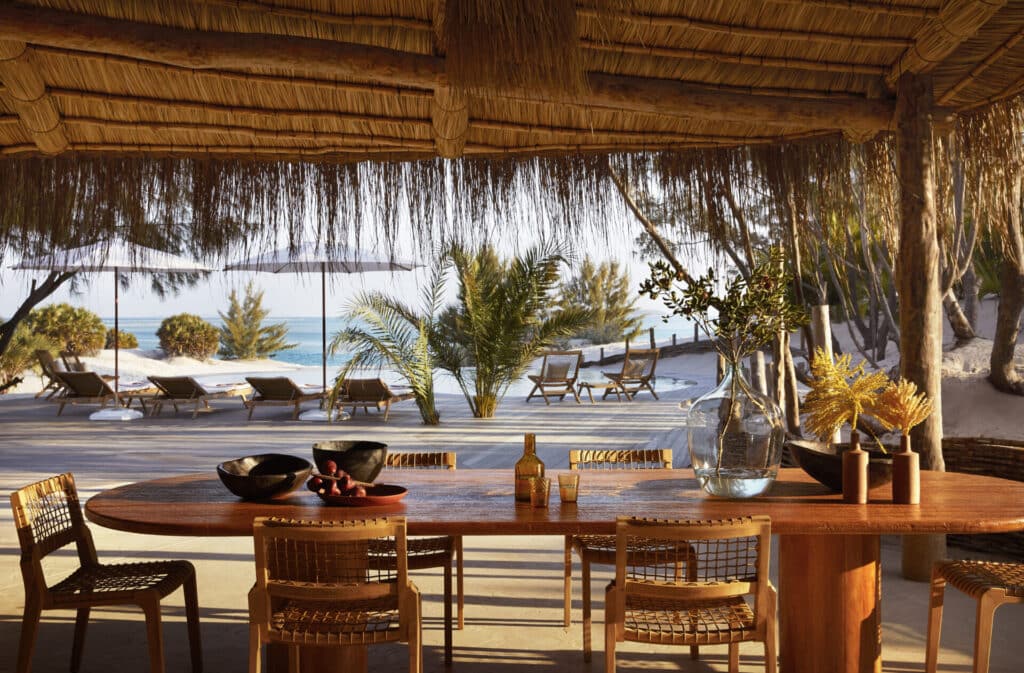
The splendour extends outdoors, where a day lounger and open-air kitchen overlook a private pool that leads towards a stretch of pristine dunes and a secluded slice of icing-sugar soft coastline. I am immediately greeted by bee-eaters darting from the branches of a Tipu tree, its blossoms exploding like yellow popcorn. They hover above the pool for a moment before vanishing back into the foliage. Beyond them, a miniature Suni antelope picks its way skittishly across the dunes.
Lunch arrives with the company of two white-necked ravens, carefully preening one another’s collars with the care of a couple dressing for a black-tie event.
A private pool that leads towards a stretch of pristine dunes and a secluded slice of icing-sugar soft coastline. I am immediately greeted by bee-eaters darting from the branches of a Tipu tree, its blossoms exploding like yellow popcorn
With such esteemed company and a stage so perfectly set, the meal itself has to be extraordinary. It doesn’t disappoint. In fact, the cuisine at Kisawa is a triumph, and some of the best I’ve tasted anywhere in the world. But I’m not surprised.
Barrel-chested and eyes beaming like blow-lamps, Chef Jean-Pierre ‘JP’ Nunez looks as though he could bench-press a kudu before breakfast, but his real strength lies in his delicate and deft ability to blend the best of Africa with a dash of Portuguese flourish.
Almost everything is sourced locally and responsibly: from the lush permaculture gardens on site, or through a trusted network of local farmers and fishermen from across Inhambane province. Ingredients are smoked, grilled, baked, and pickled right here at Kisawa.
There’s a botanical gazpacho that reads like an edible garden: chilled tomato water layered with cucumber, celery, apple, pear, avocado purée, and scattered with pumpkin seeds and ‘Kisawa’ herbs
Dining options are plentiful with three restaurants and a scattering of more adventurous al fresco setups such as the Pizza Tuk-Tuk, should the mood (or tide) take you. The Main Terrace is the formal offering, where the sand-coloured marble bar undulates like a breaking wave. Circular portholes frame the view of beach and sea, while spicy margaritas, infused with local sacana (piri piri) chillies, flow from the capable hands of Elton, the mixologist.
Vegetarians will find themselves well looked after. There’s a botanical gazpacho that reads like an edible garden: chilled tomato water layered with cucumber, celery, apple, pear, avocado purée, and scattered with pumpkin seeds and ‘Kisawa’ herbs. Another highlight is the wild mushroom ravioli, inspired by the 60-odd edible species found in the surrounding region, served in a mushroom broth and finished with a whisper of white truffle oil and parmesan.
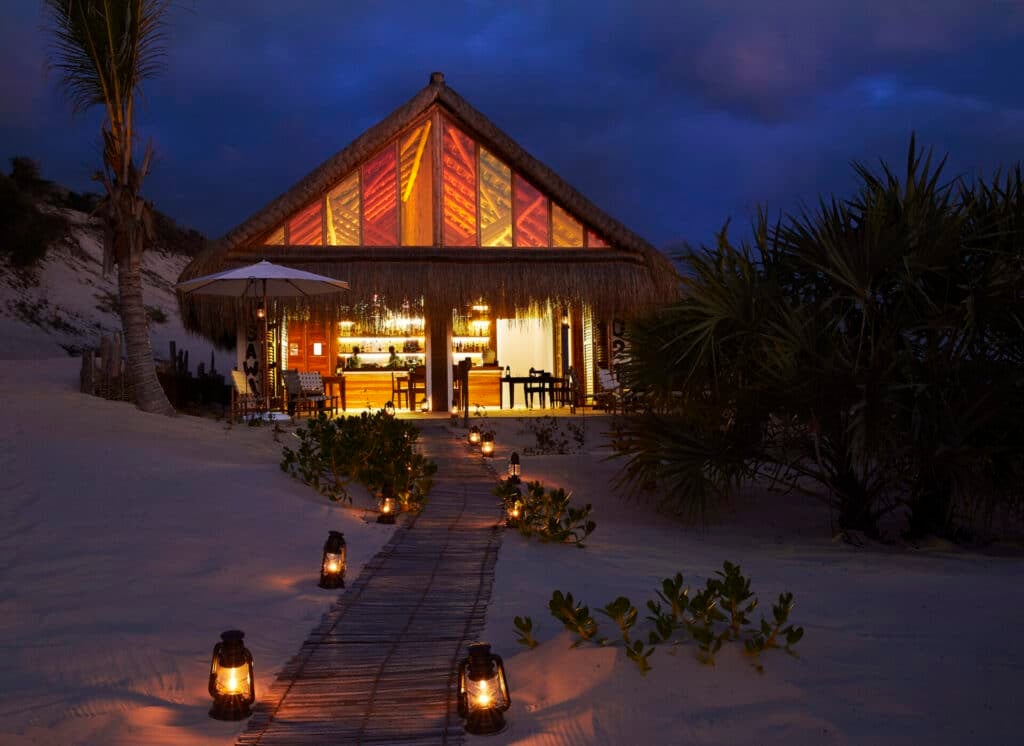
Of all the restaurants, Cove Mussassa is probably my favourite, a barefoot, beach-chic affair. The menu is a fresh mix of island-style tapas: charred corn and pickled mango salad, falafel bites with sesame sauce, smoky baba ghanouj with homemade pesto, and muhammara spiked with fruit molasses.
If the cuisine at Kisawa is dedicated to nourishing the body from within, the award-winning Natural Wellness Centre is its perfect counterpart. My experience here is guided by Ayu, the Balinese spa manager, who begins my treatment not with a menu, but a conversation. Ayu notices I have caught the sun climbing the Bazaruto dune and sets about creating a bespoke hydration blend of oils just for my massage.
This ethos of personal attention is everywhere. The gym, in a wonderfully liberating design choice, has no mirrors, encouraging you to focus on how you feel rather than how you look. The journey often concludes at the Japanese Iyashi Dome, a dry-heat sauna that feels less like a treatment and more like being gently rebooted by a benevolent spaceship, leaving you utterly renewed.
This feeling of renewal isn’t born from a single treatment; it’s a reflection of the sanctuary’s entire philosophy of care. It’s a warmth you feel in every interaction, a spirit that emanates from the staff that is, without exception, wonderfully and genuinely welcoming. After a final evening spinning vinyl from a collection curated to my own tastes, it becomes clear that life in the sanctuary operates on a different speed. In the local Tswa language, Kisawa means ‘unbreakable’, referring to a bond from the heart, and the connection it forges is just that.
Kisawa: Getting There
Rates start from 23,000 AED per night (minimum of two nights), all inclusive, based on two adults sharing in Kisawa Cove.
Flights are 1 hour 45 minutes to Vilankulos Airport (VNX) from Johannesburg (JNB). From Vilankulos, transfers to Benguerra Island are by helicopter or speedboat, arranged through Kisawa Sanctuary. Helicopter transfers depends on the package, but a shared, return charter typically costs 2,700 AED per person.
For some packages and stays of 7 nights or more, the shared helicopter transfer is complimentary. A private helicopter (up to 4 guests) is 8,000 AED return. kisawasanctuary.com