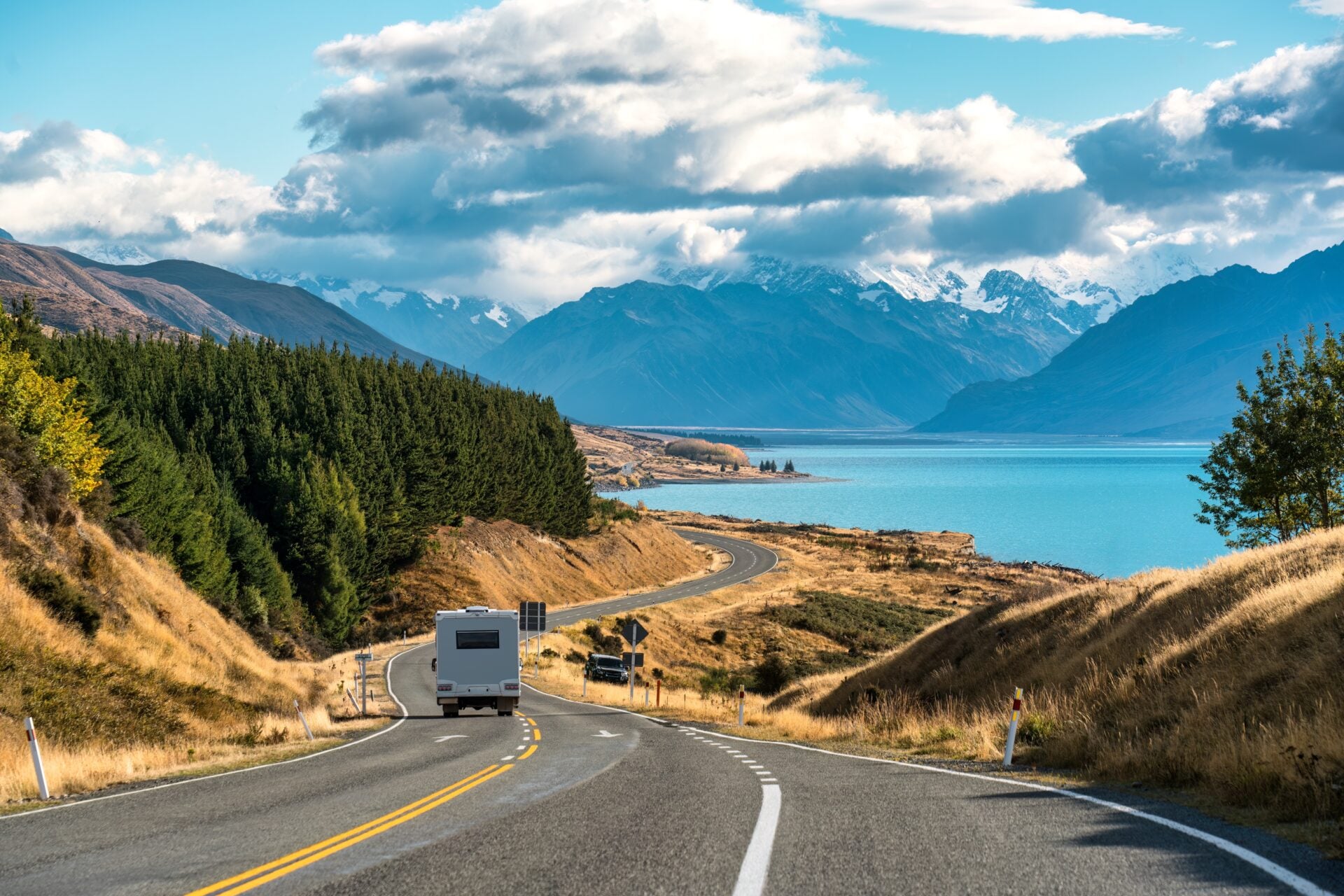
I’m deep within the Fiordland National Park on New Zealand’s South Island, when a rare, endangered Kea – a large parrot endemic to the country’s alpine regions – decides to hitch a ride. It lands with a thud on the campervan bonnet, and eyes up us and our sandwiches through the windscreen. We’re stationary – thank goodness – but it’s still something of a surprise, one more in a long list of exceptional experiences that exploring by campervan brings.
Thrilled as we are with an appearance of this mythical-looking, griffin-like bird, it is notorious for pecking at rubber seals, and so we gently shoo it away – and, sandwiches finished, we tidy up and hit the road again.
There’s something wonderfully romantic about having your home on your back. For me, this harps back to a childhood love of fairytales and legends, when heroes and heroines set off with nothing more than a merry whistle and a bundle of their belongings tied to a stick. It speaks of adventure, seeking new horizons, and, most of all, freedom.
My bundle may have wheels, a tiny loo and shower, a double bed, and two gas hobs, but the sentiment is the same, and, after all, there is no more iconic Kiwi experience than a campervan trip around South Island, or to give it it’s Māori name, Te
Waipounamu, meaning the place of greenstone. We picked up our Maui two-berth campervan in Queenstown, a bustling lake-side settlement and the natural starting point for campe rvan adventures, as flights alight here. The appeal of a campervan, over a car hire and hotel combination, is the chance it gives to disappear deep into nature. I also like the idea of being self-sufficient and venturing off-grid – you can happily forget Wi-Fi signals at backwater campsites.
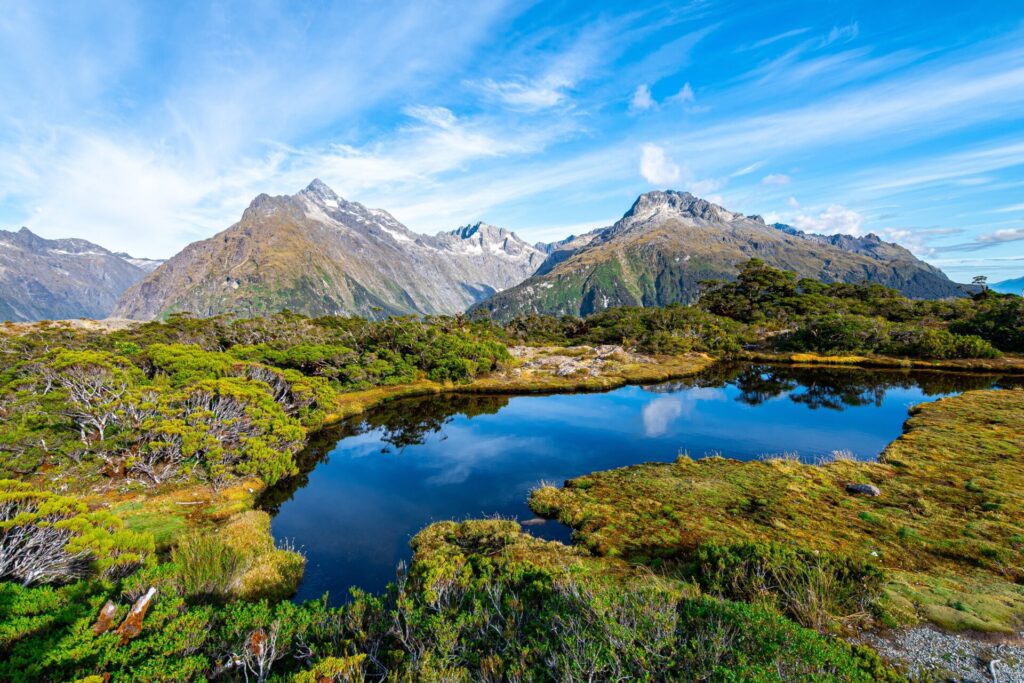
New Zealand is just how I imagined it to be, but vaster. I’m awe-struck by its open landscapes peppered by sheep, its towering mountains of majestic Tolkienite proportions, and its menthol-blue lakes
Ideally, my mode of transport would be electric, but currently challenges exist around infrastructure, and the distances you must cover between charging points. Campervans take longer to charge, staying at unpowered Department of Conservation (DOC) campsites would be out of the question, and while the EV charging network is growing, it’s not widespread and rare in remote areas, meaning travellers might well end up stranded.
But I’m pleased to see that other green considerations have been covered. The company I book with (maui-rentals.com), are the first in New Zealand to have its campervan emissions regularly and independently tested, and have partnered with recycling agency LOVE NZ. I’m invited to return all recyclable material, and the cleaning pack I’m given contains eco-friendly products. They’re also committed to the Tiaki Promise to care for the environment, for now and future generations.
I’m travelling out of season, which runs from December to February, summer here and there’s a reason why locals refer to campervans as maggots during this time, as they are white, slow, and unwelcome. Travel during New Zealand’s autumn, from March to May, and you’ll be met with lovely weather and a pick of the campsites, as the tourist hotspots of Milford Sound and Mount Cook have fewer visitors.
It’s obvious that many of the Kiwis I meet have grown up with a love of wild camping, hiking, fishing, and biking, and, when in doubt, we need only to look to them for guidance
Now, setting off, we pass beautiful locations that look idyllic where ‘No Overnight Camping’ signs are on full display, but our romantic notions about freedom camping aren’t completely off the cards. DOC sites offer a good alternative, where facilities are basic – think long-drop, compost toilets – and it’s rare that you can pre-book a pitch.
With most, you simply take your chances and leave a nominal fee in an honesty box. What they lack in luxury they make up with glorious off-the-beaten track locations and a fantastically laid-back atmosphere.
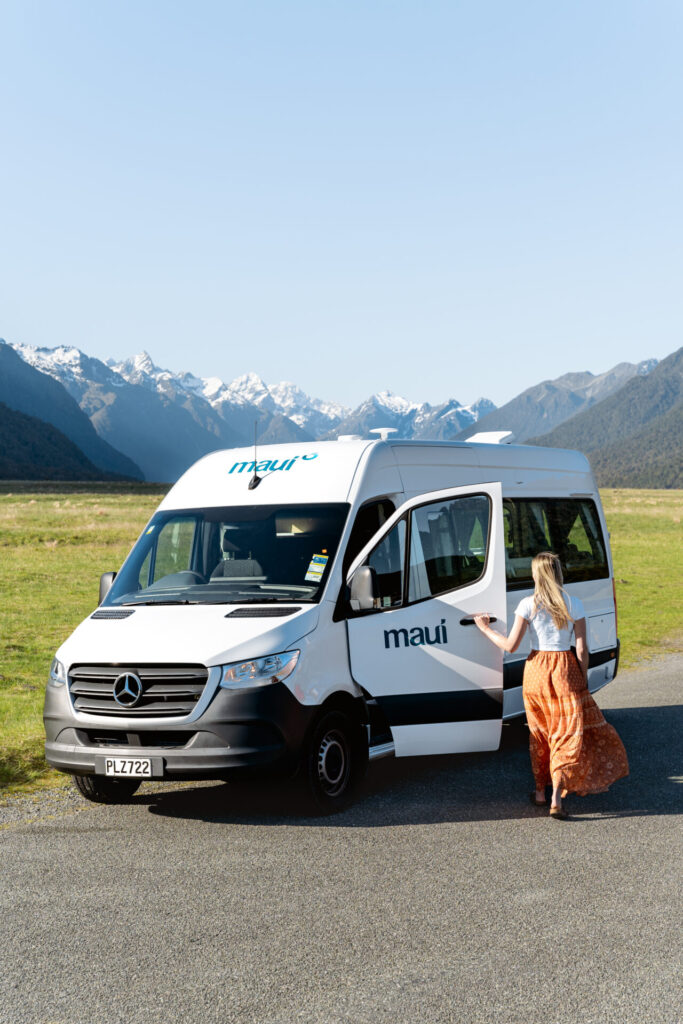
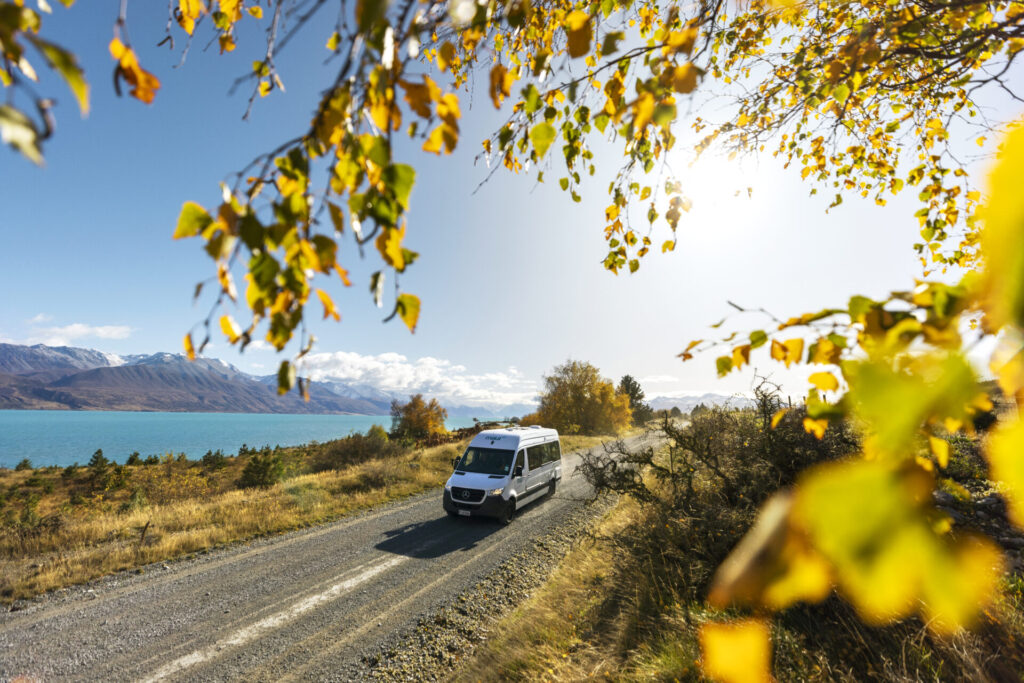
New Zealand is just how I imagined it to be, but vaster. I’m awe-struck by its open landscapes peppered by sheep, its towering mountains of majestic Tolkienite proportions, and its menthol-blue lakes. I’m sucking in great lungfuls of the freshest air as we hike to the glacial Hooker Lake, the final destination of the Hooker Valley Track at Mount Cook, where we’ve found a perfect spot with mountain views on a DOC site.
We’re travelling with a rough plan that will tick off the highlights, but in keeping our itinerary loose, we can fully embrace the adventure. I’m soon impressed by the green etiquette of fellow campers. There are no over-flowing bins at unmanned campsites; toilets, though basic at some sites, are left pristine and all water is diligently recycled at appropriate stations.
‘The drive through the UNESCO world heritage site of Milford Sound – named the eighth Wonder of the World by Rudyard Kipling – is spectacular’
It’s obvious that many of the Kiwis I meet have grown up with a love of wild camping, hiking, fishing, and biking, and, when in doubt, we need only to look to them for guidance. ‘I wouldn’t park that way round, mate. The wind will blow the smoke from your barbecue inside your van,’ was the first good pointer we received.
At Lake Tekapo, a UNESCO- designated dark sky area, we spot the Southern Cross twinkling and head to the Dark Sky Project to learn more on how Māori people once used the stars to navigate and hunt (on the clearest of nights, they also run star-gazing tours at the Mt John Observatory).
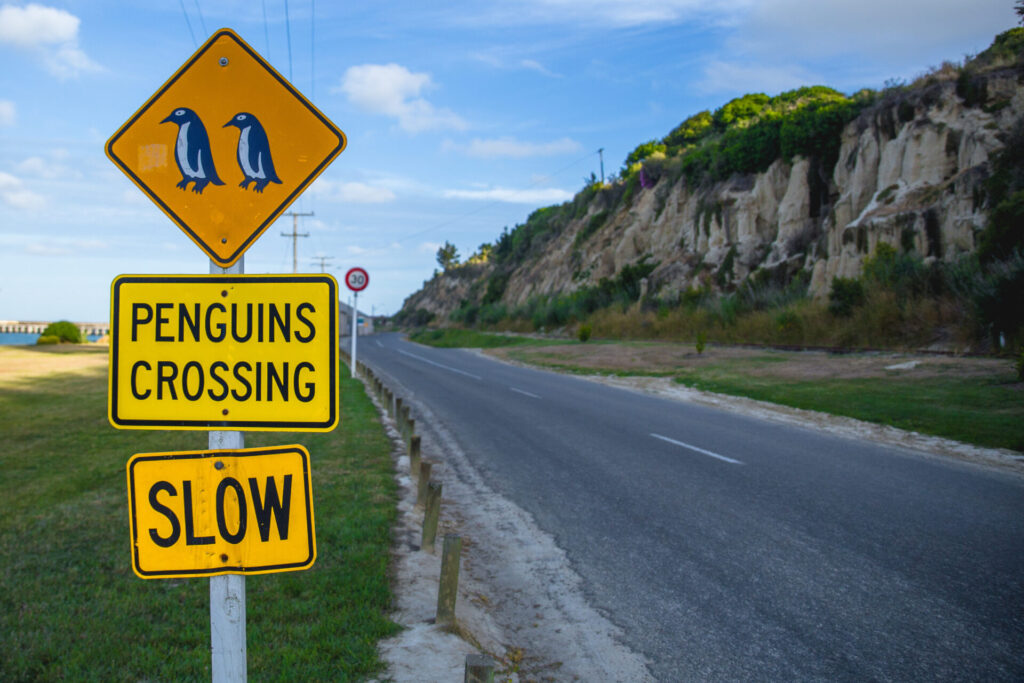
It’s the Little Blue Penguin colony, the world’s smallest at just 15 inches tall, that lures us to Oamaru and then further along the Otago Peninsula to walk among basking sealions on windswept Allans Beach, and peer through our binoculars at nesting Royal Albatross from the Albatross Conservation Centre right at the tip of the headland.
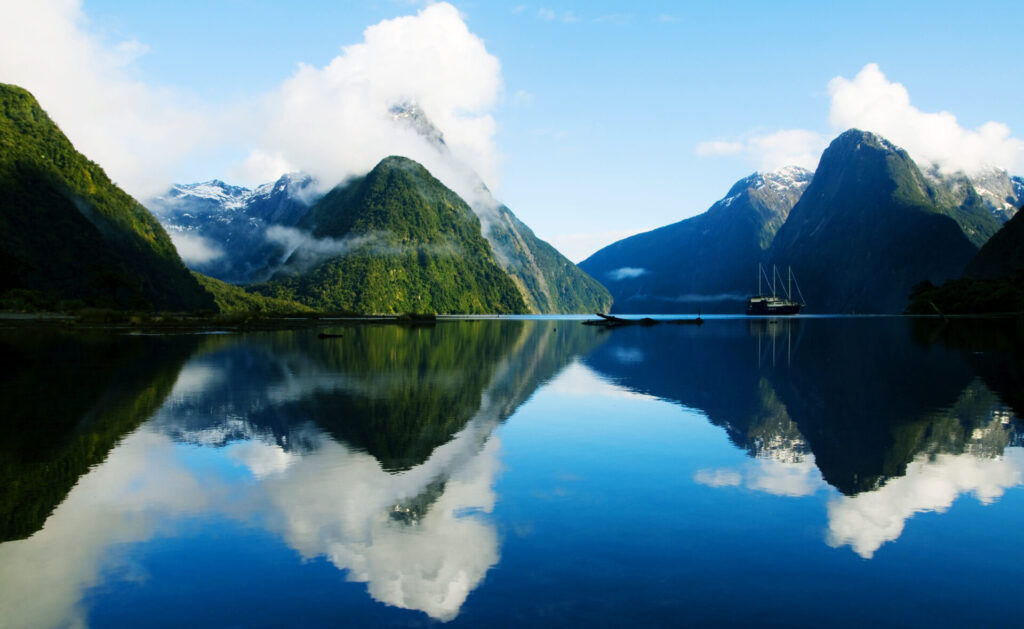
The drive through the UNESCO world heritage site of Milford Sound – described as the eighth wonder of the world by The Jungle Book author Rudyard Kipling – is breathtaking and nothing short of spectacular.
Known for its towering Mitre Peak and regarded as New Zealand’s ultimate natural attraction, it was once so famously well-hidden that Captain Cook missed the entrance to the fiord twice. Located in the southwest, and with just one road in and out, we take a snail-paced drive to get there, hopping out of the van at the so-called Mirror Lakes that reflect the Earl Mountain range, and, later, following a track to the Chasm, to see the water sculpted rock formations of the Cleddau River.
A highlight is the stroll we take through a fern-filled, moss-covered forest to reach the shores of Lake Gunn, accompanied by a soundtrack of bellbirds. While driving, the van’s big windows couldn’t be better for marvelling at the waterfall-streaked mountains and plunging, mist-strung valleys. Not many visitors stay within the park, as accommodation is at a minimum, but we’ve booked a pitch at Milford Sound Lodge, where all pitches are hugged by forest, giving the illusion of complete seclusion. This is the place to have a night off from cooking as the lodge has a wonderful restaurant that celebrates local, seasonal produce.
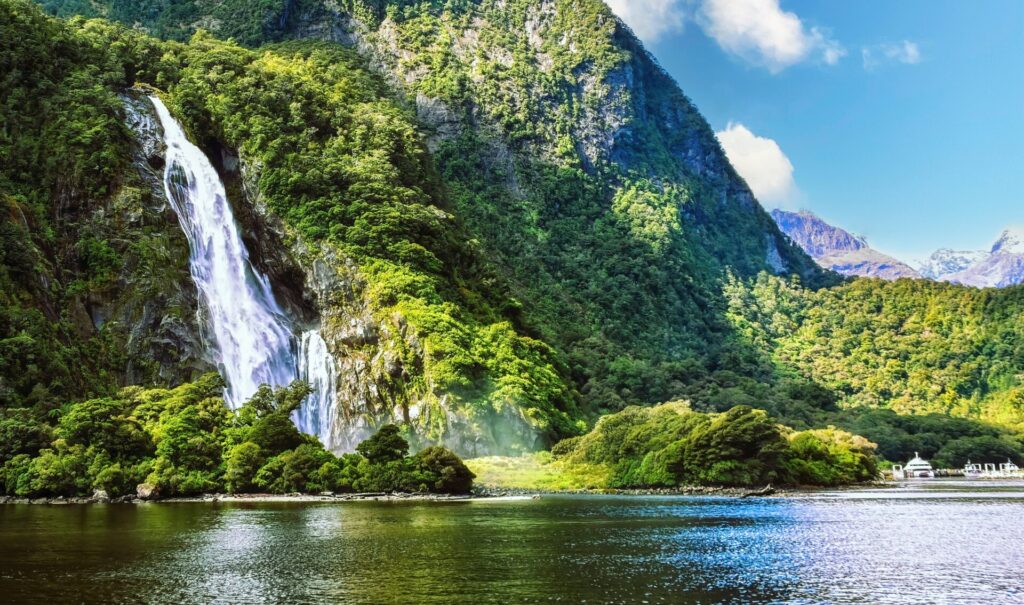
Again, it’s the space, the proportion, and the scale of the vista that has me spellbound as we cruise out across the fiord with Southern Discoveries to gaze at the Stirling and Bowen waterfalls, where fur seals rest below one of the world’s only visible fault lines, a jagged line etched into the cliff face that serves as a rare, extraordinary reminder of our unpredictable planet.
The Milford Track is legendary, and it takes around four days to complete. With time against us, we catch a water-taxi to the start of the final 8km stretch, heading out in rare sunshine.
When the heavens open, I embrace the soaking. This is one of the wettest places on the planet, receiving on average seven metres of rain per year, and without it, the mighty Beech trees of the region would not be bromeliad-clad or carpeted in soft moss and lichen. The waterfalls would not gush and drop so beautifully into boulder-filled rivers, and when the sun resumes, the bellbirds would not shake their feathers and resume their chiming chant – and our walk would not be all the sweeter for it.
Details
Kate was a guest of Maui Rentals. A Maui Ultima two-berth starts at NZ$ 257 per night (AED 568), not including insurance. Check the site for the latest offers. maui-rentals.com/nz
What you can do to be a good campervanner
Be ever conscious of your environment and leave no trace.
Make sure your rubbish is safely disposed of, away from wildlife, or, better still, take it with you to recycle at the nearest town.
While driving, respect the local people by always giving way. There are many laybys that are easy to pull into, so that you can let traffic pass safely.
If you’re camping for free, do make sure to spend some money locally, by eating in a café, stocking up on provisions in a local shop, taking a local tour, or hiring a local guide.
Be mindful of your neighbours. Keep noise to a minimum at night, and if you have a (often noisy) generator on board, use only during reasonable hours.
Go with an open heart and embrace the adventure.