An influential team of climate scientists warn the Earth is close to a ‘point of no return’ after which global heating cannot be reversed.
This could lock the world into a disaster-filled ‘hothouse Earth’ – very different to the advantageous conditions of the past 11,000 years, during which the whole of human civilisation developed.
If between three and four centigrade increases are reached the scientists say the world’s economy and human society will cease to function as we know it.
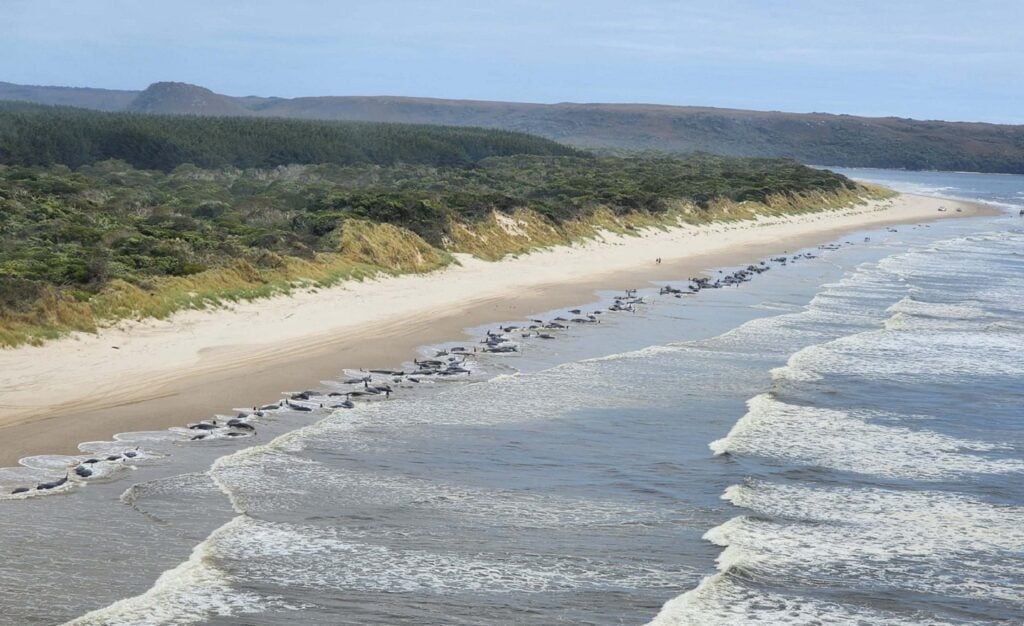
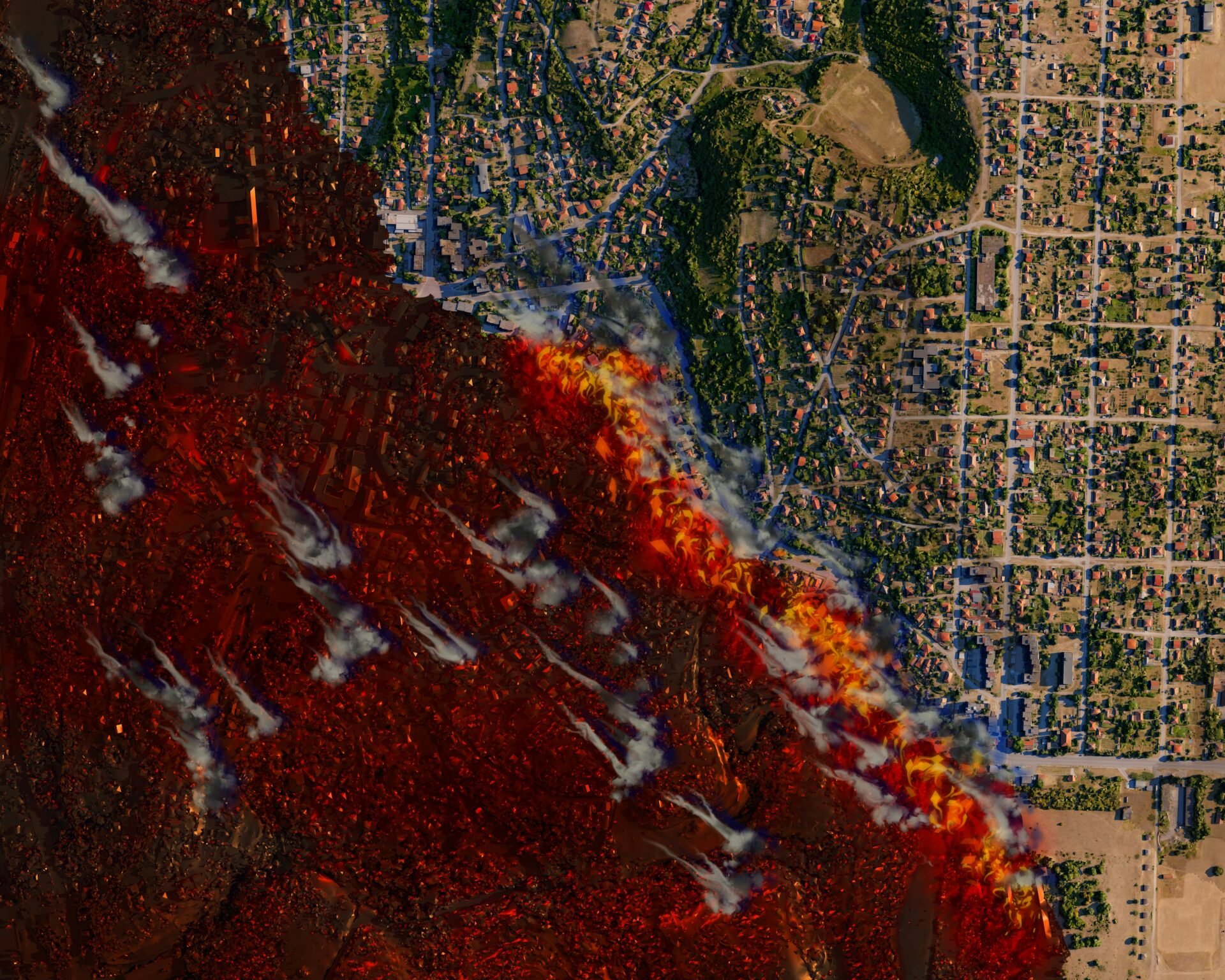
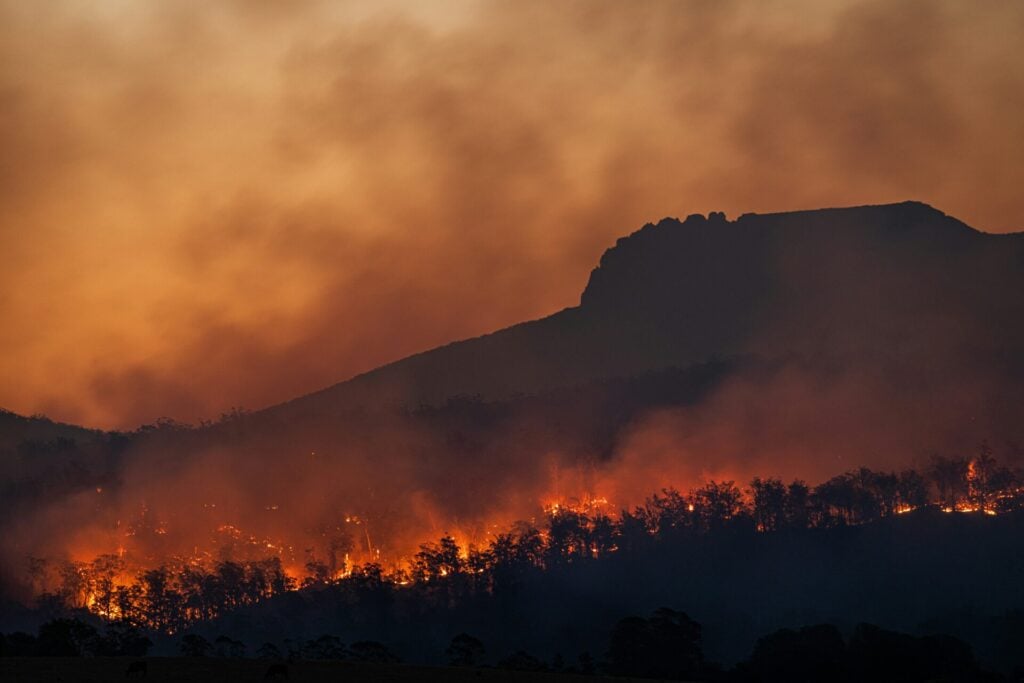
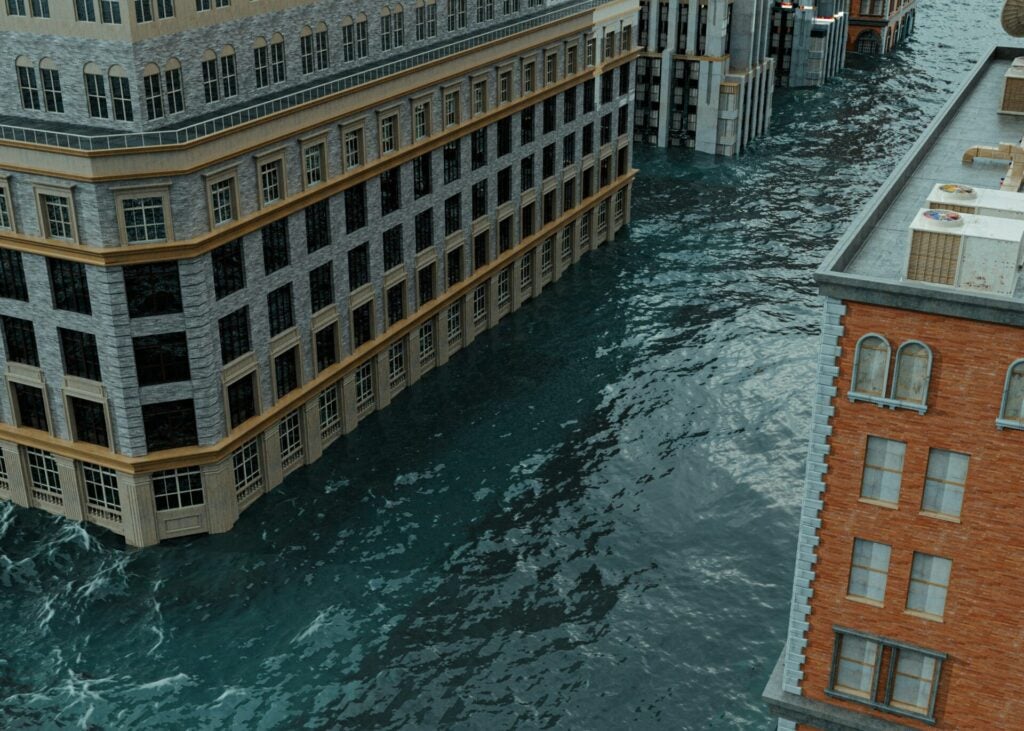
A hothouse Earth could result in coastal cities being destroyed by rising sea levels, massive, destructive wildfires, failing agricultural resources, droughts, wildlife loss, livestock deaths, and mass climate-induced migration.

It was difficult to predict when climate tipping points would be triggered, making precaution vital, said Dr Christopher Wolf, a scientist at the Terrestrial Ecosystems Research Associates in the US.
Wolf is a member of a study team that includes Prof Johan Rockström at the Potsdam Institute for Climate Impact Research in Germany and Prof Hans Joachim Schellnhuber at the International Institute for Applied Systems Analysis in Austria.
A over-heated planet could result in coastal cities destroyed by rising sea levels, massive destructive wildfires, failing agricultural resources, droughts, wildlife loss, livestock deaths and mass climate-induced migration.
‘Crossing even some of the thresholds could commit the planet to a hothouse trajectory,’ said Wolf.
‘Policymakers and the public remain largely unaware of the risks posed by what would effectively be a point-of-no-return transition. It’s likely that global temperatures are as warm as, or warmer than, at any point in the last 125,000 years and that climate change is advancing faster than many scientists predicted.’
For most of human history, the climate has been remarkably stable, allowing agriculture, cities and trade to flourish.
That stability is not guaranteed. A shift of just a few degrees may sound abstract, but it determines whether crops survive a season, whether coastal homes remain insurable, and whether heatwaves become deadly rather than merely uncomfortable.
The risk is not simply a warmer world, but a less predictable one and unpredictability is what economies, infrastructure and societies struggle with most.
Hothouse Earth – at Point of No Return?
An assessment, published in the journal One Earth, pulled together recent scientific findings on climate feedback loops identified and tipping elements towards a no-return point.
These include the melting of Greenland and Antarctic ice sheets, and the loss of mountain glaciers, polar sea ice, sub-Arctic forests and permafrost.
It’s likely that global temperatures are as warm as, or warmer than, at any point in the last 125,000 years and that climate change is advancing faster than many scientists predicted’
Dr Christopher Wolf, Scientist, Terrestrial Ecosystems Research Associates
Destruction of the Amazon rainforest is also a major tipping point, as well as interference in the Atlantic meridional overturning circulation (Amoc), a system of ocean currents that strongly influences the global climate.
In December, the EU’s Copernicus Climate Change Service said that 2025 completed the first three-year period in which the average global temperature exceeded by 1.5C above pre-industrial levels.
The Paris Agreement aims to limit long-term warming to 1.5C, measured over a 20-year average.
Professor Tim Lenton, an expert on tipping points at the University of Exeter in the UK, said: ‘We know we are running profound risks on the current climate trajectory, which we can’t rule out could turn into a trajectory towards a much less habitable state of the climate for us.
‘However, we don’t need to be heading towards a hothouse Earth for there to be profound risks to humanity and our societies – these will already be upon us if we continue to 3C global warming.’