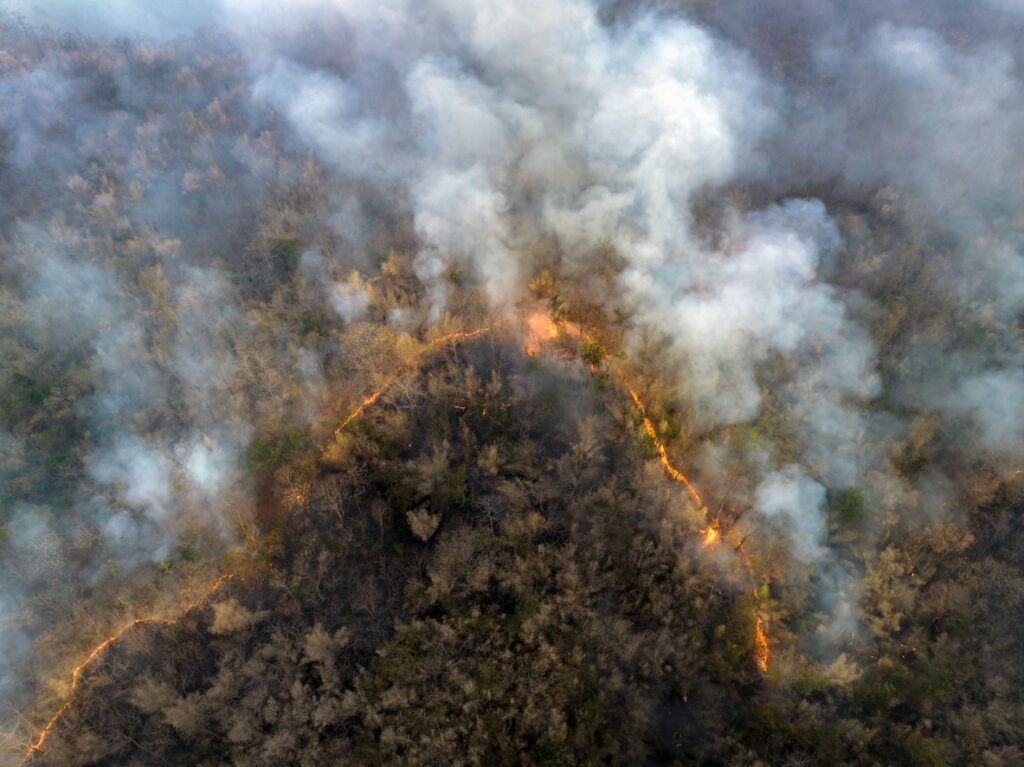
When conversations turn to the world’s rainforests, almost everyone thinks of the Amazon. Aerial views of vast swathes of land cleared for logging and smoke rising from the burning jungle have become symbols of the global climate crisis.
Every surge in deforestation makes international headlines, while world leaders, celebrities, and climate campaigners come together to discuss its fate. Mention rainforests almost anywhere in the world, and the Amazon is often the first, and only, one that springs to mind.
Yet thousands of kilometres away lies another rainforest, almost as important, but one that only receives a fraction of the world’s attention and funding. The Congo Basin.
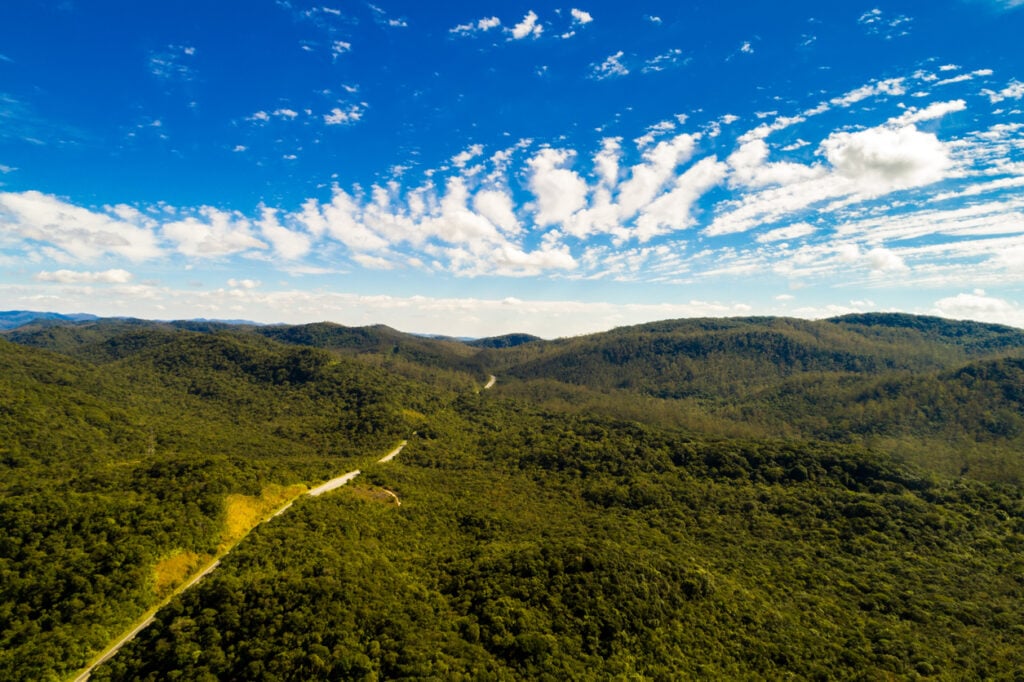
The Congo Basin is the second-largest tropical rainforest on Earth. Covering around 500 million acres – an area larger than Alaska – it stores an estimated 30 billion tonnes of carbon, regulates rainfall across much of Africa and harbours an astonishing wealth of wildlife found nowhere else on the planet.
Spanning across six countries: Cameroon, the Central African Republic, the Democratic Republic of the Congo, the Republic of the Congo, Equatorial Guinea and Gabon, the Congo Basin accounts for more than 70 per cent of Africa’s tropical forests, houses 10,000 tropical plant species, 400 animal species, 1,000 bird species, and around 700 fish species, while supporting the lives and livelihoods of approximately 80 million people. Nearly a further 300 million people across Africa benefit indirectly from the rainfall, rivers and climate regulation the Congo Basin provides.
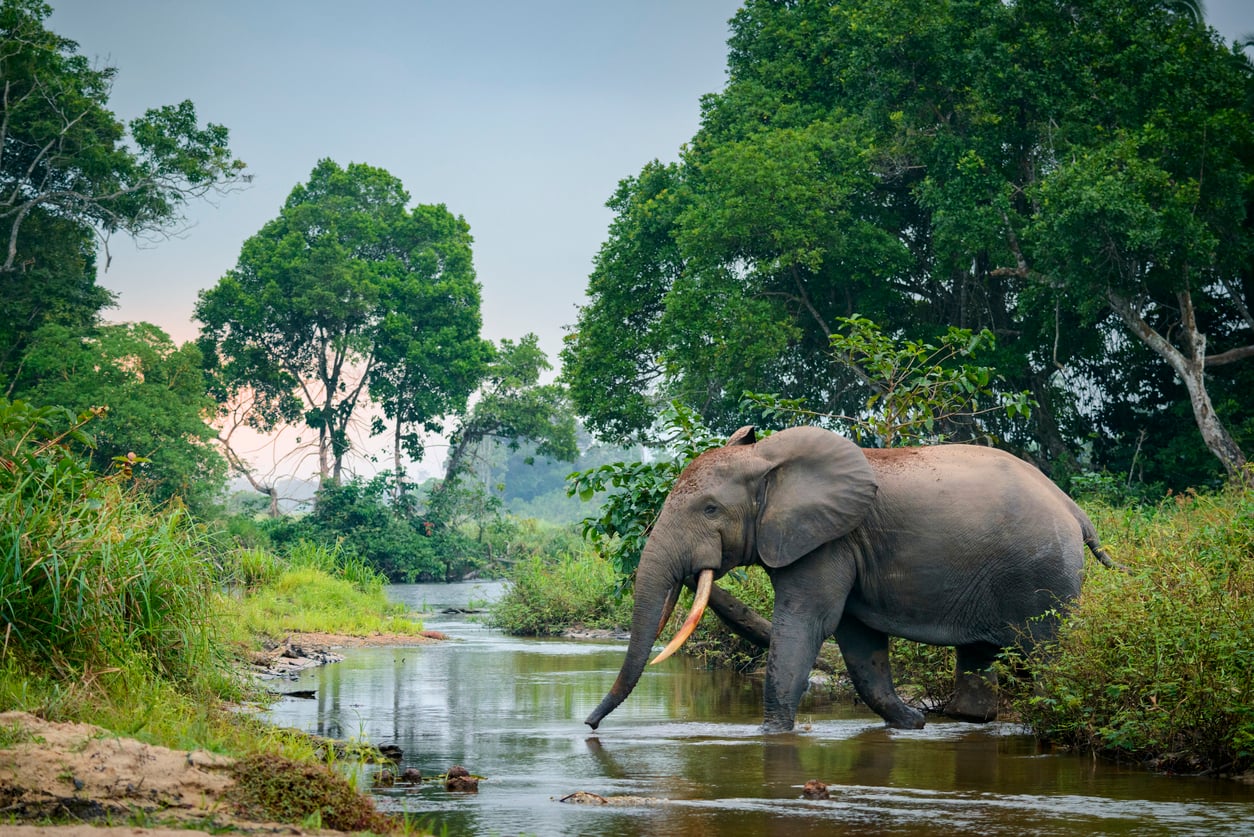
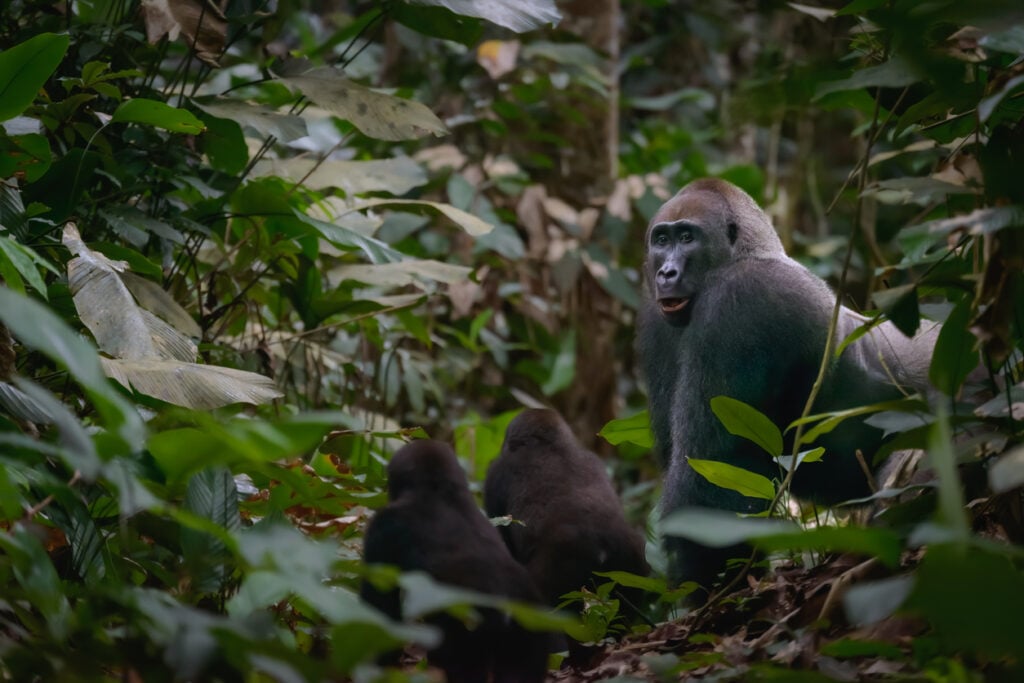
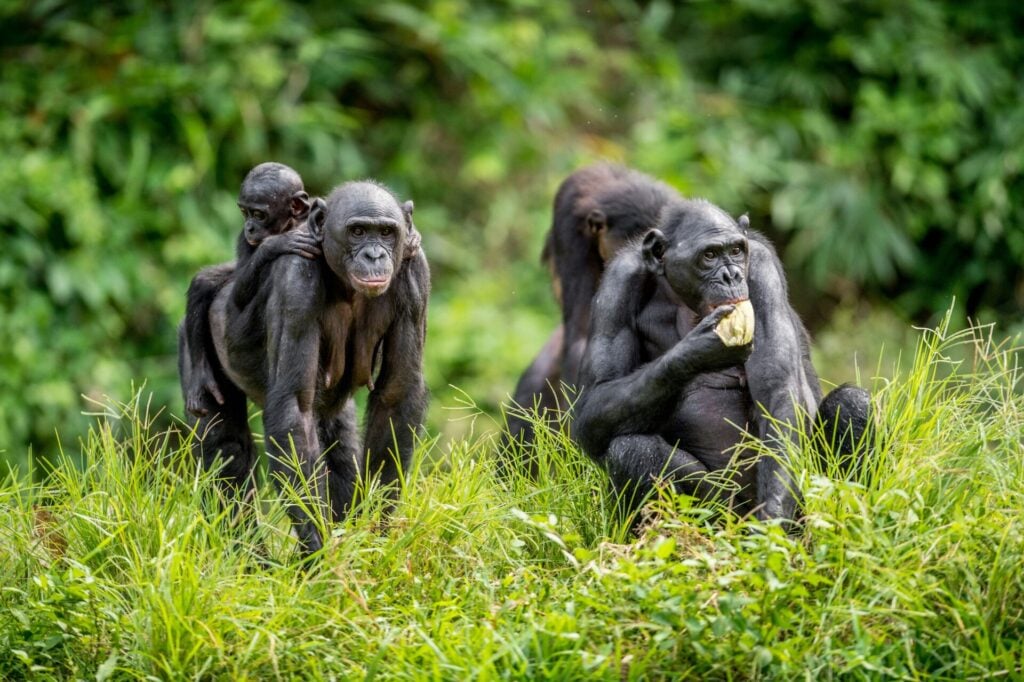
This is the only place on Earth where forest elephants carve paths through dense jungle, where elusive okapis move beneath the canopy, and where critically endangered gorillas and bonobos still survive in the wild
This is the only place on Earth where critically endangered forest elephants carve paths through dense jungle, where elusive okapis (a rare, forest-dwelling mammal that looks like a mix between a zebra, deer, and giraffe) move beneath the canopy, and where critically endangered eastern lowland gorillas, western lowland gorillas and bonobos – who communicate in calls still being deciphered by scientists; still survive in the wild.
Many of these species exist nowhere else in the world.
A rainforest unlike any other
But perhaps even more importantly, hidden beneath its trees lie the world’s largest tropical peatlands—vast waterlogged ecosystems that have locked away carbon for thousands of years. Combined with the rainforest above, the Basin absorbs almost 1.5 billion tons of carbon dioxide from the atmosphere every year, making it one of the planet’s most important natural defences against climate change.
For centuries, nobody realised that beneath the swamp forests of the Cuvette Centrale (a vast, low-lying region of swamp forests, wetlands, and tropical rainforests in the heart of the Congo Basin) lay an immense blanket of peat, in places several metres deep, built slowly from partially decomposed vegetation over thousands of years. It was only in recent years that scientists revealed the true scale of the discovery: the world’s largest tropical peatland complex, storing between 26 and 32 billion tonnes of carbon—roughly equivalent to three years of global greenhouse gas emissions.
However, only 8 per cent of this peat carbon lies within nationally protected areas, suggesting it is vulnerable to future land-use changes.
It was only in recent years that scientists revealed the true scale of the discovery: the world’s largest tropical peatland complex, storing an estimated 30 billion tonnes of carbon—roughly equivalent to three years of global greenhouse gas emissions
‘As much carbon is stored in this relatively small area of peatland as is found in all the trees of the entire Congo Basin rainforest,’ said Bart Crezee, lead author and postgraduate researcher at Leeds’ School of Geography who undertook the study alongside the University of Kisangani in the Democratic Republic of the Congo (DRC) in 2022.
‘The critical importance of keeping this carbon safely stored in tropical peatlands cannot be underestimated in the battle to tackle climate change.’
Disturbing the peatlands could release carbon that has remained safely locked underground for millennia. Once peat dries or burns, centuries of stored carbon can escape back into the atmosphere, accelerating climate change in ways that would be extraordinarily difficult to reverse.
Professor of Botany of Forest Conservation at the University of Kisangani Corneille Ewango said: ‘The Congolese peatlands are so rich. At one site alone, we counted more than one hundred plant species, some of which are almost certainly new to science.
‘People living near the peatlands are using them fairly sustainably, but threats are growing from oil drilling, logging and palm oil plantations. These developments risk the Congolese peatlands emitting vast quantities of carbon dioxide into the atmosphere, which would put global climate commitments out of reach.’
‘The Congolese peatlands are so rich. At one site alone we counted more than one hundred plant species, some of which are almost certainly new to science’
Corneille Ewango, Professor of Botany of Forest Conservation at the University of Kisangani
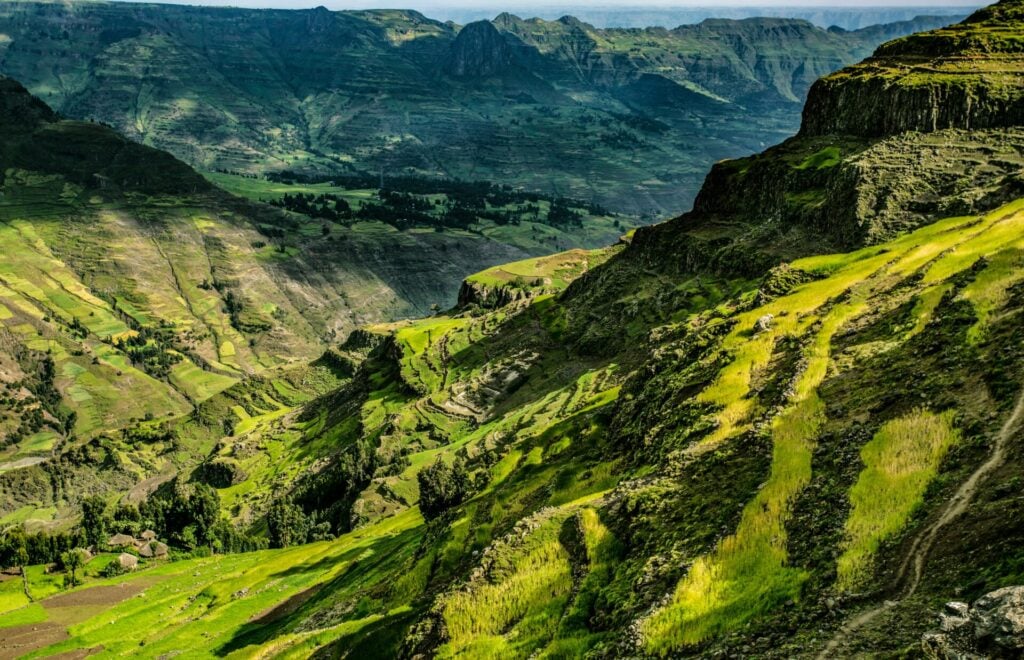
But the Congo Basin is not simply storing carbon; it is helping to dictate the weather. Every day, billions of tonnes of water are drawn from the soil and released through leaves into the atmosphere, forming invisible rivers of moisture that feed rainfall across Central Africa and beyond. Scientists believe this moisture contributes to rain that falls over the Ethiopian Highlands, whose rivers eventually flow into the Nile.
And yet, remarkably, the Congo Basin still receives only a fraction of the political attention afforded to the Amazon.
While scientists agree on the Congo Basin’s critical importance, it continues to be funded at a far lower rate than its counterparts. A report published earlier this year by the Centre for International Forestry Research and World Agroforestry (CIFOR-ICRAF) revealed the scale of the financial imbalance.
Between 2008 and 2022, the world’s three main rainforest regions received a combined total of $20bn (£15bn) in international funding. Of that, $9.3bn (47 per cent) went to the Amazon basin, $7.4bn (37 per cent) to south-east Asia, and only $3.2bn (16 per cent) to the Congo basin.
Why is the Congo Overlooked?
For all its ecological importance, the Congo Basin has never captured the world’s imagination in quite the same way as the Amazon. That disparity is not because the forests matter less, or because the threats they face are any less urgent, but because the story is infinitely more complicated. Spanning six sovereign nations, each with its own political priorities, conservation policies and economic pressures, there is no single government that can instantly convey the scale of what is happening under the canopy.
Congo Basin countries also score poorly on the fight against corruption, transparency, the rule of law and the Doing Business indices. Hence, both public and private investors are cautious.
For decades, much of Central Africa has also been associated in international headlines with armed conflict, political instability and humanitarian crises. Conservation stories have struggled to compete with reports of violence and displacement, while the remoteness of vast swathes of rainforest has made them among the least reported ecosystems on Earth.
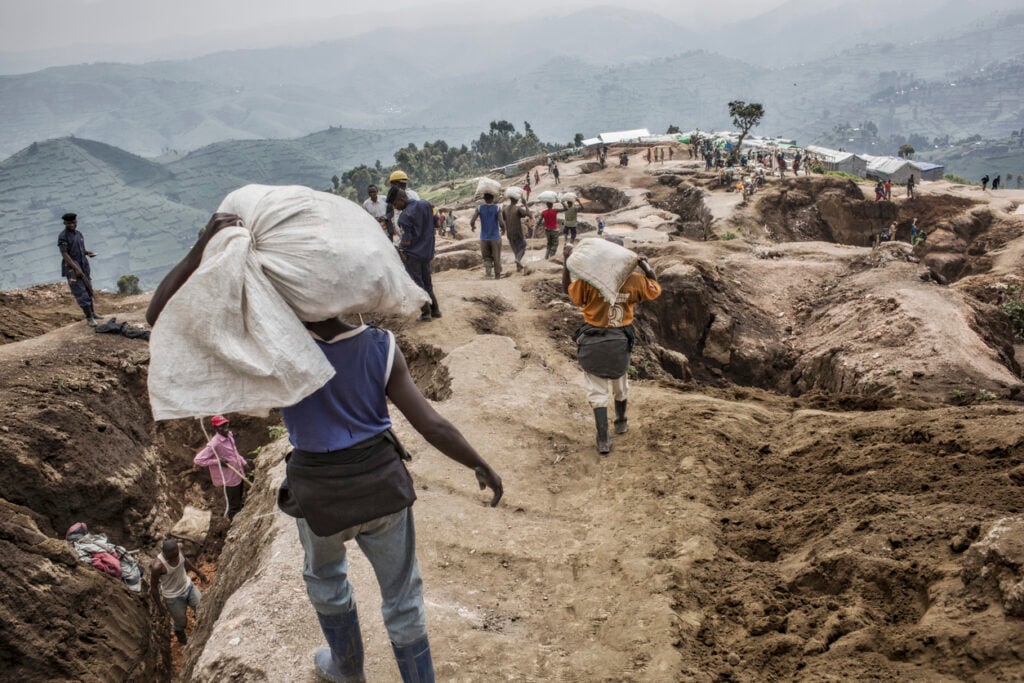
Mining operations, driven by soaring global demand for cobalt, copper and coltan- the very minerals essential for electric vehicles, smartphones and renewable energy infrastructure – are expanding across parts of the region
Compared with South America, there are relatively few international journalists and researchers permanently based in the region and only a modest ecotourism industry to bring photographers, filmmakers and visitors into its forests. Much of the Congo Basin has therefore remained out of sight.
‘You’ve got this critical ecosystem, but there just aren’t enough local scientists working to understand it,’ says Lee White, an honorary professor at the University of Stirling and former environment minister in Gabon.
A Subtle Erosion
Unlike the Amazon, whose destruction is often visible in enormous clear-cut expanses, the Congo Basin is being eroded more subtly. Logging roads slice deeper into previously inaccessible forest, fragmenting habitats, while mining operations, driven by soaring global demand for cobalt, copper and coltan—the very minerals essential for electric vehicles, smartphones and renewable energy infrastructure—are expanding across parts of the region. More than a quarter (an estimated 27 per cent) of the region’s intact forests now overlap with mining permits, according to Earth Insight.
The Congo Basin remains the last great refuge for western and eastern lowland gorillas, bonobos, lions, hippos and forest elephants, yet each faces mounting pressure from habitat loss, poaching and the illegal wildlife trade. Scientists are increasingly recognising that losing these animals has consequences extending beyond biodiversity itself. Large mammals disperse seeds across vast distances, helping regenerate forests dominated by large, carbon-rich trees. Protecting wildlife, it turns out, is also part of protecting the forest’s ability to store carbon.
Unlike the Amazon, around 80–90 per cent of the Congo Basin remains forested, while recent analysis suggests that the rate of deforestation has decreased significantly over the past five years, meaning there is still an extraordinary opportunity to protect it before it reaches the same tipping point.
But perhaps the Congo Basin’s greatest guardians have never been governments, NGOs or international donors.
Increasingly, research is showing what many Indigenous communities have always known: forests tend to survive best when the people who know them most intimately are given the legal right to protect them
For countless generations, Indigenous Peoples and local communities have lived within these forests, relying upon them not simply for food, medicine and shelter but as the foundation of their identity, culture and spirituality. Increasingly, research is showing what many Indigenous communities have always known: forests tend to survive best when the people who know them most intimately are given the legal right to protect them. Yet those same communities often find themselves excluded from decisions about the very landscapes they have stewarded for centuries.
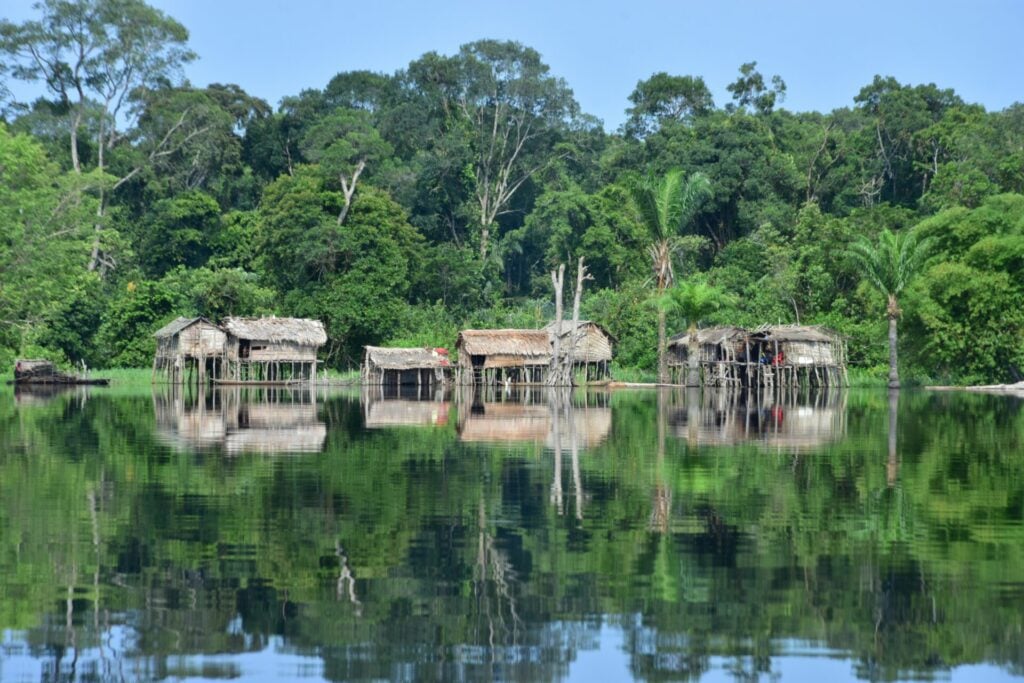
The Congo Basin is not only a conservation story, but it’s also a story about equity, Indigenous rights, global economics and the imbalance between those who benefit most from healthy forests and those who bear the burden of protecting them.
Perhaps that is why this rainforest has remained, in many ways, invisible. It is harder to tell stories about conflict than about colourful wildlife, harder to photograph peatlands than burning trees, and harder to explain why a swamp hidden deep within Central Africa can influence the climate experienced by families in Europe, Asia or North America.
The Congo Basin does not need saving because it is beautiful, although undoubtedly it is. Nor because it shelters gorillas, bonobos or forest elephants, remarkable as they are. It matters because the stability of one of the Earth’s most important climate systems is bound to the fate of this forest, whether or not most of the world has heard of it.
The Amazon deserves every ounce of global concern it receives. The Congo Basin deserves no less.