
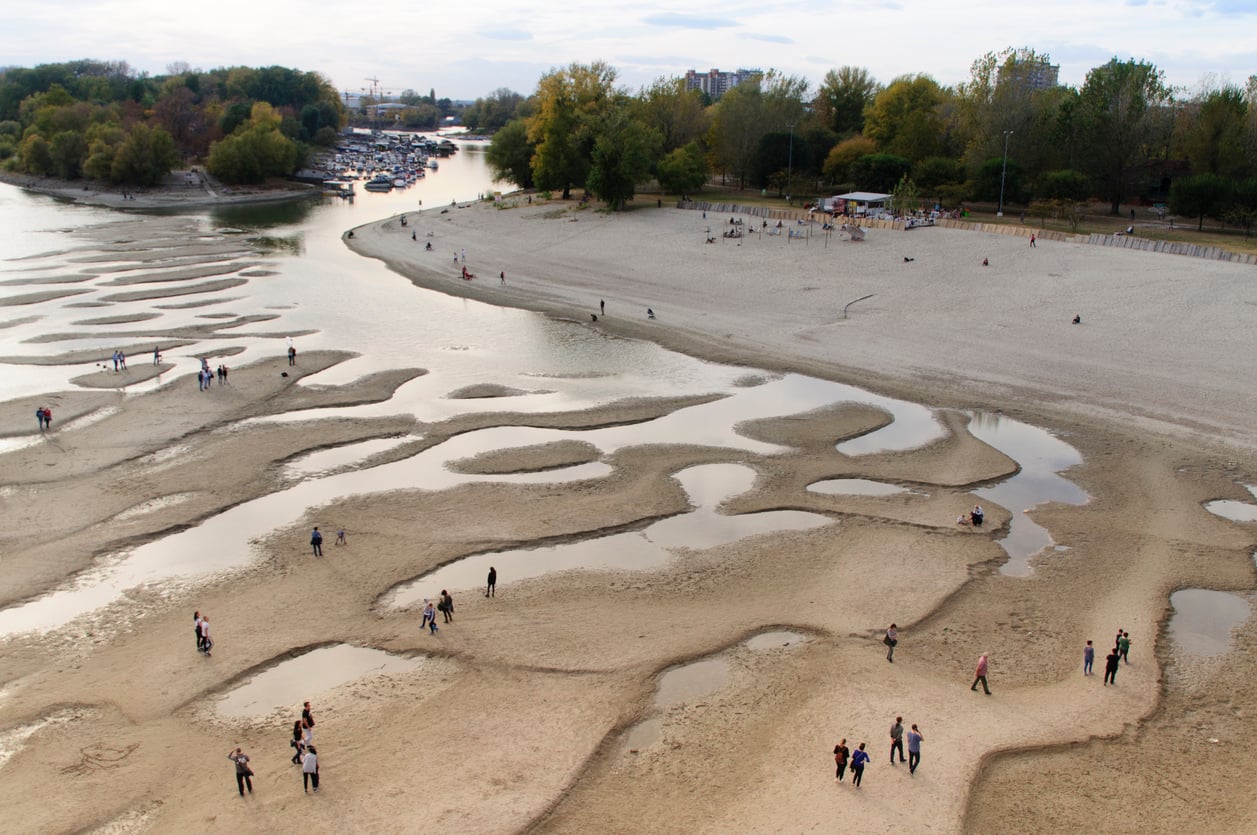
The climate crisis has revealed the rotting hulks of Nazi warships, which have been lying on the bed of the River Danube for more than 80 years.
Water levels along the river, Europe’s second longest, are now so low that the sunken Second World War German warships of the Kriegsmarine, some with command bridges and gun turrets virtually intact, are emerging.
Drought and heatwaves are the reason for the shortages in the watercourse which runs through Germany, Austria, Slovakia, Hungary, Croatia, Serbia, Romania, Bulgaria, Moldova, and Ukraine.
In the middle of the Danube separating Serbia and Romania near the Serbian port of Prahovo, a rusty hull is now visible along with a broken mast from which the Nazi flag once flew, one of 20 visible from the river banks.
The ships, some still laden with explosives, belonged to Germany’s Black Sea Fleet and were deliberately sank as Hitler’s forces retreated from Romania and Soviet troops advanced, in order to prevent their capture and block the river to prevent the Red Army moving upstream.
Historians say up to 200 German warships, mainly military cargo vessels, patrol boats, and armed tugs, were scuttled in September 1944 near Prahovo in the Danube Gorge as they came under Soviet fire. Nazi Germany surrendered months later, in May 1945.
The current Serbian government, with European Union financial support, has continued to attempt to remove the decaying wrecks.
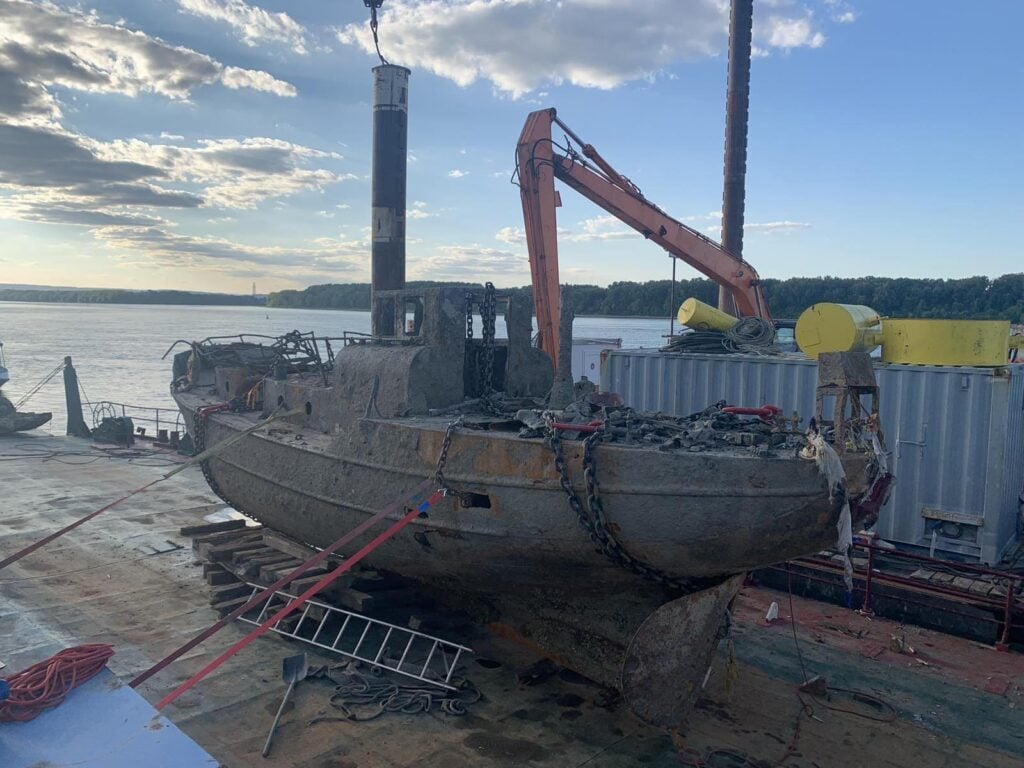
Some were removed from the river by Communist Yugoslav authorities, but most have remained because of the explosives they carried make them too risky to move.
The European Investment Bank (EIB) is funding the project to clear the river. It said some ships have already been hauled out with ropes and cleared of mud with work is due to be completed by 2028.
Divers are to be deployed in the salvage of the ships, along with pumps to remove sand and silt. However, some wrecks are too large for such a recovery and will left on the riverbed, but buried deeper so as not to obstruct shipping.