

US President Donald Trump’s aim to hugely boost Venezuela’s oil production would be a disaster for the planet say climate scientists.
Following the capture by the American military of President Nicolás Maduro and the subsequent policy to take control of his country’s vast fossil fuel deposits, environmentalists fear a ‘drill, baby, drill’ policy to ‘run Venezuela’ could wreak havoc on the battle to control gas emissions and lower global heat levels.
Even raising production to 1.5m barrels of oil a day from current levels of around 1m barrels would produce around 550m tons of extra carbon dioxide a year when the fuel is burned, according to Paasha Mahdavi, an associate professor of political science at the University of California, Santa Barbara.
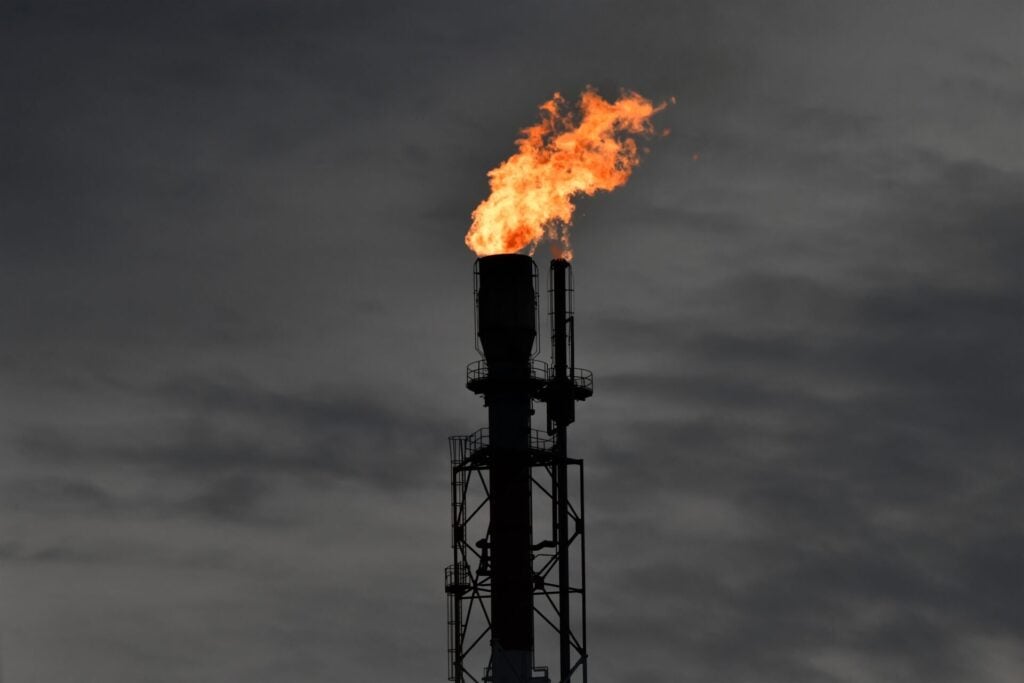
This represents more carbon pollution than emitted annually by major economies such as the UK and Brazil.
The climate costs would be especially high because Venezuela produces some of the world’s most carbon-intensive oil. Its vast reserves of extra-heavy crude are particularly dirty, and its other reserves are ‘also quite carbon and methane intensive’, Mahdavi said.
Why Venezuela’s Oil Has Become a Strategic Flashpoint
Following the arrest of Maduro and his wife, Cilia Flores, the Trump administration is seeking a ramp-up of drilling in Venezuela, which has the largest known reserves of oil in the world – equivalent to about 300bn barrels.
‘The oil companies are going to go in, they are going to spend money, we are going to take back the oil, frankly, we should’ve taken back a long time ago,’ the US president said after Maduro’s extraction from Caracas.
‘A lot of money is coming out of the ground, we are going to be reimbursed for everything we spend.’
US oil companies will ‘spend billions of dollars, fix the badly broken infrastructure and start making money for the country’, Trump added, with his administration pressing Venezuela’s interim government to delete a law requiring oil projects to be half-owned by the state.

Major US oil companies, including ExxonMobil and Chevron, have yet to publicly commit to the level of investment that would be required to dramatically increase production in Venezuela.
Chevron – currently the only American firm operating in the country – is seen as best placed to expand output quickly if conditions allow.
ExxonMobil could also stand to gain, having poured significant resources into oil development in neighbouring Guyana, while previously being blocked from expanding into Venezuela under Maduro’s government.
That said, industry appetite remains uncertain. According to several major outlets, senior US oil executives are uneasy about the administration’s overtures, citing confusion over who is effectively governing Venezuela and questioning the logic of boosting supply at a time when oil prices have slipped to around $60 a barrel.
The American Petroleum Institute has so far offered little more than a holding statement, saying it is ‘monitoring developments’ in Venezuela and their potential impact on global energy markets. As a result, it remains unclear how US oil majors will respond to Trump’s push for regime change and expanded extraction.
What is far less ambiguous is the environmental cost.
Environmental Cost
Any significant expansion of Venezuela’s oil industry would be disastrous for the climate, experts warn. It’s reported that analysts at Energy Aspects estimate that increasing output by 500,000 barrels a day would take around two years and cost roughly $10bn, with further growth requiring vastly greater investment.
Returning production to around two million barrels a day by the early 2030s could demand more than $100bn, according to Rystad Energy — much of it tied to developing the Orinoco Belt, where heavy, sulphur-rich crude is more expensive, polluting and difficult to refine.
Climate economists say the consequences would be global.
‘If there are millions of barrels a day of new oil, that will add quite a lot of carbon dioxide to the atmosphere and the people of Earth can’t afford that,’ John Sterman, an expert in climate and economics at the Massachusetts Institute of Technology, told The Guardian.
He added that increased drilling would also depress oil prices, slowing the transition to renewable energy and electric vehicles, ultimately leaving both the climate and Venezuela worse off.