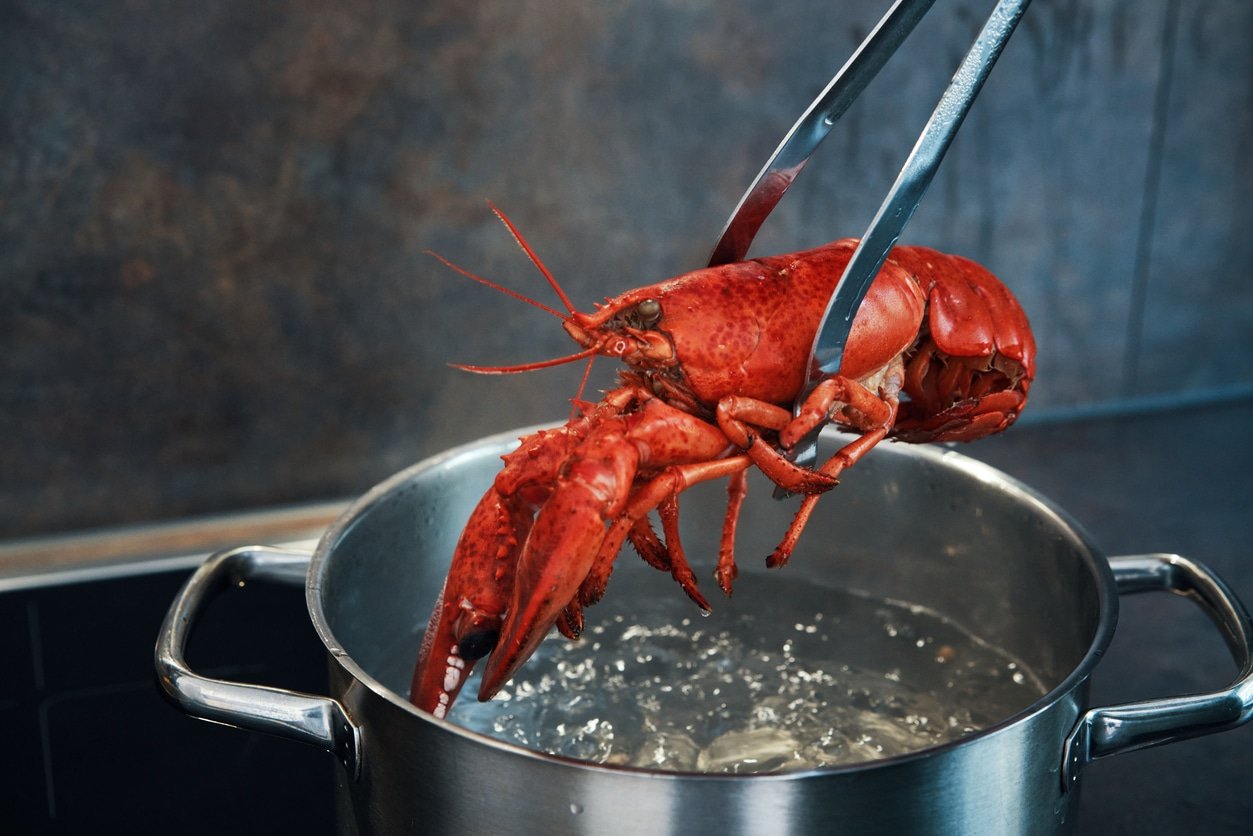
New York City is considering a ban on boiling lobsters alive, in what could be a welcome step forward for animal welfare.
The new bill, put forward on November 19 by City Council members Oswald Feliz and Harvey Epstein, would make it illegal for restaurants to place live lobsters, crabs and other crustaceans directly into boiling water.
Restaurants would still be allowed to serve lobster and crab, but would need to kill the animals before cooking them. Those breaking the rules would first receive a warning, followed by fines of $100 for each further offence.
The move follows growing scientific evidence that lobsters and crabs can feel pain, despite long-held beliefs that their reactions to boiling water are simply reflexes.
Research has shown that these animals can learn to avoid painful situations and change their behaviour after harmful experiences, suggesting they may experience pain in ways that are more complex than once thought.
Scientists have also found that some crabs will give up a safe hiding place to escape an electric shock, even when leaving puts them at greater risk. This suggests their response goes beyond a simple reflex and that they may be weighing up different threats.
Scientists have found that some crabs will give up a safe hiding place to escape an electric shock, even when leaving puts them at greater risk
For animal welfare groups, these findings raise serious questions about the way millions of lobsters and crabs are caught, handled and cooked each year.
Unlike fish, which are often killed before being prepared, lobsters are commonly kept alive until the moment they are placed into boiling water. The practice has long been defended as a way to keep seafood fresh, but campaigners argue that it causes avoidable suffering.
Several countries have already taken steps to protect them. Switzerland banned boiling lobsters alive without first stunning them in 2018, while Norway, Austria and parts of Australia have introduced rules aimed at reducing their suffering.
In 2022, the UK formally recognised lobsters, crabs and other crustaceans as sentient animals, meaning they can feel pain and distress. It followed a major review of more than 300 scientific studies by researchers at the London School of Economics who found strong evidence that they can feel pain and called for better welfare standards. Their review called for an end to boiling them alive without first making them unconscious.
However, while the UK recognised their ability to suffer, it stopped short of introducing a ban on boiling lobsters alive.
Boiling Lobsters Alive is ‘Cruelty’
Speaking to the New York Post, Councilman Feliz said: ‘Boiling an animal alive is the textbook definition of animal cruelty.’
He questioned why lobsters struggle to escape when placed in boiling water if they are unable to feel pain, and argued that the practice should no longer be accepted.
Feliz also made clear that the proposed ban would not stop restaurants from serving lobster, but would simply require them to use a different method of killing the animals before cooking.
Not everyone is happy about the proposal. Some New York restaurant owners say the new rules would add to the pressures they already face from rising rents, food prices and staff costs.
In the same article, retired restaurateur Angelo Vivolo called the idea ‘insane’, while chef Zach Erdem questioned why lawmakers were focusing on lobsters when restaurants were already struggling to stay in business.
However, more humane methods are already available, including electrical stunning, which can make crustaceans unconscious before they are killed.
Specialist equipment designed to prevent boiling lobsters alive is already used in some professional kitchens. Although it can be expensive, supporters argue that it offers a practical alternative and shows that traditional cooking methods can change without removing popular dishes from menus.
Animal Welfare on the Menu
The debate also comes at a time when more people are questioning where their food comes from and how animals are treated before reaching their plates.
From the use of cages in egg production to the treatment of animals in factory farms, food businesses around the world are facing growing calls to improve welfare standards. The treatment of lobsters and crabs is increasingly becoming part of that wider conversation.
The proposed ban is one of two new animal welfare bills being considered in New York. The second would stop live goldfish from being given away as prizes at fairs and other events, a practice that has also faced criticism from animal protection groups.
New York City has previously taken action on animal welfare in the food industry. In 2019, lawmakers voted to ban the sale of foie gras, a luxury food made from the enlarged livers of ducks and geese that have often been force-fed. However, that ban has faced years of legal challenges.
If passed, it would bring New York closer to other parts of the world that have already changed their laws to better protect these animals. And while it may change how some of the city’s restaurants prepare seafood, it could also help end a practice that animal welfare groups have campaigned against for years.