They grow where most trees would struggle to survive, standing ankle-deep in seawater along some of the world’s hottest coastlines, their tangled roots rising from the mud like stilts. Mangroves may not have the immediate grandeur of a tropical rainforest or the technicolour appeal of a coral reef, but these strange forests are among the most valuable ecosystems on Earth, and they’re in danger of being lost.
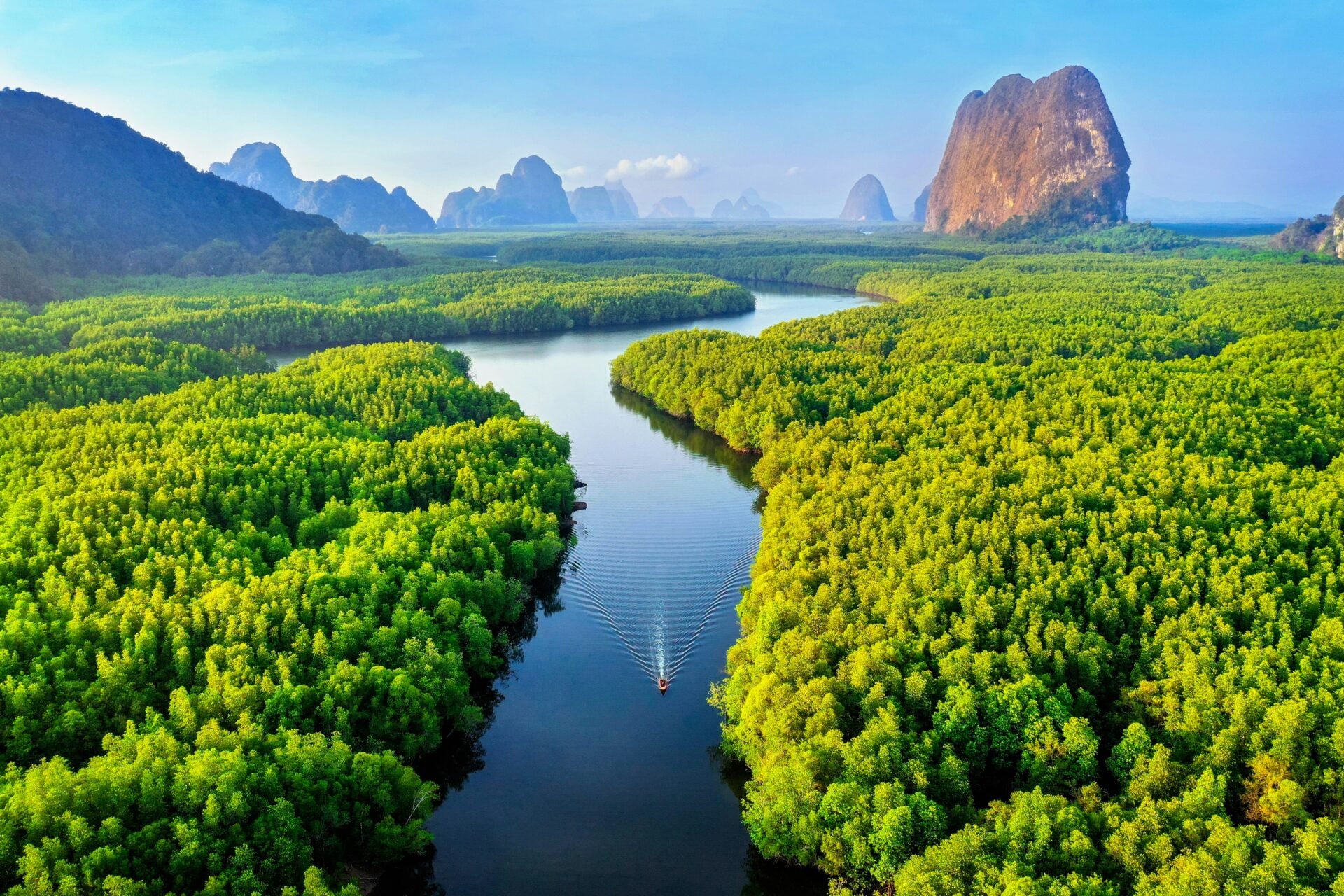
Found across tropical and subtropical coastlines, mangroves occupy the boundary between land and sea. They tolerate salt, flooding, punishing heat, and oxygen-poor mud, creating forests in places few other trees can survive. In doing so, they provide nurseries for marine life, shelter threatened wildlife, protect communities from storms, and lock away remarkable quantities of carbon – up to four times more than most tropical forests, in fact.
Yet they have also been disappearing for decades, cleared for development, aquaculture, agriculture and infrastructure. According to the United Nations, more than 20 per cent of the world’s mangroves are estimated to have been lost in just 40 years.
But first, what exactly is a mangrove?
Despite the popular misconception, the word mangrove doesn’t describe just one particular species of tree. Instead, it’s an umbrella term for a group of trees and shrubs specially adapted to live in salty or brackish water along sheltered tropical and subtropical coastlines.
There are around 70 true mangrove species worldwide, across more than 100 countries, from the Caribbean and Central America to East Africa, the Arabian Gulf, South and Southeast Asia, and northern Australia. Of the 14.8 million hectares of mangroves that remain globally, almost 44 per cent are found in South and Southeast Asia.
While ordinary plants draw freshwater through their roots, mangroves have to contend with seawater that would dehydrate or kill most vegetation, and different species have evolved ingenious ways of coping. Some prevent much of the salt from entering through their roots in the first place, while others absorb it and then expel it through specialised glands in their leaves. Certain mangrove leaves can become so salty that crystals are visible on their surface.
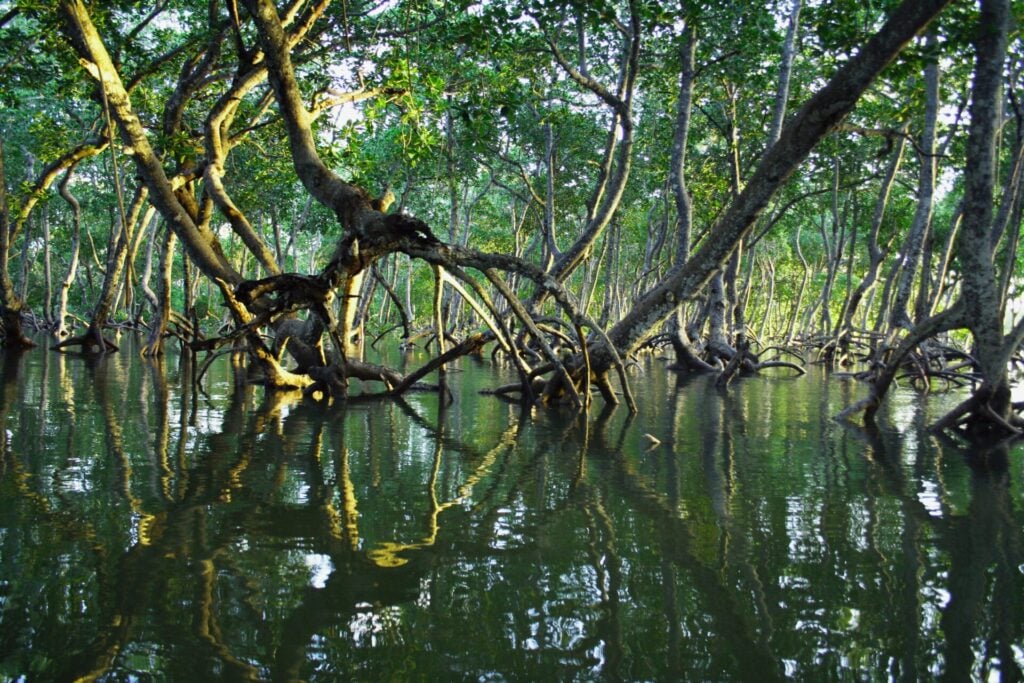
Their root systems solve another problem. Mangrove mud is often waterlogged and starved of oxygen, so some species grow aerial roots above the surface, allowing them to take in oxygen when the tide retreats. Others balance themselves on prop or stilt roots, creating the extraordinary tangled forests associated with mangrove coastlines.
A nursery beneath the roots
Look beneath the surface of a mangrove forest and an entirely different world appears. Their submerged roots create protected water where juvenile fish, crabs, shrimp and countless other creatures can feed and grow with some protection from larger predators. For many species, mangroves function as nurseries before young animals move into coral reefs, seagrass beds and the open ocean. That makes the health of mangroves inseparable from the health of neighbouring marine ecosystems.
During storms, cyclones, and storm surges, healthy mangrove belts can be the first line of defence, lessening the force of water reaching communities behind them
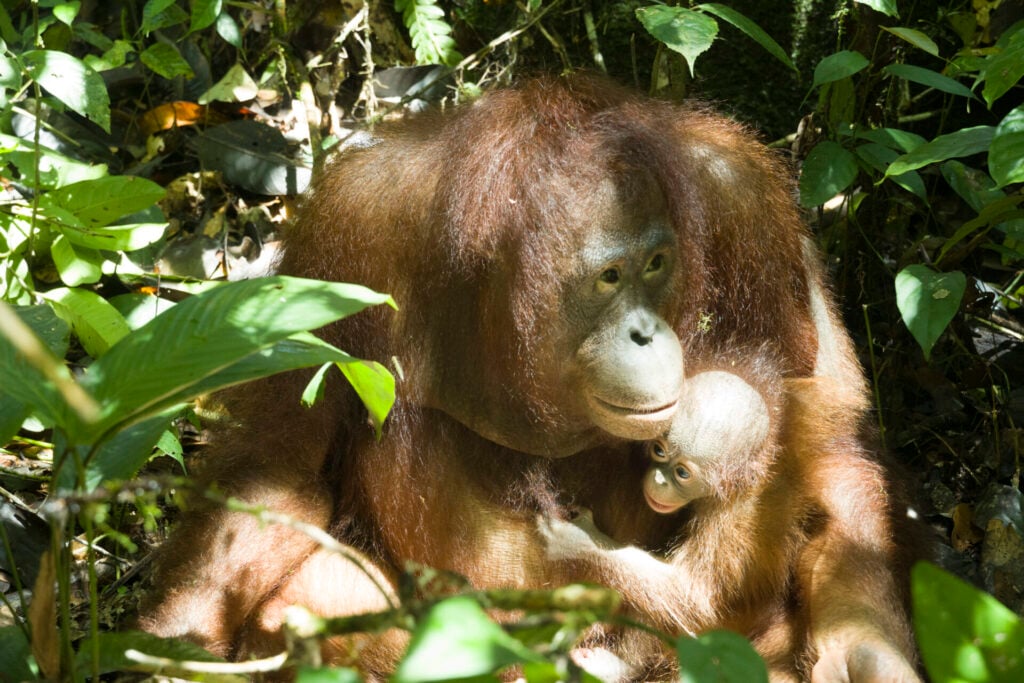
Above the water, meanwhile, their branches and muddy shores support birds, reptiles, mammals and insects. Depending on where in the world you are, a mangrove forest might shelter everything from monkeys and crocodiles to flamingos, kingfishers, and sea turtles.
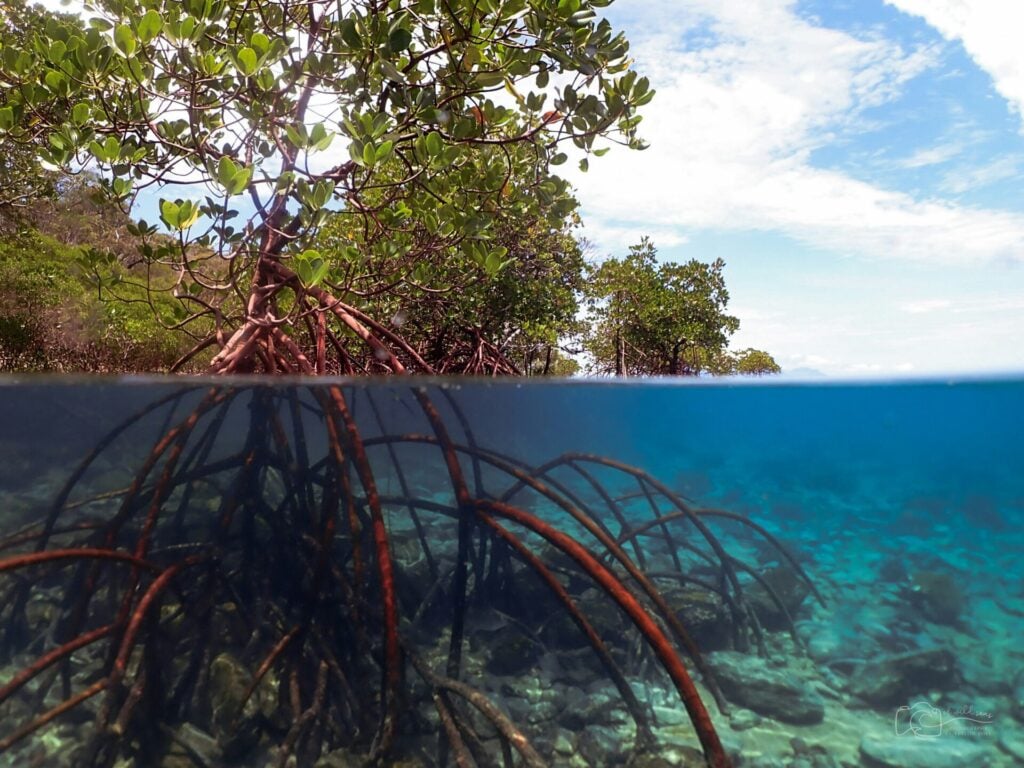
Even fallen mangrove leaves matter. As they decompose, they feed microorganisms and tiny animals at the bottom of a food web that ultimately supports much larger marine species.
From coastal defence to carbon
For millions of people living close to tropical coastlines, mangroves can also provide something increasingly valuable: protection. Their dense roots, trunks and branches act as natural buffers between land and sea, absorbing wave energy and helping to reduce coastal erosion. During storms, cyclones, and storm surges, healthy mangrove belts can be the first line of defence, lessening the force of water reaching communities behind them.
According to the World Bank, mangroves are estimated to protect around 15 million people from flooding every year and prevent more than US$5 billion in flood damages annually. If today’s mangroves disappeared, an additional 18 million people would be flooded every year, and annual property damage would rise by US$82 billion.
Mangroves also trap sediment within their roots, helping stabilise shorelines and, under the right conditions, can even allow the ground under them to build vertically over time.
The waterlogged, oxygen-poor soils beneath mangrove forests slow the decomposition of organic material. Carbon from dead leaves, roots and other matter can accumulate and remain locked away for centuries or even millennia
Then there is their extraordinary relationship with carbon. Mangroves belong to a group of coastal ecosystems, alongside salt marshes and seagrass meadows, associated with what scientists call ‘blue carbon’: carbon captured and stored by ocean and coastal environments.
And mangroves are exceptionally good at it. Like other forests, they store carbon in their trunks, branches, leaves and roots. Mangroves hold an average of around 1,000 tonnes of carbon per hectare, including the huge stores in their soils, and have the largest average carbon stocks per unit area of any terrestrial or marine ecosystem.
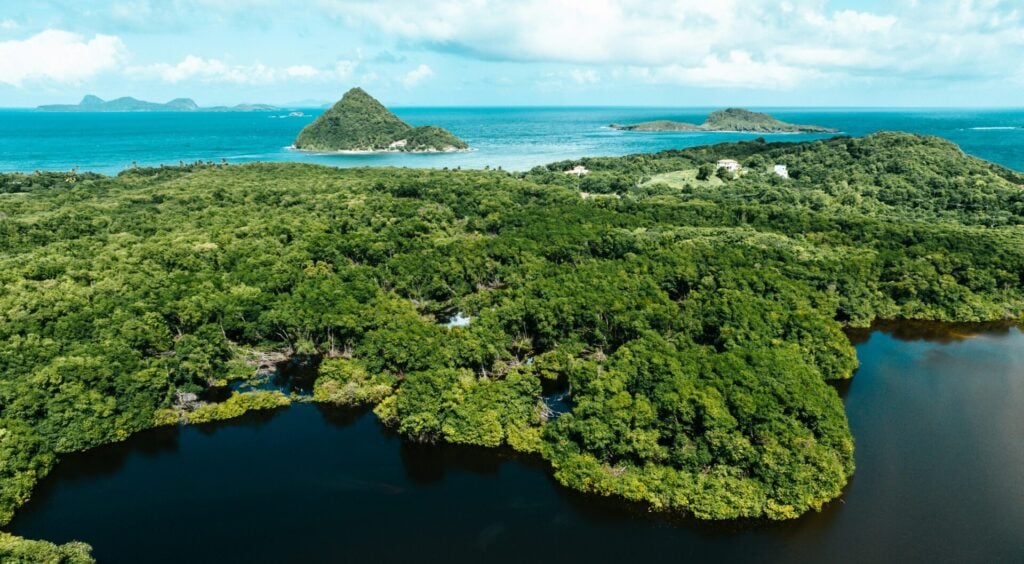
And their greatest carbon reserves are often hidden underground. The waterlogged, oxygen-poor soils beneath mangrove forests slow the decomposition of organic material. Carbon from dead leaves, roots and other matter can therefore accumulate in the sediment and remain locked away for centuries or even millennia.
This means that, despite occupying a relatively small area of the planet, mangroves can store disproportionately large amounts of carbon. It also makes their destruction particularly damaging. When mangrove forests are cleared or their soils disturbed, carbon that has been accumulating beneath them for generations can be released back into the atmosphere.
Protecting an existing mangrove forest therefore does two jobs: it continues capturing carbon while helping prevent an enormous existing carbon store from being disturbed.
Why are we losing them?
For much of modern history, mangroves were treated as expendable, muddy coastal land waiting to be drained, cleared or developed.
Large areas have disappeared to make way for shrimp farms and other forms of aquaculture, agriculture, roads, ports, resorts and expanding cities. Pollution, changes to freshwater flows and rising seas placed additional pressure on the forests. Between 2000 and 2020 alone, 677,000 hectares disappeared.
However, 393,000 hectares appeared in places where mangroves had not existed in 2000. That means gains offset more than half the losses, leaving a net decline of 284,000 hectares
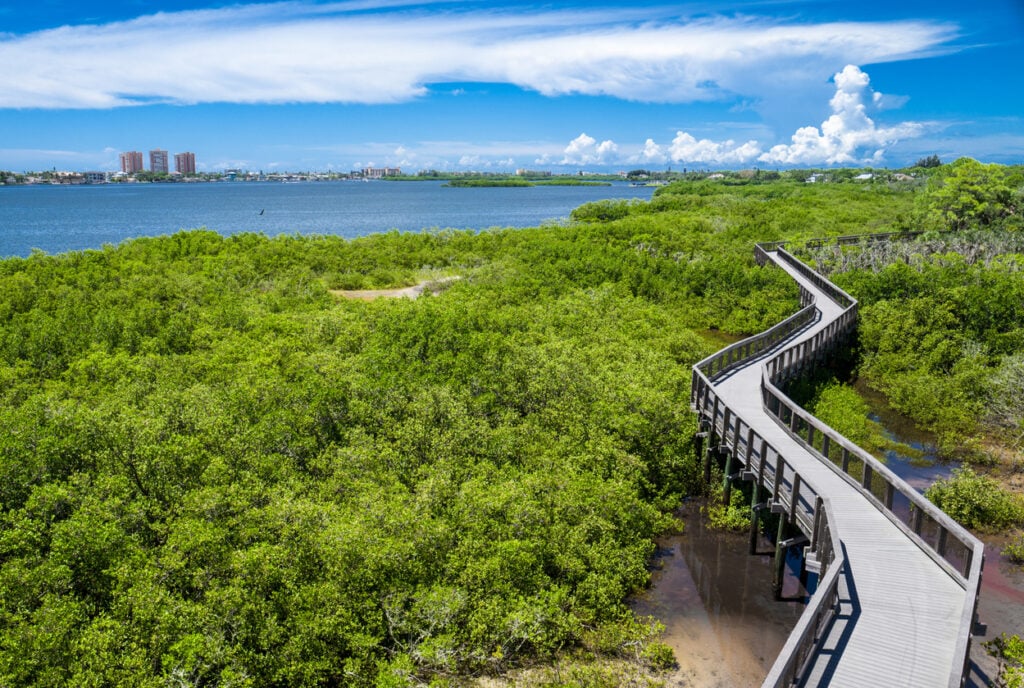
Surprisingly, only 18 per cent of the gains were attributed to restoration. A huge 82 per cent came from natural expansion.
Mangroves are dynamic forests. Their seeds and propagules can travel by water and establish themselves on newly suitable stretches of coastline. Where sediment accumulates, tidal conditions change or suitable habitat becomes available, mangroves can colonise it remarkably quickly.
That’s important because it means it isn’t always about people planting thousands of trees. In many places, the more effective intervention can be removing whatever is preventing natural recovery, such as restoring tidal flows, protecting suitable land from development, and allowing mangroves to recolonise by themselves.
Protecting isolated pockets of nature is not enough. Ecosystems function through connections, and mangroves are one of the great connectors between terrestrial and marine worlds
Their location also makes them particularly vulnerable. The same coastlines that suit mangroves are often highly desirable for human development. And once a mature mangrove ecosystem disappears, replacing it is not as simple as planting a row of seedlings.
Mangrove restoration projects have become increasingly popular around the world, but successful restoration requires the right species, tidal conditions, sediment, hydrology and location. Planting thousands of mangrove seedlings makes for an appealing photograph; but rebuilding a functioning ecosystem is considerably more complicated.
That is why protecting healthy, established mangrove forests remains so important.
Mangroves, coral reefs and seagrass: a connected world
In many tropical regions, mangroves sit alongside seagrass meadows and coral reefs, with animals moving between all three ecosystems during different stages of their lives. Mangrove roots provide shelter for juveniles, seagrass beds offer feeding grounds and reefs become habitat for adults.
Mangroves can also trap sediments and pollutants flowing from land before they reach offshore habitats, helping maintain the clearer water upon which corals and seagrasses depend. Destroy one part of this chain and the consequences can ripple outward.
It is one reason conservationists increasingly argue that protecting isolated pockets of nature is not enough. Ecosystems function through connections, and mangroves are one of the great connectors between terrestrial and marine worlds.
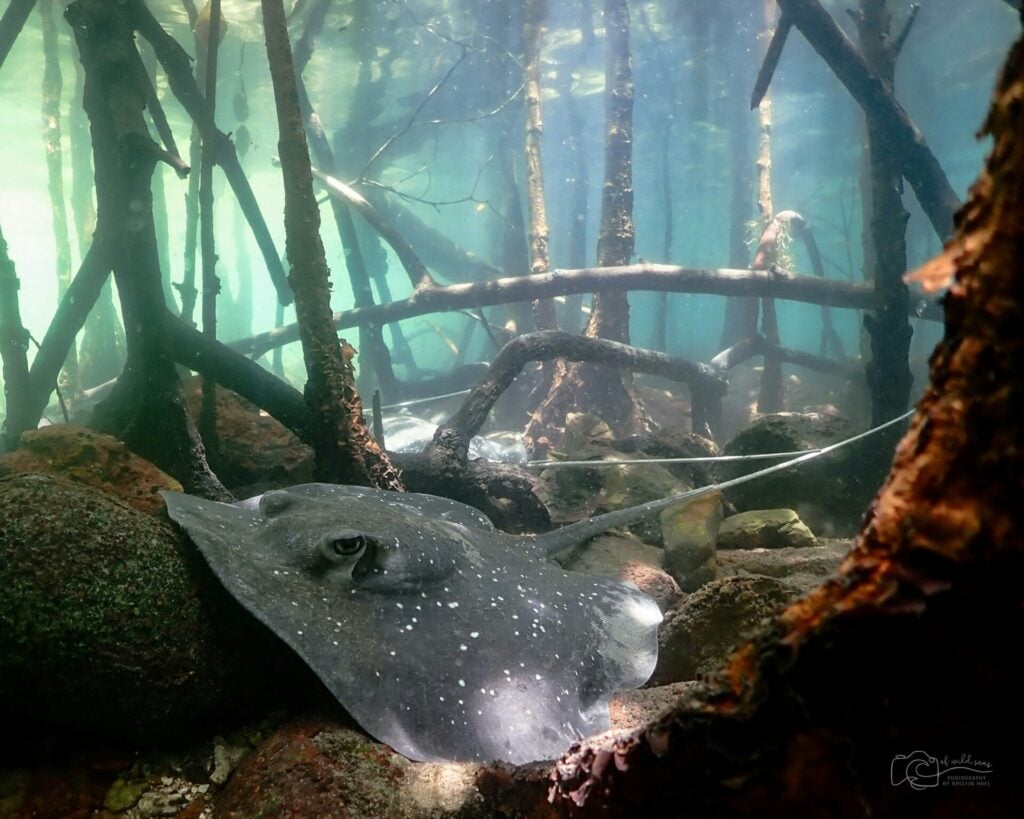
Mangroves represent one of nature’s most ingenious adaptations: forests that have learned to live between two worlds, breathing through exposed roots, filtering salt and creating life in shifting mud and tidal water.
For decades, their messy shorelines meant they were often overlooked in favour of more conventionally beautiful landscapes. We now understand that the apparent mess is precisely the point. Those tangled roots are fish nurseries, storm barriers, sediment traps, wildlife refuges and carbon stores all at once.
Protecting mangroves is not simply about saving trees. It is about preserving one of the remarkably intricate systems that holds coastlines, and the life around them, together.