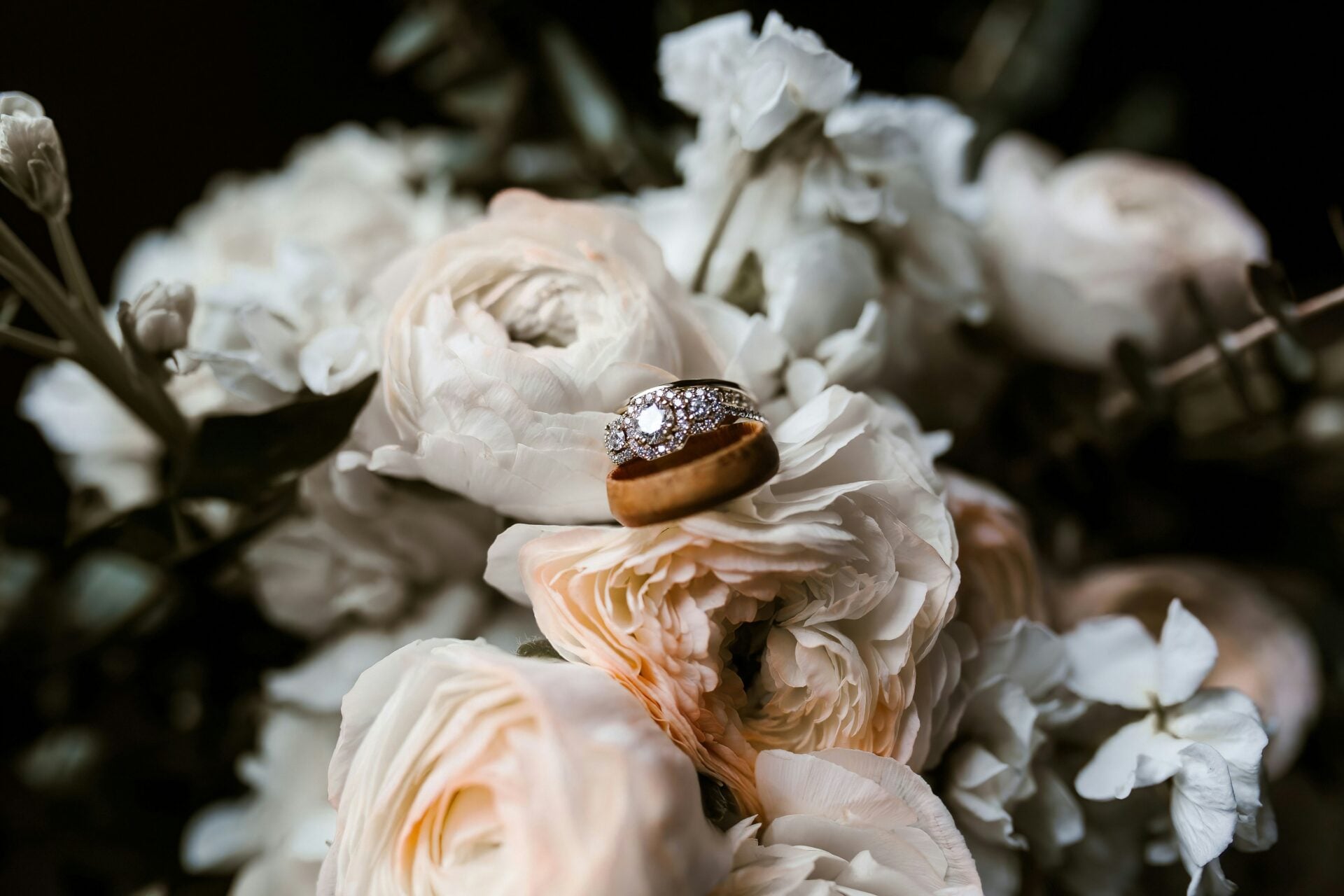
You can save a hundred pictures of engagement rings and still have no idea which one you’d want to wear every day. That sleek solitaire you’ve been coveting might suddenly feel a little impersonal once it’s on your hand. Then you try on an old ring, notice the tiny details around its setting and find yourself wondering who wore it before you.
It’s easy to see why antique-inspired designs are finding their way into modern collections. Firstly, there’s a growing demand for highly personalised, bespoke items. According to industry data, nearly 71 per cent of consumers now expect brands to deliver tailored, individual experiences rather than generic, mass-produced goods. An engagement ring is one of the most personal pieces of jewellery you’ll own, so it’s natural to want something that feels like yours. Vintage details can give it that character, whether you fall for a century-old ring or choose a newly made design.
Another factor is that modern consumers are more concerned with reducing their carbon footprints than their predecessors. The modern jewellery trade requires processes that create emissions and rely on lax labour laws in foreign countries. When we buy vintage rings that don’t come with these supply-chain problems, these concerns disappear. And this movement toward vintage designs is echoed by those looking for so-called ‘modern vintage’ alternatives.
The vintage designs making a comeback
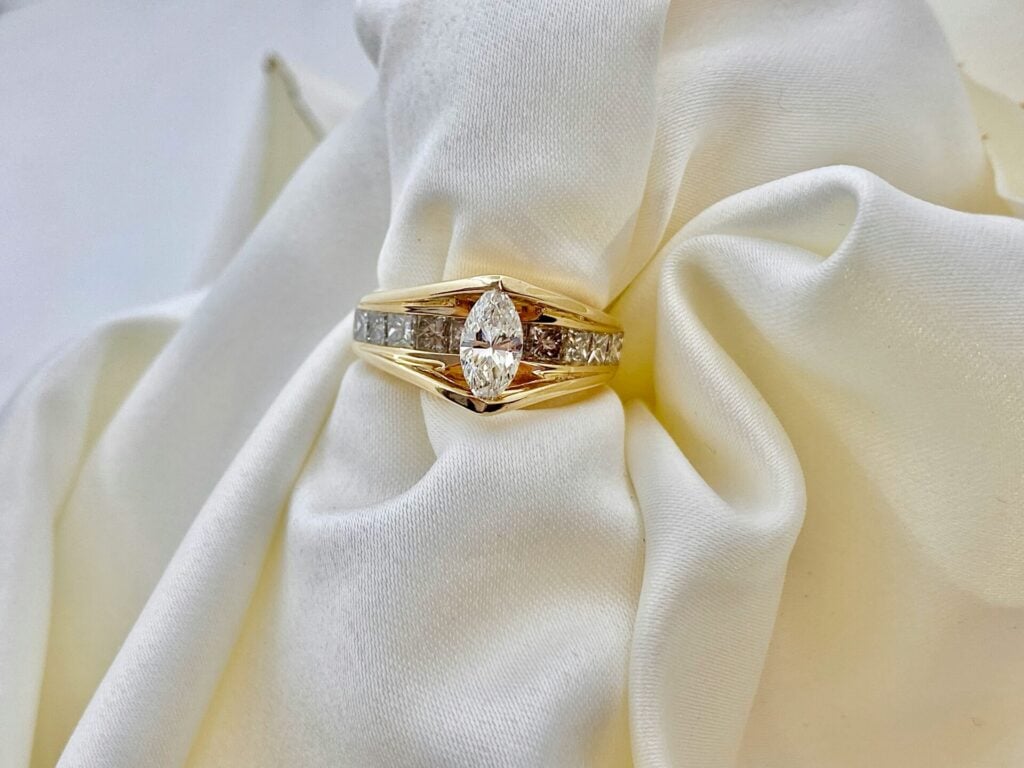
So, exactly which kinds of design are on the way back? It’s fair to say that we’re mostly talking about the highly detailed and distinctive flourishes, since these are the most likely to be identifiable as belonging to a certain period. Think milgrain edges, filigree work, intricate engraving, and the kinds of gemstone cuts that evoke bygone periods.
Of course, modern jewellers aren’t just imitating these things. In most cases, they incorporate them into modern designs and make them work with modern materials in modern ensembles and wardrobes. A contemporary men’s wedding band might harken back to older designs in subtle ways, while retaining the advantages of modern craftsmanship.
Over the last hundred or so years, jewellers around the world have gained access to a variety of new tools and techniques, meaning many of the designs are being made in entirely different ways than they originally were. This is great news for those looking for something durable, practical, and traditional.
The argument for lab diamonds
If you’re looking to buy a new ring, it’s worth asking a few questions. Globally, about 90 million carats of rough diamonds and 1,600 tons of gold are mined for jewellery every year, generating over US$300 billion in revenue.
Diamond and gold mining can have serious consequences for workers and communities; Human Rights Watch has documented labour abuses, conflict-related abuses and harms to environmental health in jewellery supply chains. A ‘conflict-free’ assurance doesn’t necessarily answer every question about conditions at the mine.

That doesn’t make every mined stone the same, or every alternative automatically sustainable. If you choose a newly made ring, ask the jeweller where the stone and metal came from, what they can trace, and whether they can use an existing stone or documented recycled metal. A lab grown diamond avoids new diamond mining, but producing one still requires energy; ask how it was made before accepting broad environmental claims.
A Ring With a Past
An original vintage ring has already been made, so choosing it gives its stones and metal another life. A family ring offers the same possibility, even if the setting isn’t quite right for you. A jeweller should be able to keep the stone and create a setting you love while preserving its history.
But if you’re buying vintage, you don’t need to know your Edwardian from your Art Deco before you start trying rings on. Notice what catches your eye. Milgrain is the fine, beaded edge that gives a setting texture, while filigree is delicate, often open metalwork. Engraving can turn a plain band into something interesting.
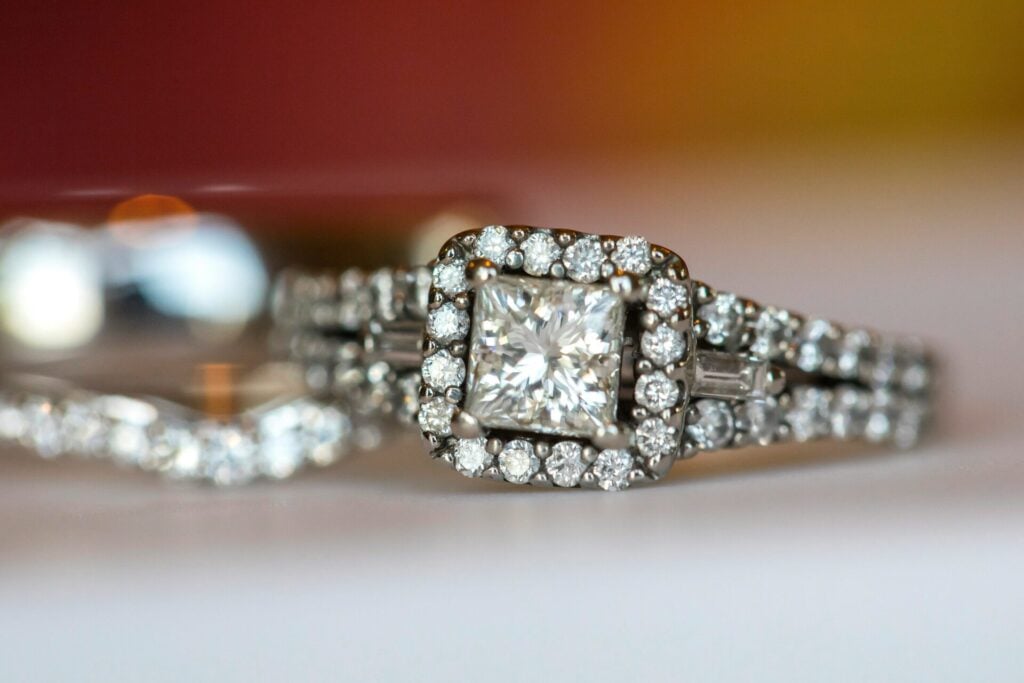
Try those details on your hand, rather than judging them only in photographs. An elaborate setting can look wonderful in a display case but feel too tall or delicate for daily wear. You may find that one small detail, an engraved shoulder or a milgrain border, gives you the character you wanted.
Make the Ring Work for Everyday Life
If you fall for a genuine antique, have a jeweller check the claws, setting and band before committing to daily wear. If you’re commissioning a new ring, talk about its height, how easily it can be cleaned and whether the stones will be secure in the way you live.
The nicest outcome isn’t a ring that ticks a trend box. It’s one whose details still make you pause and look at it years from now, whether they were made a century ago or chosen especially for you.