

Brushing up on your travel etiquette before setting off to a new destination can go a long way to making yourself welcome, because what’s acceptable in your own country doesn’t always translate in foreign climes. Small gestures such as removing shoes before entering a temple or home in Thailand, not pointing with your chopsticks in Japan, and addressing elders formally in Germany (by using Herr and Frau), shows that you care enough to have done your research.
I’ll never forget the time (or shame) in Tokyo when I raised my voice in public to my three young sons, and quite literally the traffic stopped. There was no two ways about it, I was being rude, forgetting, momentarily, in the heat of a family argument, that disturbing the peace of others was considered the height of bad manners. Fear of navigating social etiquette shouldn’t spoil your enjoyment of exploring a new culture, but it’s wise to learn a few basics. Here’s my guide to getting started…
In general, be mindful….
Before we get on to the particulars, it’s always good to remind ourselves to be mindful while travelling. Causing offence while exploring is so easily done, and often unknowingly. While all countries have their own rules, there are some that are universally shared, such as showing due respect to older citizens, mostly revered for their wisdom and considered head of the family. Wherever you are, always ask permission before taking a photograph in which people feature, particularly if there are young children in the shot.
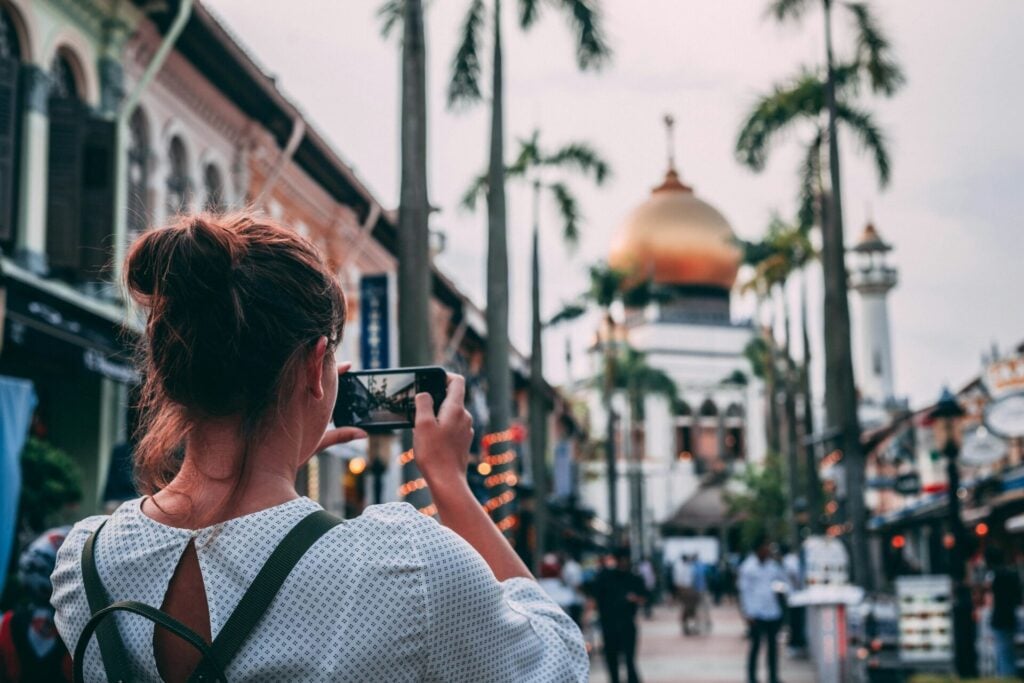
Do not raise your voice unless you are issuing a warning. In most cultures, shouting is considered aggressive (and tourists are particularly guilty of raising their voices in frustration when they can’t make themselves understood. Remember that the language barrier is your problem, not theirs). Give priority to local people as they go about their everyday business (try not to be a nuisance in other words). You may want to jostle to the front of the crowd to watch the action, but don’t get in the way of local people living their everyday lives. While norms around punctuality vary globally, do not keep people waiting. In most cultures, tardiness is considered rude. Showing gratitude is a valued gesture the world over.
Greeting & Touching
First impressions count for a lot and how to appropriately greet someone is important because it sets the tone for what will hopefully be a meaningful connection. If you’ve been raised in a culture where hugs and kisses are administered freely, even to those you’ve recently met, you may be required to restrain your natural warmth so as not to offend. I’m not even referring to hugging or kissing (even of the air variety, favoured in Latin America), as simply shaking hands is often considered too intimate a ‘hello’.
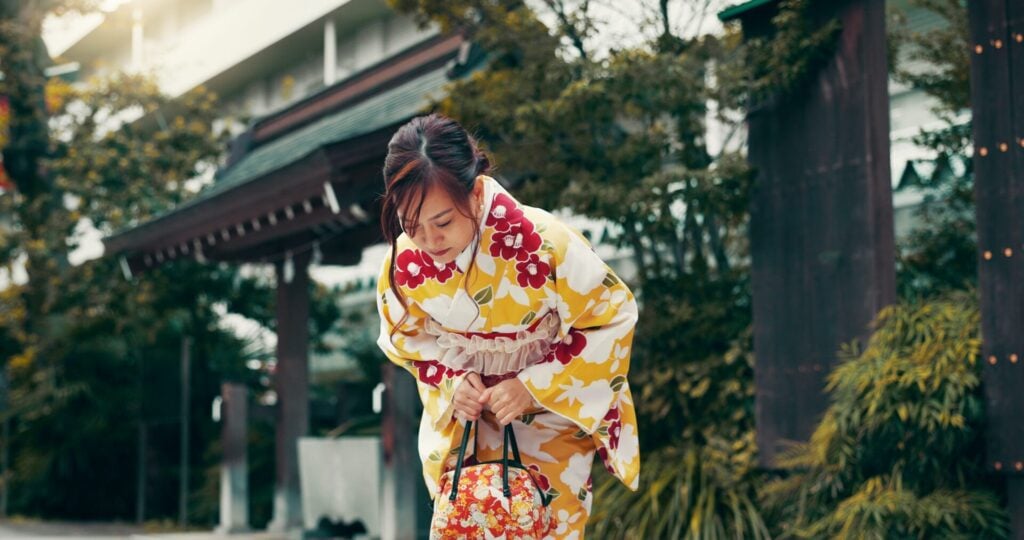
A short bow, accompanied by pressing your palms together at heart height, is the norm in India, Nepal, Cambodia, Thailand, and Laos, while in Japan prayer hands aren’t used, but the depth of a bow indicates your level of respect. Also be respectful to children. The friendly ruffling of a child’s hair is never okay in regions such as Southeast Asia because touching the head (considered the holiest part of the body in Buddhist culture) shows disrespect. Personal space varies significantly across cultures, so always look to local people for social cues.
Hand Gestures
This is more of a minefield than you may imagine, and the meanings of common gestures can vary greatly. I was red faced in Greece after discovering that the friendly thumbs up I’d given to my tour guide, after he’d asked if I’d enjoyed the day, is just about as rude a gesture as it gets (the equivalent of raising a middle finger in most western countries) and is also offensive in most Islamic countries, and also Russia and Australia. In Greece, an open palm (known as the moutza), means you have zero respect for the person you are showing it to. Jerking your chin upwards in France and Italy is used as a rude dismissal (rather than trying to get someone’s attention, like it is in the UK and US).

Simple pointing can also get you into trouble, considered ill-mannered in most Arab nations, as well as in parts of Asia, particularly Cambodia, Malaysia and Japan. In Africa, pointing directly at someone is always viewed as hostile. In Latin America and Southeast Asia, never beckon someone using your index finger as this gesture is reserved for animals. The ‘okay’ sign (as in making a circle with your thumb and index finger) translates as ‘loser’ or ‘worthless’ in France, Germany, and Brazil. Never cross your fingers for luck in Vietnam. The gesture symbolises female genitalia and is considered extremely vulgar.
Body Language
Body language speaks volumes about how we’re feeling, particularly when struggling with verbal communication. Remember that a smile can also signify discomfort and embarrassment, as well as happiness (most often in Asia, where local people do not like to display displeasure to foreigners). Rule of thumb, always place the facial expression in context. While turning your back on someone is generally considered rude the world over, while face to face the degree of eye contact varies greatly. Most Western cultures view sustained eye contact as a sign of respect and engagement, but in many Asian and African cultures it can be seen as a sign of hostility and disrespect.
In Japan, China, and Korea avoiding eye contact with elders indicates a deep reverence. In the Middle East, sustained eye contact between men and women is considered inappropriate. Although a simple shrug in Western cultures usually indicates a lack of knowledge, in the Middle East and Asia it can be used to display arrogance, often used in a dismissive way to indicate that you don’t care.
Most Common Travel Etiquette Faux Pas
Leaving your chopsticks pointing upwards in a bowl in Asia (indicative of incense sticks at funerals and viewed as an omen of death). Always lay them flat.
Showing affection in public. Save your kisses for private in the Middle East, and in rural parts of Vietnam, Thailand, Indonesia, and India.
Eating with or offering your left hand to shake in India. Always use your right. The left is for bathroom duties.
Not covering up appropriately, particularly at religious sites and in all public places in Muslim countries. View this as showing respect to local women.
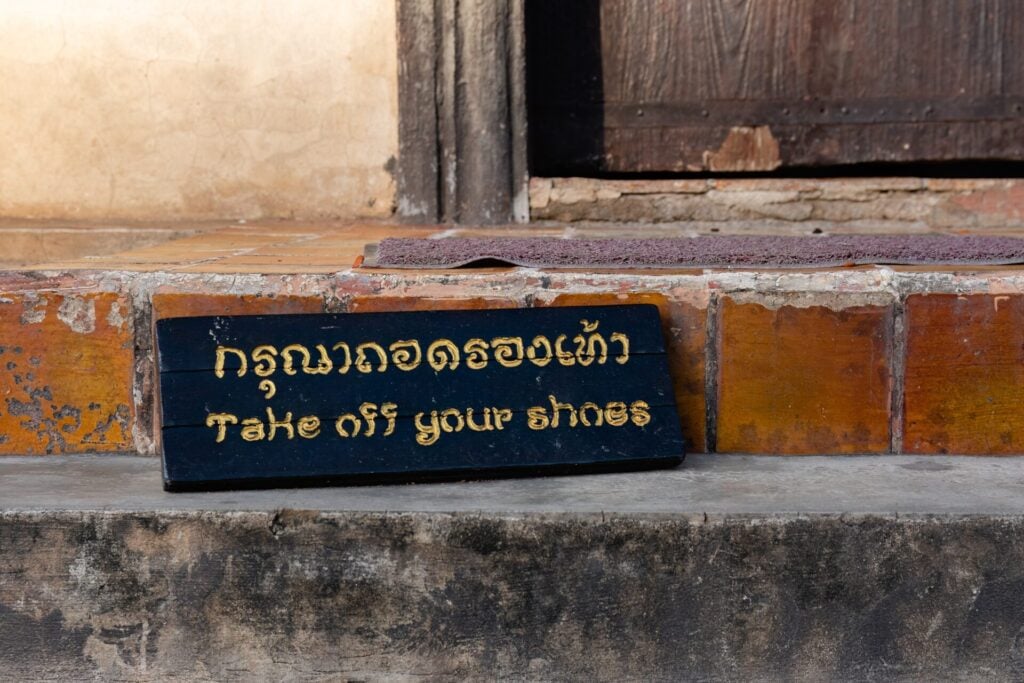
Not taking your shoes off before entering a place of worship or at a private home in Asia, the Middle East, and commonly in Scandinavia.
Before You Travel… Homework Top Five
Learn a few phrases in the local language (especially hello, please, and thank you), as this effort goes such a long way to making friends.
Research how to greet a local person respectfully.
Find out what the custom is for dressing appropriately.
Gen up on table manners, including how to raise a toast.
Look up the etiquette on tipping, as in always tip in the US, but never in Japan (it’s considered awkward to accept money from strangers).
Kate Wickers covers the pitfalls of Japanese etiquette in a chapter on Japan in her family travel memoir, Shape of a Boy, My Family & Other Adventures, available from Amazon.