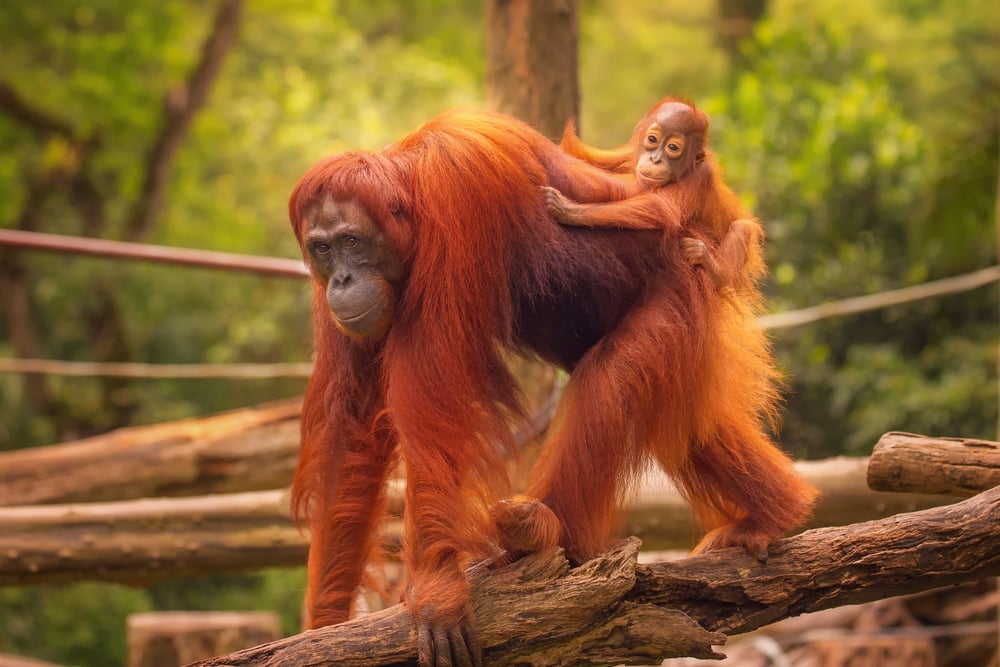
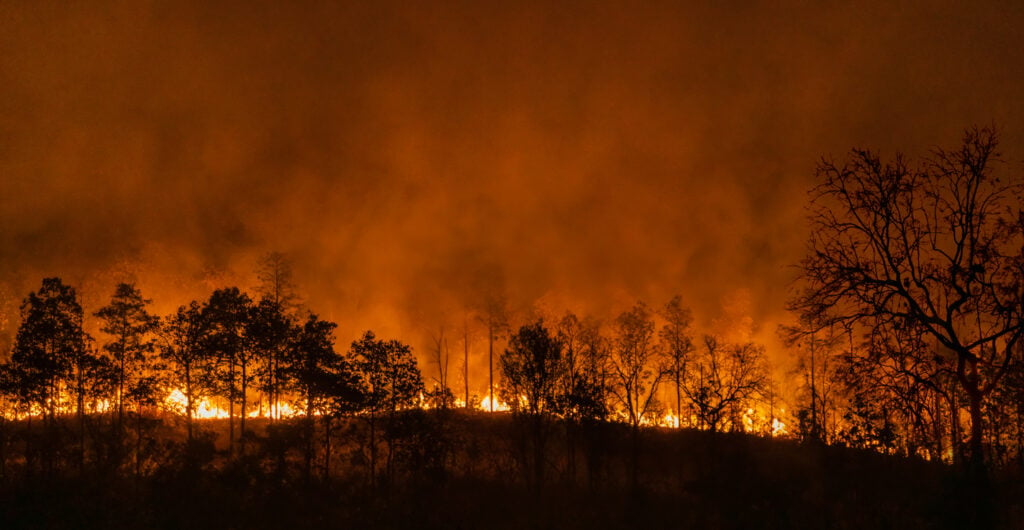
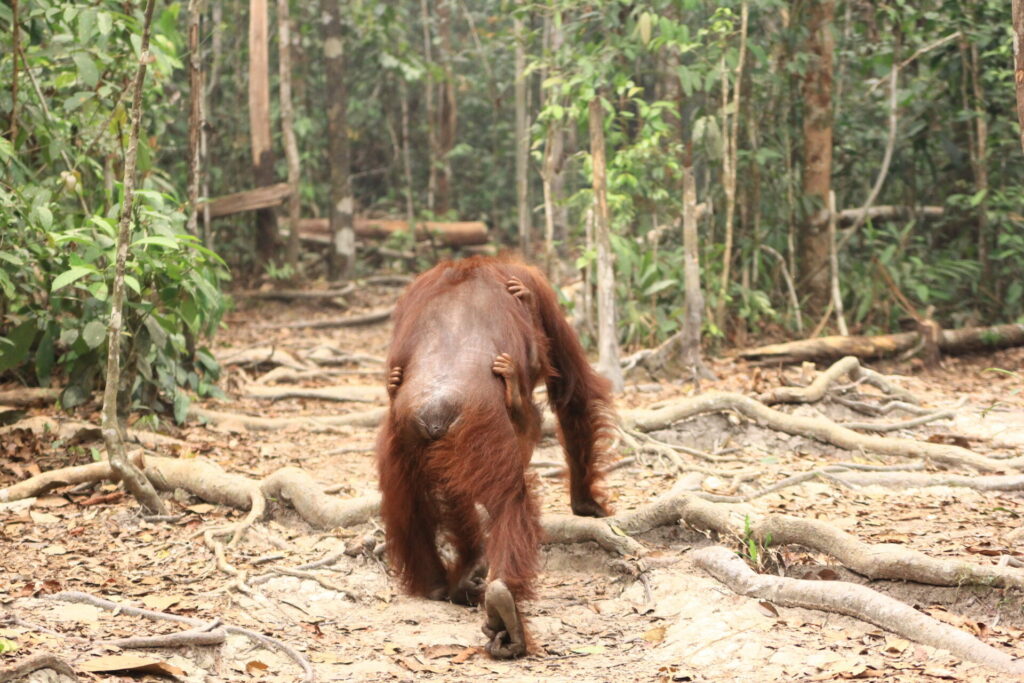
Orangutans are at major risk from wildfires devastating Indonesia’s forests which are destroying their habitat, crippling their food sources and causing thick, choking, smog.
Primate specialists from the International Union for Conservation of Nature (IUCN) are calling for urgent assistance to help control the fires, warning that thousands of the endangered animals could be killed, injured or displaced.
Wildfires happen every year in Indonesia, where fire is often used to clear land to make way for palm or pulp plantations.
But the arrival of a supercharged El Niño has brought especially dry conditions, causing blazes to spread rapidly across parts of Sumatra, Kalimantan, the Indonesian part of Borneo and Papua.
Habitat containing 52 per cent of the total Bornean orangutan population is now affected by the fires, according to a statement from the IUCN’s primate specialists.
Blazes have also spread into the habitats of five gibbon species, all of which are listed as endangered on the IUCN Red List.
Geopix, an environmental NGO, warned earlier this month that 4,500 fires had been detected across 21 Sumatran elephant habitats over recent months.
‘I believe that the toll on wild animals being burned, dead, because of the fires is huge,’ says Dr Karmele Llano Sanchez, a veterinarian and co-founder and CEO of Yiari, a non-profit group focused on primate and habitat conservation, which rescues orangutans and other species from torched forests.
Even animals that survive the catastrophe can face long-term consequences.
Food availability falls in the aftermath of fires as forests struggle to recover, and the risk of conflict between animals can rise if they are displaced and forced to live closer to each other.
Experts believe that, as with humans, there will also be health impacts for animals that have lived with months of dense smog.
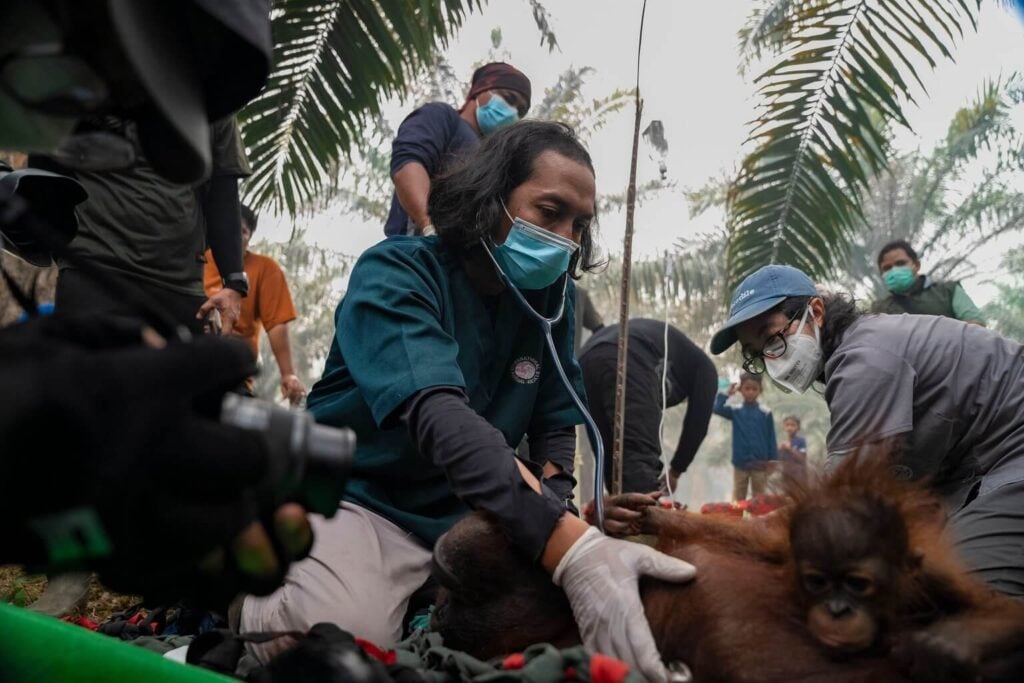
So far, more than 20 orangutans, as well as other species such as pangolin, have been evacuated from the fires by Yiari, which is working alongside West Kalimantan’s Natural Resources Conservation Agency, searching the forests for animals in need and responding to reports from the public.
The group sated: ‘Yiari continues to monitor and handle affected animals. To date, 21 orangutans have been evacuated, in addition to 12 other wildlife consisting of seven pangolins, two proboscis monkeys, one gray langur, one Bornean slow slow loris, and one tenggalung ferret in Ketapang and North Kayong Regencies.’
‘It hasn’t rained in 80 days here, and everything is dried and burned,’ said Sanchez. ‘No leaves and no fruits – nothing they can eat.’
Animals that are evacuated are given sedatives through a dart, which can be fired as high as 30 metres into the trees.
A team then hold a net to catch the animal as it tumbles from the branches.
Such evacuations are a last resort, says Sanchez, undertaken when the area of forest is destroyed: ‘Otherwise they will for sure die.’
There are many animals in peril that simply can’t be reached: proboscis monkeys, which are endangered, Sunda pangolin and snakes – including a python and king cobra – have all been found dead.
Forestry minister Raja Juli Antoni told media the wildfires could continue until early November, with the rainy season expected to arrive late. An estimated 600,000 hectares were damaged by fire in August, according to the environmental group YKAN.
The full extent of the long-term impact of the fires on surviving orangutans’ health is unknown.
However, during smoky periods orangutans show ketosis, a sign of increased fat breakdown. It’s believed this is because the smoke raises energy demands, probably by forcing the immune system to work harder.
Research also found orangutans made fewer sounds less in heavy smoke, and that they had reduced vocal quality. Most vocal changes persisted for two months after the smoke had cleared and probably signalled changes in health, researchers concluded.
Gibbons, which rely on song to attract mates, cement bonds and defend territory, have also been found to sing less when exposed to heavy smoke.