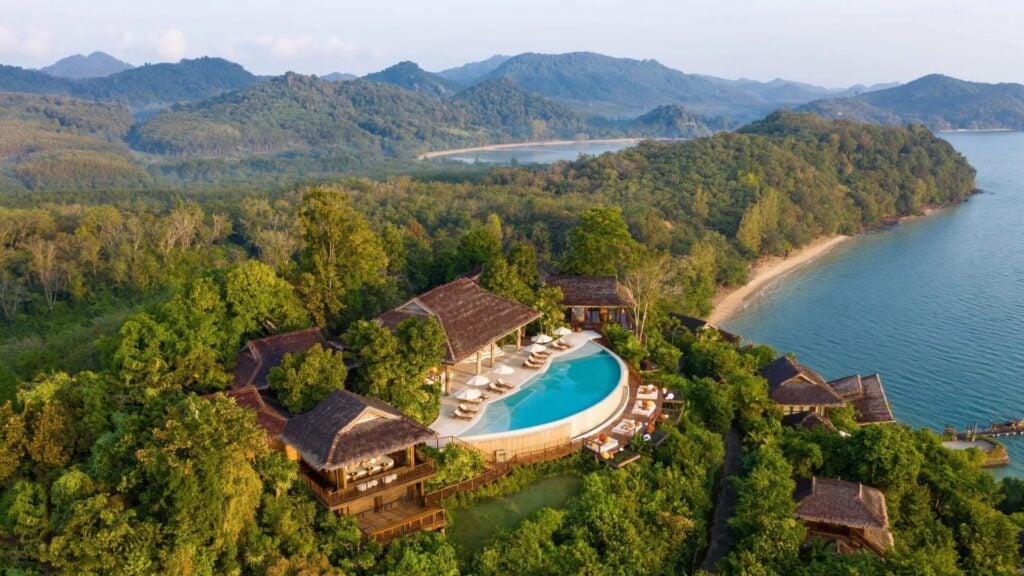
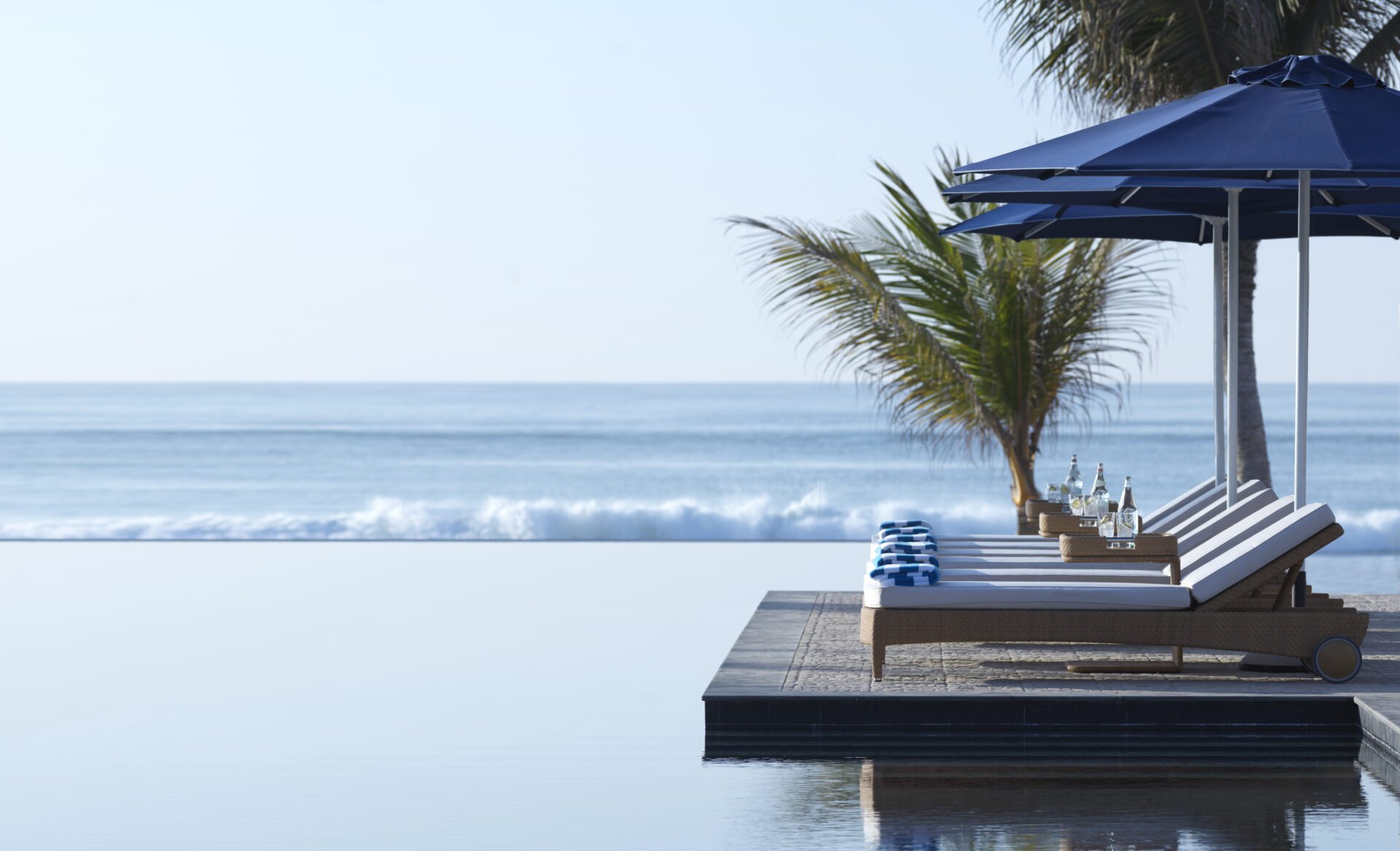
The Arabian Sea rolls in confidently, transforming from waves into sheets of white foam before sliding back in a shimmering medley of colours. The air tastes of salt, and the wind carries the mighty sound of sea meeting shore. I venture in, feeling the cool water against sun-warmed skin, and prepare myself as another wave arrives, laughing as it breaks, surf crashing around me.
Back on the beach, where tourists stroll along the silver-looking sand, small white sanderling birds dart opportunistically, pecking at the unsuspecting hermit crabs delivered freely by the currents. Nature’s very own Deliveroo, I muse. Beyond them, long-necked Socotra Cormorants land briefly before flying off into the wind. I take it all in and feel connected in a way I haven’t in a long time. There is space to breathe here, wide, uninterrupted space with a horizon that stretches in long lines of sea, sand and sky.

This is Salalah, and I am staying at Anantara Al Baleed Salalah Resort. The Dhofar coastline here is refreshingly untouched; there are no cranes or half-finished towers, no man-made islands dotting the horizon. It may be just under two hours from Dubai, but atmospherically, it’s worlds away.
I take it all in and feel connected in a way I haven’t in a long time. There is space to breathe here, wide, uninterrupted space with a horizon that stretches in long lines of sea, sand and sky
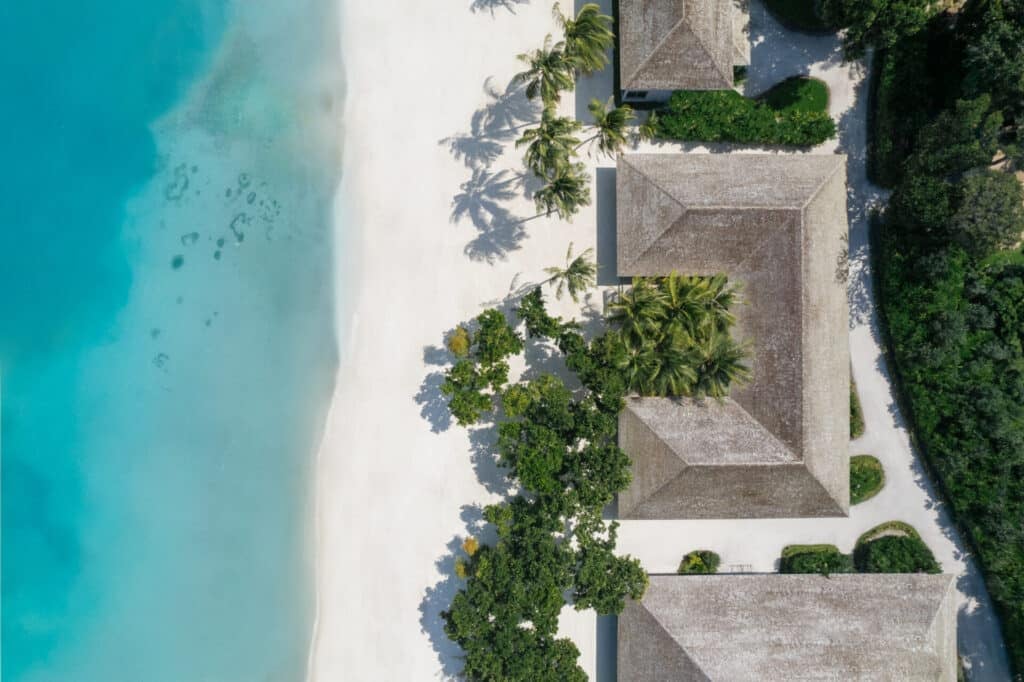
That sense of openness is built into the experience at this acclaimed Omani resort. Over 80 one-and two-bedroom villas inspired by the traditional villages of Dhofar sit low under palm trees. Even the welcome is in tune with nature, with guest names carved into coconut shells upon arrival and a warm ‘Marhaba’ written in the sand just outside the Omani-carved wooden doors.
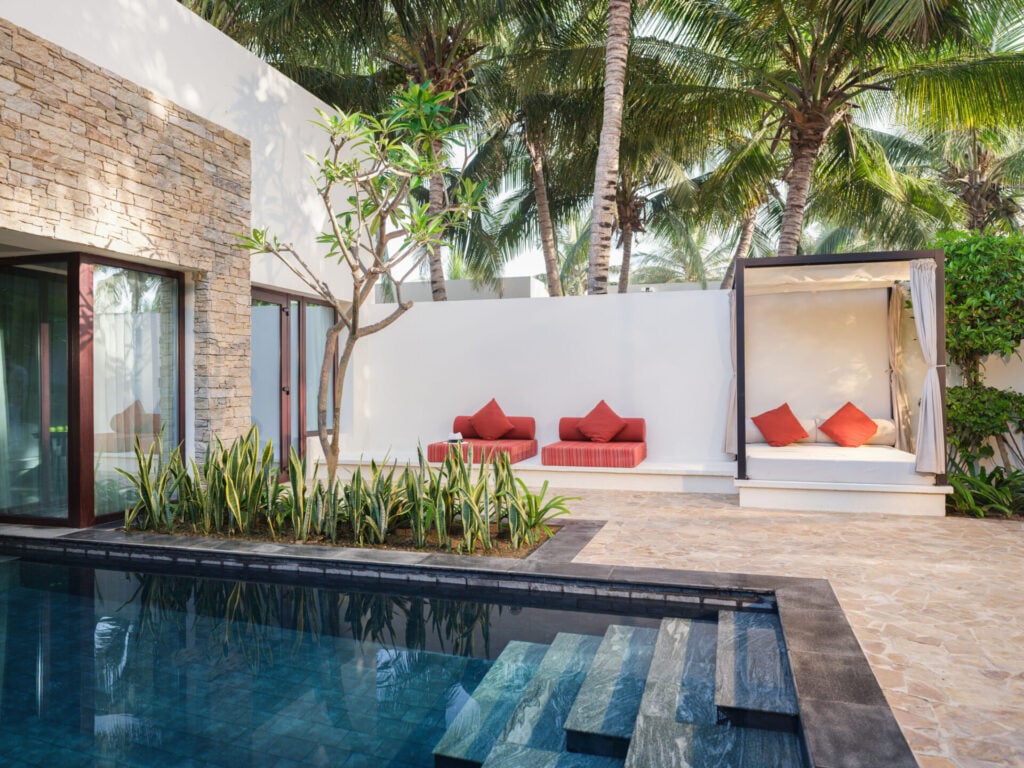
The private garden view pool villa is designed in earthy tones that echo Omani architecture, and the bathroom opens directly onto a generous plunge pool. The sense of privacy is immediate, and with a sense of relief, I get the impression that salt-spray hair and sand between the toes are entirely appropriate here.
Farm-to-Table À la Carte
My visit coincided with the resort’s annual Al Baleed Culinary Festival, which brings together international Michelin-starred chefs alongside the property’s own culinary team to create a series of dining experiences
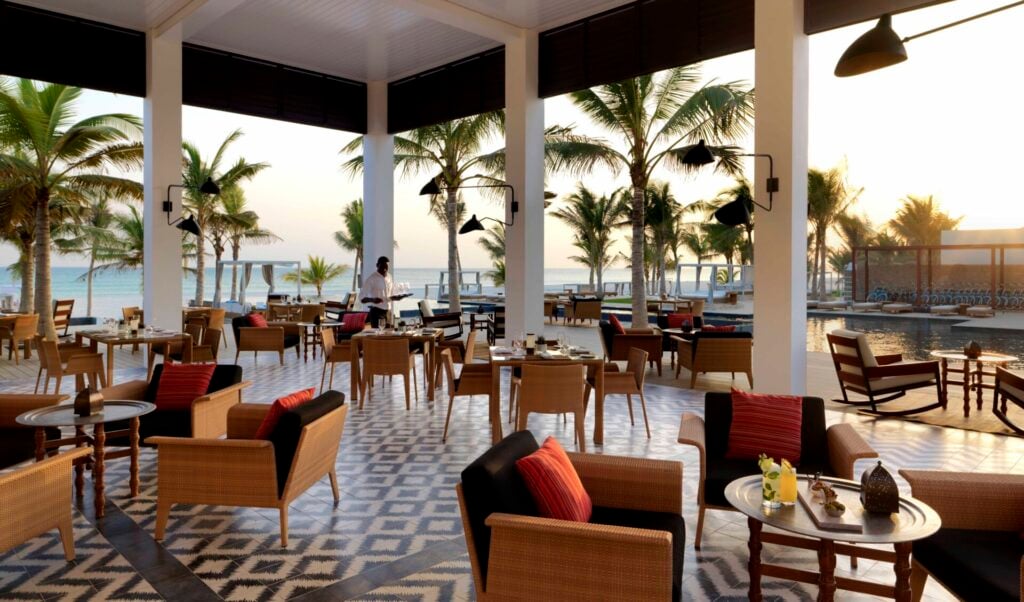
Dinner was served on the palm-lined terrace of Al Mina, which translates to ‘port’ in Arabic, overlooking the beach with the sound of waves rolling in the distance. Independent stations offered an array of elevated dining options, and as a vegetarian navigating menus designed for broader appeal, the emphasis on freshness was unmistakable.
Across the festival and the wider menus, it quickly became apparent that many of the ingredients had travelled only a few hundred metres before arriving on the plate. Caprese arrived layered with buffalo mozzarella and basil pesto; spaghetti aglio e olio carried a hit of chilli and parsley grown on site; eggplant parmigiana was baked into something almost lasagne-like in its richness. The vegetables tasted vivid because they are harvested daily.
There are no cranes or half-finished towers, no man-made islands dotting the horizon. It may be just under two hours from Dubai, but atmospherically, it’s worlds away
That daily harvest happens in a surprisingly ambitious organic farm tucked within the resort, overseen by the talented and passionate Adil Hussain, affectionately known as the ‘Farm Guru’.
Launched in 2023, the 4,000-square-metre organic farm now produces around 30 types of fruits, vegetables and herbs and supplies roughly 50 per cent of the produce used across Anantara Al Baleed Salalah’s restaurants. The resort’s 700-plus coconut trees yield approximately 150 coconuts per day, while three varieties of bananas grow alongside fresh produce, including eggplant, beetroot, spinach, radish, cauliflower, cabbage, pomegranate, papaya, pineapple and fresh sugar cane.
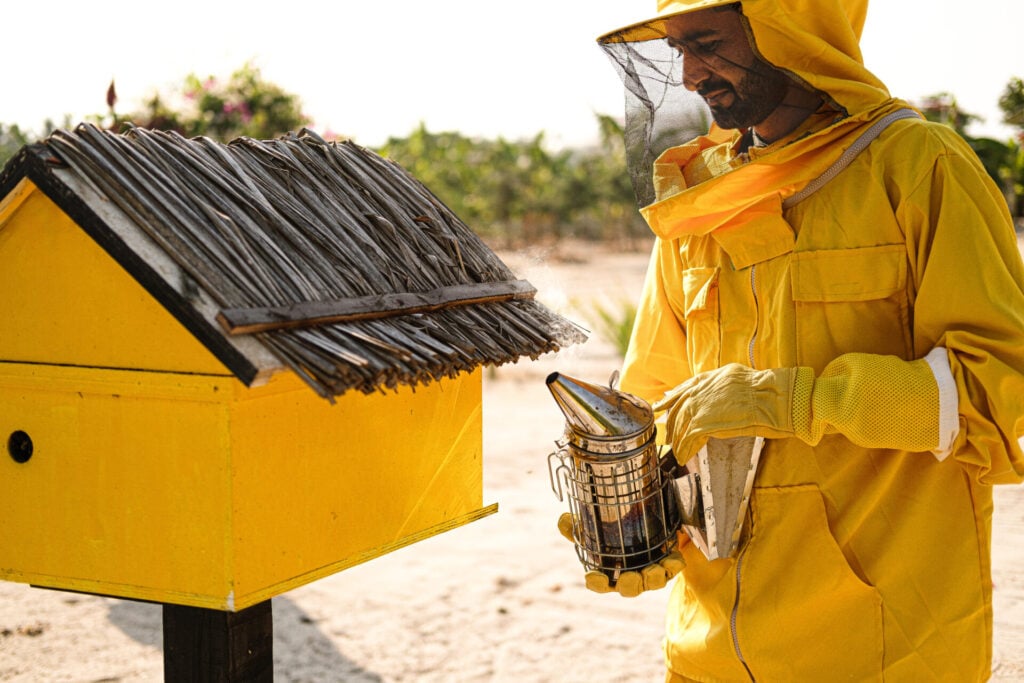
Ten beehives sit at one edge of the farm, producing honey for the kitchens, while egg shells are crushed and scattered as a natural pesticide against snails. Composting is serious and continuous, with all kitchen scraps being brought to the on-site infrastructure. Even the plot borders are made from upcycled plastic and glass bottles. In fact, last year the team constructed a Christmas tree from 4,000 coconuts, painted them gold for the festive season, and, when they dismantled it, the shells were upcycled into farm borders.
Guests at Anantara Al Baleed Salalah can wander through the leafy area – reached via a tunnel of bougainvillaea – for a farm tour and, for a small fee, plant a young frankincense tree, contributing to the preservation of the region’s Boswellia groves, the ancient trees that produce Oman’s prized resin. For centuries, this milky sap was harvested, dried into crystals and carried along incense routes to Rome, India and beyond, shaping the identity and economy of southern Oman.
Wetlands and Wellness
That same resin appears in multiple resort experiences, especially in the spa, where I enjoyed a frankincense body scrub that left skin beautifully soft, followed by a facial infused with regional botanicals, including moringa grown on-site, that left my complexion fresh and luminous.

A brief sound-healing session, led by Dr Amit, who travels internationally to teach yoga and holistic practices, featured the hum of giant singing bowls, one even placed gently on my head. I’ll admit I felt slightly self-conscious at first, unsure whether I was supposed to be deeply transformed or simply very still, but my travel companion drifted so convincingly into a trance that I had to check she was still with us. She emerged a few moments later before we both dissolved into fits of laughter. She remained blissfully elsewhere for some time after.
We found a stretch of wetlands tucked between the villas, where migratory birds were skimming the water, swooping and swirling in formation against a pink sky backdrop
Walking back from the spa to chase a sunset picture, we found a stretch of wetlands tucked between the villas, where migratory birds were skimming the water. We watched as they swooped and swirled in formation against a pink sky backdrop. There was no filter needed there.
By the time we reached Mina, where we both ordered the house frankincense cocktail, ‘The SouthEast’, a resin-infused gin, balanced with rose, lime, and tonic, the sky had deepened. I sat watching the waves collide, remembering my earlier swim and admiring how unapologetically powerful nature can be.
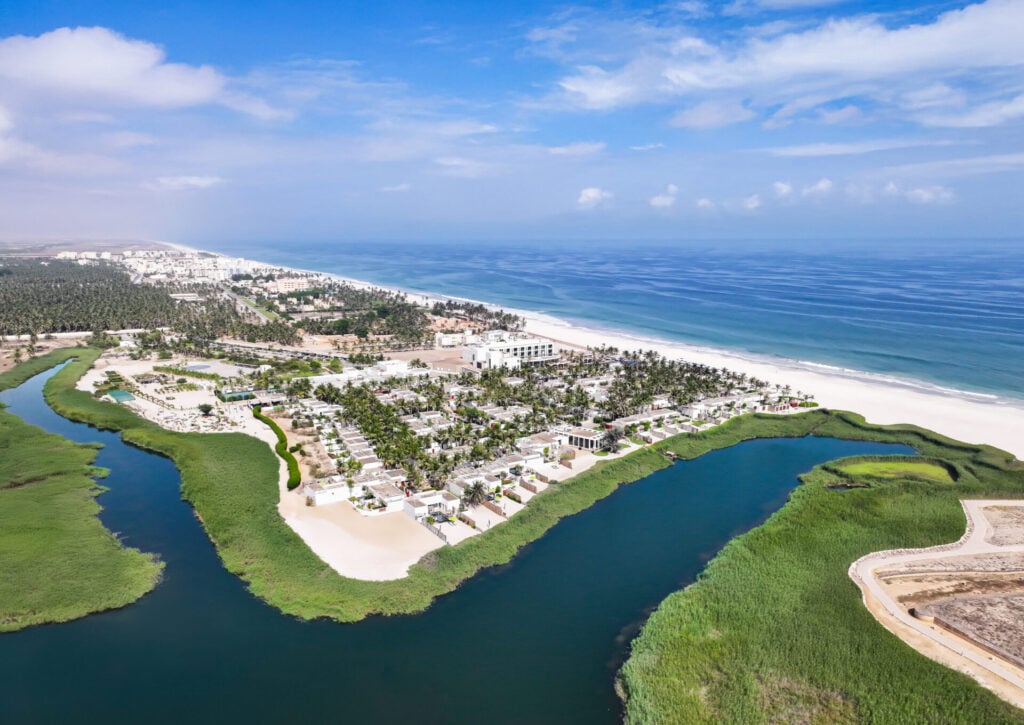
Salalah is often described as the UAE’s cooler neighbour, and while meteorologically that may be true, especially during the khareef season when monsoon mists roll in, the real difference lies in its atmosphere.
Being at Anantara Al Baleed Salalah makes it clear that the Arabian Peninsula is far more than just deserts and glass towers; it’s wetlands, organic farms, migratory birds, and coastlines that feel positively alive. All of this wrapped into one resort, just two hours away. I suspect I’ll be back.
Details
Anantara Al Baleed Salalah is just under two hours by air from Dubai, with regular direct flights to Salalah International Airport. From there, the resort is a 15–20-minute drive along the coast.