Twenty years ago, I swam with sharks in the Bahamas. After donning snorkels to drift with the tide between two tiny islands, our group of giddy day-trippers was casually told that the resident sharks would probably be following us.
They did. All three metres of them, tailing us from a short distance. As you can imagine, their presence added an electrifying edge to the experience.

In truth, the danger was low: our visitors were docile nurse sharks. But one thing was obvious – they were kept sweet by the free fishy morsels that our guides were doling out.
At first glance, no harm was being done – but in reality, the staff broke one of the cardinal rules of conservation: never feed a predator.
In US National Parks, they say ‘a fed bear is a dead bear’ – because as soon as Grizzlies associate food with humans, they become a danger. Similarly, most African game reserves actively discourage – or even prohibit – feeding animals.
So why are we so happy to bend the rules when it comes to sharks? And just how much harm are we doing?
A fast-growing industry
These questions lie at the centre of one of ecotourism’s most hotly debated issues.
The global shark diving industry is worth around $2 billion annually – and could hit $4bn (AED) 14.6bn by 2033. If each dive costs around $400, (AED 1,469) the projected market value equates to some 10 million people paying to swim with the ocean’s top predators annually.
The controversy isn’t so much around human safety, though that plays a part. Concern is more closely centred on the sharks’ wellbeing – as well as possible disruption to the delicate ecosystems they inhabit.
In essence, shark boat captains are in the entertainment business, consistently needing to deliver the goods to secure those five-star reviews. And the best way to lure your star attraction is by baiting the waters.
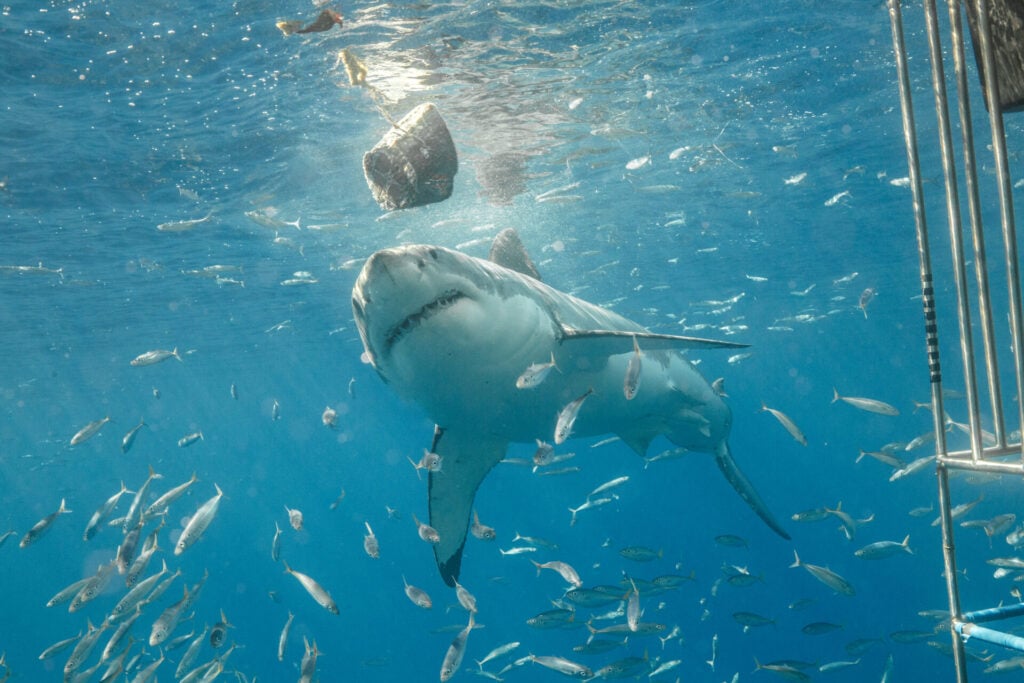
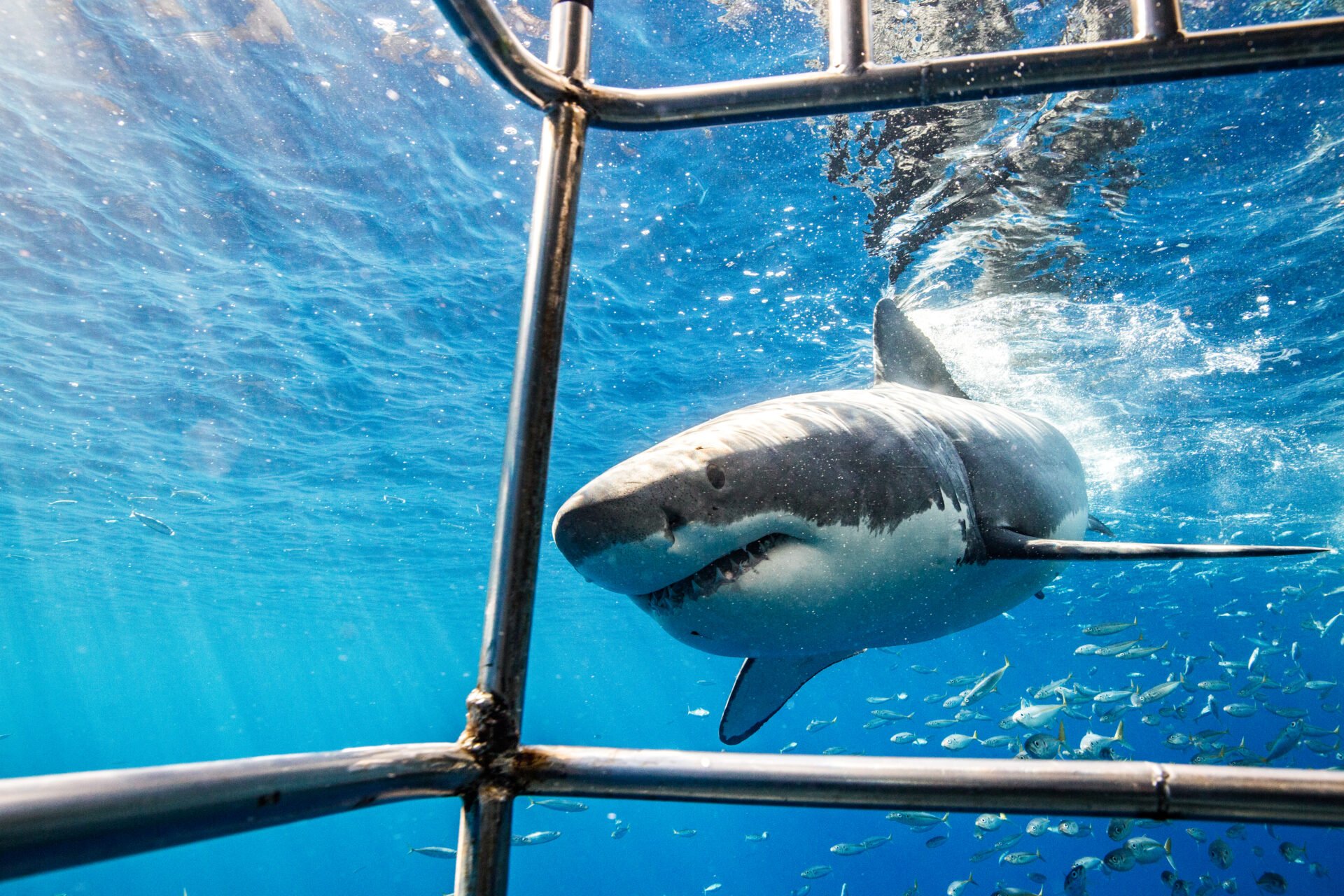
‘Sharks acting naturally does not fit our schedules and itineraries,’ says National Geographic writer Andrew Evans, a keen diver. ‘So shark cage diving operators must resort to the only thing that will get sharks to overcome their apprehension and swim extremely close to boats and humans: blood.’
That often means tens of kilos of ‘chum’ – fish chunks and bones – tossed overboard before a dive.
It’s a treat few nearby sharks can resist. And if you’re in a shark cage that’s just been dropped into heavily-chummed waters, it’s as good a guarantee as any that you’re going to get some great photos.
Changing feeding habits
Alongside cage dives, the other type of controversial shark experience involves divers on the seabed watching from a ‘safe’ distance as their guide serves pieces of fish to sharks on poles.
The effect is the same – lots of sharks in a concentrated area.
The downside is that both practices can make sharks associate divers and boats with feeding time. And that may increase the potential for shark attacks where humans are innocently swimming a mile or two away.
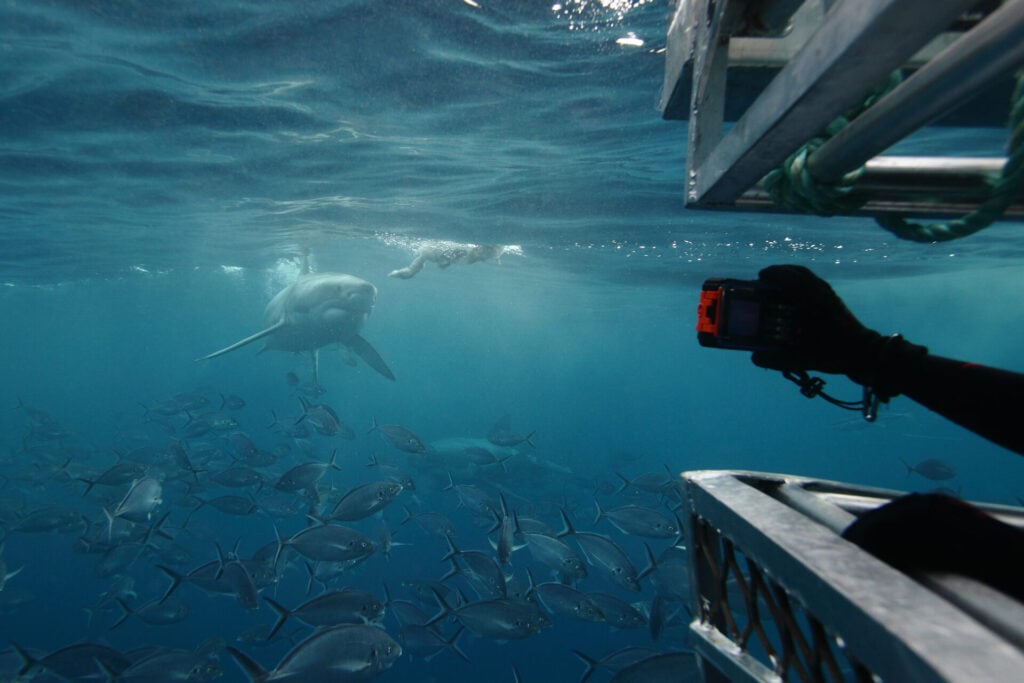
Critics abound. Shark cage adventures have been banned in Hawaii since 2009 and Western Australia since 2012, while the state of Florida is currently in discussions to extend its shark feeding ban to deeper waters.
When things go wrong, the results can be tragic. In 2008, an Austrian tourist on holiday in the Bahamas died a day after being bitten during an open-water shark dive while four people died in Western Australia between 2011 – 2012 after interacting with sharks.
Western Australian Fisheries Minister Norman Moore announced the ban on ‘shark cage tourism’ claiming: ‘While such ventures may generate direct or indirect economic benefits, there are also concerns that sustained activities to attract sharks to feeding opportunities have the potential to change the behaviour patterns of those sharks.’
What stops most conservation bodies from railing against shark diving is that it gives locals a reason not to catch great whites, hammerheads and any of the other 500 plus shark species they may otherwise sell at the fish market
The sharks can suffer, too. Diving with whale sharks – those gloriously serene giants of the ocean measuring up to 13m – has become so popular in parts of the Philippines that some have been injured by boat propellers.
The conservation paradox
Knowing where to stand on shark diving is tricky. Many shark conservation groups run their own shark dives or recommend certain providers, which further clouds the waters.
While these charities and non-profits generally do not bait the areas they are diving (the WWF are among those who advise against chumming and feeding), it still adds a note of ambiguity.
What stops most conservation bodies from railing against shark diving is that it gives locals a reason not to catch great whites, hammerheads and any of the other 500 plus shark species they may otherwise sell at the fish market.
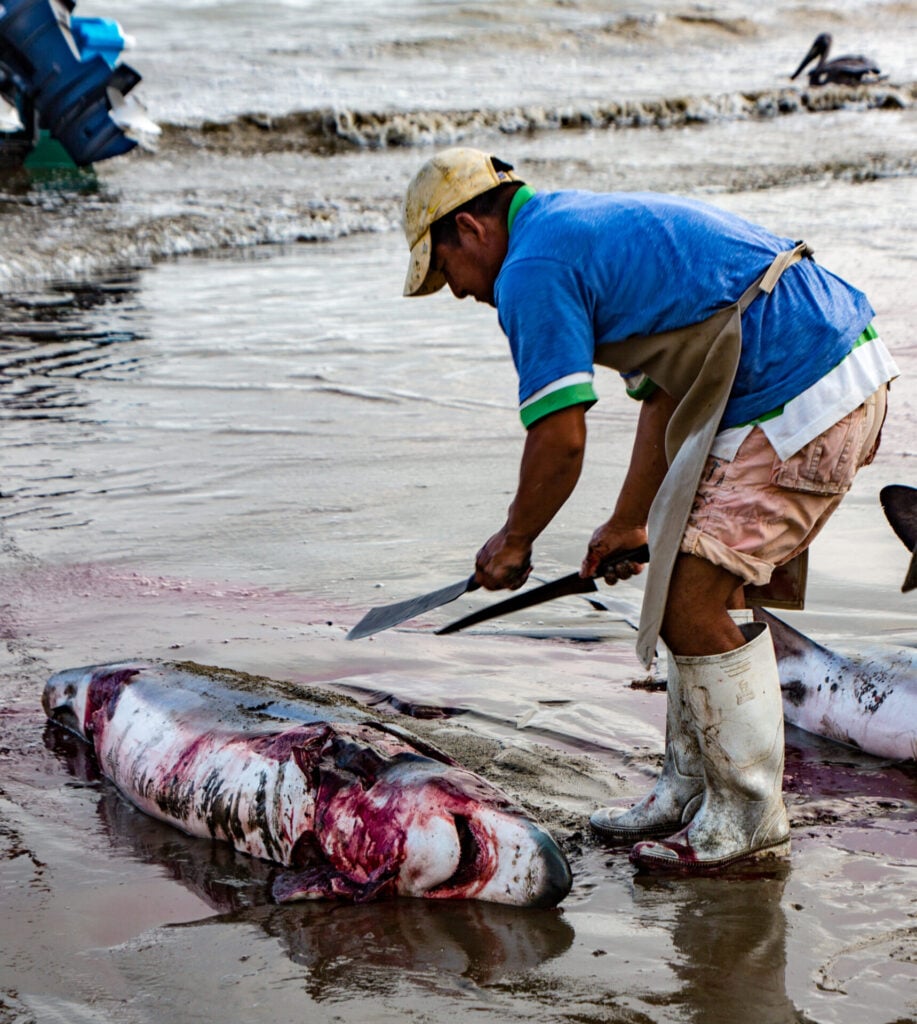
As the Shark Trust, which works globally to improve the conservation status of sharks, notes: ‘A single live reef shark could generate $73 (AED 268) a day, equating to more than $200,000 (AED 734,579) over its lifetime. This same shark might fetch less than $20 (AED 73)on a fish market.’
By that logic, the 10,000 or so people working in the shark dive sector globally have a financial incentive to keep sharks, which, says the Shark Trust, is one of the most threatened groups of animals on the planet, alive.
This, insist proponents of shark diving, is a small step in the fight back against a fishing industry that indiscriminately kills upwards of 100 million sharks every year with Science Direct claiming it could be as many as 273 million.
‘By following respectful codes of practice, shark ecotourism is a powerful tool for conservation and provides a wonderful way to connect with nature,’ says the Shark Trust.
And Patric Douglas, CEO of Sharkdiver, a US-based shark diving company that operates in Mexican waters argues: ‘As a successful commercial shark diving operator with over 15 years of experience with big animals like white sharks and tigers I am always a bit taken aback at the few backwards looking politicians who see sharks through the same lens cast in the 1970’s after the movie Jaws debuted.
‘The past decade has seen a revolution in the commercial shark diving world from enhanced shark diving protocols to broad based conservation initiatives developed by commercial shark diving operations designed to save dwindling shark populations.’
Perhaps the most persuasive argument in support of shark diving, however, comes from customers – hundreds of thousands of them. Many divers become fascinated by these ocean titans after seeing them in the wild and go on to support their conservation.
Underwater Circus?
Still, regular feeding can play havoc with aquatic ecosystems and alter shark behaviour. It can reduce their instinctive hunting skills, for example.
Operators will sometimes rev up the engines to attract them and the sharks appear in what could be a Pavlovian response to the sound of the motor. Essentially what you’re seeing is an underwater circus. The animals are expecting to be fed when they see a human.’
George Burgess, Director of the Florida Program for Shark Research at the Florida Museum of Natural History
Free food on tap may also disrupt migration and breeding patterns, or lead to shark overcrowding – with possible knock-on effects for reefs.
George Burgess, Director of the Florida Program for Shark Research at the Florida Museum of Natural History insists: ‘The animals are not acting normally because they are being attracted and thus are in unnatural levels of abundance. This alters the natural ecology of the region.
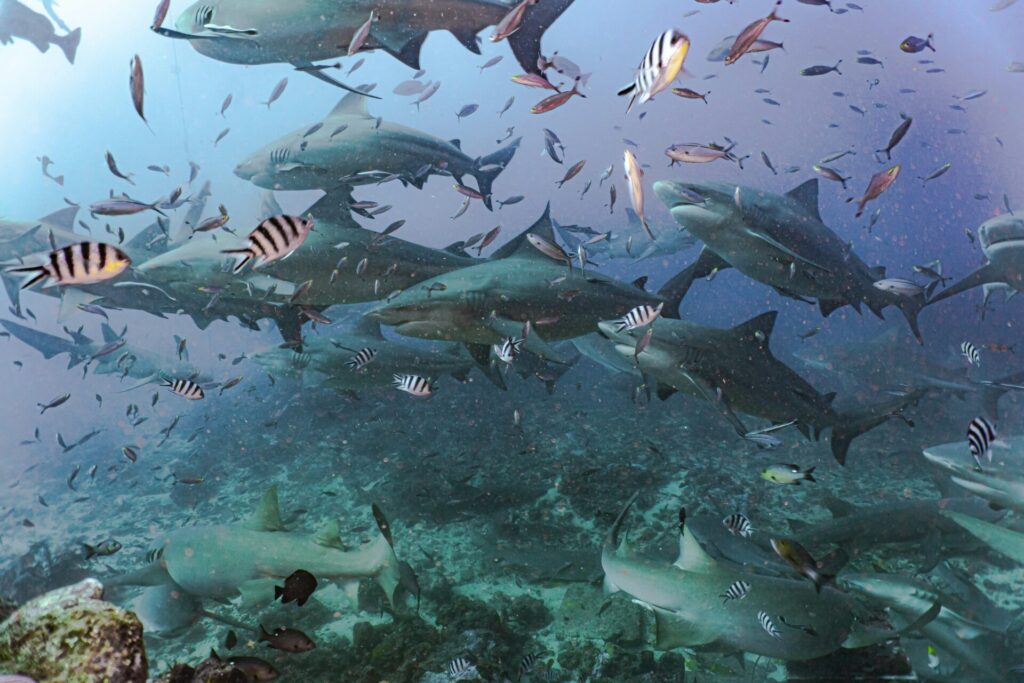
‘They are being fed by other means than their usual food sources. The animals begin to be attracted to the sound of the board engine motors. Operators will sometimes rev up the engines to attract them and the sharks appear in what could be a Pavlovian response to the sound of the motor. Essentially what you’re seeing is an underwater circus. The animals are expecting to be fed when they see a human.’
But it has yet to be conclusively proven just how damaging these are.
For what it’s worth, my own shark encounter – such as it was – inches me towards the pro-dive side.
Is baiting sharks for tourists any different to hurling a dead carcass from a Jeep in the Serengeti? Probably not. If that idea repulses you, shark diving probably isn’t for you.
From a personal safety point of view, however, diving with sharks is arguably less risky than squatting down on the floor at the edge of a big cat feeding frenzy.
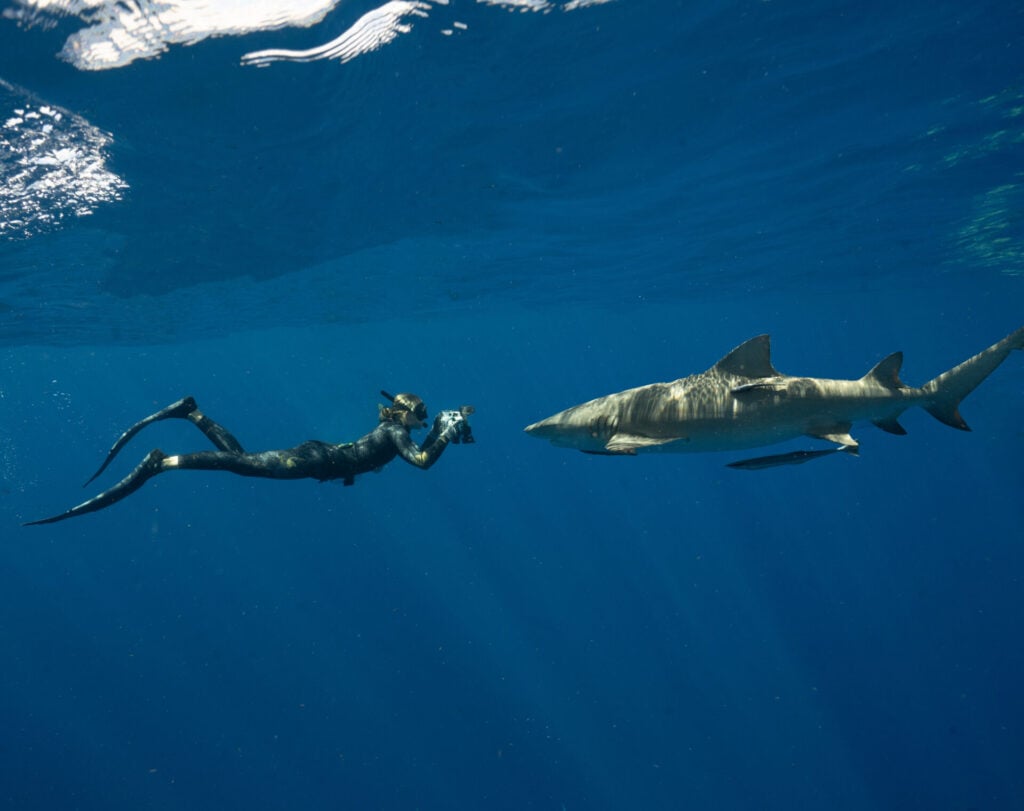
You’ve a good chance of gently ‘redirecting’ a shark with a gentle nudge from a pole if it’s coming right at you, says noted marine biologist Ocean Ramsey.
Try doing that with a lion.
How to choose an ethical shark dive company
Interested in shark diving? Keep your ethical credentials (relatively) intact by choosing a provider that:
- Restricts chumming to small, infrequent amounts.
- Prohibits hand feeding.
- Uses non-invasive, environmentally sustainable bait.
- Supports local conservation efforts.
- Uses mooring buoys instead of anchors to protect reefs.
- Selects dive sites with care so as not to disrupt habitats such as nursery or breeding grounds.