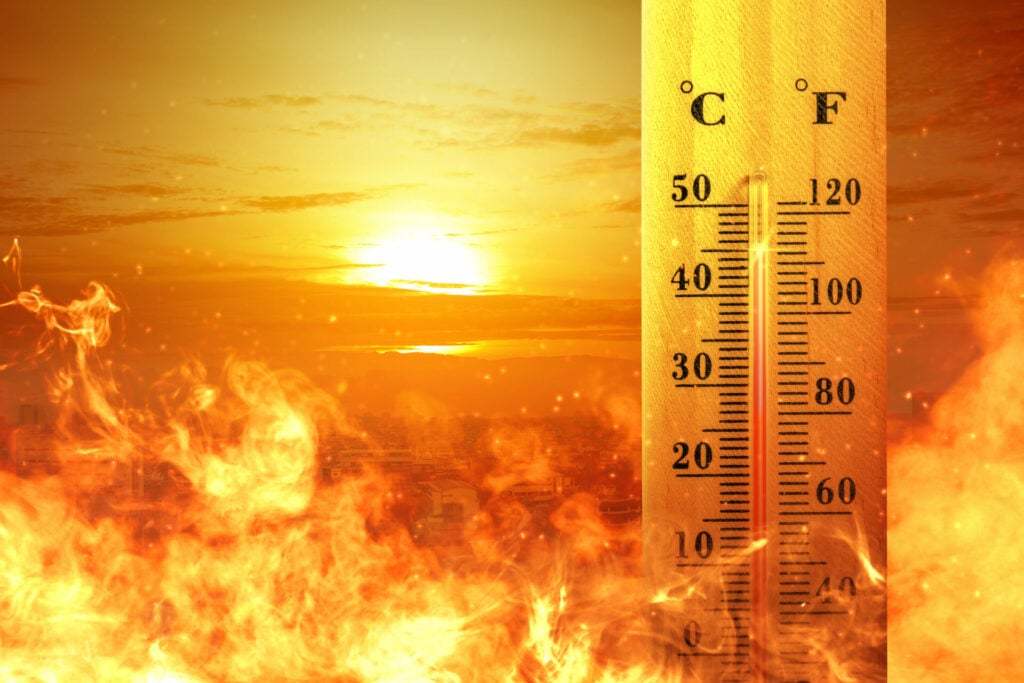
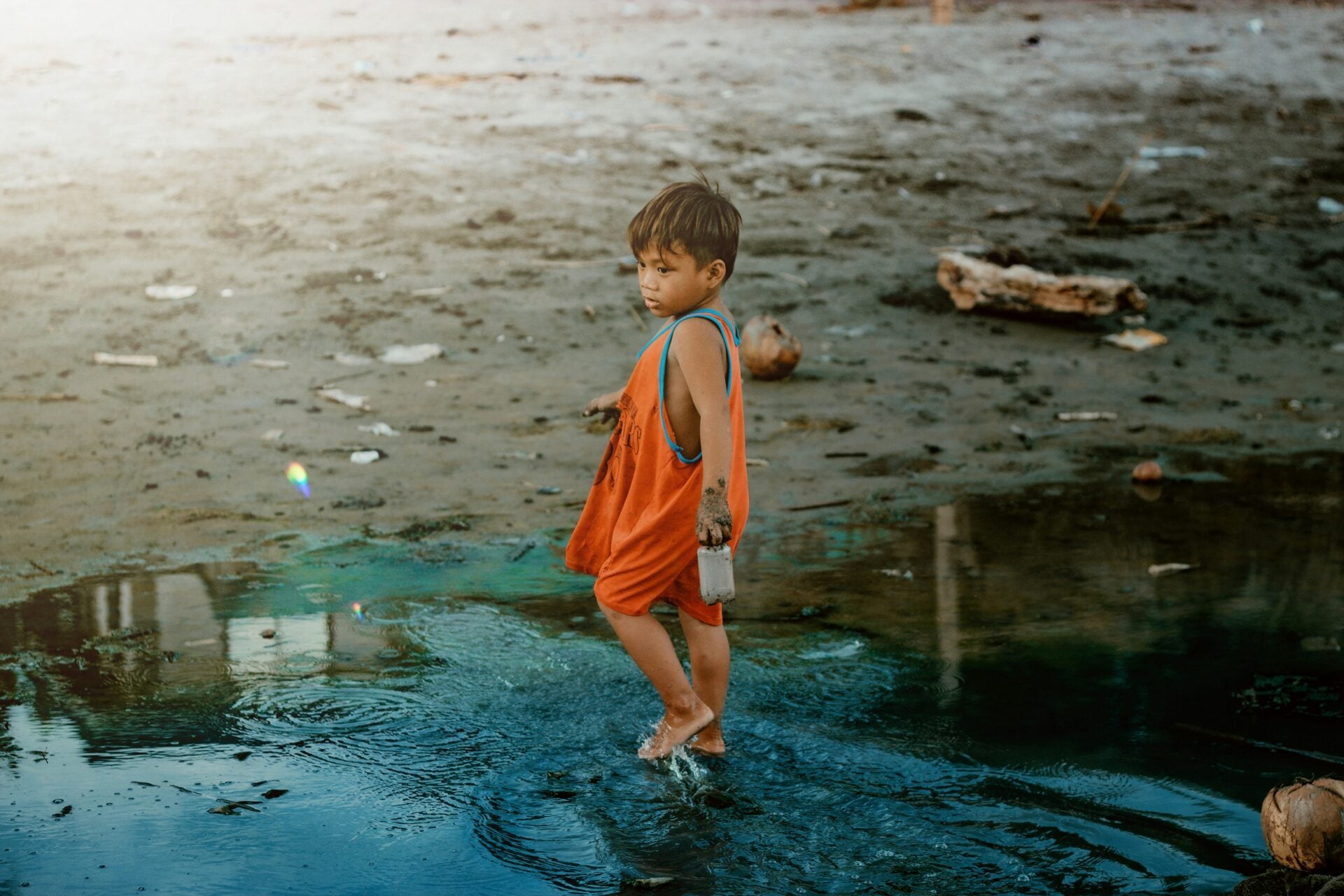
An alarming new United Nations report has revealed that half the world’s children are exposed to at least three climate-related hazards, including heatwaves, floods and droughts, threatening their health, education and, ultimately, their survival.
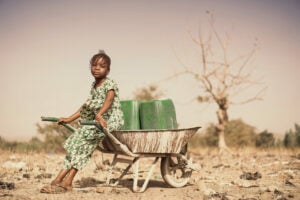
Unicef researchers say they face heatwaves, storms, floods and droughts as the climate crisis worsens, with 1.1 billion facing at least three of these at once.
The Children’s Climate Risk Report found that almost every child around the world, including those from high-income countries, is now exposed to at least one hazard, while 123,000 experience more than six in their lifetimes.
‘The lives of children continue to be upended by the impact of heatwaves, wildfires, droughts, and floods,’ said Unicef Executive Director, Catherine Russell.
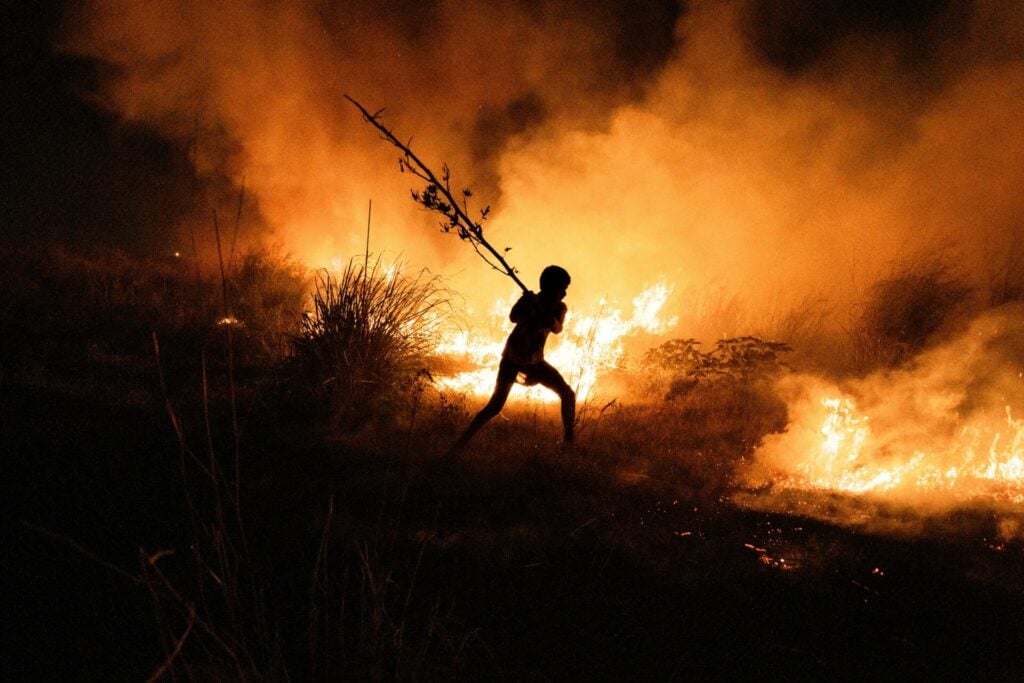
‘Half of the world’s children are now living with at least three overlapping climate threats shaping their daily lives.’
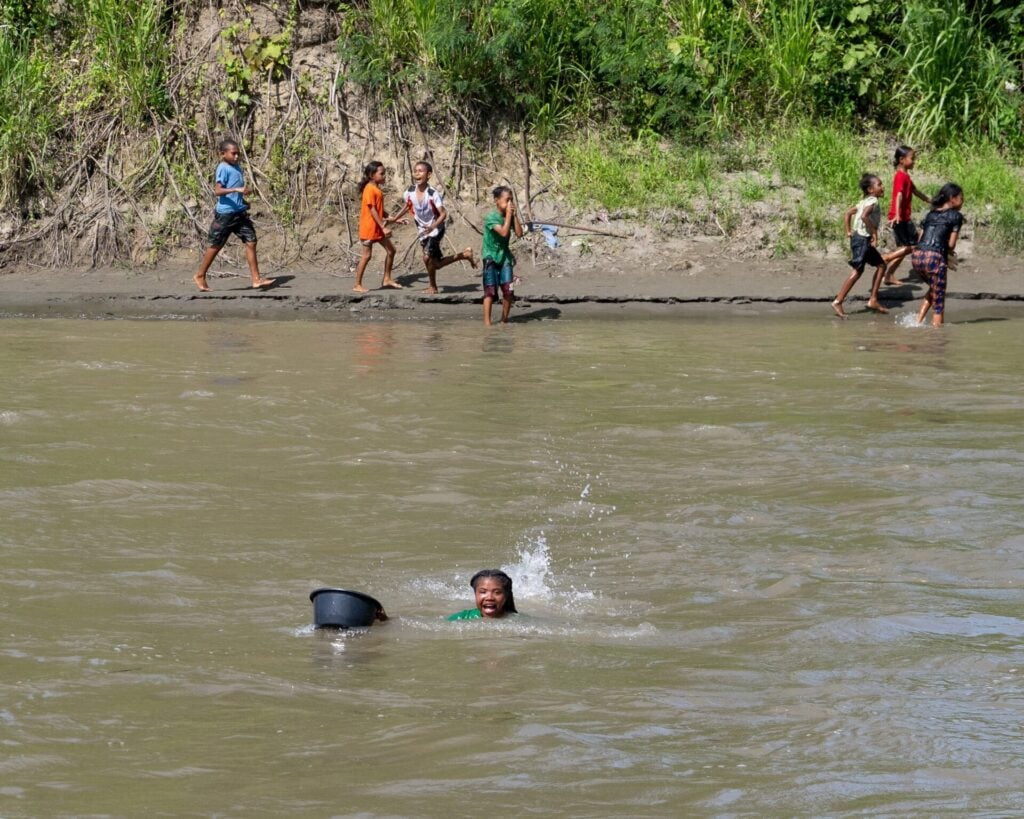
It comes as the agency released footage of children in Papua New Guinea swimming across a crocodile-infested river to get to school after a vital footbridge washed away during heavy rains.
15-year-old Lorna is one of those who has to swim across the Kempiver in Launkalana. According to Unicef, the community owns a few small boats, but the youngest children are prioritised.
‘During our periods, our elders do not allow us to cross the river to attend our classes as they think it will attract crocodiles … My dream is to become a teacher or pilot. We want a new bridge so we can go to school safely every day,’ Lorna said.
The Children’s Climate Risk Report found rising temperatures and extreme weather are putting more stress on infrastructure and warned that the destruction of key roads and bridges has dire consequences for local communities.
Unicef analysed young people’s exposure to eight climate hazards – coastal floods, droughts, extreme heat, fires, heatwaves, river floods, sand and dust storms, and tropical storms.
It then analysed their geographic locations and the availability of vital resources such as healthcare, food and water, education and safety.
‘The lives of children continue to be upended by the impact of heatwaves, wildfires, droughts, and floods,’
Catherine Russell, Unicef Executive Director,
It found the Sahel region of Africa is one of the hardest hit globally, with more than 4 million children facing the triple threat of heatwaves, extreme heat, and sand and dust storms.
Children in Asian countries such as Bangladesh, Myanmar and Pakistan were found to be exposed to more climate hazards than anywhere else in the world.
High-income countries are not immune to overlapping climate shocks, the report said, citing Italy, where more than six million children are exposed to heatwaves and drought.
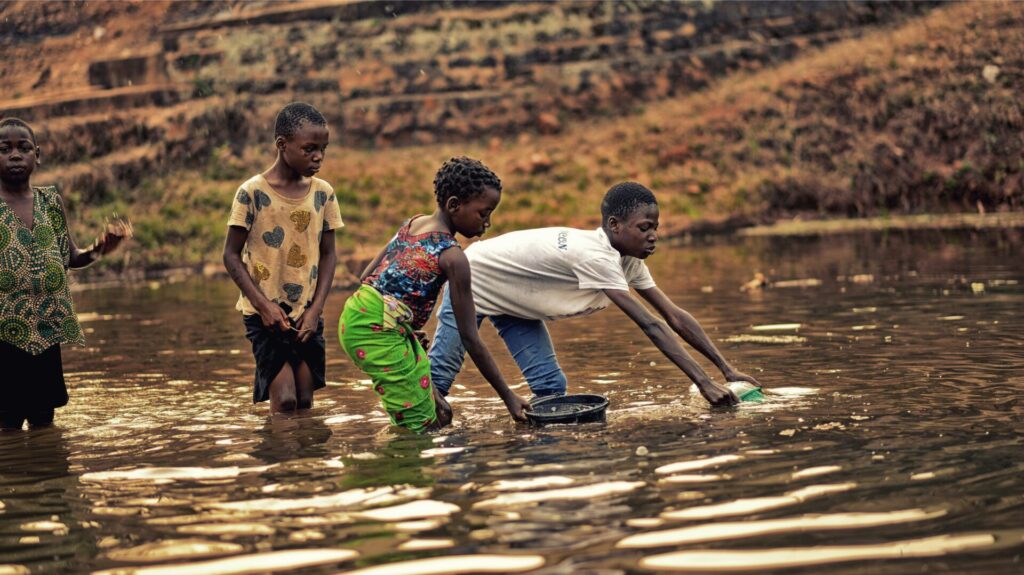
To protect children’s rights from climate threats and adapt to growing environmental changes, Unicef outlined three major proposals.
How to protect half the world’s children
The first is for governments, businesses and other sectors to reduce emissions and take ambitious action to fulfil existing international commitments, grounded in the best available science
Children in Asian countries such as Bangladesh, Myanmar and Pakistan were found to be exposed to more climate hazards than anywhere else in the world.
The UN body also stated that protection of children through climate adaptation, disaster risk reduction and responses to loss and damage is vital and called for policies that prioritise the resilience of social services, ensuring that children and child-critical services are included in national adaptation plans and sector strategies, disaster risk governance, preparedness and response plans.
Lastly Unicef emphasised the importance of empowering young people to participate in climate action by investing in education, knowledge and skills, and by strengthening the capacity of decision makers and experts to respect children’s rights to be heard.

Russell said: ‘This analysis can help governments and decision-makers plan better and invest more effectively in resilient services. When we strengthen health and education systems, and improve infrastructure with children in mind, we protect them from today’s climate threats and help secure their future.’