‘Sustainability’ is one of the most overused words in the events industry, and one of the least proven. In live events, especially in the UAE, sustainability isn’t a slogan you print on a lanyard. It’s an engineering and operations problem, and it only counts if it holds up during showtime.
Here’s the uncomfortable truth: most event sustainability claims avoid the biggest source of impact—temporary power. Diesel generators remain the default because they’re familiar, fast to deploy, and forgiving. But they’re also loud, wasteful, and carbon-heavy.
If we want truly sustainable events in the UAE, we have to stop treating clean power as an “add-on” and start treating it as a core system. That means building a new model: mobile solar + battery microgrids designed specifically for temporary, high-pressure environments. That’s what we set out to do.
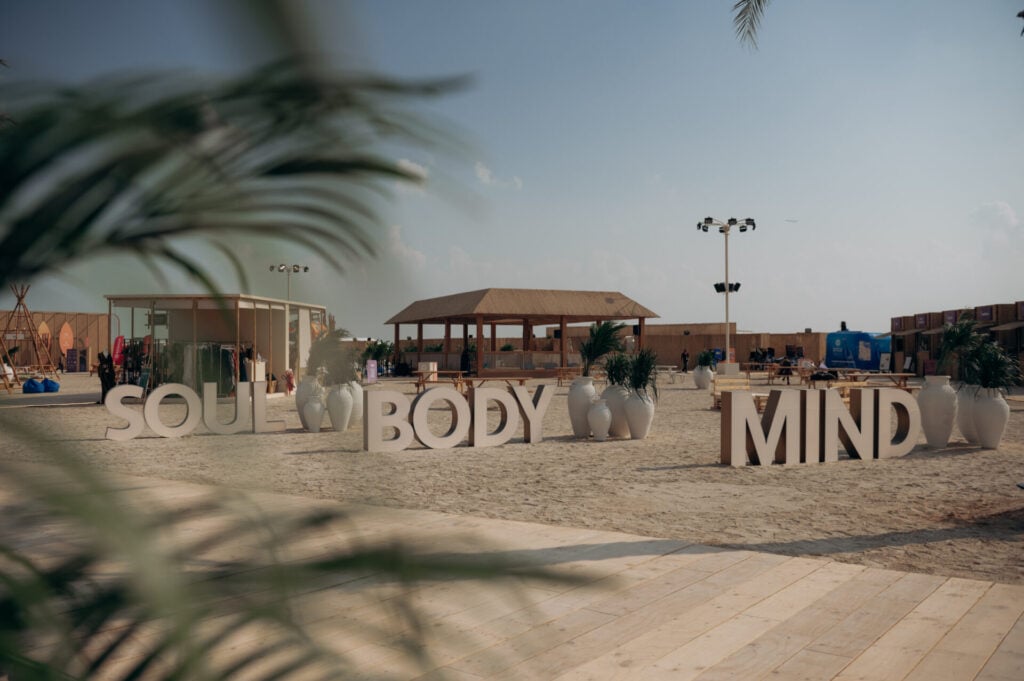
The real problem no one likes to talk about: temporary power
In the UAE, events are not small side projects. They’re a marker of national ambition; wellness festivals, fitness events with hundreds of thousands of residents, and cultural destinations built in challenging environments. That scale creates a simple reality: energy demand is rising fast.
Events operate inside the UAE’s wider energy system. Sometimes you can use the grid; often you can’t. When the site is remote or temporary, you’re left with the traditional answer, which is diesel. And once you accept diesel as the default, the rest becomes “green theatre.”
So, the question isn’t whether events can be sustainable in theory. The question is: Can renewable power perform in real-life event conditions with temporary sites, shifting loads, and zero tolerance for failure?
What sustainability looks like when it’s real
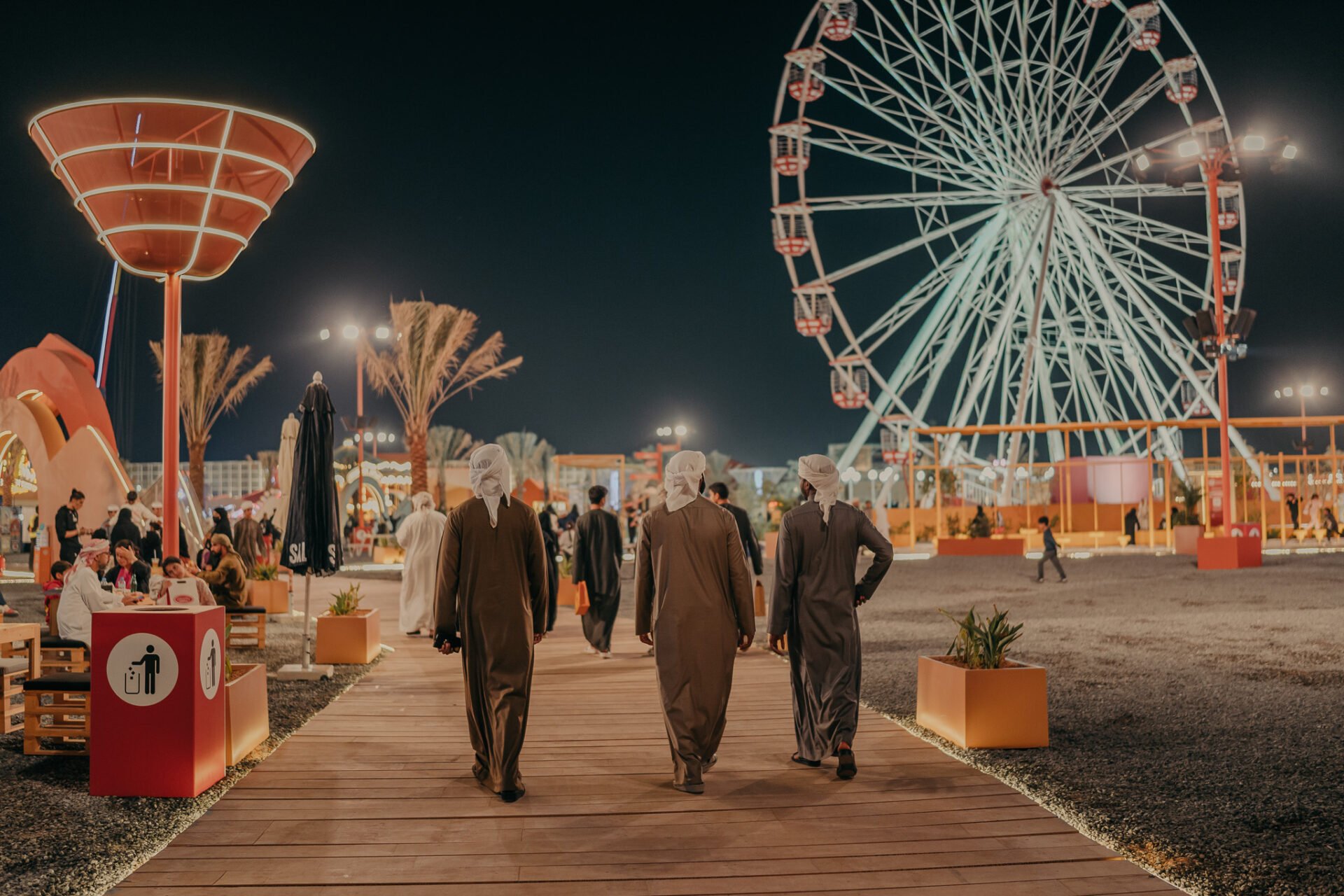
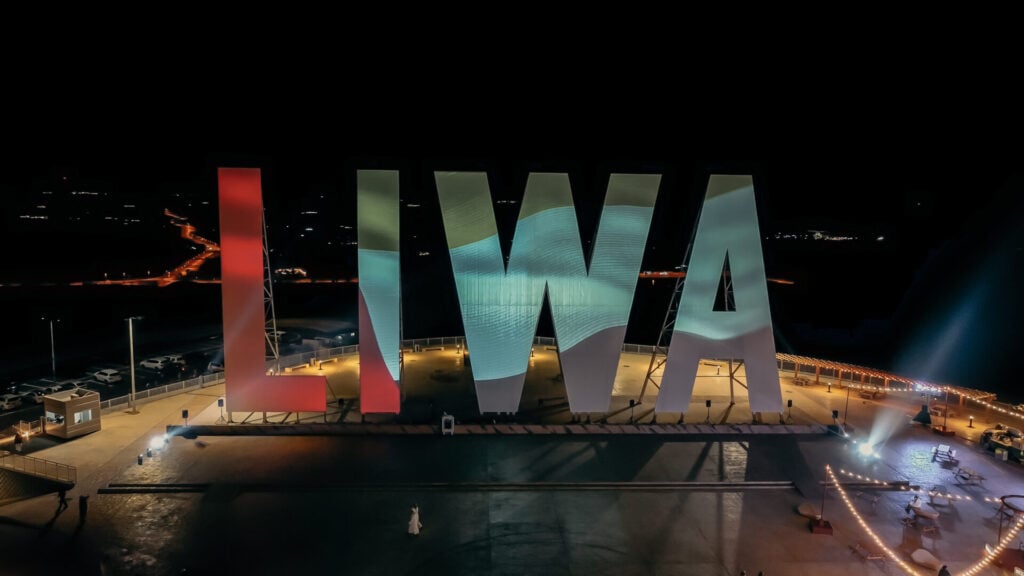
For large-scale events, the hardest part isn’t intention. Its execution. At Liwa Village, for example, daily energy consumption reaches roughly 7.5 megawatt-hours. Historically, a site of that scale would be powered almost entirely by diesel generators running day and night.
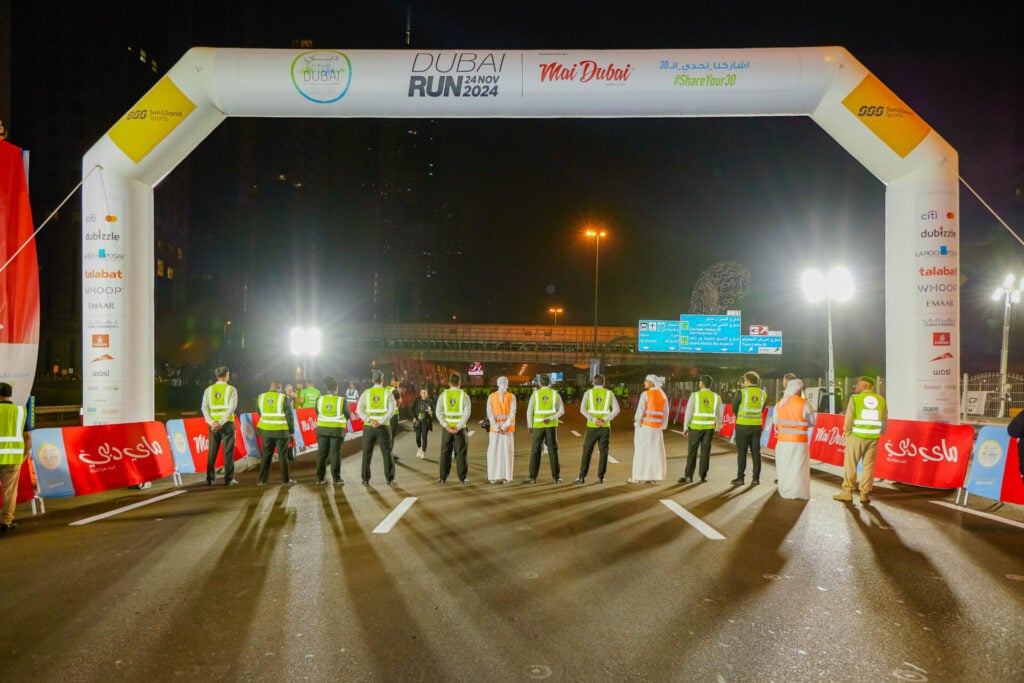
In 2025, LINKVIVA deliberately challenged that model, not in a lab, not in a pilot corner of the site, but inside a live desert festival where everything is judged by reliability. Through mobile solar generation and battery storage, we supplied around 20 per cent of the festival’s total energy demand from renewables—double the previous year’s achievement. In practical terms, that meant delivering roughly 4.5 MWh of solar energy per day, significantly reducing generator runtime, saving more than 1,100 litres of diesel per day, and avoiding nearly 70 tonnes of CO₂ over the duration of the event.
Those numbers matter, but what matters more is what they represent: renewables functioning as real infrastructure, not PR.
Why this is pioneering—and why it’s harder than people think
Diesel is simple. Temporary renewables are not. Replacing generators with solar and battery systems requires new power architectures, far more detailed load planning, live operational decision-making, and genuine redundancy and risk management. This is where most ‘sustainability talk’ collapses because batteries don’t care about your marketing deck. They demand engineering discipline, safety design, and operational maturity. And often the truth is decided at 2 a.m., on the ground, while thousands of people are still on site. That is the difference between making claims and proving performance.
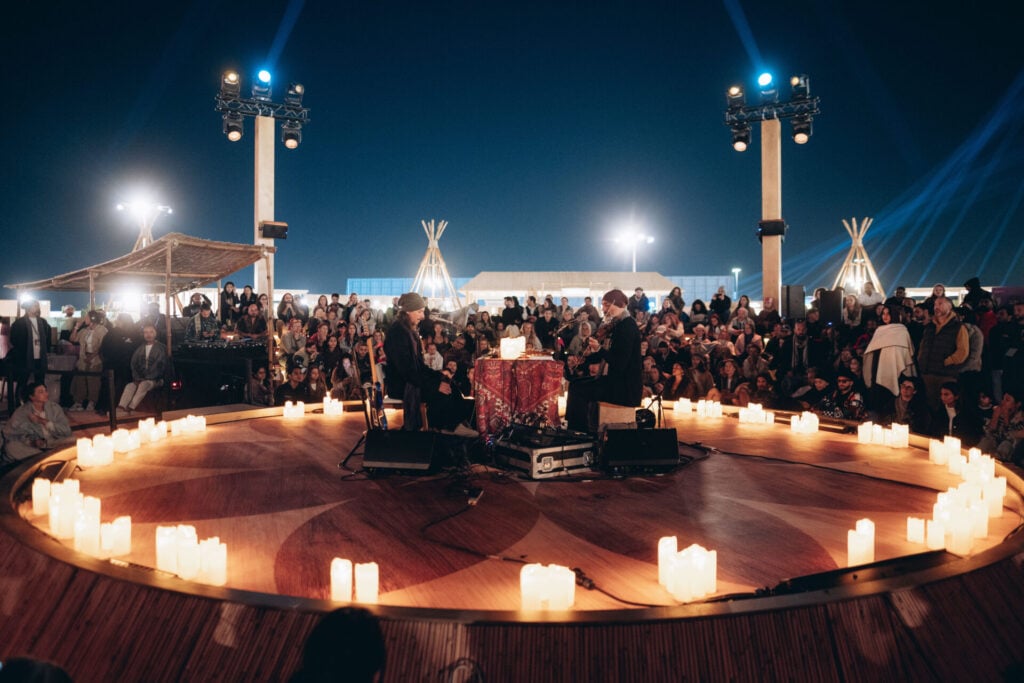
When 100% renewable is possible—and what it proves
Not all events face the same constraints. And that’s good news—because it means 100% renewable events are not a fantasy.
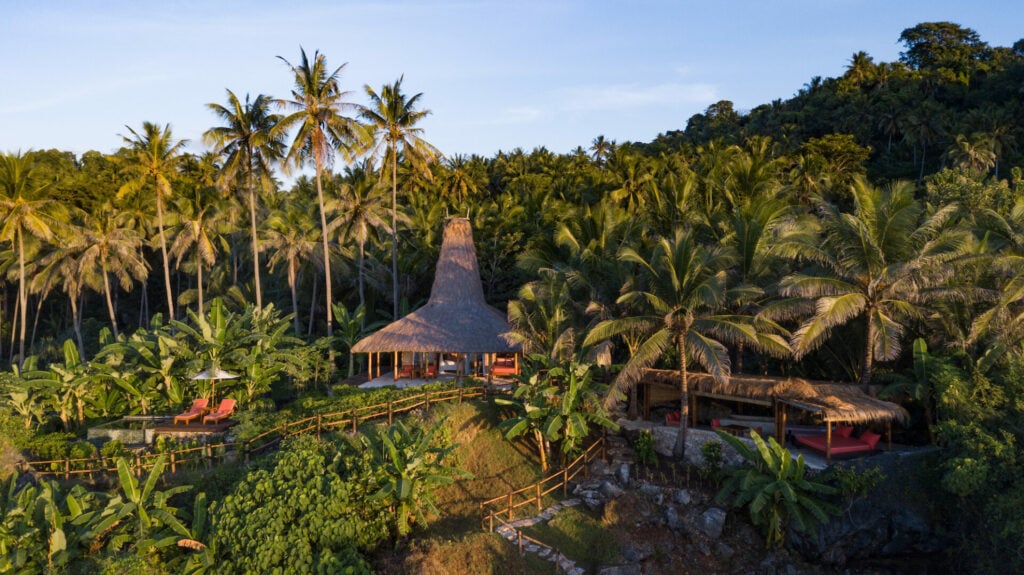
Take the upcoming Kayan Wellness Festival on Fahid Island in Abu Dhabi. Its energy demand is expected to be around 3–4 megawatt-hours per day. In that context, a different model becomes feasible. Kayan is being delivered on 100% solar power, supported by battery storage, without diesel backup during standard operations.
This matters because it proves a core point: when sustainability is built in from the beginning, into the site planning, program design, and power strategy, the full renewable operation becomes achievable.
And it also proves something else: sustainability is not one-size-fits-all. What works for a wellness festival can’t be copied onto a multi-week desert destination without adjusting expectations around cost, scale, and risk.
The cost question—honestly
Clients often assume sustainability automatically means higher costs and a worse bottom line. I understand that concern. But the reality is more nuanced.
Indeed, renewable infrastructure for temporary builds is more expensive than hiring diesel generators. Battery systems require expertise and safety planning. Waste segregation, material reuse, and low-impact logistics add budget lines are frequently overlooked. But here’s the difference between ‘expensive sustainability’ and ‘smart sustainability’: When these decisions are made early, they become manageable, and they often reduce inefficiency over time.
The UAE economy is already moving in that direction across sectors. We see it in how capital is being allocated toward sustainability-linked projects. And event clients are operating inside that same shift. They’re not demanding perfection. They’re demanding credibility, data, and solutions that work without breaking the business model.
The work that actually changes outcomes
While energy attracts the most attention, outcomes are often shaped by dozens of smaller operational decisions, from how materials are reused and waste is separated, to supplier selection, transport planning and site dismantling. In remote environments such as Liwa, these challenges are amplified by logistics constraints, access limitations, and environmental sensitivity. That is why sustainability benchmarks must be practical and site-specific, not generic checklists divorced from reality.
What success actually looks like
Sustainable events in the UAE will not be defined by ‘zero impact’ claims. They will be defined by measurable progress: increasing renewable energy use year on year, reporting real figures rather than estimates, reducing reliance on diesel as the default and embedding sustainability into event design from the start. A 30-percentage-point increase in renewable energy use in a single year is meaningful. A festival operating without diesel backup during standard operations is a genuine milestone. These aren’t the finish line, but they are proof that a different model is possible.
Sustainability without proof is just branding
The UAE is serious about sustainability. For events, that seriousness has to show up in the hardest place: temporary power. The future isn’t made up of ‘perfect events.’ The future is defined by events that are radically better than what came before, powered by systems engineered, measured, and proven under real-world pressure. That’s the conversation our industry needs now, not more claims, but more proof.