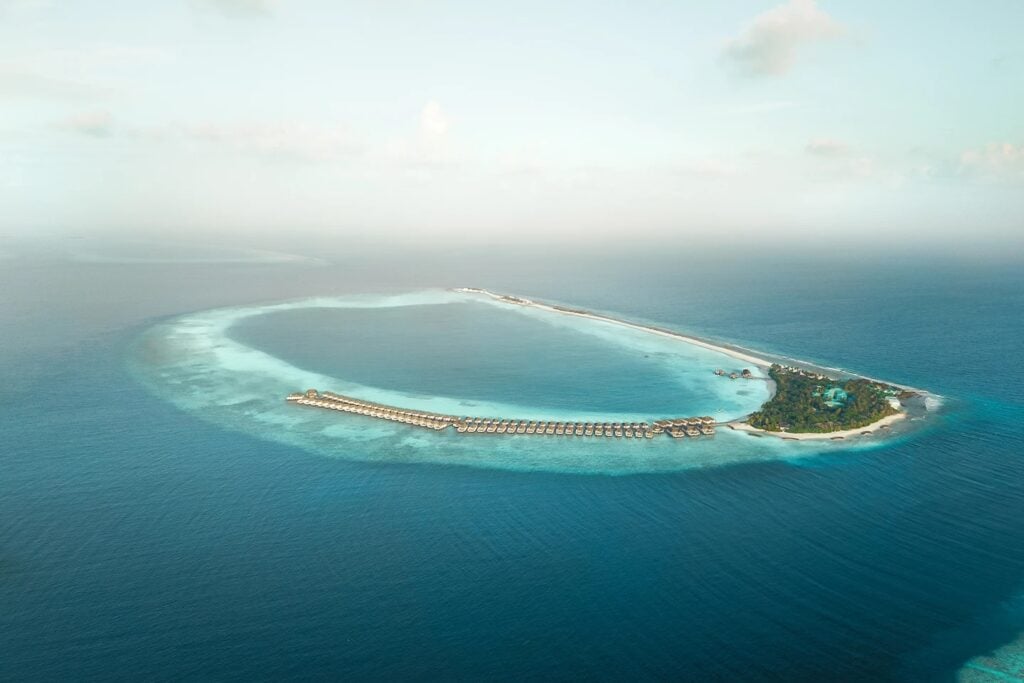
For much of the year, Hanifaru Bay seems to be little more than a small curve carved into the eastern edge of Baa Atoll. But between May and November, the interaction of wind, tide and current draws vast quantities of zooplankton into its waters, and with them, one of the greatest gatherings of manta rays anywhere on the planet.
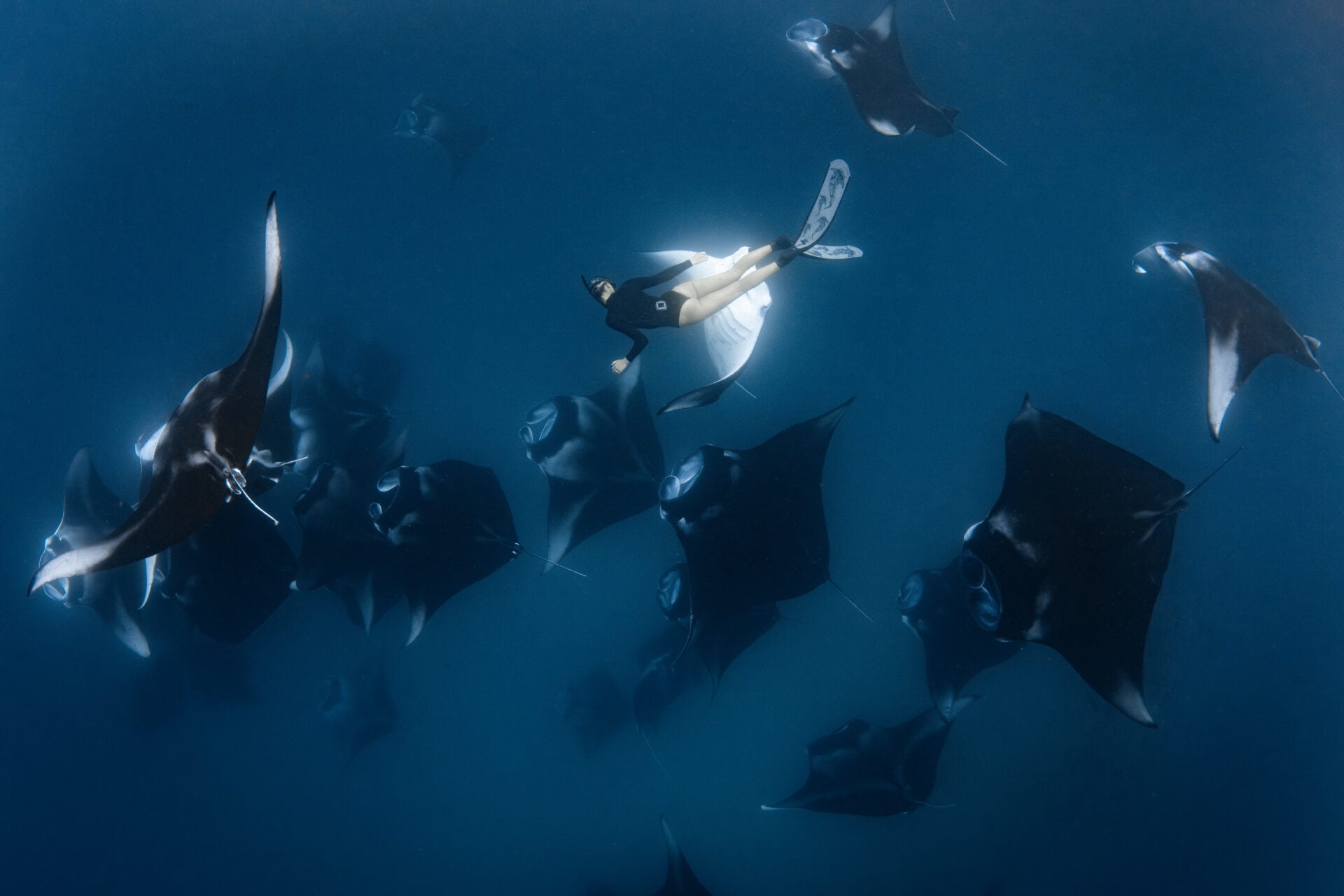
Reef manta rays arrive in their dozens and sometimes hundreds, unfurling their wing-like fins as they glide through the plankton-rich water, feeding so intently that swimmers can find themselves surrounded on every side. More than 250 have been identified during exceptional feeding events, prompting the Manta Trust to describe Hanifaru Bay as the world’s largest known aggregation site for feeding reef manta rays.
‘Baa Atoll remains a very significant habitat for manta rays in the Maldives, particularly for the reef manta ray,’ Harry Green Longin, marine biologist at Finolhu, a Seaside Collection Resort tells The Ethicalist.
‘The unique shape and orientation of Hanifaru Bay causes currents to concentrate zooplankton inside the bay, creating incredibly productive feeding conditions for mantas. This can result in hundreds of manta rays gathering to feed at the same time, sometimes reaching more than 200 individuals.’
Mantas move around Baa Atoll in response to the monsoons, tides and availability of food, visiting different areas to feed or to hover above coral outcrops known as cleaning stations, where small reef fish remove parasites and dead tissue from their bodies.
‘Hanifaru isn’t the only important habitat,’ Longin explains. ‘Throughout Baa Atoll, mantas use a number of different sites for feeding and cleaning, which makes the whole atoll particularly valuable to the migrating manta population.’
A stronghold for a vulnerable species
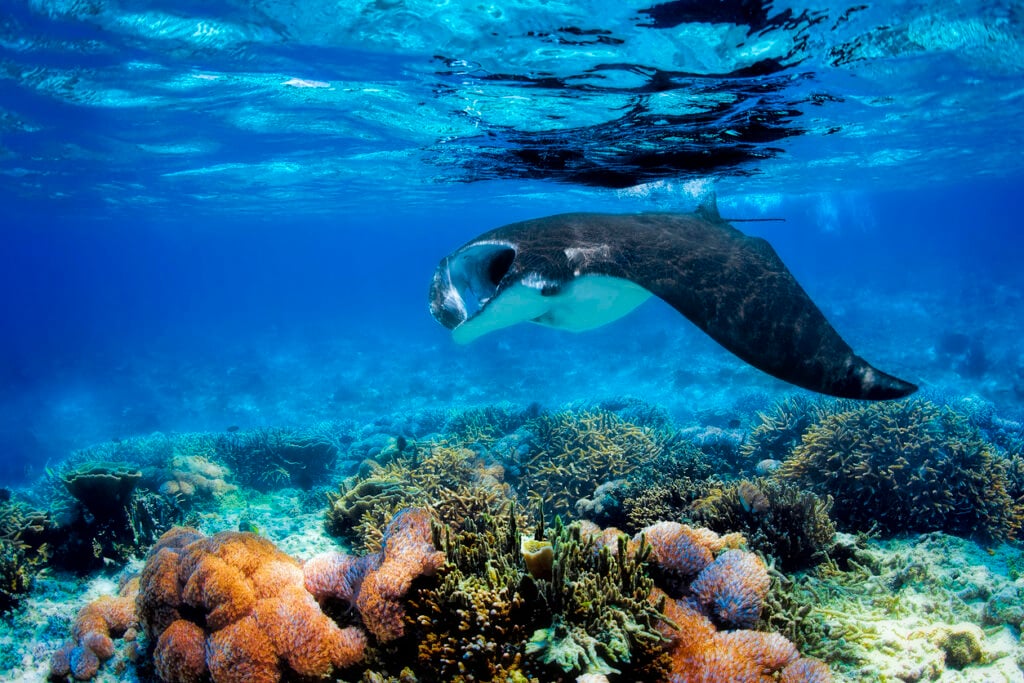
The Maldives is believed to support the largest population of reef manta rays in the world. Researchers from the Maldivian Manta Ray Project have identified more than 5,000 individuals, building a database that allows scientists to trace their movements, relationships, injuries and reproductive histories.
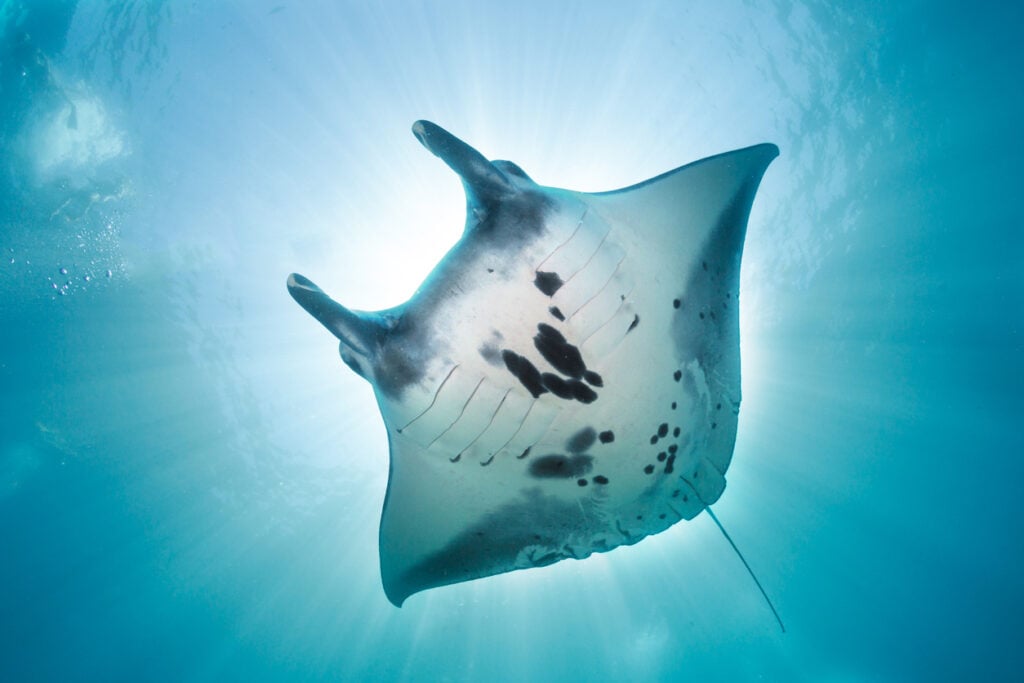
This is possible because every manta has a natural identification system, much like a human fingerprint on their underside. A clear image of their belly can be compared with earlier records, allowing an animal first photographed many years ago to be recognised when it returns.
‘One of the things that surprised me most was learning that they have a spot pattern on their stomachs that is unique to every manta ray,’ says Harry. ‘The second was that they can regenerate their tissue at very fast speeds after injury.’
If we see a major decline in manta numbers, it isn’t something we can necessarily reverse within a few years. It could take decades for populations to recover, which is why protecting them before they decline too much is so important
Harry Green Longin, marine biologist at Finolhu, a Seaside Collection Resort
One of the most striking examples is Babaganoush, a male reef manta first added to the Maldivian database in 2005. In 2018, researchers recorded him with devastating injuries following a speedboat collision, yet he reappeared six months later with the wound healing. He has now been sighted more than 200 times.
Despite this resilience, the reef manta ray is listed as Vulnerable on the IUCN Red List, with its global population considered to be decreasing. Reef mantas often display strong fidelity to particular regions and have relatively little connectivity between widely separated populations, leaving local groups especially susceptible to depletion.
‘Another thing that worries me is the biology of manta rays themselves,’ explains Harry. ‘They are relatively slow to reproduce. They can take many years to reach sexual maturity, and females will produce only a single pup every two to five years.
‘That means populations don’t have the ability to recover quickly from significant losses caused by bycatch or fishing pressure. If we see a major decline in manta numbers, it isn’t something we can necessarily reverse within a few years. It could take decades for populations to recover, which is why protecting them before they decline too much is so important.’
Fishing, entanglement and boat strikes
Across the world, manta and devil rays are under intense pressure from fisheries, with all 10 species now threatened with extinction, primarily as a result of targeted fishing and bycatch. Their gill plates are traded internationally, while their meat is consumed in some fishing nations. Despite international trade controls, a recent global assessment found that exploitation remains at unsustainable levels.
Manta rays are legally protected in the Maldives, a country that has never developed a major targeted fishery for the species. That national protection is enormously valuable, but it can’t remove every threat.
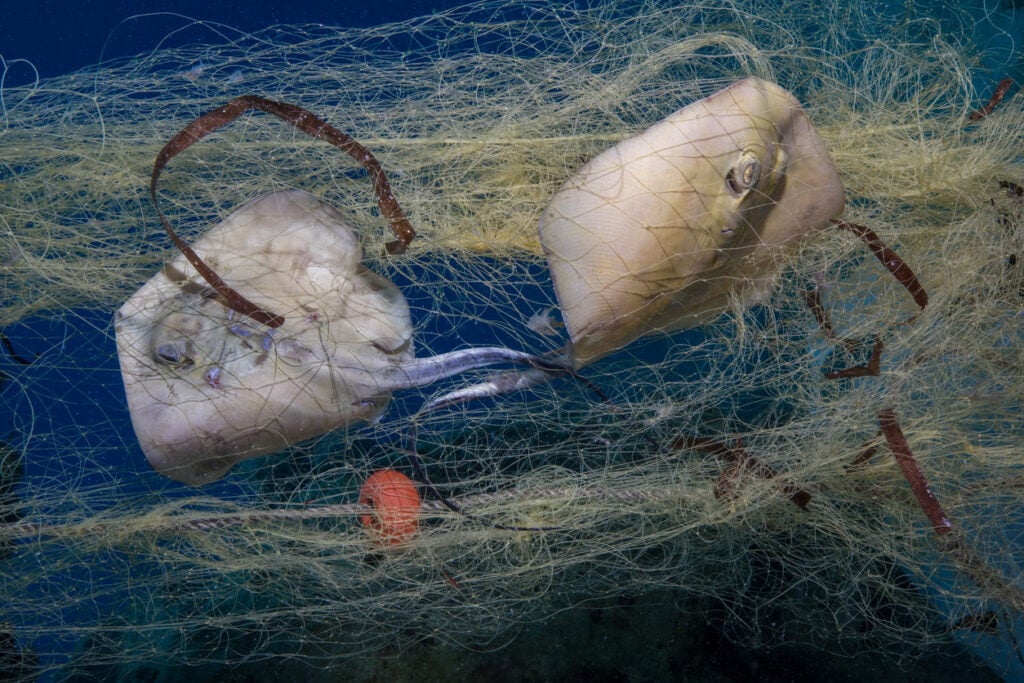
‘Globally, one of the biggest threats facing manta rays is targeted fishing and bycatch,’ says Harry. ‘In the Maldives, targeted fishing for manta rays is illegal, which is a really positive step, but bycatch and entanglement in fishing lines and other gear remain a potential hazard, not just for mantas but for all marine life.’
The rapidly expanding number of boats moving between islands creates another danger.
‘Another factor to consider in an island nation like the Maldives is boat strikes,’ Harry adds. ‘Mantas will often spend a lot of time feeding close to the surface, and this can unfortunately make them vulnerable to collisions with speedboats.’
Collisions can cause deep propeller wounds, amputations and internal damage, while the animals’ ability to heal rapidly may mean that the true frequency of boat-strike injuries is underestimated.
When tourism becomes part of the problem
Hanifaru Bay offers one of the world’s most memorable wildlife encounters, but its fame has created a delicate management challenge. The mantas are protected from fishing within the marine protected area, yet the concentration of swimmers and boats can itself disrupt the behaviour visitors have travelled to witness.
‘Passively observing mantas has little to no measurable effect on their behaviour. The problems arise when people dive down towards the mantas, attempt to touch them, block their path or otherwise interfere with their natural behaviour’
Longin is clear that tourism is neither inherently harmful nor automatically sustainable. The difference lies in the way people behave in the water and how consistently the rules are enforced.
‘Tourism absolutely can pose a threat, but it really depends on how that tourism is managed,’ he explains. ‘Research from the Manta Trust found that passively observing the mantas has little to no measurable effect on their behaviour. The problems arise when people dive down towards the mantas, attempt to touch them, block their path or otherwise interfere with their natural behaviour.
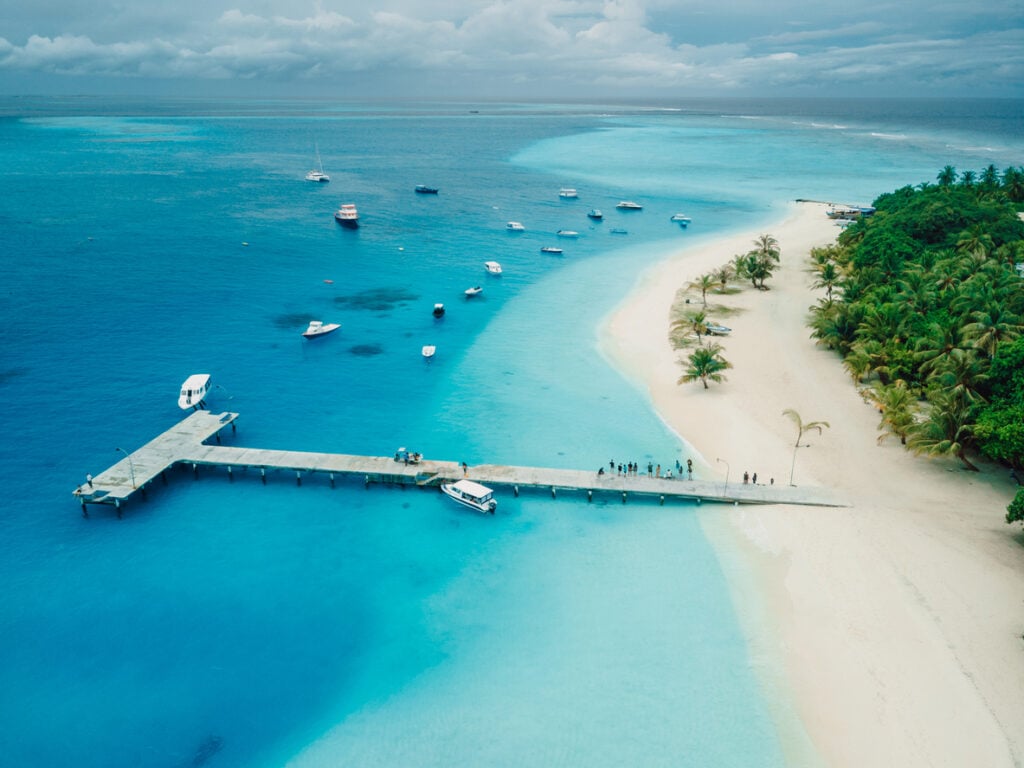
‘This is where guides and rangers have a really important role to play. Everyone entering Hanifaru Bay should be properly briefed, and the regulations need to be consistently enforced. If visitors don’t follow those guidelines, they should be removed from the water.’
Research into human-manta encounters supports the need for better management. One study examining interactions at manta ray feeding sites in the Maldives found that only 44 per cent complied with the existing code of conduct, despite evidence that passive observation causes far less disturbance than active approaches. What may feel like one brief approach to a swimmer can become repeated disruption for a manta facing boatload after boatload of visitors.
The economic value that Hanifaru Bay brings to local communities, businesses and resorts is significant, and that gives people a strong incentive to maintain its protection.
Yet responsible manta ray tourism can also make an exceptionally strong economic case for protection. A recent assessment estimated that manta-focused tourism generated US$227.3 million for the Maldives in 2021, including US$39 million from dedicated diving and snorkelling excursions and US$188.3 million in associated tourist spending.
‘When sustainable tourism is achieved, it can be a real win-win for both people and marine life,’ says Harry. ‘The economic value that Hanifaru Bay brings to local communities, businesses and resorts is significant, and that gives people a strong incentive to maintain its protection. It also provides a really good example of how well-managed marine tourism can help support marine protected areas elsewhere.’
Reefs under pressure
The future of Baa Atoll’s mantas is also inseparable from the health of the wider marine ecosystem. Climate change is warming the ocean, intensifying marine heatwaves and contributing to mass coral-bleaching events, while pollution, coastal development and sedimentation place additional pressure on already stressed reefs.
‘When we talk about the corals themselves, I would say it’s quite a mixed picture,’ explains Harry. ‘There are many reefs around Baa Atoll that still have beautiful coral cover and impressive biodiversity, but there are also reefs that have clearly experienced significant degradation over the years.
‘Unfortunately, this is becoming increasingly common as reefs face greater external pressures from climate change, pollution and sedimentation. A healthy coral reef is incredibly resilient, but the more it degrades, the more vulnerable it becomes.’
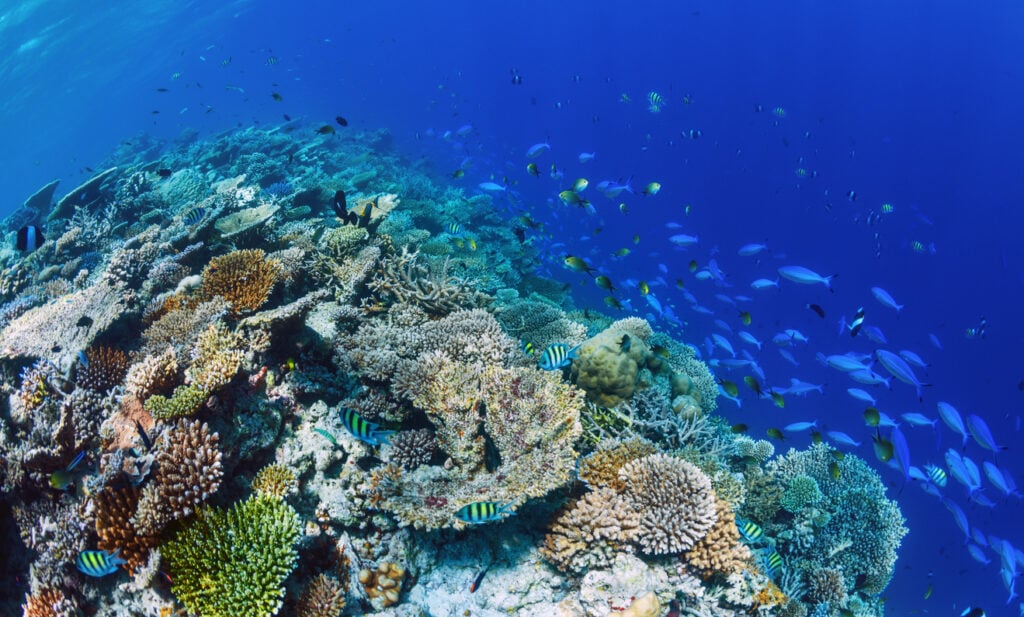
Although manta rays feed primarily on zooplankton rather than coral, they depend upon productive, interconnected marine systems.
‘What worries me most is climate change and overfishing,‘ says Harry. ‘Manta rays rely on productive oceans and healthy marine ecosystems, particularly because they depend on an abundant supply of zooplankton. As our oceans warm and events such as El Niño and marine heatwaves become more frequent or intense, we can see increasing stress on coral reefs and the wider marine ecosystem.
‘When you start losing coral reefs, the effects can cascade through the ecosystem. You lose habitat for fish and other marine life, which can affect the wider food web and ultimately the health of the entire reef system.’
Rebuilding the reef at Finolhu
At Finolhu, where Longin leads the marine conservation programme, coral fragments are grown in underwater nurseries before being transplanted onto damaged sections of the surrounding reef.
‘I believe the programme has been successful in many ways, but I like to think of it more as a work in progress,’ Harry says. ‘Coral restoration is a long-term commitment. So far, we’ve managed to transplant over 1,500 coral fragments, and we’re gradually increasing the coral cover and biodiversity across our reef.’
The figures are encouraging, but coral restoration is painstaking work rather than an instant solution to reef decline.
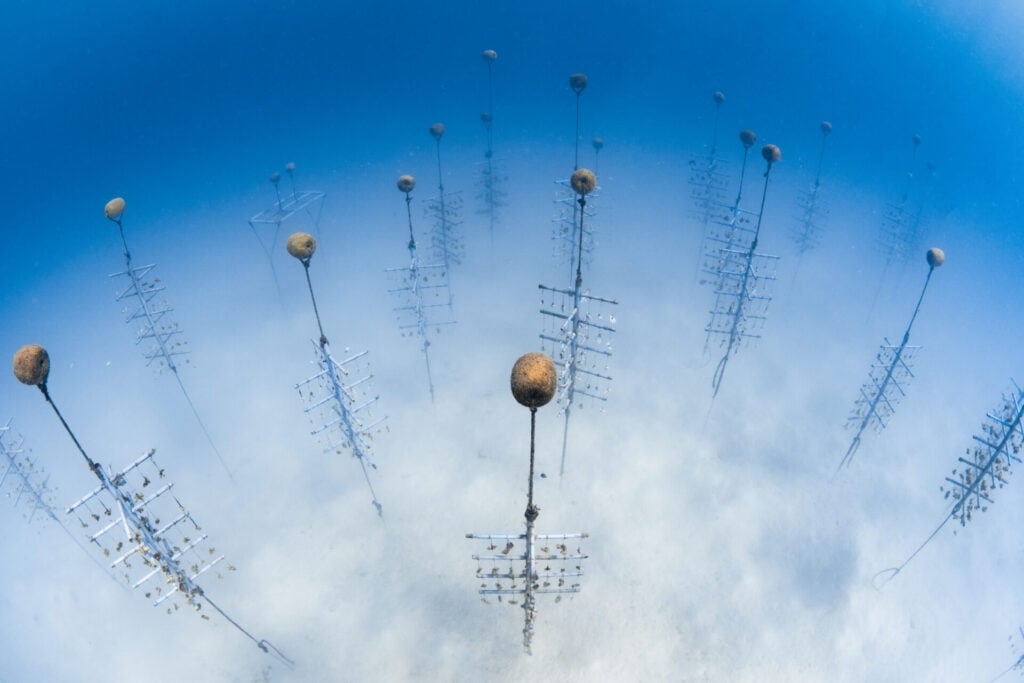
‘For me, the real measure of success is what happens after transplantation. Whether those corals continue to grow, survive and thrive years down the line. I’m very happy to say that, so far, we’re seeing positive signs of that. One of the things I love most is seeing the additional marine life that these restored areas are now attracting.’
Guests can learn about and support the work through the resort’s coral-adoption programme, receiving updates as their adopted fragment develops. This educational element matters, Harry argues, because restoration should not simply take place beneath the surface, invisible to the people whose holidays depend upon the health and beauty of the same environment.
Sustainability can’t just be something that’s used for marketing or something that’s nice to have. It needs to be a core principle of the resort, backed up by real action and long-term commitment’
‘Success isn’t just about how many corals we’ve planted,’ he says. ‘It’s about seeing those corals become part of a functioning reef, while inspiring the people who visit us to care about that reef as well.’
A responsibility beyond the resort boundary
Luxury tourism has an unavoidable environmental footprint in a remote island nation, from the energy and water required to run a resort to imported food, international flights, waste and boat traffic.
However, resorts possess resources, visibility and access to an international audience that can be directed towards meaningful conservation.
‘The Maldives is recognised worldwide as a luxury destination, with thousands of visitors throughout the year, and a huge part of that appeal is the incredible marine life that people come here to experience,’ Harry says. ‘Because of that, I believe resorts have a responsibility to protect the very environment that is bringing people here in the first place.
‘But I think the most important part is that it must be genuine. Sustainability can’t just be something that’s used for marketing or something that’s nice to have. It needs to be a core principle of the resort, backed up by real action and long-term commitment.’
Local participation is equally critical. Maldivian communities have depended upon the ocean for generations and will live with the consequences of its decline long after individual tourists have flown home.
‘Every successful conservation programme around the world ultimately depends on having the local communities involved and invested in its success,’ he explains. ‘The Maldivian people have an incredibly close relationship with the ocean. For generations, communities have depended on the sea for their livelihoods, food and way of life, and they’ve also witnessed how the marine environment has changed.
‘When local communities can see not only the financial benefits but also the ecological importance of protecting manta rays and key habitats such as Hanifaru Bay, they’re much more likely to support those protections in the long term. Tourists come and go, but the local people will be here for generations.’
For more information on their manta ray conservation visit finolhu.com