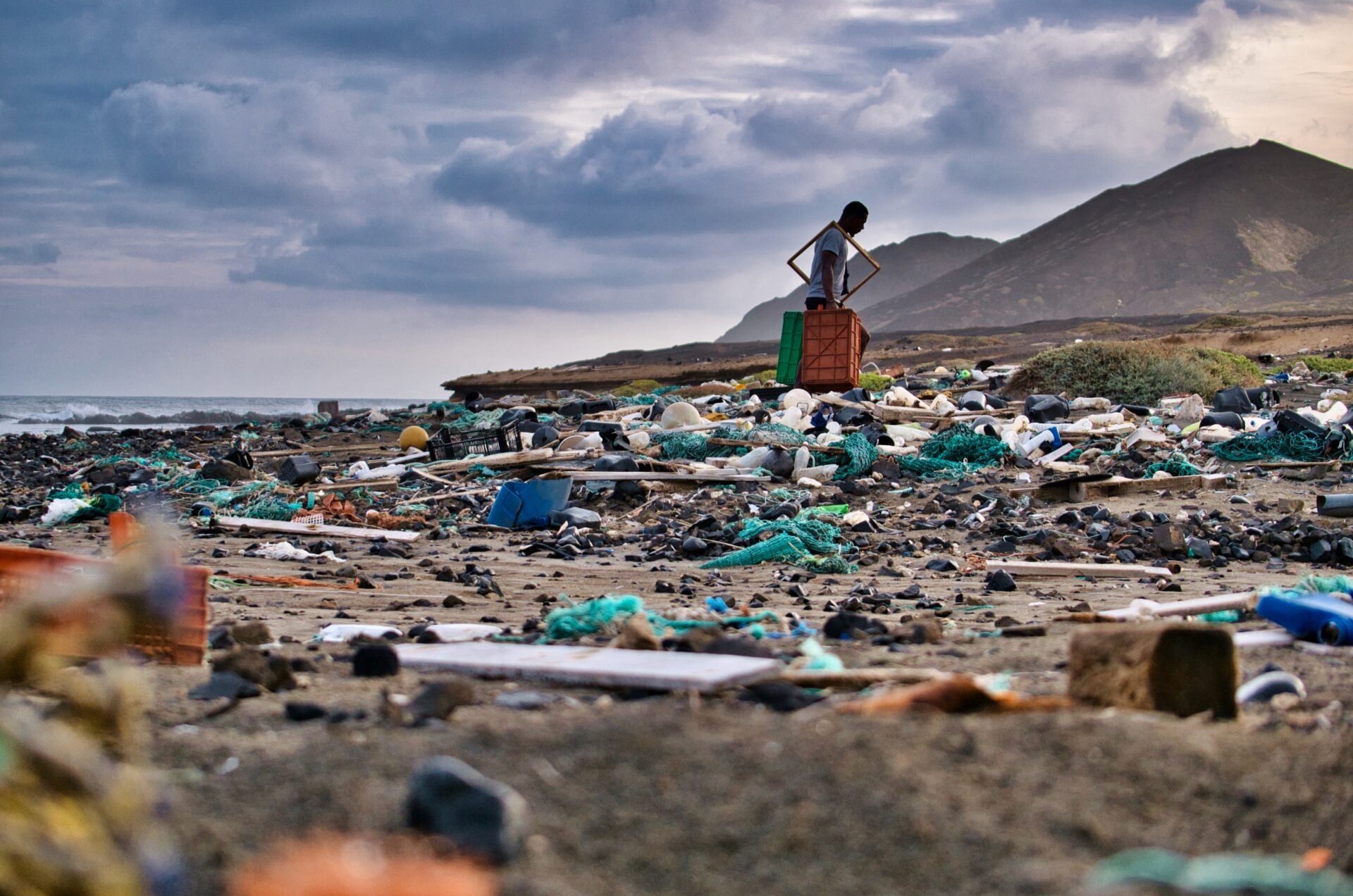
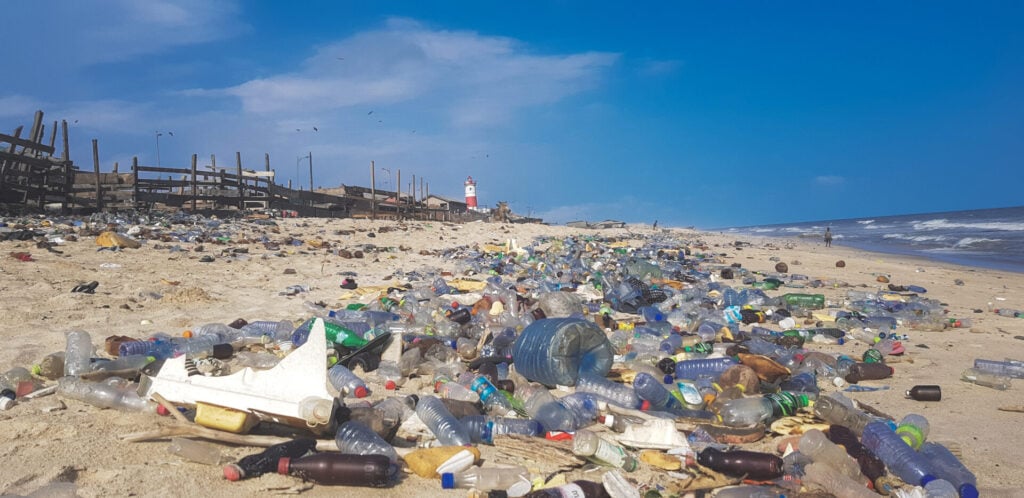
Plastic waste such as bags, bottles, food wrappers, lids and caps form the majority of litter found on the world’s shores.
Researchers in the UK have looked at data from more than 5,300 surveys of coastal refuse to produce the first global analysis on the subject.
The report, published in the journal One Earth, looked at 94 countries, and included estimates for another 18 countries – a total of 86 per cent of the world’s population.
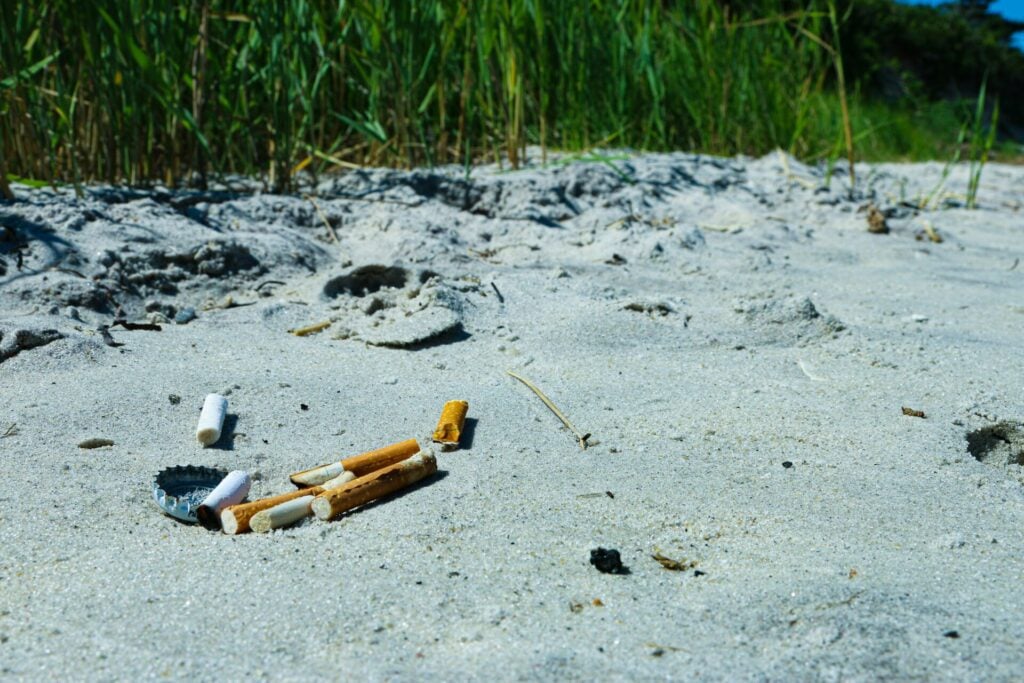
Food and drink-related plastics were found in 93 per cent of coastal litter surveys, making them the most common form of waste recorded. Plastic bags appeared in 39 per cent of datasets, while cigarette butts ranked among the highest toxic pollutants, showing up in 38 per cent.

‘It’s the everyday stuff that we’re using,’ said Richard Thompson, the founder of the University of Plymouth’s international marine litter research unit.
‘Even in countries with fairly advanced waste management, those are the dominant items on the shoreline.’
He said he was not surprised to see lots of single-use plastics in the data, but the fact those items
There were, however, some regional variations. Plastic bags, for example, were consistently prevalent in Asia.
Plastic Ban Doesn’t Equal Less Plastic Waste
The study also noted that a ban on plastic bags did not necessarily mean a country had less plastic waste. Instead, it noted that poor policy enforcement or the importation of waste from other countries exacerbated the litter issue.
Around 460 million tonnes of plastic are produced annually, with approximately 20 million metric tons of plastics entering the environment annually.
The report concluded: ‘We show that food and beverage items are nearly universal as a top pollutant, highlighting a clear, high-priority target. These findings mean society can move beyond “one-size-fits-all” solutions.
‘By prioritising the reduction of specific high-impact items at national and global scales, through targeted legislation and sectoral shifts, we can more effectively safeguard environmental and human health.’