Let’s start with an honest assessment of the situation: unless you were literally born this week, you probably won’t be around for any kind of holiday that people will be taking in 2125.
OK, so some optimistic human ageing experts believe the first person who will live to be 1,000 years old is already among us, but for most people, living to 2125 is just a pipe dream.
What you can glean from this article is a hint at what your great-great-grandchildren will be doing when they take a week off, and, perhaps, gain a greater appreciation of what’s currently available when you next go on vacation.
Because whatever you consider to be a holiday inconvenience today is going to get worse before it gets better. Welcome to your holiday in 2125…
By 2125, Travel May Look Very Different
More than 1,200 islands in the Maldives are barely 1.5 m above sea level. That’s currently part of their charm; you can stand in the middle of one and ogle the blue ocean at every turn.
Sadly, rising sea levels are set to put as many as 77 per cent of the Maldives underwater by 2100. By 2125, it will be even worse.
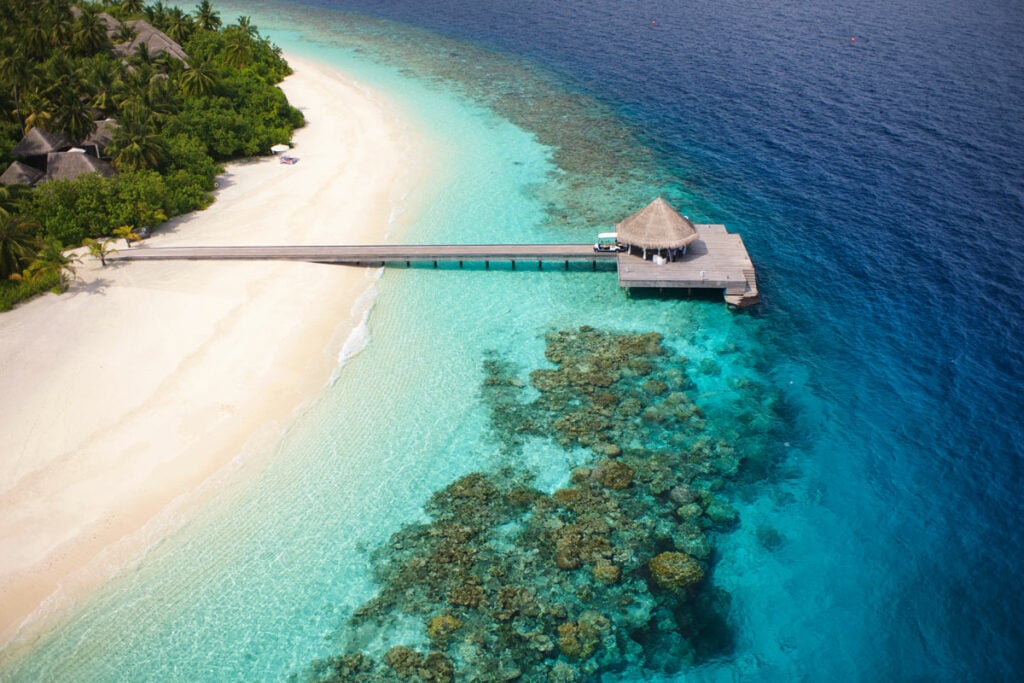
According to Earth.org, global sea levels are set to rise by as much as two metres by the end of this century, which also spells potential disaster for cities such as Venice, New Orleans, Miami and anywhere else where the sea looms ominously over the horizon.
Climate change will also decimate southern Europe’s beach holiday market, with vast swathes of Greece, Italy, Spain and Turkey becoming inhospitable to tourists not just because of rising summer temperatures, but also because of forest fires.
‘The climate crisis is already here,’ Greek Prime Minister Kyriakos Mitsotakis declared in 2023 after flames prompted the evacuation of thousands of panicked holidaymakers. ‘It will manifest itself everywhere in the Mediterranean with greater disasters.’
Technology will become so advanced that a few decades from now, the ever-growing airport queues we have to put up with will have disappeared completely. You’ll simply be biometrically scanned as you enter the airport
Popular tourist destinations like the Napa Valley in California and many US National Parks could be similarly affected, while at the opposite end of the spectrum, winter skiing trips may disappear because of depleted snow levels. The World Economic Forum reports that seasonal snow cover in the Alps has already fallen by 8.4 per cent in the past 50 years.
According to the European Travel Commission, 81 per cent of Europeans have already amended their holiday plans in some way because of climate change. In the coming years, we’re all going to be thinking more carefully about where we book to vacation.
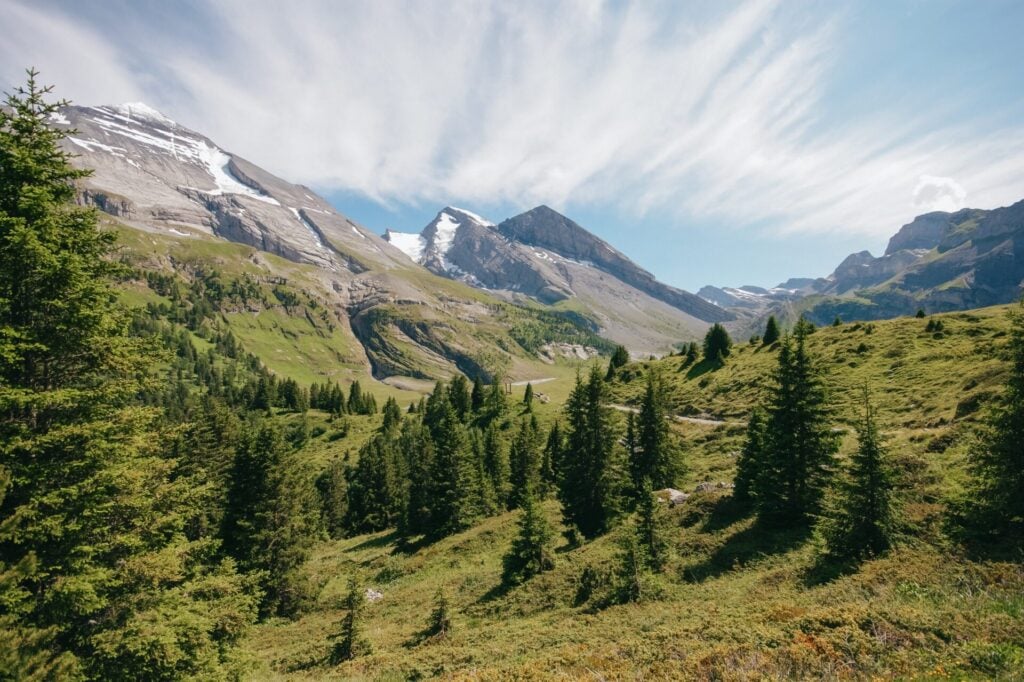
If there’s any consolation, futurologist Tom Cheesewright thinks that technology will become so advanced that a few decades from now, the ever-growing airport queues we have to put up with will have disappeared completely. You’ll simply be biometrically scanned as you enter the airport.
That’s if you use an airport at all – as early as next year, you should be able to look to Dubai’s skies and see Joby Aviation’s electric aerial ridesharing (sky taxis, in other words) whizzing tourists and residents around.
And if you do still want to jet off to another country, flights without pilots will soon be the norm and aviation will be powered by high-density energy storage so it will be emission-free and carbon negative, says Jia Xu, senior director of strategic planning for Honeywell Aerospace.
Unexpected Rising Stars
It stands to reason that as the planet becomes hotter, people will holiday in countries that are currently on the chilly side. Scandinavia is already seeing a major upswing in summer visitors.
By 2125, holidaying in the cosmos seems set to be commonplace, with a weekend at an orbital hotel in low-Earth orbit (LEO) being the next frontier in luxury travel
The ‘coolcation’ spots of today will be the pleasantly hot summer destinations of tomorrow, with destinations from Northern Germany and Poland to America’s Great Lakes, New Zealand, and Iceland set to benefit.
One study by a team of international economists predicted that climate change could see tourism more than double in Canada by the century’s end.
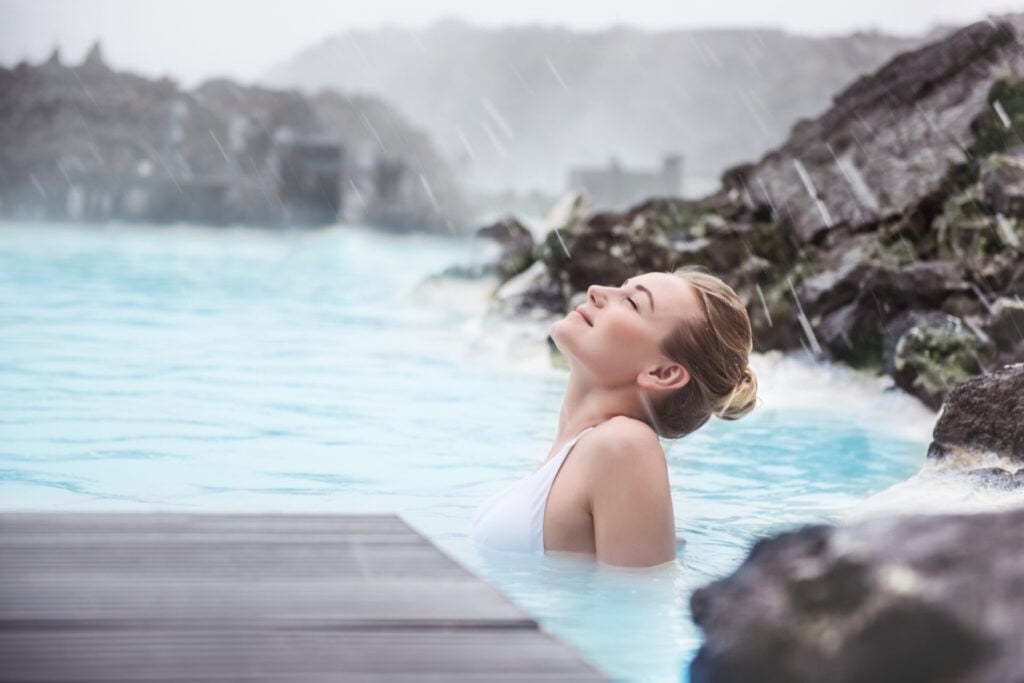
Other destinations that some experts have earmarked as future tourism hot spots include remote parts of South America (a kind of new Alps) and story-rich sanctuaries, such as Uzbekistan.
Stella Vacations
But forget rising stars – how about a journey to the stars? At his inauguration in January 2025, Donald Trump said the US would plant a flag on Mars. Lockheed Martin – the aerospace titans – have similar ambitions and say humans will be on the red planet by the 2030s.
One seemingly ludicrous – but theoretically plausible – method for getting people into space, however, is lifts, which would zoom elevator cars up and down ultra-strong lightweight cables tethered to an anchor beyond our atmosphere
That may be an ambitious target, but by 2125, humans holidaying on Mars seems a distinct possibility – Future Sciences magazine reported in June 2025 that SpaceX would have 100 rockets heading in that direction as early as 2031.
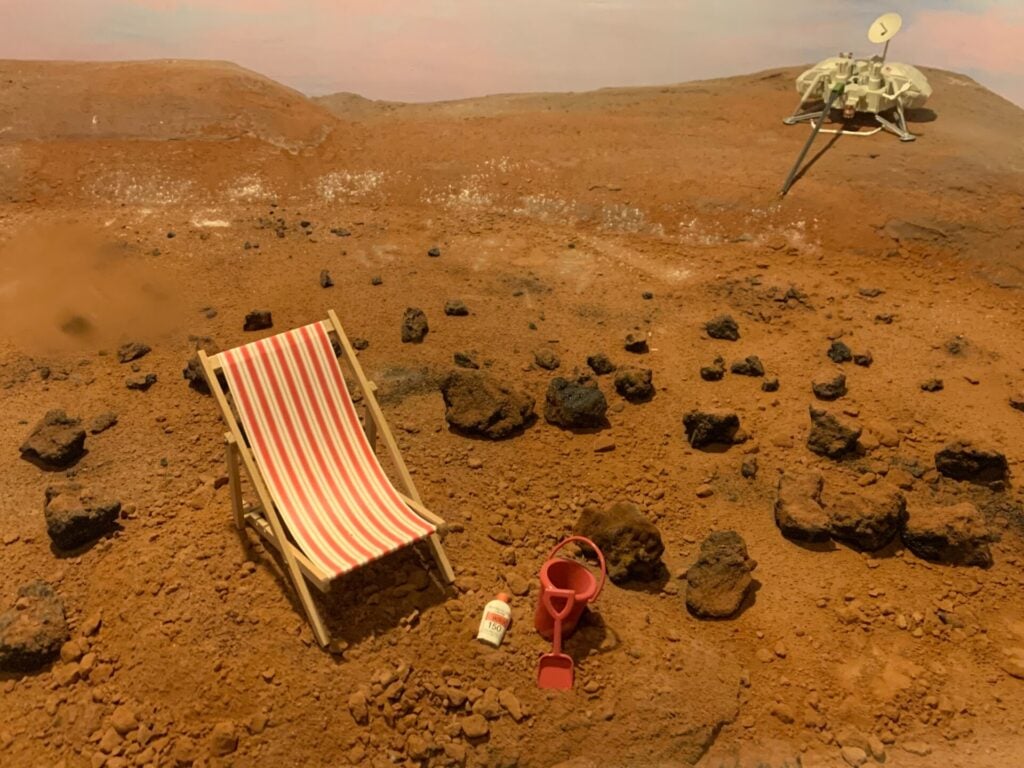
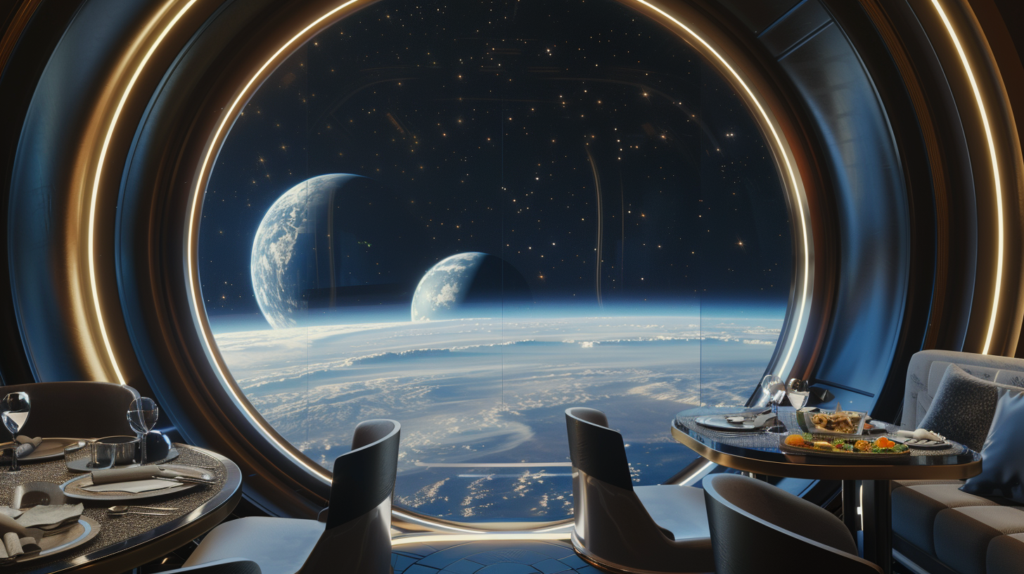
But you won’t have to go that far for a space holiday. Jeff Bezos’ Blue Origin company is developing a tourist-friendly space station, Orbital Reef, and many others are planned. By 2125, holidaying in the cosmos seems set to be commonplace, with a weekend at an orbital hotel in low-Earth orbit (LEO) being the next frontier in luxury travel.
Your hotel will feature 360° Earth-facing windows, zero-gravity bedrooms, gourmet meals prepared by robot chefs, and AI-curated interior aesthetics that adapt to your personal preferences. You’ll be able to watch Planet Earth rotate beneath you every 90 minutes and even take a ‘space walk’ in special gravity chambers.
And you want have to worry about the emissions from such an interstellar vaction – space travel will be sustainable with methane-oxygen or eco hydrogen fuel used to propel rockets.
At some point in the next 100 years, we’ll be able to travel at 10-20 per cent the speed of light using lasers to ‘power-beam’ us across space. That’s quite fast. It’s over 60 million miles per hour.
One seemingly ludicrous – but theoretically plausible – method for getting people into space, however, is elevators, which would zoom elevator cars up and down ultra-strong lightweight cables tethered to an anchor beyond our atmosphere. These could serve colonies on the Moon or even further afield.
But maybe we won’t need them. Ron Litchford, the principal technologist for propulsion at NASA, told Popular Mechanics that at some point in the next 100 years, we’ll be able to travel at 10-20 per cent the speed of light using lasers to ‘power-beam’ us across space.
That’s quite fast. It’s over 60 million miles per hour.
Floating Cities
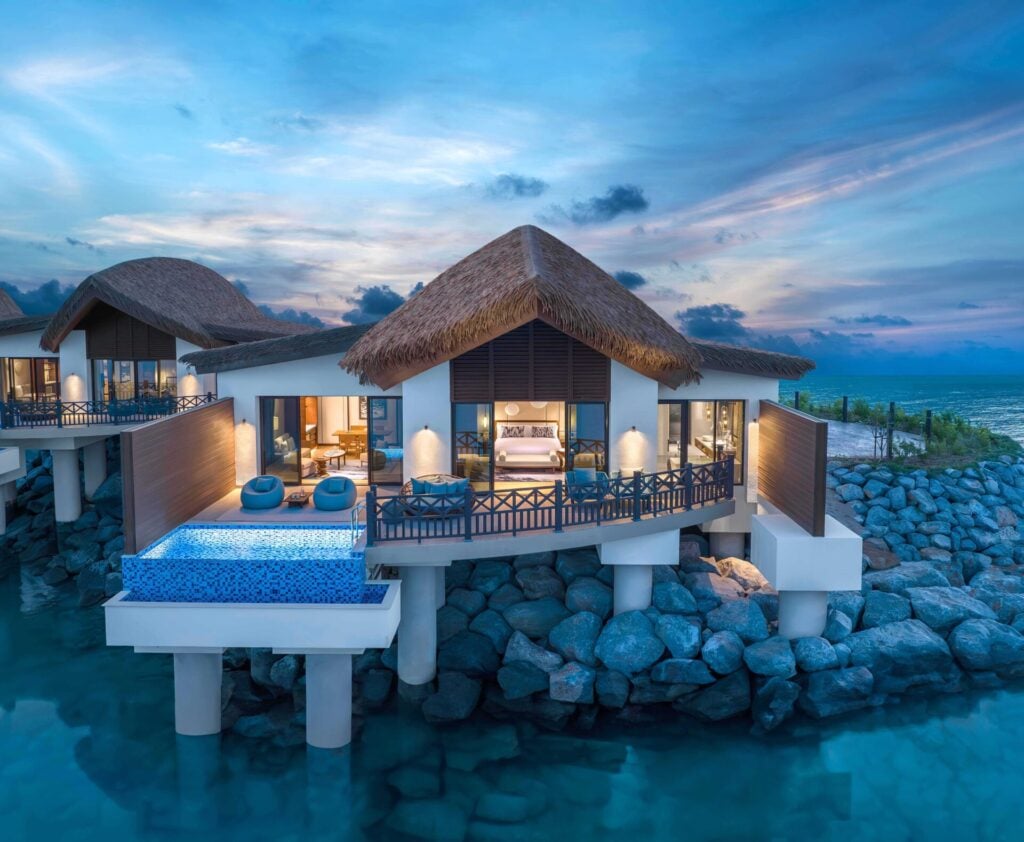
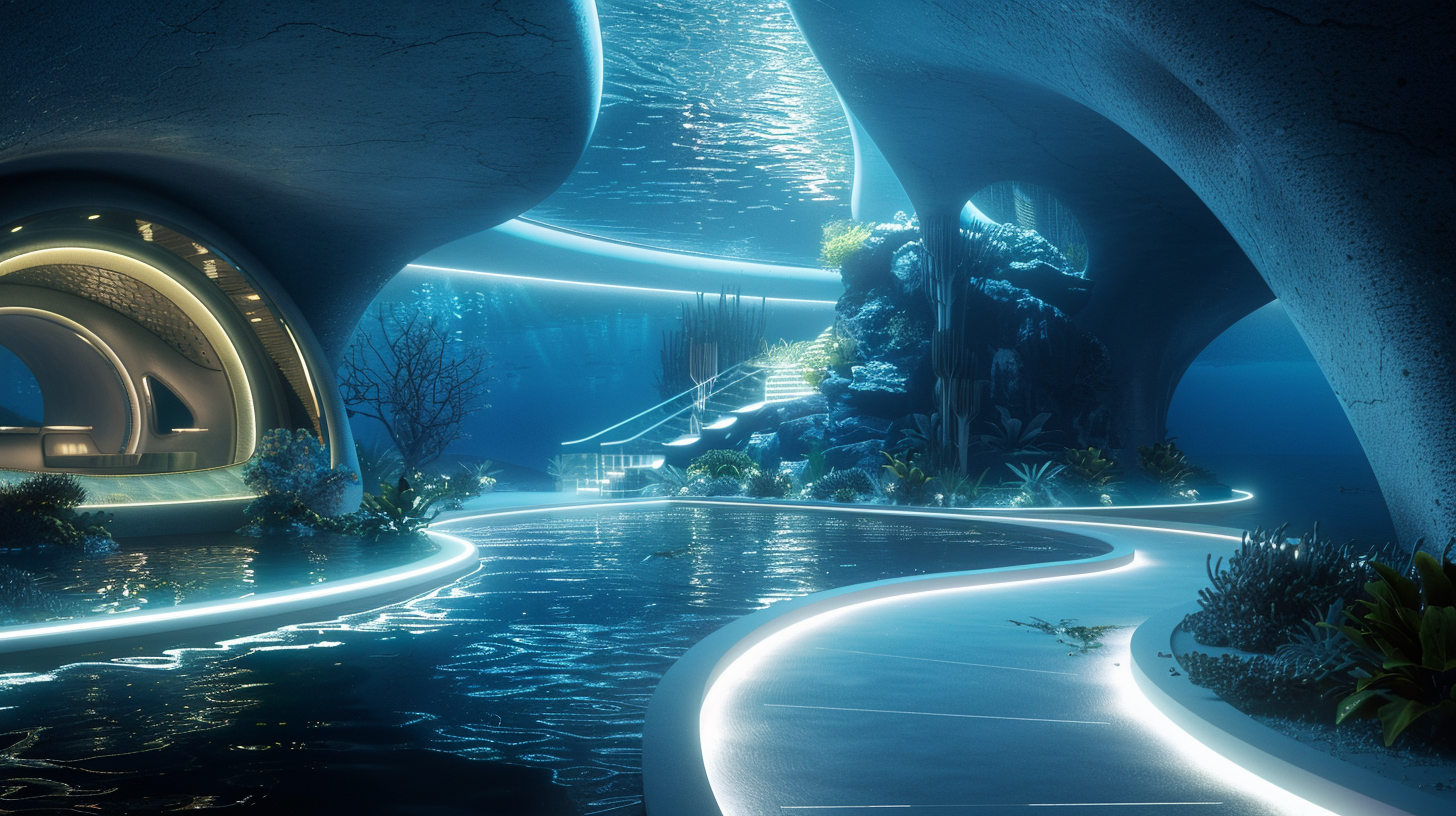
With a projected 10 billion people on Earth by 2125, we’re going to need more room. We have several options that don’t require leaving the planet, such as self-contained, climate-controlled destinations in inhospitable locations. And holiday resorts either floating on top of or under the sea.
Among the better-known projects already underway is the $500bn NEOM in Saudi Arabia, an indoor smart city in development that is slated to stretch 110 miles (177km).
Waterfalls, lush, verdant forests, valleys, and cystal clear lakes would be inside enormous climate-controlled domes with retractable roofs. Creatures would roam the dome where families can get to nature, albeit an artificially created one
While chiefly a residential project, up to five million visitors a year are reportedly expected by 2030 – though recent photos of the proposed city show little more than long stretches of infrastructure. Some recent reports say the project has been massively scaled back.
But drawings of self-contained resort cities certainly look great in the hands of visionary architects, and some, surely, will become future tourism magnets.
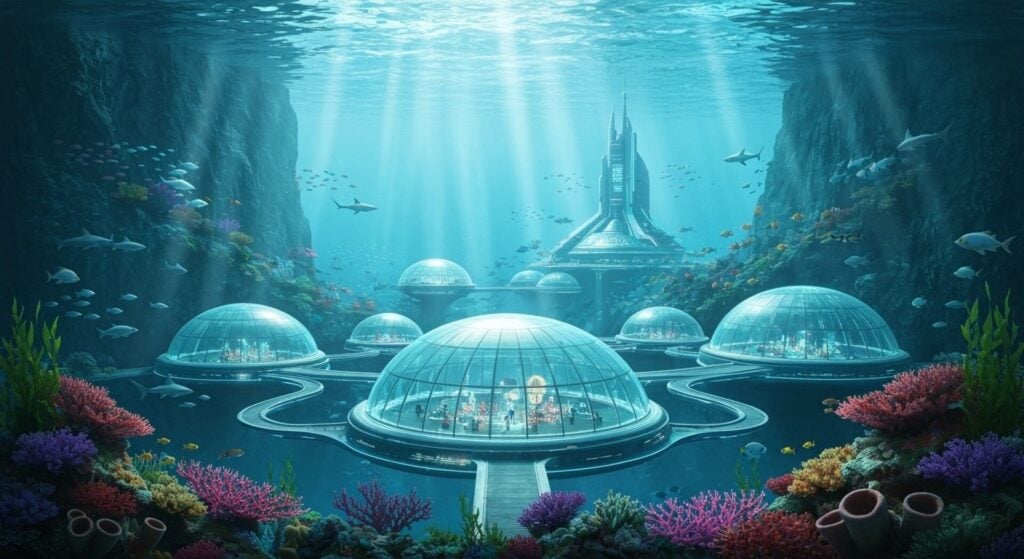
Japan’s Ocean Spiral project – an underwater city that draws energy from the seabed – isn’t likely to be one of them because of the complexities of maintaining a city under the sea.
Shimizu Corp, though, still insists the city could be reality within 20 years and will ‘capitalise on the infinite possibilities of the deep sea’ to accommodate human life, as rising sea levels threaten the survival of island communities.
Travel trend forecaster Jenny Southan recently warned that by 2050 the world will be so dramatically different to what we know today that we can scarcely imagine it.
She thinks that mega-resorts may start to spring up in less-obvious places such as Albania and El Salvador to cope with growing tourist numbers.
‘The good thing about teleportation is that there is no fundamental law telling us that it cannot be done, and with technical advances, I would estimate teleportation that we see in the films will be with us by 2080.’
Dr Mary Jacquiline Romero, quantum physicist at the University of Queensland, Australia.
And we can create our own eco biodome spa and sanctuaries to escape the skyscraper mega cities where nature is front and centre.
Waterfalls, lush, verdant forests, valleys, and cystal clear lakes would be inside enormous climate-controlled domes with retractable roofs. Creatures such as butterflies, deer, birds and small mammals would roam the dome where families can get to nature albeit an artificially-created and maintained one.
Take The Train
Long before 2125, air travel will have switched to battery, hydrogen or synthetic fuels – but fast transport between destinations won’t solely rely on air.
Elon Musk ambitiously plans to connect cities by hyper-quick trains travelling at 3,000 miles per hour and thinks New York to London is achievable in under an hour – 54 minutes to be exact.
The current snag for his transatlantic 3,000-mile long system is a rumoured $20 trillion (AED 73 trillion) price tag. However, improvements in tunnelling technology could reduce this.
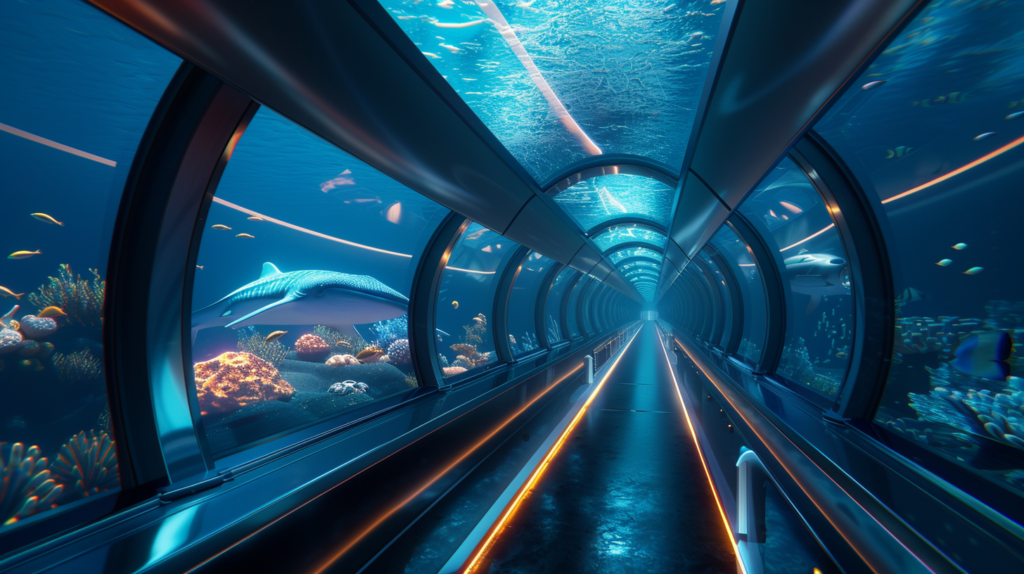
And why not forget planes, trains and automobiles all together. Why not simply teleport yourself to your dream destination? Teleportation could become reality by 2080, according to Dr Mary Jacquiline Romero, a quantum physicist at the University of Queensland, Australia.
‘The good thing about teleportation is that there is no fundamental law telling us that it cannot be done,’ she said, ‘and with technical advances, I would estimate teleportation that we see in the films will be with us by 2080.’
A Vacation Pill
‘A hundred years from now, trips will be trips,’ says Philippe Brown of luxury travel specialists Brown and Hudson. ‘A shortcut to the illusion of connection, the rush of hormones, the mind-expanding awe – all delivered in minutes, without carbon impact.’
Imagine two -three hour escapes as deeply impactful as two-week journeys, he says. How? The idea of a journey in a pill has influenced everything from Total Recall to Nine Perfect Strangers – and if time can indeed be ‘bent’ while you’re under, what’s to say that a tailored virtual holiday that meets your every whim, is only limited by your imagination, and only requires an afternoon off work wouldn’t be the answer we all crave?
Brown also thinks that game design principles such as surprises, random rewards and challenges will infiltrate virtual travel experiences.
As with every prediction, however, everything we’ve put forward should perhaps be taken with a pinch of salt. After all, back in 1925, Irish physicist E.E. Fournier d’Albe wrote that in 2025 travel would be ‘free and unfettered.’
Anyone who has ever turned up at an airport a little later than planned would agree that precisely the opposite is true.