For centuries, humans have pushed some of the planet’s most influential species to the brink by hunting, poisoning, and fencing them out of landscapes they helped shape for thousands of years.
But a remarkable reversal of these lost species is now underway. From wolves returning to the American West and lynx reclaiming the Iberian Peninsula to beavers engineering British rivers and wild horses roaming the Kazakh steppe once again, countries around the world are attempting something once thought impossible: putting nature’s missing pieces back.
Beavers
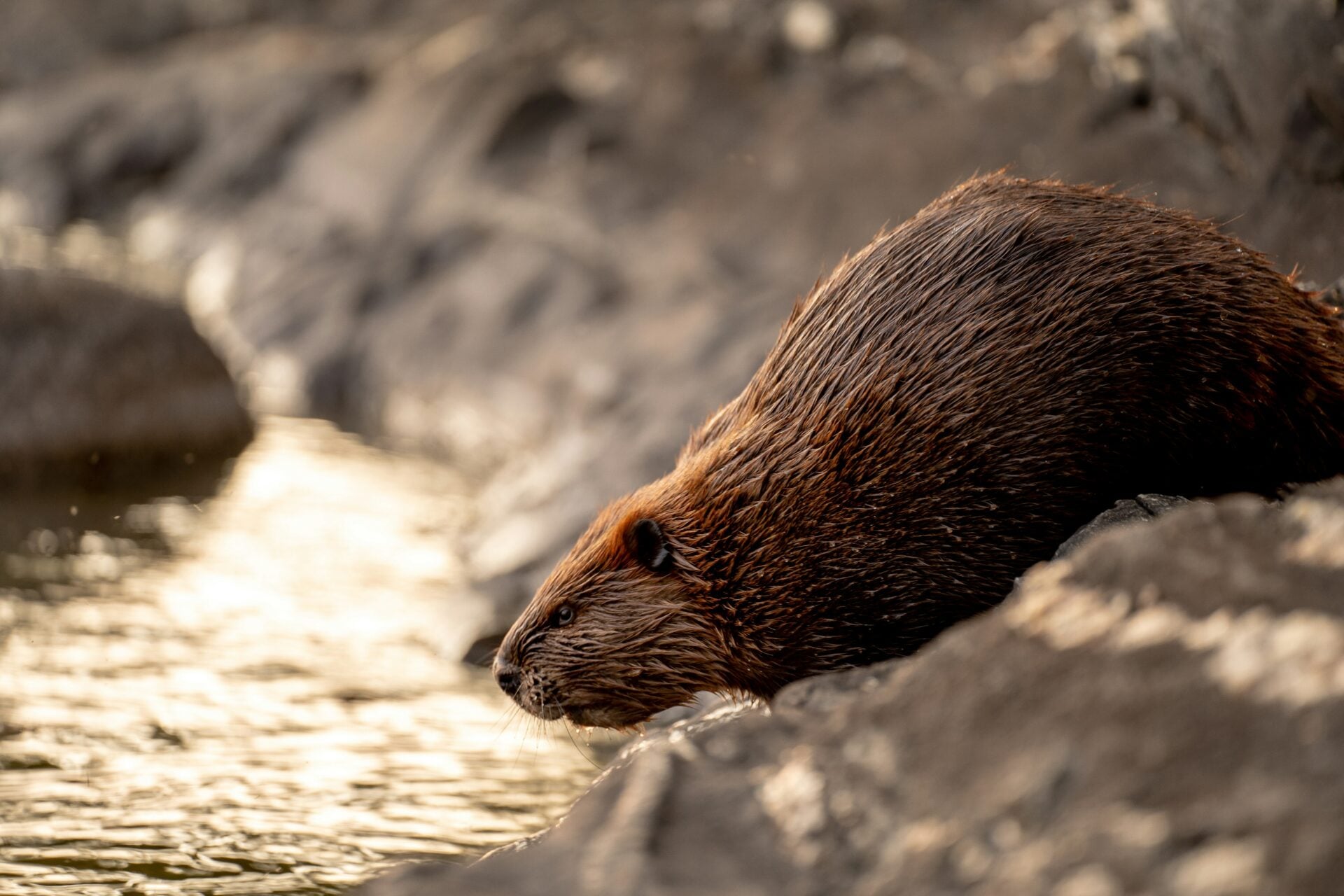
Nature’s original master builder, the Eurasian beaver, has slowly been returning to Britain’s waterways after centuries of absence. Beavers are well-known ecosystem engineers and proven climate champions who create natural flood defences and build wetlands, which are thriving havens for wildlife.
They are regarded as a keystone species because the habitats they create benefit so many other species. Their activities create diverse, dynamic wetlands that can help otters, water shrews, water voles, birds, invertebrates (especially dragonflies), and breeding fish, while also sequestering carbon.
Once widespread across the UK, they disappeared due to overhunting for their fur, meat, and scent glands. In recent years, beavers have been returning to British waterways. In Scotland, beavers have been released into the wild since 2009, and the country now has a population of over 2000 of this once-lost species. In England, following a government decision last year allowing them to be released into the wild their comeback has been slowly rolled out. In February 2026, one of the first wild beaver releases in England to go through the formal application process took place in Cornwall, by Cornwall Wildlife Trust.
Touching footage of the moment taken by The Wildlife Trust is shown above.
The Iberian Lynx
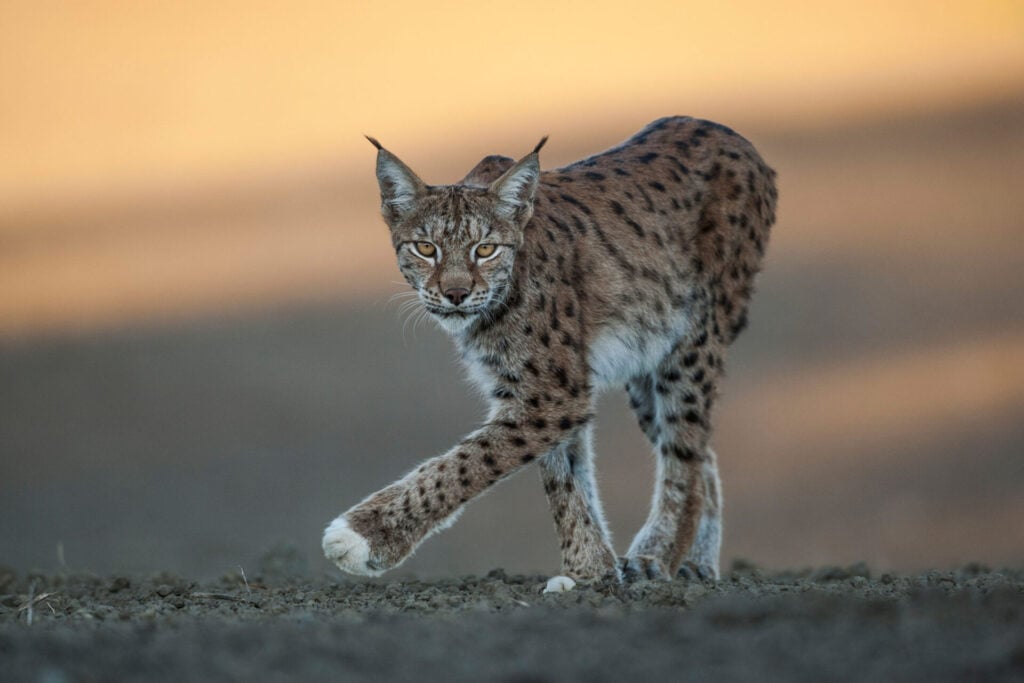
In 2001, WWF declared the Iberian lynx ‘the most endangered cat species and the only endemic large carnivore in Europe.’ At the time, the situation for the Iberian lynx was dire: They were found in just a handful of isolated pockets of Spain and Portugal, and the International Union for Conservation of Nature (IUCN) estimated the population had dwindled to just 62 mature individuals. In Portugal, the species had experienced an 80 per cent range loss between 1960 and 1990, and by 1980, the Portuguese lynx population was estimated at no more than 50 individuals.
This dramatic decrease was largely due to habitat loss, reduction in prey (particularly the European rabbit), and human-induced threats such as poaching, road accidents, and habitat destruction. Unlike the wide-ranging Eurasian lynx, which stretches across much of Europe and central Asia, the Iberian lynx has always had a relatively restricted range, which made habitat loss all the more devastating.
Thanks to conservation efforts, the Iberian lynx staged one of history’s greatest wildlife comebacks. From that record low figure of 62, coordinated conservation across Spain and Portugal pushed the wild population of this remarkable lost species to a record 2,663 animals. As a result, in June 2024, the IUCN removed the Iberian lynx from the Endangered list, upgrading its status to Vulnerable.
Success has depended on far more than breeding and releasing lynx. Conservationists have reconnected fragmented landscapes through wildlife corridors, restored Mediterranean scrub and forests, and protected the European rabbit, the lynx’s main food source.
Wolves
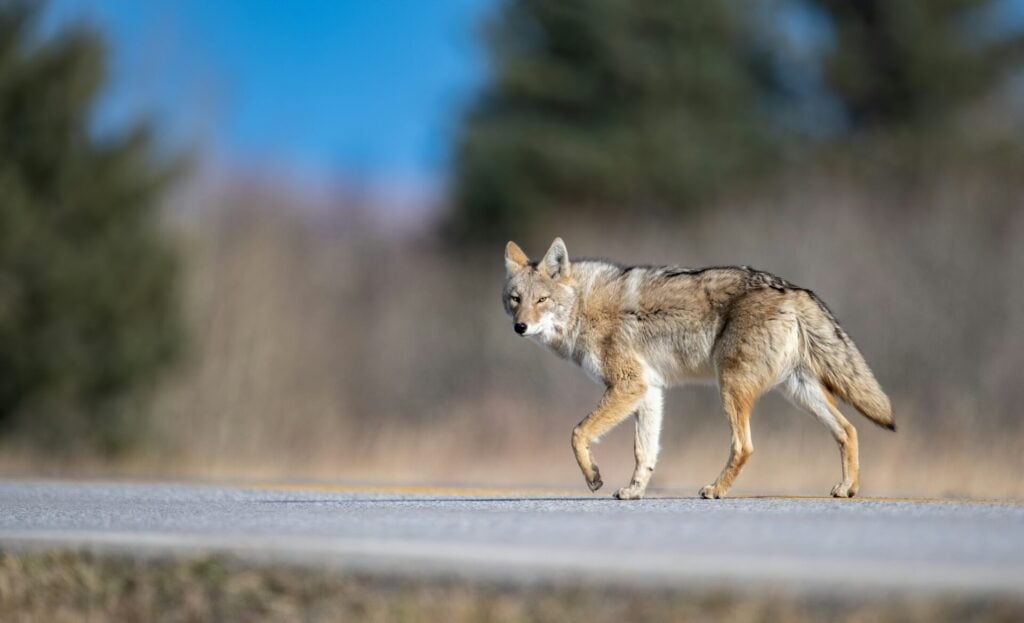
For decades, conservationists have argued that wolves do far more than simply keep deer populations in check. As apex predators, they influence the behaviour of prey species, triggering what ecologists call a trophic cascade, a chain reaction that ripples through an entire ecosystem.
Nowhere is this more famous than in Yellowstone National Park, where grey wolves were reintroduced in 1995 after a 70-year absence. Elk, once able to graze freely throughout the park, began avoiding exposed valleys and riverbanks where they were more vulnerable to predation. This gave willow, aspen and cottonwood trees the opportunity to regenerate, stabilising riverbanks and creating habitat for birds, insects and countless other species. The recovering woodlands also supported the return of beavers, whose dams slowed water flow, created wetlands and further boosted biodiversity.
While scientists continue to debate the extent to which wolves alone drove every aspect of Yellowstone’s recovery, the park remains one of the world’s most influential examples of how restoring a single predator can have far-reaching ecological effects.
That lesson is now being tested in Colorado, where voters narrowly approved the reintroduction of grey wolves in 2020, and the first animals were released in late 2023, with further releases following in 2025. The aim is to establish a self-sustaining population across suitable habitat, restoring a lost species that had been eradicated from the state by the 1940s.
Bison
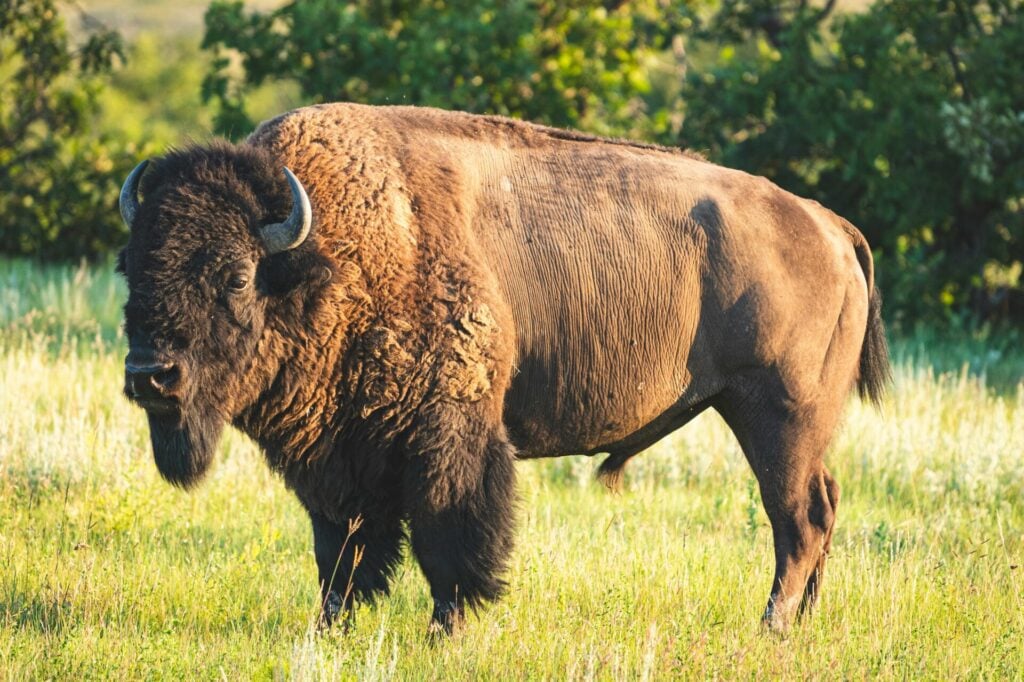
By the early 20th century, the European bison had disappeared from the wild altogether. Once roaming across much of the continent, relentless hunting and habitat loss drove Europe’s largest land mammal to extinction in the wild by 1927, leaving just 54 animals alive in zoos and private collections.
Against the odds, those few surviving individuals became the foundation of one of Europe’s most remarkable conservation success stories. Through carefully managed captive breeding programmes and decades of international cooperation, European bison have been reintroduced to forests and grasslands across Poland, Romania, Germany, Bulgaria, the Netherlands and the UK. Today, more than 10,000 European bison exist worldwide, with thousands now living in free-ranging or semi-wild populations.
As bison graze, browse, trample vegetation and create patches of disturbed ground, this once-lost species generates habitats that support insects, birds, wildflowers and smaller mammals. Their dung provides food for countless invertebrates, while their movements help disperse seeds across the landscape. In many ways, they are restoring ecological processes that disappeared alongside them.
Przewalski’s horse
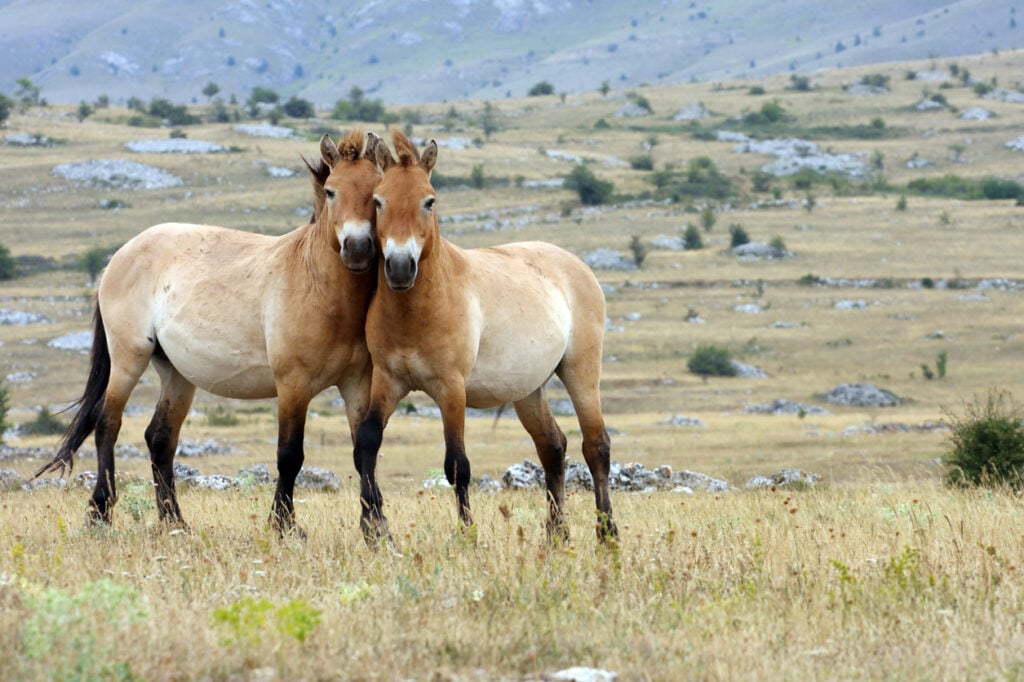
For decades, Przewalski’s horse was considered the world’s last truly wild horse. Native to the vast grasslands of Central Asia, the species disappeared from the wild by the late 1960s, driven to extinction through hunting, competition with livestock and habitat degradation.
Its survival depended entirely on a small captive population descended from just a handful of animals. Thanks to decades of international breeding programmes, those horses have since become one of conservation’s greatest success stories, allowing the species to be reintroduced to Mongolia and China.
In 2024, another milestone was reached when Przewalski’s horses returned to Kazakhstan’s Golden Steppe after an absence of around 200 years. The ambitious programme aims to restore the species to one of the largest temperate grassland ecosystems on Earth, where conservationists hope it will once again fulfil its natural ecological role. Last year, for the first time in over 10,000 years, wild Przewalski’s horses roamed Spain’s highlands. The 35 Przewalski’s horses, introduced by Rewilding Spain, are helping manage the local environment by grazing long grass and preventing wildfires, while also boosting the local economy through tourism.
Unlike domestic horses, Przewalski’s horses’ grazing prevents grasslands from becoming overgrown, while their constant movement creates a patchwork of vegetation heights that benefits everything from insects and ground-nesting birds to antelope. Their hooves break up compacted soils, and their dung returns nutrients to the land, supporting a remarkable diversity of life.
Vultures
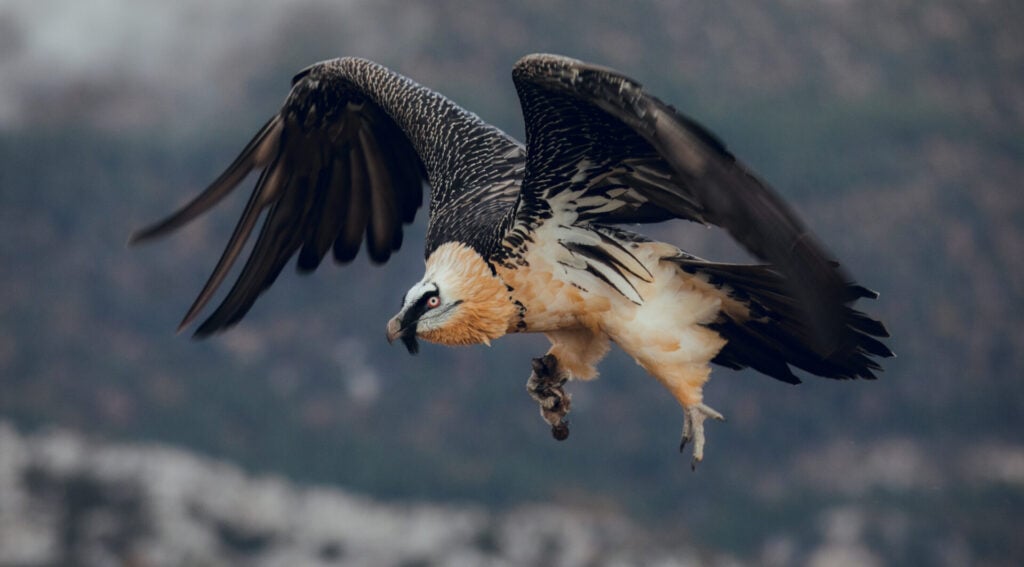
Long associated with death and decay, vultures are often overlooked in favour of more charismatic wildlife. Yet these remarkable birds perform one of nature’s most important ecological services.
Across much of Europe, vulture populations collapsed during the 20th century as a result of poisoning, persecution, habitat loss and declining food supplies. Several species, including the cinereous and bearded vulture, disappeared from large parts of their historic range.
Today, conservation organisations are working to reverse that decline. Captive breeding, carefully managed releases and habitat protection have helped return vultures to parts of Spain, Italy, Bulgaria and other regions across southern Europe. Protected feeding sites, together with stricter controls on poisoning, have allowed several populations to recover, while international projects continue to reconnect fragmented populations across the continent.
Vultures are nature’s sanitation workers, capable of stripping a carcass clean within hours. By removing dead animals before they decompose, they reduce the spread of diseases such as anthrax, botulism and rabies, while also preventing explosions in populations of rats and feral dogs that often thrive on carrion.